
Climate & Environment
Europe’s Cities Are Adapting to Climate Change Yet Is It Reaching Residents?
European cities are expanding climate adaptation measures, from green infrastructure to flood protection. But major differences in urban design, transport access and funding show why adaptation remains uneven.


A city can draw up a climate adaptation plan quickly. Changing what people experience on its streets takes years. Across Europe, local governments are investing in measures meant to make urban areas more resilient to rising temperatures, flooding and other climate risks. The 2026 Europe Cities Report by the Lancet Countdown recorded 1,519 planned or implemented adaptation actions across more than 850 cities. These include green infrastructure, flood defences, ecological restoration and community engagement.
There are signs that some of these interventions are making a difference. Summer surface urban heat-island intensity declined in 88% of the cities analysed, with an average reduction of 0.7°C. But progress is uneven. Nearly one-third of the cities reported financial and technical constraints as major barriers to adaptation. For residents, the value of these measures is ultimately measured at a much smaller scale: a shaded road, a cooler neighbourhood, a bus stop protected from direct sun or a safer route to work and school.

Climate Adaptation: Where the Trees are Matters
Trees are one of the most visible ways cities can respond to heat, but the amount of urban tree cover varies widely across Europe. Swedish cities had average tree cover equivalent to 41.6% of urban land in 2020. Eleven of the 14 cities studied had at least 30% tree cover. Bulgaria’s average was 22%, while Spain recorded 13.2%, France 9.2% and Ireland 3.4%. The figures do not establish a direct link between tree cover and a city’s overall heat risk. They do, however, show how different the urban environments are in which people are exposed to a warming climate.
Dr Rita Issa, a family medicine and climate-health consultant at WHO, identifies green spaces as an intervention that can support physical and mental health while helping cities respond to environmental pressures. She also points to low-emission zones as an example of a policy that can produce health benefits alongside environmental gains.
But where greenery is placed matters. A park at the edge of a neighbourhood may offer little protection to someone walking along a treeless road or waiting at an exposed bus stop. Trees lining routes used by children, older people and pedestrians can affect heat exposure much more directly.
Adaptation Measured by its Impact
The 1,519 adaptation actions in the report cover a broad range of interventions. Community engagement accounted for 8.1% of the actions, green infrastructure for 6.4%, flood defence for 5.1% and ecological restoration for 4.5%.
Of these actions, 596, or 39.2%, reported public-health co-benefits. That provides a useful way of looking at urban adaptation. Infrastructure is only part of the story. What matters is whether an intervention reduces exposure or produces measurable benefits for residents. Francesca de’Donato of ASL Roma 1 says city-level indicators can help connect scientific evidence with local policy while allowing health co-benefits to be measured and monitored.
That approach shifts the focus from the number of projects completed to what they achieve. A city can count the trees it has planted or the flood barriers it has built. It is more useful to know whether those measures have reduced heat exposure, improved air quality or made vulnerable neighbourhoods safer.
Heat Changes Cities’ Movement
Transport is closely tied to this question. The cities studied in Sweden and Spain recorded an average sustainable transport score of 5.3 out of 10. Ireland scored 5.2, France 5 and Bulgaria 4.6. Access to public transport also differed. Only 23% of urban areas in the Swedish cities studied were within 250 metres of a public transport stop. The corresponding figures were 32% in Spain, 31% in Ireland and 30% in France.
Then there is the question of shade. Trees covered 27.7% of cycling and shared cycling-pedestrian paths in the Swedish cities studied. The proportion fell to 9.4% in Spain and 8.3% in Ireland.
These indicators are presented as measures of transport infrastructure, but they also say something about exposure to heat. A journey that is manageable in moderate weather can become difficult when temperatures rise and the route offers little shade. Jordi Jové of the Barcelona Metropolitan Area links sustainable mobility with lower emissions, cleaner air and healthier urban environments. For cities facing more frequent heat, how people move around the urban environment becomes part of the climate-health equation.
The Cost of Adaptation Remains a Constraint
The biggest obstacle may not be a lack of possible solutions. Nearly one-third of the cities in the report identified financial and technical constraints as major barriers to adaptation. Many measures also require continued investment after they are built. Trees need space and maintenance. Public transport systems require long-term funding. Heat-health measures depend on cooperation between municipal authorities, health services and communities. The 596 adaptation actions reporting public-health co-benefits point to one way of making these investments work harder. A single intervention can address several problems.
A greener street can provide shade and improve the surrounding environment. Better public transport can reduce emissions and traffic-related pollution. Streets designed for walking can make everyday journeys easier while reducing dependence on cars. The difficulty is ensuring that these benefits do not remain concentrated in parts of a city that already have better infrastructure.
The Real Measure of a Climate-ready City
The report presents a European urban landscape that is changing, but not at the same pace everywhere. Some cities have reduced their summer heat-island intensity. Others have extensive tree cover or are investing in transport, flood protection and ecological restoration. Yet many still face financial and technical limits. Lorna Benton of Pathfinder says city-level assessments can help cities understand the health risks they face and identify opportunities to build healthier, more resilient and lower-carbon urban environments.
The next step is whether that information changes decisions on the ground. For residents, adaptation is not experienced as a number in a municipal report. It is the shade on a walk to school, the temperature at a bus stop, the availability of a nearby green space or the ease of reaching a clinic without spending too long in the heat.
That is where the success of urban climate policy becomes tangible. European cities have started changing their streets, public spaces and transport systems. The larger challenge is to make those changes reach the neighbourhoods and people most exposed to a hotter climate.










Energy
India’s Clean-Energy Transition: Will It Replace Oil Dependence With Mineral Dependence?
India’s shift towards electric vehicles, renewable energy and green hydrogen could reduce its dependence on imported fossil fuels. But with critical minerals, battery materials and clean-energy components sourced from global supply chains, a new question emerges: will the transition bring energy independence or create another form of import dependence?
Society
India’s Farm Subsidies Fail to Offset Price Pressures on Farmers, OECD Report Finds
India’s agricultural support system faces scrutiny after a new OECD report found that market regulations and trade restrictions continue to depress prices received by farmers, despite substantial government subsidies. The findings raise questions about the effectiveness of farm support policies, public investment and the sustainability of agricultural growth.
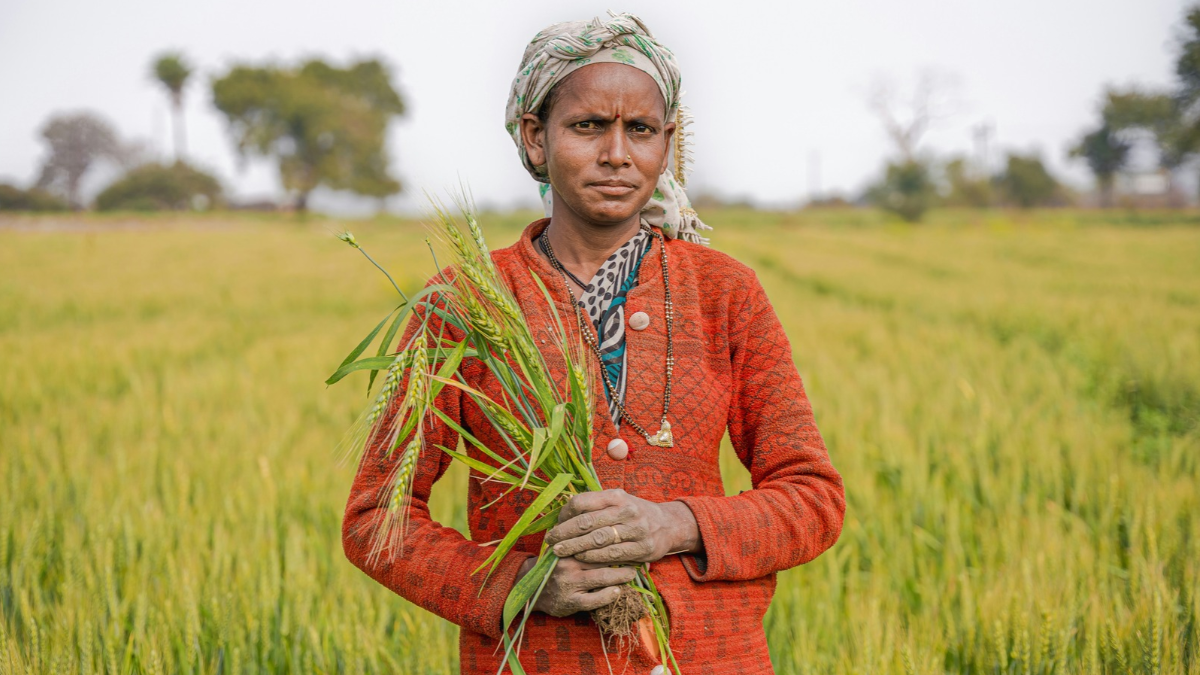
India’s agricultural support system presents a striking contradiction: the government spends substantial sums on subsidies and income-support programmes, yet its policies continue to impose an implicit financial burden on farmers. A new assessment by the Organisation for Economic Co-operation and Development (OECD) finds that India’s net support to agricultural producers remained negative during 2023–25, suggesting that budgetary payments did not compensate for the price-depressing effects of domestic marketing regulations and trade policies.
The Agricultural Policy Monitoring and Evaluation 2026, released on November 2, estimates India’s Producer Support Estimate (PSE) at an average of -9.2% of gross farm receipts during 2023–25. The negative figure indicates that agricultural policies, taken together, reduced the prices producers received compared with international reference prices, even after accounting for direct government support.
The finding draws attention to a structural problem in India’s agricultural policy: support delivered through subsidies can be undermined by policies that influence how crops are marketed, priced and traded.
The gap between subsidies and prices
The OECD’s PSE is not a measure of the amount of money farmers receive from the government. It estimates the annual value of transfers to agricultural producers arising from policy measures, including direct payments and the difference between domestic and international market prices.
In India’s case, the report identifies both positive and negative market price support. Commodities receiving positive support recorded an average of 3.5% of gross farm receipts, while those facing negative support experienced price effects of as much as -23.4% during 2023–25.
The report attributes the overall negative estimate to a combination of domestic marketing regulations and trade policy measures. Restrictions on the export of rice, wheat, sugar, onions and related products during the assessment period are among the measures identified. Such interventions are often introduced to contain domestic food prices and protect consumers from inflation. However, when they restrict access to higher-priced international markets, they can also limit the prices producers receive.
India gradually relaxed several restrictions during 2025, including measures affecting rice exports. Nevertheless, the OECD argues that unpredictable restrictions make agricultural markets less certain and can discourage farmers, traders and businesses from investing in production and supply chains.
This presents a difficult policy balance. Governments need to protect consumers from sudden food-price increases, particularly low-income households, but interventions that repeatedly change market conditions can undermine price incentives for producers.
Agriculture’s economic importance
The implications extend beyond farm incomes. According to the OECD, agriculture accounted for 16.3% of India’s GDP in 2024 but employed 42.4% of the workforce. The disparity points to a significant productivity gap between agriculture and the rest of the economy.
The report also notes that farm incomes have grown at less than one-third the rate of non-agricultural incomes in recent years. Although agricultural output has expanded, a large share of the workforce continues to depend on a sector that contributes a considerably smaller share of national economic output.
India’s agricultural output grew at an average annual rate of 3.9% between 2014 and 2023, exceeding the global average. Total factor productivity grew by 1.5% annually during the period, supported by technological progress, improved seeds and infrastructure, including irrigation and roads.
However, output growth alone does not guarantee that gains reach farmers. The prices received for produce, the cost of inputs, access to markets and the distribution of value along supply chains all influence farm incomes.
The OECD’s findings therefore raise a question about whether India’s existing support mechanisms are sufficiently addressing the conditions that determine what farmers earn.
Where does government support go?
The report does not suggest that India has withdrawn financial support from agriculture. Budgetary transfers to producers averaged 10.7% of gross farm receipts during 2023–25. Much of this support, however, was directed towards variable input subsidies, particularly fertilisers, electricity and irrigation water.
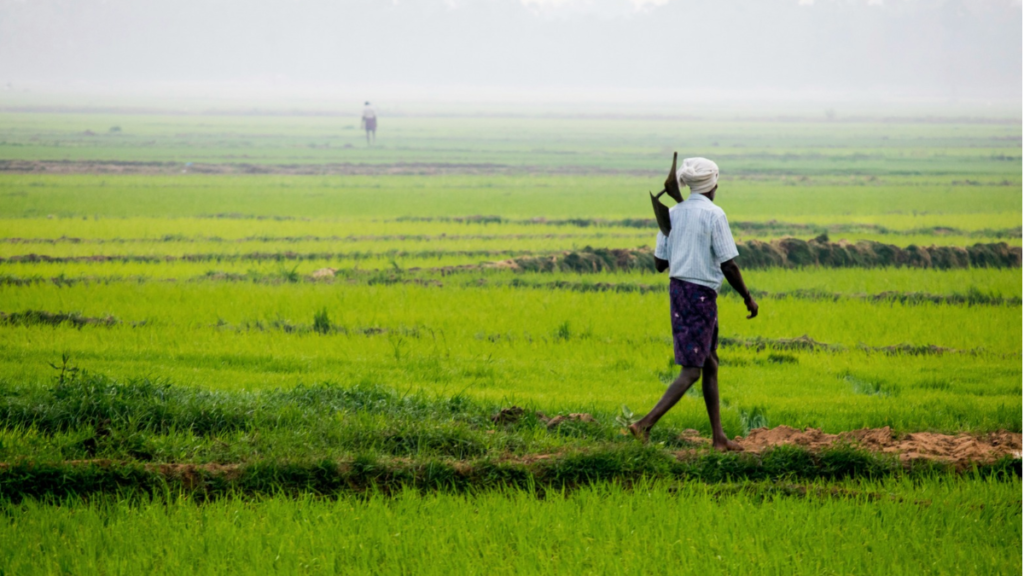
A farmer walking in a paddy field at early morning.Image credit:Pexels
These subsidies help farmers manage production costs and are politically significant, especially when input prices rise. The government continues to rely on them to maintain affordability and support agricultural production.
The scale of fertiliser assistance illustrates this dependence. On November 11, 2026, the Union Cabinet approved a nutrient-based subsidy allocation of ₹62,370 crore for phosphatic and potassic fertilisers for the October 2026–March 2027 winter cropping season. The allocation was approximately 64% higher than that for the previous winter season, reflecting pressures from international fertiliser prices and supply disruptions.
But input subsidies are not a substitute for investments that improve productivity over the long term. The OECD recommends gradually reducing inefficient fertiliser, electricity and irrigation-water subsidies and redirecting resources towards agricultural research, education, rural infrastructure, financial services, sustainable input use and climate resilience.
The distinction is important. Subsidising electricity or water consumption can provide immediate relief, but poorly designed subsidies may also encourage excessive use of resources. A transition towards more efficient support would need to protect small and vulnerable farmers while reducing incentives for wasteful consumption.
The environmental cost of agricultural growth
India’s productivity gains have also come with mounting pressure on natural resources. The OECD records an increase in the country’s nitrogen balance from 90.7 kg per hectare in 2000 to 133.4 kg per hectare in 2024. The phosphorus balance rose from 20.8 to 28.1 kg per hectare over the same period.
These indicators measure the difference between nutrients entering agricultural systems and those removed through harvested crops and other processes. Persistent surpluses can indicate inefficient fertiliser use and increase the risk of nutrient pollution in soil and water.
The report links rising fertiliser use and agricultural output to growing pressure on land and water resources. It argues that support policies should encourage more sustainable production rather than simply increase the volume of inputs used.
This is particularly relevant for India, where irrigation, fertiliser affordability and electricity subsidies are closely connected to agricultural production. Reforming these systems without adequate alternatives could increase costs for farmers. The challenge is therefore to improve efficiency without shifting the burden of transition onto those with the least capacity to absorb it.
Rethinking agricultural policy
The OECD recommends making agricultural trade more predictable by limiting ad hoc export restrictions and extending the Agricultural Export Policy framework to more products. It also calls for domestic marketing reforms that allow farmers and traders to respond more effectively to market demand.
Its broader recommendation is to shift public spending away from measures that distort production and trade towards investments in productivity, sustainability and resilience. Research, extension services, infrastructure and digital skills are identified as areas requiring greater attention.
The Economic Survey 2025–26 also identifies fragmented landholdings, limited access to irrigation and quality inputs, low mechanisation and insufficient investment as continuing constraints on Indian agriculture. It points to initiatives in agricultural extension, digital agriculture, farmer-producer organisations and market infrastructure as part of the policy response.
The OECD’s assessment should not be read as an argument against all subsidies or government intervention. Price stabilisation and food security remain important objectives in a country where millions of households depend on affordable food. But the report highlights the limitations of a system that supports farmers through input subsidies while simultaneously using market and trade controls that can depress the value of their produce.
The central policy question is no longer simply how much the government spends on agriculture, but whether that spending improves farmers’ capacity to earn, invest and adapt. For India, a more durable agricultural support system will require aligning price policy, market access, public investment and environmental sustainability rather than treating them as separate concerns.
Energy
Fossil Fuels Linked to Millions of Premature Deaths as Ministers Call for Healthy Energy Transition
A new ministerial declaration is calling for public health to become central to the global transition away from fossil fuels. Highlighting the health and economic costs of air pollution, it urges governments to accelerate the shift towards clean energy and strengthen the role of health systems in climate action.
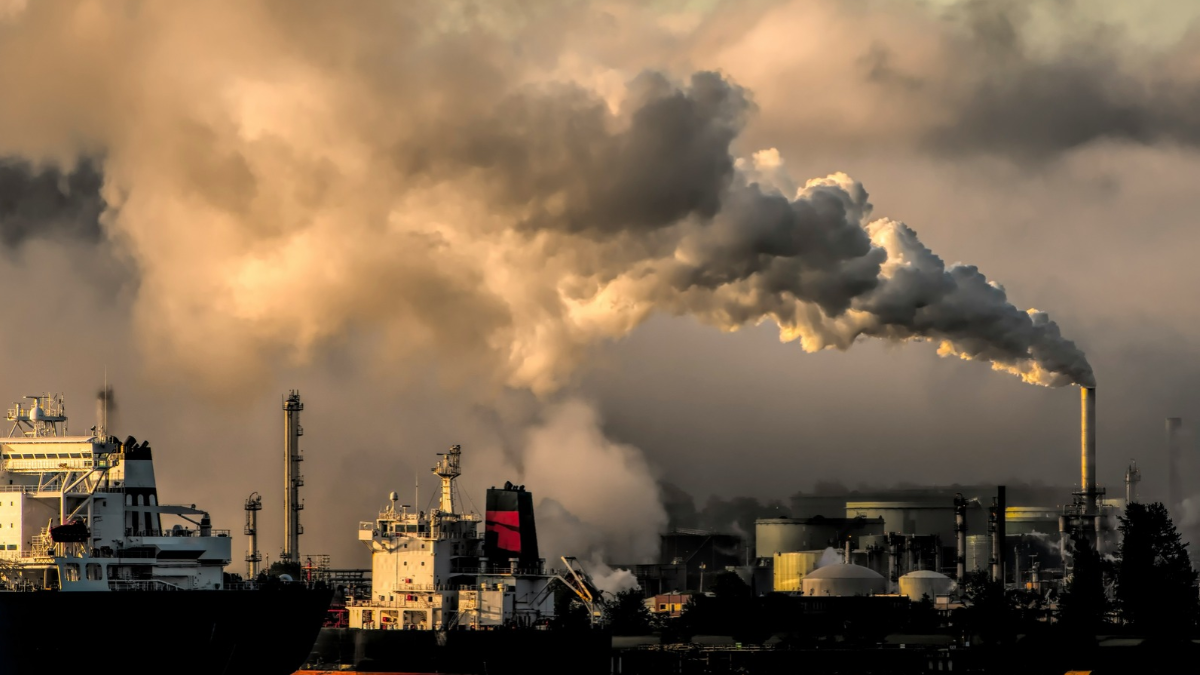
The transition away from fossil fuels is not merely an environmental necessity but also a public health imperative, according to a new ministerial declaration calling on governments to accelerate the shift towards clean and renewable energy. The Political Declaration on a Healthy Transition seeks to place public health at the centre of international energy and climate policies as the 31st Conference of the Parties (COP31) to the UN Framework Convention on Climate Change (UNFCCC), which began on November 9, continues in Antalya, Türkiye.
The declaration highlights the health consequences of fossil fuel dependence, including air pollution, respiratory illnesses, cardiovascular diseases and the growing risks associated with climate change. It argues that transitioning towards cleaner energy systems could reduce the burden of disease, lower healthcare expenditure and improve workforce productivity.
According to the World Health Organization (WHO), ambient and household air pollution together account for approximately 6.7 million premature deaths annually. The declaration cites estimates that fossil fuel dependence contributes to between five and eight million premature deaths every year.
The health consequences extend beyond direct exposure to polluted air. The extraction and combustion of coal, oil and natural gas contribute to global warming, intensifying heatwaves, droughts, floods and storms. These changes threaten food and water security, increase heat-related illnesses and create conditions favourable for the spread of infectious diseases.
The Lancet Countdown 2025 Report on Health and Climate Change estimated that fossil fuel-derived outdoor air pollution caused approximately 2.52 million deaths in 2022, while household air pollution from polluting fuels and technologies accounted for another 2.3 million deaths. The report also found that heat-related mortality had increased by 23% since the 1990s, reaching an average of 546,000 deaths annually during 2012–2021.
The economic case for cleaner energy
Beyond the human toll, the declaration draws attention to the economic costs of fossil fuel dependence. World Bank estimates cited in the document put the global economic damage associated with air pollution at approximately $8.1 trillion annually, equivalent to 6.1% of global gross domestic product (GDP).
The declaration also refers to International Monetary Fund (IMF) estimates suggesting that eliminating explicit and implicit fossil fuel subsidies could prevent 1.6 million premature deaths annually and generate an additional $4.4 trillion in government revenue.
The benefits of reducing fossil fuel dependence are also reflected in improvements in air quality. The 2025 Lancet Countdown report estimated that reductions in coal-related outdoor air pollution between 2010 and 2022 helped avoid approximately 160,000 premature deaths annually.
However, the transition must also address unequal access to energy. The declaration notes that approximately 750 million people lacked access to electricity in 2023. For communities dependent on traditional biomass fuels, access to clean electricity and cooking technologies remains essential to reducing household air pollution. Off-grid solar systems and mini-grids are identified as potential solutions for underserved populations.
Healthcare systems must also reduce emissions
An important aspect of the declaration is its recognition that healthcare systems themselves contribute to climate change. The document estimates that the healthcare sector accounts for approximately 5% of global carbon emissions, reflecting its dependence on energy-intensive infrastructure, pharmaceutical manufacturing and supply chains.
It calls for healthcare institutions to lead by example through energy-efficient hospital buildings, sustainable waste management and low-carbon pharmaceutical manufacturing. Healthcare systems also have considerable purchasing power, which could help create demand for cleaner technologies.
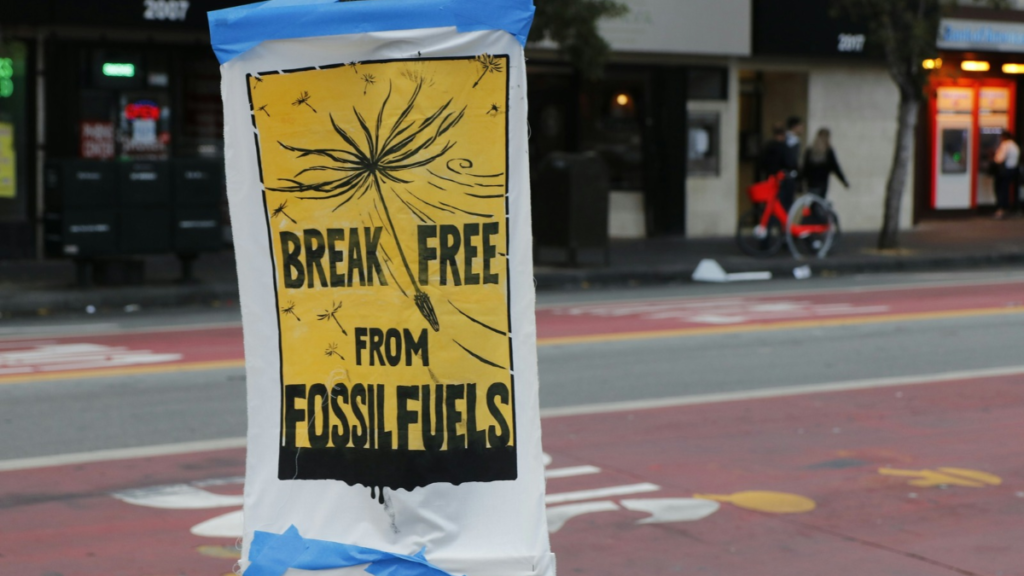
Representative image.Image credit:Unsplash
The declaration encourages countries to incorporate health considerations into their Nationally Determined Contributions (NDCs) and National Adaptation Plans (NAPs). It also calls on the WHO to provide technical assistance and coordinate international efforts towards a just and orderly energy transition.
From commitments to implementation
The initiative builds on momentum from COP30, where around 90 countries expressed support for a roadmap to transition away from fossil fuels. It also follows the first international conference on transitioning away from fossil fuels, co-organised by Colombia and the Netherlands in April 2026.
The declaration identifies three ways health ministries can influence the transition: raising public awareness about the health costs of fossil fuels, using the healthcare sector’s purchasing power to promote cleaner technologies, and working with other ministries to align climate and health policies.
However, translating these commitments into measurable outcomes remains a challenge. The declaration acknowledges differences in national capacities, development priorities and energy security requirements, particularly among least developed countries and small island developing states.
It does not establish binding emissions targets, dedicated funding commitments or country-specific implementation deadlines. Its effectiveness will therefore depend on whether governments translate its recommendations into national policies and allocate resources for implementation.
As countries are negotiating at COP31 and looking forwards to the 80th World Health Assembly in May 2027, the declaration seeks to strengthen the connection between climate action and public health. Its central argument is that cleaner energy is not simply about reducing carbon emissions; it is also about preventing avoidable deaths, reducing health inequalities and building more resilient healthcare systems.

IIT Delhi Returns to Global Top 200 in QS Sustainability Rankings 2027; 38 Indian Universities Improve

India’s Clean-Energy Transition: Will It Replace Oil Dependence With Mineral Dependence?

Six months on, Ebola outbreak in DR Congo remains uncontrolled, with over 5,500 deaths

Why Does the Brain’s Waste-Clearance Process Slow Down During Sleep As We Age?

India’s Farm Subsidies Fail to Offset Price Pressures on Farmers, OECD Report Finds

Indian universities lead Asia in research output per faculty, but the country’s top six all slip in QS ranking

Why Delhi’s Geography Makes It Vulnerable to Severe Air Pollution

Europe Braces for Extremes as Commission Unveils Climate Resilience Framework

NASA recruits new astronauts for future Moon Base and Mars missions

Between Lectures and Lyrics: Kabeer Is Building a Malayalam Hip-Hop Career One Self-Taught Skill at a Time
-

 Math4 months ago
The 2026 Fields Medals: Four Proofs, Four Decades-Old Problems Solved
-
EP Deep Dive: Data & Solutions4 months ago
After Kerala’s Deadliest Landslide, the Hardest Thing to Rebuild Was Childhood
-
EP Deep Dive: Data & Solutions4 months ago
West Asia Crisis: Can Kerala’s Returning Gulf Migrants Find a Future in the Green Economy?
-
Space & Physics6 months ago
India Semiconductor Mission: ‘It’s Not About Fabs. It’s About Building An Entire Ecosystem’
-
Interviews2 months ago
From Scams to Screens: How the National Stock Exchange Rewrote India’s Equity Story
-
Climate & Environment6 months ago
The Climate World Cup? How Climate Change Could Affect Player Performance at the 2026 World Cup
-
Society4 months ago
What Is Civilisational Diplomacy? Understanding India’s Newest Foreign Policy Tool
-
Society5 months ago
From Bell Labs to the Classroom: A Second Career in Teaching