EDUNEWS & VIEWS
What India’s Four Best Student Cities Reveal About the Future of Higher Education
Mumbai, Delhi, Bengaluru and Chennai have entered the world’s best student cities rankings. Their strengths in affordability and employability are clear, but the rankings also reveal what India must improve to become a global education destination.

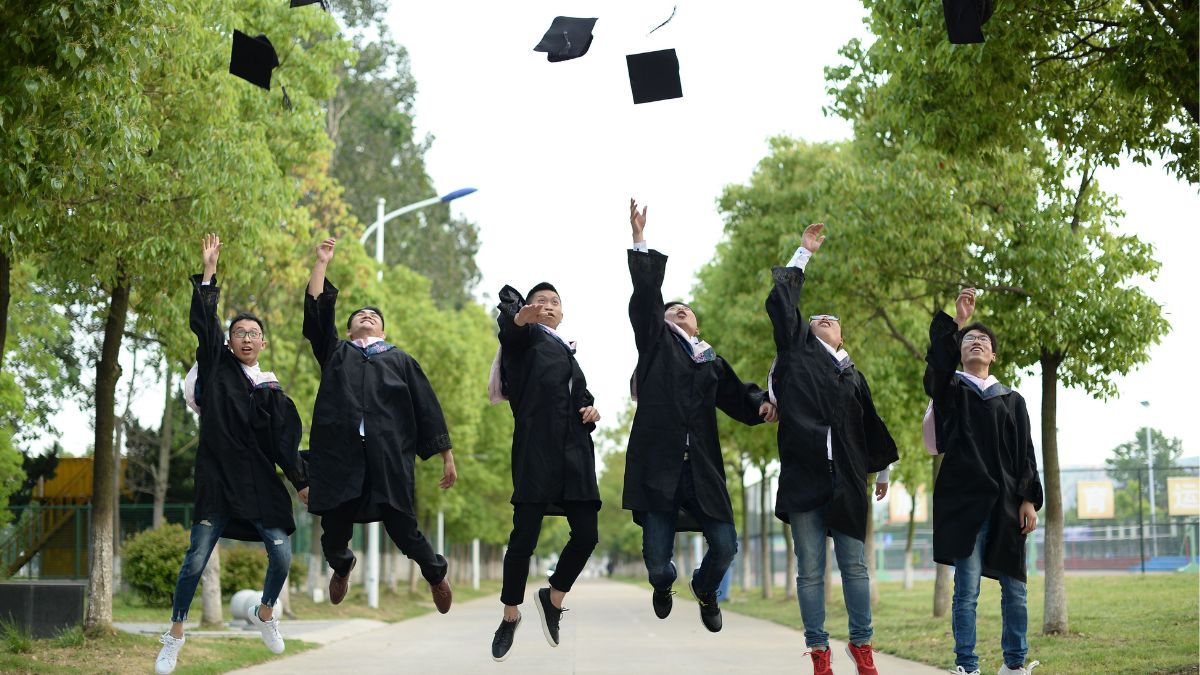
Choosing a university today is about much more than academics. Students now evaluate affordability, career opportunities, safety, research facilities, campus life and overall quality of living before deciding where to study. This shift has made student cities an important factor in higher education choices, as learners increasingly select not just a university, but a city where they can build their careers and shape their future.
For India, these choices carry national importance. According to the Ministry of External Affairs, more than 1.3 million Indian students were studying abroad in 2024, making India one of the world’s largest sources of international students. At the same time, the government wants to turn India into a global education hub through the National Education Policy (NEP) 2020, the Study in India programme and by allowing foreign universities to open campuses in the country.
The QS Best Student Cities 2027 rankings offer a useful reality check on how close India is to achieving that goal. Unlike university rankings, which judge institutions, this index measures what it is actually like to study and live in a city. This year, Mumbai, Delhi, Bengaluru and Chennai made it to the world’s top 150 student cities. The rankings highlight India’s biggest strengths—affordability and strong job prospects—but they also reveal where the country still has work to do.
Four Cities, One Picture of India’s Higher Education
India has one of the world’s largest higher education systems. According to the All India Survey on Higher Education (AISHE) 2021–22, the country has 1,168 universities, more than 45,000 colleges and over 4.3 crore students enrolled. Yet, despite this scale, only four Indian cities feature in the global rankings.
Mumbai is India’s highest-ranked student city at 91st, followed by Delhi (99th), Bengaluru (114th) and Chennai (123rd). Mumbai, Delhi and Chennai all climbed higher this year, while Bengaluru dropped six places.
The rankings also reflect India’s growing academic reputation. In the QS World University Rankings 2027, India had 52 universities listed—up from just 14 in 2017. That makes India the fifth most represented higher education system in the world. But stronger universities have not automatically made Indian student cities more attractive to students from across the globe.
Delhi Tops the World in Affordability
If there is one area where India clearly stands out, it is affordability. Delhi was ranked the world’s most affordable student city, with average international tuition fees of about US$2,700 a year. Mumbai ranked 12th, while Bengaluru and Chennai also featured among the world’s 30 most affordable student cities. The ranking takes into account both tuition fees and everyday living costs, including accommodation, transport and other daily expenses.
This comes at an important time. Tuition fees are rising in many popular study destinations, while tighter visa rules and changing immigration policies in countries such as Canada and Australia have made overseas education more expensive and uncertain.
Indian student cities also scored well in Employer Activity, an indicator that measures how attractive graduates are to employers using recruiter surveys and labour market data. Delhi ranked 29th globally and Mumbai 34th, showing that students graduating from these cities have strong employment prospects. Together, affordability and employability make a compelling combination. But in today’s competitive education market, they are only part of the story.
The Missing Piece: International Students
While more than 1.3 million Indians study abroad, India hosts only around 50,000 international students. Nearly one-third of them come from Nepal, showing that the country’s international student community is still concentrated in neighbouring countries rather than drawing students from across the world.
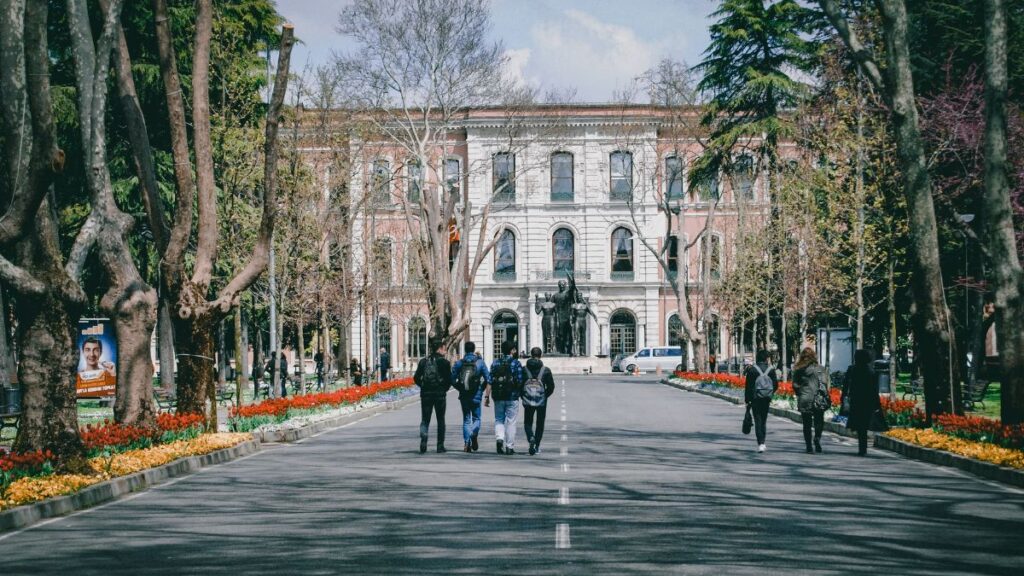
This gap is clearly visible in the Student Mix indicator, which measures the proportion of international students, the diversity of their nationalities, the size of the student population and how inclusive a city is. Mumbai ranked last globally at 150th, Delhi stood at 146th, while Bengaluru and Chennai were also among the bottom six student cities worldwide.
The message is clear: low costs alone cannot build a global education destination. Students today compare much more than tuition fees. They look for cutting-edge research, international collaborations, multicultural campuses, efficient public transport, safe neighbourhoods, affordable housing, student support services and a vibrant city life. These are the qualities that make education hubs such as Seoul, Tokyo and London stand out year after year.
Different Cities, Different Strengths
Each of India’s four ranked student cities has its own identity and strengths. Mumbai benefits from a rich mix of higher education institutions, including IIT Bombay, the University of Mumbai and the Institute of Chemical Technology. Combined with its position as India’s financial capital, the city ranked 34th globally for Employer Activity.
Delhi stands out for offering a rare combination of quality education, affordability and good career opportunities, making it especially attractive for students looking for value without compromising on outcomes.
Bengaluru remains the country’s technology and innovation capital. Its startup ecosystem, research institutions and presence of multinational technology companies continue to attract engineering and technology students. Although it has the highest average international tuition fee among the four cities—around US$5,400 a year—it still ranks among the world’s 30 most affordable student cities.
Chennai has steadily strengthened its position through institutions such as IIT Madras, Anna University and SRM Institute of Science and Technology. The city continues to build on its reputation as one of India’s leading destinations for engineering and technical education.
Together, these four cities show that India’s higher education strengths are spread across finance, technology, research and engineering rather than being concentrated in a single city.
The Next Test for India’s Education Ambitions
Global competition in higher education is increasing between student cities. Students compare entire urban ecosystems. They want excellent universities, but they also expect good public transport, safe streets, research opportunities, multicultural campuses and a lively academic environment. Cities such as Seoul, Tokyo and London consistently rank among the world’s best because they bring all these elements together.
India’s four ranked student cities show that the country has built a strong foundation. The challenge now is to make these cities as attractive to international students as they already are to Indian students. Only then can India move from being one of the world’s largest higher education systems to becoming one of the world’s leading education destinations.










Society
India to Push Indian Sign Language Into Everyday Life
From an ISL rendition of Vande Mataram to school lessons, books and digital learning, new initiatives are widening the place of Indian Sign Language in everyday life for deaf people.

When Vande Mataram was presented in Indian Sign Language (ISL) at this year’s Sign Language Day event in New Delhi, it was more than a ceremonial performance. It showed how a familiar part of public life can be made accessible through a visual language. But the larger story lies elsewhere. Alongside the ISL rendition, the event brought out a range of new resources, for young children, school students, readers, teachers, interpreters and people accessing educational content online. Together, they point to an effort to take ISL beyond specialised spaces and into more routine parts of life.
India had about 50.7 lakh people with hearing disability, according to the 2011 Census. The figure includes people who were deaf as well as those with difficulty hearing. The Department of Empowerment of Persons with Disabilities (DEPwD) has called for ISL to become part of “everyday citizenship”, so that deaf people can take part in public life without communication barriers, said Additional Secretary Manmeet Kaur Nanda.
A Child’s First Lessons
Some of the new material begins at the earliest stage of education. “Sanket Vatika” visual books have been introduced for children aged 3–6. There is also new teaching material for courses that prepare ISL interpreters and teachers. For schoolchildren, ISL videos now cover content from 14 textbooks for Classes 1–6. The material includes 100 personalised adaptive learning videos. Concept-based videos have also been prepared for Classes 9–12.
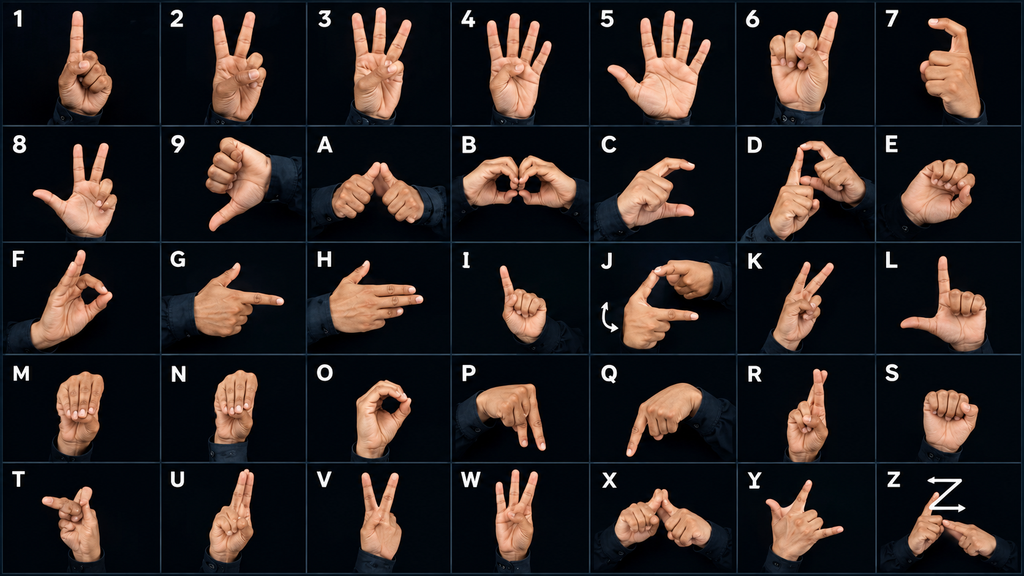
The idea is to build resources across different stages of schooling rather than leave gaps as children move from one level to another.
More Than Classroom Material
The move into ISL is also reaching books. Three hundred National Book Trust titles have been made accessible in ISL. They include stories, biographies and historical accounts.
The ISL Dictionary has also been expanded into 11 more languages. The stated goal is to eventually cover all 22 Scheduled Languages. For a language to be used widely, its vocabulary has to travel with it. The expansion of the dictionary is one part of that process.
Taking ISL to the Screen
ISL content is now being live-streamed through PM e-Vidya Channel 31 using direct encoder-based streaming. That puts educational material in a format that deaf viewers can access through a dedicated ISL channel, rather than having to rely only on spoken content.
Digital resources and translated material cannot cover every interaction. There is still a need for people who can interpret between ISL and spoken languages. At the event, DEPwD Joint Secretary Rajeev Sharma spoke about the growing demand for ISL interpreters across different fields.
The new teaching material for the Diploma in Indian Sign Language Interpretation and Diploma in Teaching Indian Sign Language courses is part of this effort. It points to a practical challenge: making information available in ISL is one part of access. Having enough trained people to support communication is another.
What this Looks Like in Ordinary Life
The ISL version of Vande Mataram may have been one of the more visible moments at the event. But the changes taking place in classrooms, books and digital learning are closer to the everyday experience of deaf people.
For a young child, it could mean learning a new word from a picture book in ISL. For a student, it could mean following a lesson in a language they understand. For a reader, it could mean picking up a story, biography or history book in ISL. And for someone who needs to communicate directly, it could mean having an interpreter to help bridge the conversation.
Taken together, these efforts are about making ISL useful beyond a classroom or a special occasion, as a language through which deaf people can learn, read, find information and take part in public life. That is what this year’s Sign Language Day, themed “Declaring Deaf People’s Human Rights”, sought to put into focus.
Learning & Teaching
Job Readiness for Students: 7 Career Sutras That Matter
Job readiness for students goes beyond a degree. These seven career sutras cover skills, adaptability, experience, confidence and career planning.


EDUNEWS & VIEWS
From Drones to Aircraft Maintenance: What India’s New WorldSkills Entries Say About the Future of Work
From drones to aircraft maintenance, India’s new WorldSkills categories offer a glimpse into how technology is reshaping jobs and skills across the country.
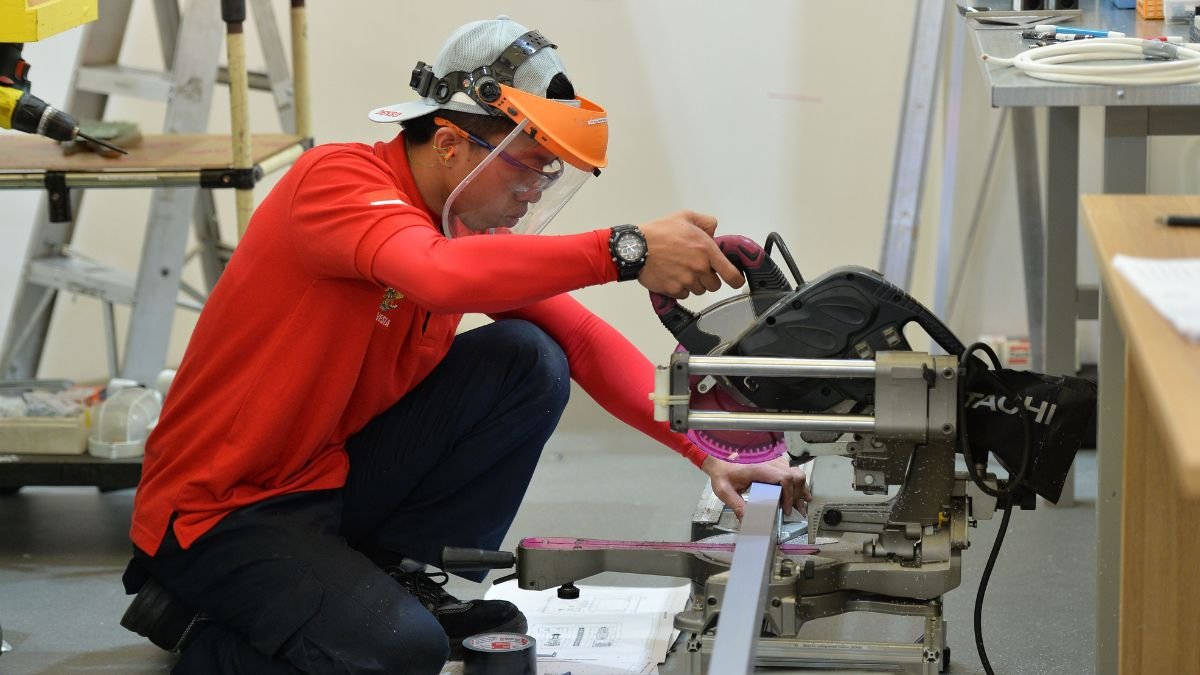
What does a skilled worker look like in 2026? The answer is becoming harder to fit into the old categories. At the WorldSkills Competition in Shanghai this month, Indian competitors will take part in 63 of 64 skills. For the first time, India will enter 11 categories, including unmanned aerial systems, aircraft maintenance, intelligent security technology, software testing, optoelectronic technology and digital interactive media design. Nearly 70 competitors will represent the country.
The list is revealing. It includes jobs that sit at the intersection of several disciplines: mechanics and electronics, healthcare and precision manufacturing, software and quality assurance, aviation and advanced diagnostics. Drones are no longer simply flying machines; they are becoming tools in agriculture, infrastructure and public services. Security systems increasingly rely on sensors, AI-enabled surveillance and automated responses. Optoelectronics has applications ranging from healthcare to communications and advanced manufacturing.
For India, this raises a question that matters well beyond a competition in Shanghai: are the country’s workers being prepared for the jobs that industries are beginning to need?
A Different Kind of Skills Shortage?
India’s employment conversation often swings between two extremes—too few jobs for a large young population, and too few people with the skills employers want. Both can be true. The World Economic Forum’s Future of Jobs Report 2025 estimates that 63% of workers in India will require training by 2030. About 12% are not expected to receive the upskilling they need, representing more than 70 million workers.
The pressure is coming partly from technology. Indian employers expect AI and machine learning, big data and security-related roles to grow rapidly over the coming years. They also anticipate greater demand arising from developments in areas such as computing, semiconductors and quantum technologies.
But technological change does not create only jobs with “AI” or “data” in their titles. It changes the work done by people in existing occupations. An aircraft maintenance worker, for example, may now need to understand increasingly complex electronic and mechanical systems. Industrial technicians are working with machinery that requires more sophisticated diagnostics. Agricultural workers and infrastructure teams are beginning to use drones. Software products need people who can test them systematically before they reach users. That is reflected in the new WorldSkills categories.
The Technician is Changing Too
The popular image of the technology worker is still largely that of a programmer sitting behind a screen. India’s new skills list tells a broader story. Heavy Vehicle Technology requires advanced diagnostic, repair and maintenance capabilities. Industrial Mechanics involves precision assembly, troubleshooting and optimisation of complex machinery. Aircraft Maintenance demands expertise across mechanical, electrical, fluid and structural systems. Software Testing requires workers to examine whether digital products function reliably.
These occupations are not replacing technology with human labour. They are occupations being reshaped by technology. As machines become more capable, the people who install, maintain, inspect, test and troubleshoot them become more important too. A factory may become more automated, but somebody still has to understand what happens when an automated system stops working. A drone can collect agricultural data, but somebody has to operate it, interpret its output and deal with what the machine cannot.
The skills shortage, therefore, is not confined to India’s technology sector. It is spreading into the technical occupations that support a technology-heavy economy.
Degrees may not tell the whole story
There is a related change taking place in how employers think about talent. The World Economic Forum reports that around 30% of companies in India expect skills-based hiring including removing degree requirements—to help address talent shortages. Globally, that figure is 19%. For young workers, that could prove consequential.
A qualification still matters. But in occupations where technology changes quickly, employers also need to know what a person can actually do. Can they diagnose a machine? Test software? Work with a drone system? Maintain an aircraft? Operate sophisticated equipment safely? That is where vocational and technical education becomes relevant to India’s much larger employment question. The issue is not whether vocational training should compete with university education. It is whether young people have enough routes into specialised work—and whether those routes are connected to what employers actually need.

India’s WorldSkills preparation is being supported by training institutions, industry partners and domain experts, including organisations working across manufacturing, software, retail, heavy industry and dental technology. That industry connection may be more important than the competition itself.
What happens after the medals?
India’s performance at international skills competitions has improved considerably. It rose from 29th at WorldSkills in 2015 to 13th in 2024 and ranked eighth in Asia at WorldSkills Asia 2025. But medals are a narrow measure of a country’s skills capacity. The larger question is whether specialised training reaches beyond a relatively small group of competitors.
Can an ITI student in a smaller Indian city access training in technologies that employers will need five years from now? Can a worker already in a factory retrain when the machinery changes? Can training institutions update equipment and curricula quickly enough? And will employers pay a premium for the skills they say they cannot find?
Those questions matter because India’s demographic advantage depends partly on what happens to its workforce after people leave the classroom. The WorldSkills categories offer a useful snapshot of where some of that work is heading. They bring together aviation, healthcare, manufacturing, software, security and drones—fields that once belonged to separate training systems.
That may be the most interesting part of India’s participation in Shanghai. The future of work is not arriving as one new profession. It is appearing inside existing ones, quietly changing what a mechanic, technician, designer, tester or maintenance worker is expected to know.
For millions of young Indians entering the labour market, that shift may matter far more than who takes home a medal.


Earth is Heating Up: The Economic Cost of a Rising Sea

Digital Detox: Why Taking a Break From Screens Matters

When a Village Walks Together, Even Drought Is Defeated. How Halma Breathed Life Back into Kesarpura’s Pond

100% Access in China, 5% in South Sudan: The Global Electricity Gap

India to Push Indian Sign Language Into Everyday Life

From Scams to Screens: How the National Stock Exchange Rewrote India’s Equity Story

Farmers Borrowed to Build ‘Diggis’. Two Years Later, They Are Still Waiting for the Subsidy

Aim for the Stars: Anjali Thomas’s Journey from a Small College in Kerala to the Frontiers of Medical Imaging

When the Himalayas Collapse Without Warning, What Counts as Preparedness?

Anxiety Freezes Career Decisions. Curiosity Unfreezes Them

-

 Math2 months ago
The 2026 Fields Medals: Four Proofs, Four Decades-Old Problems Solved
-

 Climate2 months ago
After Kerala’s Deadliest Landslide, the Hardest Thing to Rebuild Was Childhood
-

 Society3 months ago
West Asia Crisis: Can Kerala’s Returning Gulf Migrants Find a Future in the Green Economy?
-

 Space & Physics4 months ago
India Semiconductor Mission: ‘It’s Not About Fabs. It’s About Building An Entire Ecosystem’
-

 Interviews3 days ago
From Scams to Screens: How the National Stock Exchange Rewrote India’s Equity Story
-

 Climate4 months ago
The Climate World Cup? How Climate Change Could Affect Player Performance at the 2026 World Cup
-

 Society3 months ago
What Is Civilisational Diplomacy? Understanding India’s Newest Foreign Policy Tool
-

 Society3 months ago
From Bell Labs to the Classroom: A Second Career in Teaching