
Climate
Super El Niño Can’t Explain Mumbai’s Deluge, But Climate Change Can
Climate change is intensifying Mumbai’s rainfall, making downpours shorter and more extreme. Experts explain why El Niño alone cannot explain the floods.

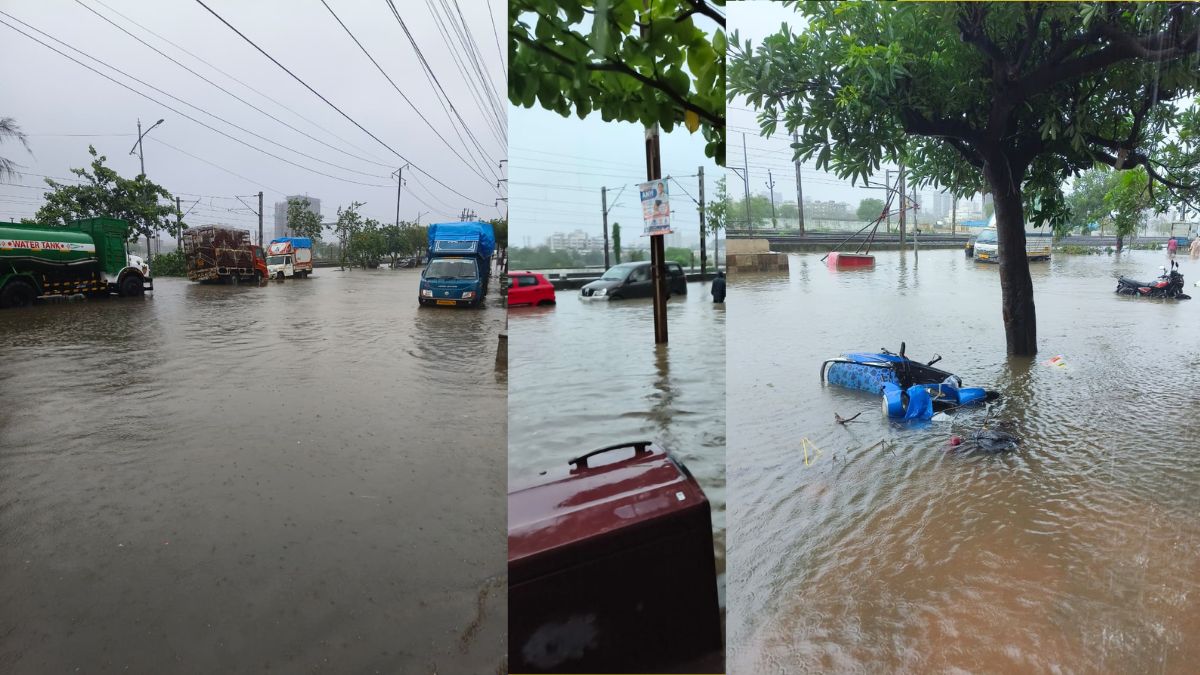
Mumbai Climate Change Rainfall: Mumbai’s recent deluge reflects a changing monsoon shaped by climate change as much as El Niño. Experts say warming oceans and a hotter atmosphere are driving fewer rainy days but far more intense downpours, exposing the city’s ageing drainage systems and growing vulnerability to urban flooding.
For most of June, the story of India’s monsoon was one of delay and deficit. A strengthening El Niño in the Pacific was pushing the Southwest Monsoon back, and by the end of the month the country was staring at a 40 percent rainfall shortfall. Then, within days, the sky flipped. As the monsoon shifted into an active phase, Mumbai and the rest of India’s west coast were hit by rain so intense that the national deficit collapsed from 40 percent to 20 percent in less than a week, as of July 6.
The whiplash has revived a debate among climate scientists that goes beyond this one season: it is no longer only about how much rain a city gets, but how that rain arrives.
A new briefing from Climate Trends lays out the case that a warmer atmosphere and rapidly heating oceans are loading the air with more moisture than before, which means fewer rainy days overall but far more violent bursts when the rain does come. El Niño, in this reading, still controls the timing and broad strength of the monsoon — but climate change is increasingly writing its character, turning downpours shorter, sharper, and more likely to overwhelm drains built for a gentler era.
Mumbai Climate Change Rainfall Intensifies Monsoon Extremes
Mumbai’s own numbers make the point. In the first seven days of July alone, the city saw four separate spells of triple-digit rainfall. The Colaba observatory logged 791 mm between July 1 and 7 — more than its entire climatological average for the whole month of 768.5 mm. Santa Cruz recorded 879 mm in the same window, brushing up against its monthly normal of 919.9 mm.
Mahesh Palawat, Vice President of Meteorology and Climate Change at Skymet Weather, pointed to a pile-up of weather systems as the immediate trigger. “Monsoon is presently in an active phase, with several weather systems prevailing across the country,” he said, noting a depression over Odisha and a cyclonic circulation over Maharashtra keeping both arms of the monsoon active, while continuous moisture from the Arabian Sea kept regenerating cloud cover over the state.
Dr Raghu Murtugudde, Emeritus Professor at the University of Maryland and a retired professor at IIT-Bombay, went further, arguing that the two forces driving this monsoon can no longer be pulled apart. “El Niño just cannot be separated from global warming anymore,” he said, describing how both the Arabian Sea and the Bay of Bengal were firing at once, feeding moisture into the core monsoon zone that eventually rides the Western Ghats and dumps over Mumbai.
Rewriting the Monsoon’s Rulebook
Palawat said the shift is structural, not a one-off. Weather systems that form in the Bay of Bengal, he explained, have started tracking west instead of northwest, while the Arabian Sea’s record warming has added extra moisture to the mix, keeping clouds regenerating for days on end wherever a weather system parks itself.
Dr K J Ramesh, former Director General of the India Meteorological Department, framed it as a break from the monsoon India used to know. “We know that the character of the monsoon has changed forever due to global warming,” he said. “Rains will be in the form of short duration and high intensity, whether there is an El Niño or no El Niño.” He pointed to Rajasthan, Gujarat and West Madhya Pradesh, where Western Disturbances alone can no longer explain the volume of rain now falling — an added moisture feed from the Arabian Sea, he said, has changed the pattern across the region.
Research cited in the briefing backs this up on a larger scale: the Middle East has been warming almost twice as fast as the rest of the inhabited world, and that heating has been linked to nearly half — 46 percent — of the intensified rainfall over Northwest India and Pakistan between 1979 and 2022, by pushing moisture northward out of the Arabian Sea.
The Long-term Drift
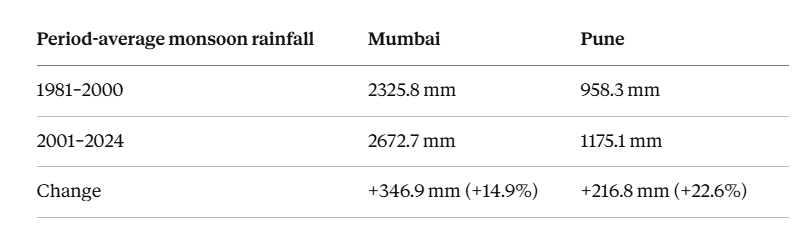
Zoom out from any single storm and the trend holds. Comparing 1981–2000 with 2001–2024, average monsoon rainfall has climbed by nearly 15 percent in Mumbai and 23 percent in Pune, according to data from the Council on Energy, Environment and Water (CEEW).
Looking ahead, a separate report — Indian Coastal Region: Climate Projections 2021–2040 — suggests suburban Mumbai and parts of coastal Maharashtra and Gujarat should expect almost an additional week of heavy rain during the Southwest Monsoon in the coming years, alongside a projected 18 percent rise in the region’s already-massive 1,749 mm monsoon baseline. The same projections point to rising temperatures across the board, including a 1.3°C increase in both summer wet-bulb and winter minimum temperatures.
When Rain meets a City That isn’t Ready
Climate change, though, is only half the story of why Mumbai floods. The briefing frames urban flooding as a climate-plus-exposure problem — extreme rainfall colliding with a city whose drains, floodplains and green cover haven’t kept pace.
Ramesh was blunt about what that means on the ground. “It is no longer a matter of warnings anymore as substantial warnings have been issued well in time. It is now a preparedness and response issue,” he said, calling for full desilting of drains ahead of every monsoon and blaming unchecked concretisation for leaving trees with no room for their roots to breathe.
Dr Vishwas Chitale, a Fellow at CEEW, described the immediate toll of the past week’s rain — an orange alert in Mumbai and a red alert in Pune, both signalling rainfall heavy enough to disrupt daily life. He pointed to early warning systems and structured flood-resilience plans, like the one CEEW helped develop with the Thane Municipal Corporation, as the kind of groundwork cities now need. “We need to come out with some practical solutions on the ground to be able to manage urban flooding better,” he said.
Aarti Khosla, Director of Climate Trends, put the challenge in starker terms: extreme rainfall is no longer a possibility to plan around but a near-certainty to plan for. “The question is no longer whether extreme rainfall events will occur, but whether our cities are prepared to withstand them,” she said, calling for climate-resilient drainage, nature-based flood defences and urban planning that treats risk as a starting assumption rather than an afterthought.
The briefing’s broader point is a simple one: urban flooding happens when saturated drainage meets any of several triggers — torrential rain, storm surge, sea-level rise, groundwater seepage, or simply a city with too little permeable ground left to absorb water. Global warming is intensifying the rainfall trigger, and dense, paved-over cities are amplifying what happens next.
As one line from the briefing puts it, cities designed for yesterday’s climate are struggling to cope with today’s extremes — and, if the projections hold, tomorrow’s will demand even more.










Climate
Domestic Wastewater Overtakes Garbage as Kerala’s Biggest Waste-Sector Emitter, Report Finds
Kerala’s waste sector emissions are dominated by domestic wastewater, which accounts for 96% of emissions, according to the latest greenhouse gas inventory report.

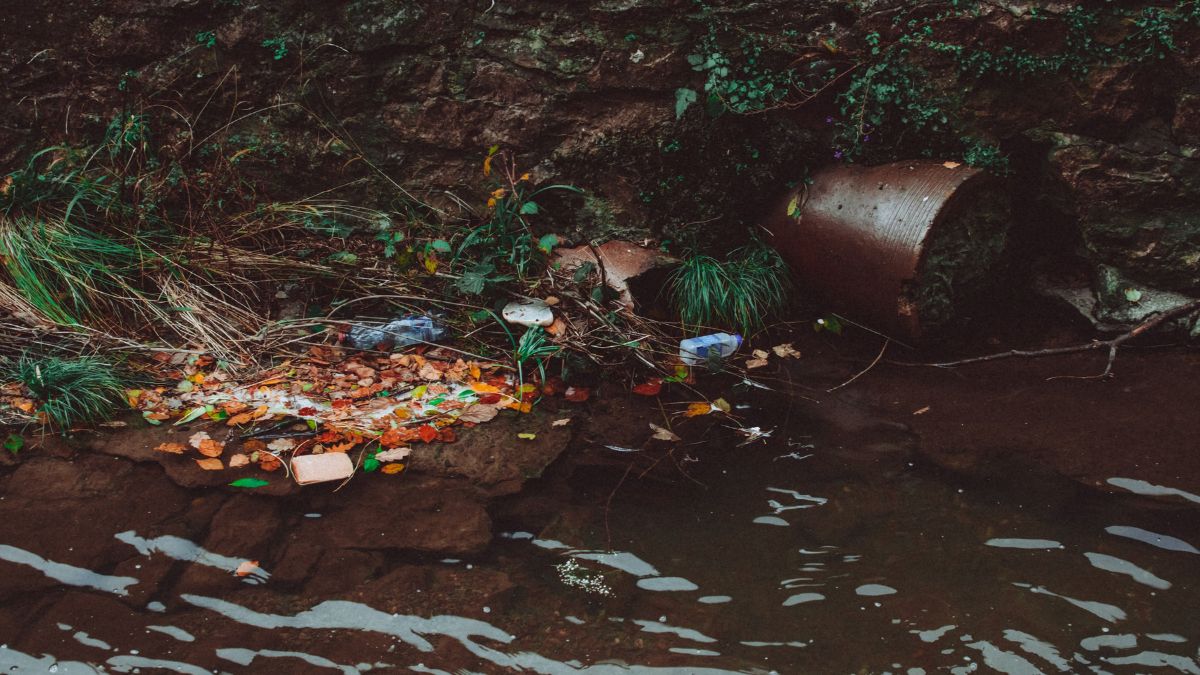
The biggest waste-related climate threat in Kerala isn’t the garbage piling up in bins or the plastic littering its streets. It’s the wastewater flowing out of millions of homes every day. The state’s latest Greenhouse Gas Inventory Report shows that domestic wastewater accounts for more than 96% of greenhouse gas emissions from Kerala’s waste sector, making it the state’s largest waste-related emitter.
According to the report, 96.14% of waste-sector greenhouse gas emissions in 2023 came from domestic wastewater. This includes wastewater generated from everyday household activities such as toilets, bathrooms, kitchens, laundry and cleaning. When the organic matter present in this wastewater breaks down in oxygen-poor conditions, it releases methane, a greenhouse gas far more effective at trapping heat in the atmosphere than carbon dioxide.
While domestic wastewater dominates the sector’s emissions, other sources contribute much less. Municipal solid waste disposal accounted for just 1.7%, while industrial wastewater contributed 2.16%. Together, Kerala’s waste sector emitted 1.92 million tonnes of carbon dioxide equivalent (MtCO₂e) in 2023.
The findings reveal a sharp contrast between Kerala’s visible waste challenges and the hidden sources driving climate emissions. While garbage remains the most noticeable part of the waste problem, wastewater has emerged as the state’s biggest climate concern within the sector.
Wastewater: The Emissions We Don’t See
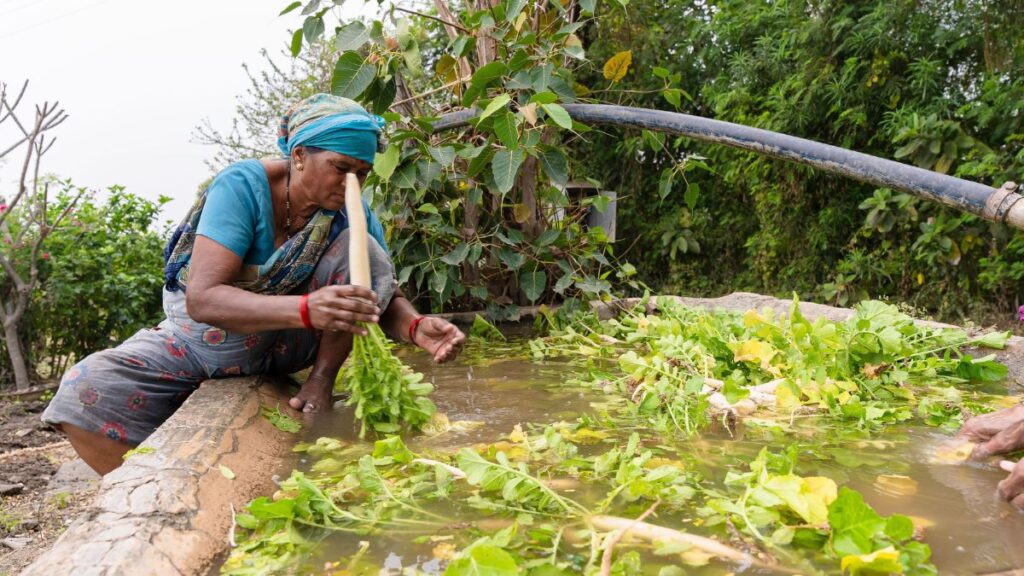
Unlike overflowing garbage bins or plastic waste on roadsides, wastewater remains largely invisible once it leaves households. However, the systems used to manage this wastewater play a major role in determining how much methane is released.
According to the inventory, Kerala’s sanitation systems are still dominated by decentralised methods. Pit latrines account for 74.06% of sanitation systems, septic tanks account for 24.62%, while piped sewer systems make up only 0.26%.
Individually, a single septic tank or pit latrine may appear insignificant. But across millions of households, these systems collectively become the largest source of waste-sector greenhouse gas emissions.
The report highlights that improving sanitation infrastructure is not only a public health priority but also an important climate action measure. Better wastewater treatment can reduce methane emissions while improving water quality and sanitation outcomes.
Why Waste Reforms Haven’t Reduced Emissions
Over the past decade, Kerala has invested significantly in improving solid waste management. Programmes focused on source segregation, composting, waste collection and initiatives such as Haritha Karma Sena have helped reduce open dumping and improve municipal waste handling.
However, these improvements have not translated into a major decline in waste-sector greenhouse gas emissions. The report estimates that emissions from the sector were 1.94 MtCO₂e in 2005 and 1.92 MtCO₂e in 2023, showing only a marginal reduction over nearly two decades.
The reason is that Kerala’s waste management progress has mainly focused on solid waste, while wastewater systems continue to generate methane emissions on a daily basis. The findings suggest that reducing garbage alone will not be enough to achieve significant emission reductions.
Why Solid Waste Still Matters
Although municipal solid waste contributes a relatively small share of current emissions, it remains an important part of Kerala’s waste challenge. The report notes that, based on Kerala State Pollution Control Board data, the inventory assumes that no municipal solid waste has been disposed of in dumpsites since 2017.
However, old dumpsites continue to release methane because organic waste buried decades ago can keep decomposing for years. This means some of today’s emissions are linked to past disposal practices, while domestic wastewater continues to create new emissions every day.
Together, these factors explain why Kerala’s overall waste-sector emissions have remained largely unchanged despite improvements in solid waste management.
A New Focus for Kerala’s Climate Action
The inventory points to a shift in how Kerala approaches waste and climate action. Efforts to collect, segregate and process solid waste remain essential for reducing pollution and protecting public health. But the state’s emissions data show that wastewater management must become a larger part of the climate conversation.
Expanding sewage treatment networks, improving septage management and strengthening sanitation infrastructure could play a crucial role in reducing emissions from the sector.
Kerala’s waste story has long been shaped by measures to reduce plastic waste, garbage collection and dumping. But, addressing wastewater will be key to achieving meaningful reductions in the state’s waste-sector greenhouse gas emissions.
Climate
Mumbai Braces for More Heavy Rain as IMD Extends Alert Till July 7
Mumbai rain alert: IMD warns of extremely heavy rainfall, flooding, transport disruptions and rough sea conditions across the city until July 7.
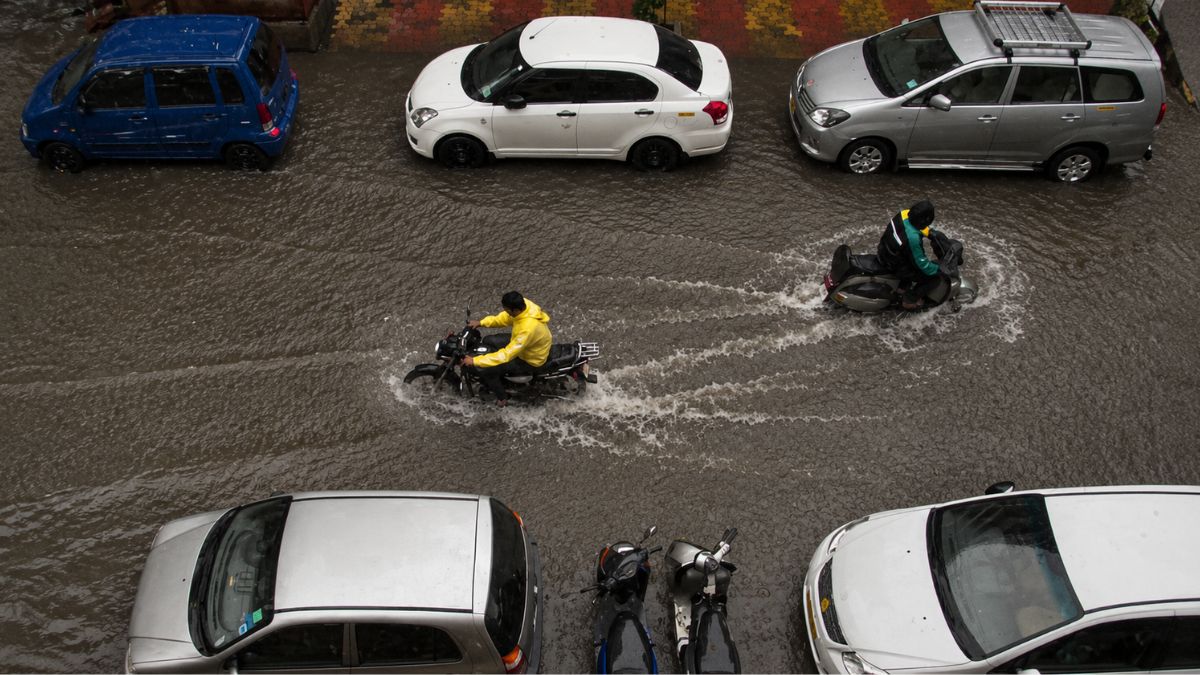
Mumbai rain alert remains in place as the India Meteorological Department (IMD) forecasts continued heavy rainfall across the city and the Konkan region until July 7, warning that intense showers could trigger urban flooding, transport disruptions, landslides and rough sea conditions over the coming days.
The IMD’s Regional Meteorological Centre (RMC), Mumbai, said widespread rainfall with heavy to very heavy rainfall at several places and extremely heavy rainfall at isolated locations is likely over Konkan and the adjoining ghat areas of Madhya Maharashtra between July 3 and July 7. The weather department attributed the active monsoon spell to the combined influence of an offshore trough extending from the Maharashtra to Karnataka coast, a low-pressure area over the northwest Bay of Bengal that is expected to intensify, and a shear zone across central India.
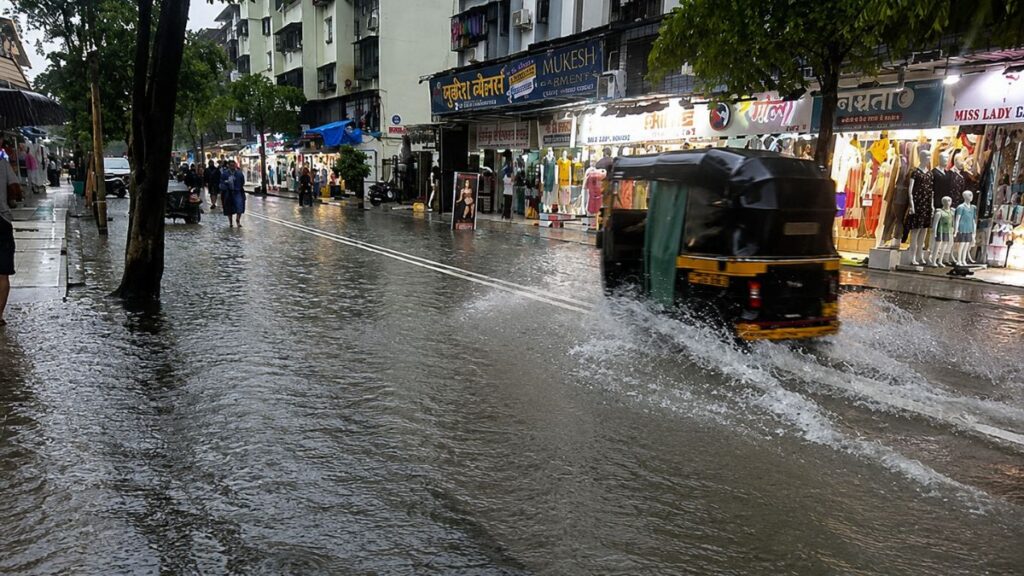
The warning comes after several days of relentless rain across Mumbai, which has inundated roads, slowed suburban train services, disrupted flights and left authorities scrambling to minimise the impact of the monsoon on one of India’s busiest metropolitan regions.
IMD issued a Red Alert for Mumbai, Mumbai Suburban, Thane, Palghar and Raigad, indicating the likelihood of extremely heavy rainfall at isolated places. The alert also warned of strong winds, rough sea conditions and the possibility of flooding in low-lying areas, especially during periods of high tide. According to the weather department, the prevailing weather systems are expected to keep moisture supply active over western Maharashtra, sustaining intense rainfall over the region.
The heavy rainfall has already taken a toll on transport infrastructure. Waterlogging was reported from several parts of Mumbai, slowing road traffic and disrupting the city’s suburban railway network, the lifeline for millions of commuters. Flight operations at Mumbai’s Chhatrapati Shivaji Maharaj International Airport were also affected by poor visibility and adverse weather. On July 5, runway operations were briefly suspended before services resumed as conditions improved. Landslides and falling debris also affected rail connectivity on sections of the Mumbai–Pune corridor, highlighting the broader impact of the ongoing monsoon spell.
Mumbai Rain Alert: Flooding and Transport Disruptions Continue
Rainfall totals have underscored the intensity of this year’s monsoon. According to media reports citing weather data, some parts of Mumbai received over 300 mm of rainfall within 24 hours, while the city crossed 1,000 mm of cumulative rainfall during the first 12 days of the southwest monsoon, far above what is normally recorded during the period. Such intense rainfall has repeatedly overwhelmed the city’s drainage network, leading to waterlogging in several neighborhoods and traffic congestion across major roads.
As a precautionary measure, the Brihanmumbai Municipal Corporation (BMC) declared a holiday today, for schools, colleges and government offices. The University of Mumbai also postponed examinations scheduled for the day. Civic authorities urged residents to avoid unnecessary travel and remain indoors unless essential, while disaster response teams were deployed in vulnerable locations across the city.
The IMD has warned that the current weather conditions could result in flash floods, localized inundation in urban and low-lying areas, riverine flooding in some catchments, landslides in vulnerable hilly regions and damage to weak structures. It also cautioned that essential civic services, including water and electricity supply, may face temporary disruptions, while road, rail, air and ferry transport could continue to be affected if heavy rainfall persists.
The weather department has advised residents to avoid waterlogged roads, stay away from landslide-prone slopes and refrain from taking shelter under trees during thunderstorms because of the risk of lightning. Authorities managing dams, barrages and hydroelectric projects have also been asked to take precautionary measures in anticipation of heavy inflows.
Along the coast, the IMD has issued a warning for fishermen, advising them not to venture into the sea off the North Maharashtra and South Maharashtra–Goa coasts until July 7. Strong winds of up to 65 kmph are expected at sea. The IMD has advised ports along the Maharashtra coast to raise a caution signal. With multiple weather systems continuing to influence conditions over western India, authorities have urged residents to closely monitor official weather bulletins as the active monsoon spell is expected to continue through the week.
Climate
World Bank Drops 45% Climate Finance Target Under US Pressure
World Bank climate finance target has been dropped following US pressure, raising concerns over climate adaptation funding and support for vulnerable countries.

World Bank climate finance target has been abandoned following pressure from the United States, prompting warnings that vulnerable countries could face reduced funding for climate adaptation and resilience.
The World Bank has abandoned its flagship pledge to direct 45% of annual lending toward climate-related activities, a retreat from a commitment it made at COP28 and one that campaigners say will hit the world’s most vulnerable countries hardest.
The decision followed sustained pressure from the United States, the Bank’s largest shareholder, and came despite last-minute appeals from France — the institution’s fifth-largest shareholder — to keep the target in place. The Bank says it will continue reporting on the climate finance it provides, but it is no longer bound to hit the 45% threshold.
Why the World Bank Climate Finance Target Was Dropped
The World Bank has long been the single largest source of climate finance for developing countries. Multilateral development banks collectively delivered a record $137 billion in climate finance in 2024, with the World Bank contributing the biggest share. That funding underpins the Baku-to-Belém roadmap, which assigns development banks a central role in reaching the $1.3 trillion climate finance goal agreed at COP29.
Dropping the target now, critics argue, sends the wrong signal at the wrong moment. Eleonora Cogo, Climate Finance Lead at the ECCO think tank, put it bluntly:
“The World Bank says it is following its clients’ lead, but the data says otherwise: developing countries want solar, wind and hydropower. Scrapping climate targets at the very moment they are being surpassed, under pressure that runs directly counter to what recipient countries are asking for, is not neutrality. It is a choice that leaves the most vulnerable even more exposed to climate impacts and to the fossil fuel market instability that every new global energy crisis brings back into the spotlight.”
One Plan Survives, Another Falls
Amid the fallout, the Bank did extend its Climate Change Action Plan (CCAP) — the framework aligning its operations with the Paris Agreement — just before its June 30 expiry. The plan had itself been under threat from Washington, and its survival came only after what one observer called a bruising fight among shareholders.
Jon Sward of the Bretton Woods Project described the outcome as a mixed result: “After a long and difficult negotiation among World Bank shareholders, the Bank’s Climate Change Action Plan has survived, but despite the efforts of other board members, US pressure has weakened the Bank’s climate work with the retirement of the 45% climate finance target.”
He added that the Bank still owes clarity on how a forthcoming independent review will shape the CCAP’s future — and how civil society groups, largely excluded from the negotiations, will be brought back in.
Joe Thwaites of the Natural Resources Defense Council struck a more defiant note, stressing that the Bank’s underlying obligations haven’t disappeared: “Let’s be clear: the World Bank still has a mandate to continue providing climate finance. The Climate Change Action Plan has been extended. Losing the overarching 45% climate finance target is bad, but individual World Bank Group entities still have their own climate targets, which can be a backstop against the bottom falling out.”
He called on shareholders to hold Bank leadership accountable and suggested donors redirect support to other institutions if World Bank climate finance begins to slide.
The Real Damage: Adaptation, Not Mitigation
Several analysts warned that the target’s disappearance won’t necessarily starve clean-energy projects — those are increasingly commercially viable on their own. The bigger casualty, they say, will be adaptation and resilience finance, which has always depended more heavily on concessional, subsidized capital.
Labanya Prakash Jena, Director of the Climate and Sustainability Initiative in India, explained:”There will be a limited impact on capital flows to bankable renewables/mitigation projects, since these are commercially attractive. The real risk is to climate adaptation and resilience financing — urban heat resilience, flood defences, climate-vulnerable agriculture — which relied on subsidised capital and development assistance, precisely because it’s harder to make commercially attractive.”
Jena noted that India, as the World Bank Group’s largest borrower, has diversified funding sources that will cushion the blow to mitigation projects — but adaptation finance will still take a disproportionate hit.
Suranjali Tandon, Associate Professor at NIPFP, connected the decision to a broader geopolitical shift: “Dropping the climate finance target reflects the shifting priorities globally. Not surprisingly, among the representatives that declined to endorse the continued work on climate change are large fossil fuel producers. Abandoning the target means the flow of finance, which so far used a broader co-benefits approach, may decline especially where the outcomes in climate change projects become less immediately discernible.”
A Push for Alternatives
For some, the episode is less a crisis than a call to action. Dhruba Purkayastha, Senior Advisor for Climate and Environment at Dalberg, framed the World Bank’s messaging with skepticism — while pointing toward a possible workaround: “While the removal of climate finance target is being positioned as shifting from ‘inputs to outcomes,’ it surely further erodes the concept of climate action as global public good, and weakens global sustainable development multilateralism. Therefore, there is need to step up on regional green development banks, funds, financial institutions such as maybe an Asia Green Finance Institution or a suprasovereign Asian Green Fund.”
What Happens Next
The World Bank’s decision arrives just months after the G11 group of developing nations formally urged the institution to extend its climate plan — a request partially honored, even as the numerical target that once anchored the Bank’s climate ambitions disappears. With the CCAP’s extension length still unannounced and an independent review pending, the coming months will determine whether individual entity-level targets and voluntary reporting can hold the line — or whether, as campaigners fear, climate finance quietly starts to shrink just as the world needs it most.


Indian Scientists Find a New Way to Tune How Metals Interact with Light

India’s School Dropouts Decline, but Higher Secondary Retention Lags

Super El Niño Can’t Explain Mumbai’s Deluge, But Climate Change Can

Domestic Wastewater Overtakes Garbage as Kerala’s Biggest Waste-Sector Emitter, Report Finds

West Asia Crisis: Can Kerala’s Returning Gulf Migrants Find a Future in the Green Economy?

From Bell Labs to the Classroom: A Second Career in Teaching

10 Technologies That Could Change How We Power Homes, Fight Cancer and Feed the World

From One Roman Classroom to 60,000 Schools: How Maria Montessori Quietly Changed the World

Beyond the IITs: India’s University Rankings Story Is Getting Bigger

Why Humid Heat Is Becoming India’s Most Dangerous Climate Threat

-

 Space & Physics1 month ago
India Semiconductor Mission: ‘It’s Not About Fabs. It’s About Building An Entire Ecosystem’
-
Climate1 month ago
The Climate World Cup? How Climate Change Could Affect Player Performance at the 2026 World Cup
-
Society3 weeks ago
From Bell Labs to the Classroom: A Second Career in Teaching
-
Space & Physics1 month ago
Engineers Develop Dual-Mode Propulsion System for Next-Generation Small Satellites
-
Space & Physics2 months ago
Inside India’s Semiconductor Push: ‘This Is a 100-Year Bet’
-
Interviews5 months ago
Geometry, Curiosity and Finding ‘Her’ Place
-
Technology2 weeks ago
10 Technologies That Could Change How We Power Homes, Fight Cancer and Feed the World
-
Society4 weeks ago
From One Roman Classroom to 60,000 Schools: How Maria Montessori Quietly Changed the World