Science
How the brain decides what you want to eat; The monkeys will answer
The study sheds light on how decision-making in animals is controlled when foraging, searching, and acquiring food or resources.











Space & Physics
BepiColombo Enters Mercury’s Orbit Despite Thruster Glitch, Next Mission Milestone Set for December
ESA and JAXA’s BepiColombo mission has successfully entered Mercury’s orbit after an eight-year journey, despite a software glitch that cut short its first major orbital manoeuvre. The spacecraft is now preparing for the separation of its two science orbiters in December 2026.
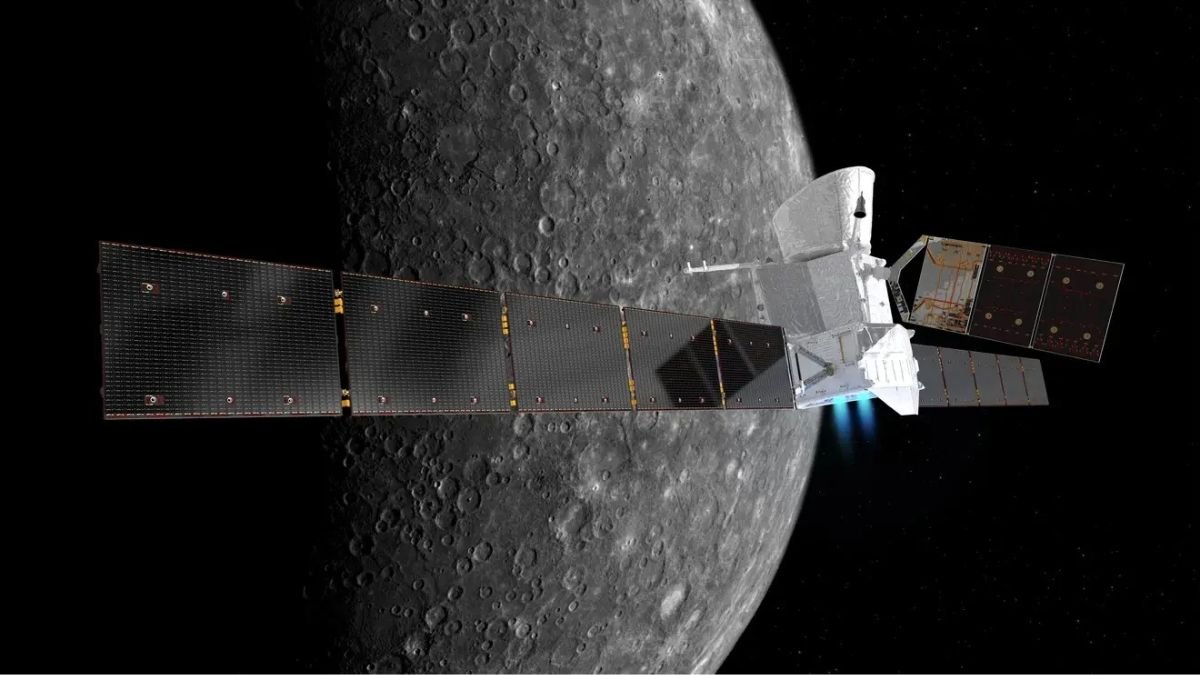
Europe and Japan’s joint mission to Mercury has achieved a major milestone after a long eight-year journey, although a software glitch cut short the spacecraft’s first major orbital manoeuvre. The spacecraft, BepiColombo, successfully entered a stable orbit around the planet on November 21, bringing its two science orbiters closer to their planned deployment in December. The mission is named after the Italian mathematician and engineer Giuseppe (Bepi) Colombo (1920–84). He is known for explaining Mercury’s peculiar characteristic of rotating about its own axis three times in every two orbits of the Sun. He also proposed to NASA the interplanetary trajectories that would allow Mariner 10 multiple Mercury flybys, by using gravity assists at Venus for the first time.
The Mercury Orbit Insertion (MOI) manoeuvre began at 18:24 UTC, when the Mercury Planetary Orbiter (MPO) fired its four axial thrusters to slow down and establish its orbit around the planet. The burn was scheduled to last 37 minutes, but an unexpected interruption brought it to an early end. When communication with the spacecraft was restored after a scheduled period of silence, mission controllers at the European Space Agency’s (ESA) European Space Operations Centre (ESOC) in Darmstadt, Germany, found that BepiColombo had entered safe mode.
This is a protective state in which a spacecraft suspends non-essential activities when it detects an unexpected condition. Initial analysis revealed that the thruster burn had achieved approximately 77% of its planned velocity change before being interrupted. Despite the setback, the spacecraft had secured its orbit around Mercury.
Software Glitch Interrupts Critical Manoeuvre
The mission control team immediately began examining spacecraft telemetry and trajectory data to establish whether the interrupted burn had affected orbital capture. The confirmation came around 01:00 local time, when the Flight Dynamics team established that BepiColombo had successfully entered Mercury’s orbit.
Investigations by ESA and the spacecraft’s lead manufacturer, Airbus, traced the problem to a software glitch involving attitude guidance and thruster control. Teams from ESA and the Japan Aerospace Exploration Agency (JAXA) are continuing to examine the anomaly.
According to ESA, BepiColombo remains safe and is following a stable trajectory around Mercury. The interruption has resulted in a longer orbital period of approximately 75 hours, compared with the originally planned 58 hours. The revised trajectory does not require additional manoeuvres and will not affect the planned separation of the two science orbiters in December.
Why Entering Mercury’s Orbit is So Challenging
Reaching Mercury presents a considerable challenge for spacecraft engineers. Although the planet is relatively close to Earth, its proximity to the Sun means that a spacecraft travelling towards it must shed a substantial amount of speed before it can settle into orbit.
BepiColombo’s journey began in October 2018. Its trajectory involved solar electric propulsion and nine planetary flybys, including encounters with Earth, Venus and Mercury. These manoeuvres gradually adjusted its speed and direction, allowing it to approach the planet at a much lower velocity. The mission also achieved a first in planetary exploration by using a technique called weak stability capture to enter orbit around another planet. Previously, this approach had been used in missions involving Earth’s Moon.
Under this technique, a spacecraft approaches a celestial body at a sufficiently low speed to become temporarily captured by its gravity. However, the resulting orbit is not necessarily stable enough to retain the spacecraft indefinitely. BepiColombo therefore needed the November 21 manoeuvre to turn this temporary capture into a lasting orbit. The chemical thrusters on its MPO spacecraft were used to reduce its velocity further and adjust its trajectory around Mercury.
Multiple Burns Help Conserve Fuel
The November 21 manoeuvre is only the beginning of a longer sequence of thruster burns. BepiColombo will undergo several such operations over the coming months as it gradually moves towards its designated science orbit. The decision to use multiple shorter burns instead of a single prolonged firing is linked to fuel efficiency. According to ESA’s BepiColombo Flight Dynamics Manager Frank Budnik, longer burns would result in greater gravity losses, reducing the effectiveness of the available propellant.
The spacecraft also has an important advantage when it performs these manoeuvres close to Mercury. Its velocity can be adjusted more efficiently when it is nearest to the planet, where its gravitational influence is strongest. Shorter burns allow the spacecraft to repeatedly take advantage of this favourable position. They also give the Flight Dynamics team an opportunity to assess the actual orbit after each manoeuvre and modify subsequent operations accordingly.
The original insertion sequence was designed to accommodate unexpected changes. Following the early termination of the November 21 burn, engineers recalculated the spacecraft’s trajectory and adjusted the remaining manoeuvres.
Two Science Orbiters to Separate in December
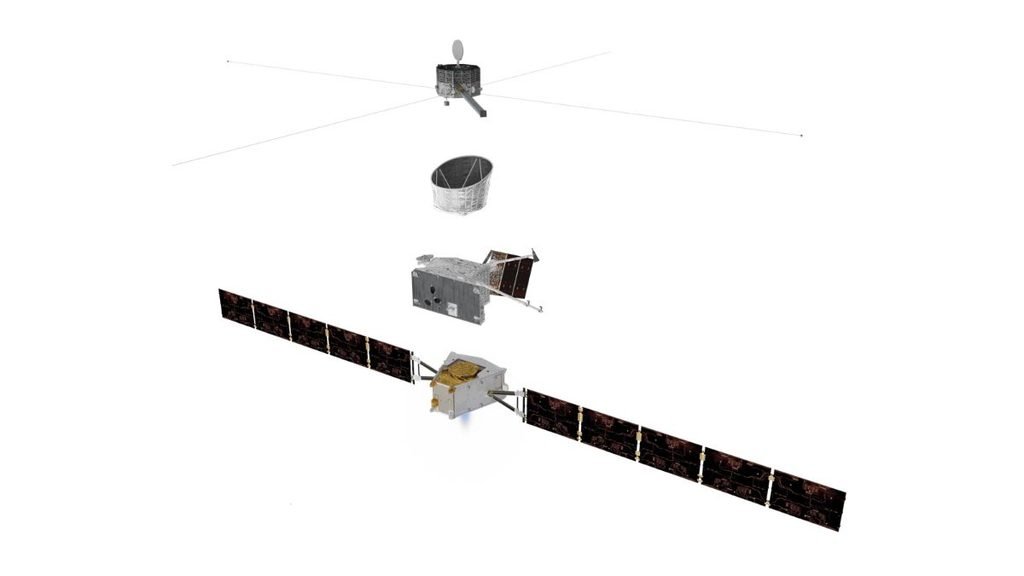
The next major milestone is the separation of BepiColombo’s two science spacecraft: ESA’s Mercury Planetary Orbiter (MPO) and JAXA’s Mercury Magnetospheric Orbiter, also known as Mio. The separation is scheduled for December 9 in Germany, corresponding to December 10 in Japan. Mio’s protective sunshield, called the Magnetospheric Orbiter Sunshield and Interface Structure (MOSIF), will remain attached to the MPO until December 16, when it is scheduled to be ejected.
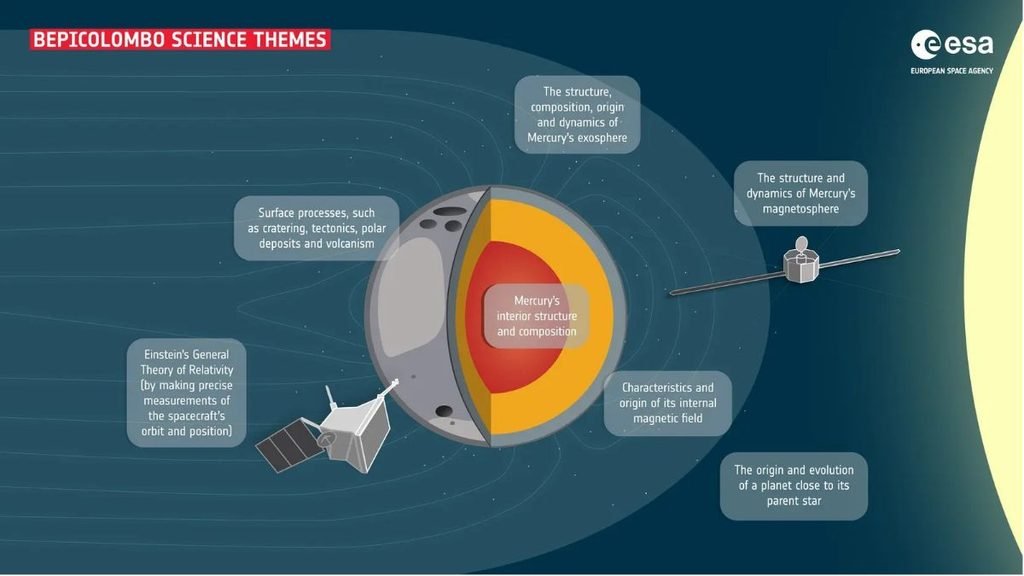
Following separation, further thruster manoeuvres will guide the MPO towards its final science orbit, which it is expected to reach by March 2027. Science operations are scheduled to begin in April 2027. The two orbiters have different scientific objectives. The MPO will investigate Mercury’s surface, internal structure and composition, while Mio will study the planet’s magnetic field and the surrounding space environment.
Their observations are expected to help scientists understand how Mercury formed, how its interior evolved and how its magnetic field interacts with the solar wind. The mission brings together nearly 600 scientists who will study different aspects of the planet. Geraint Jones, ESA’s BepiColombo Lead Project Scientist, said the successful orbital capture brings the team closer to beginning investigations of Mercury’s interior, surface and surrounding space environment.
After years of preparation and an eight-year journey, BepiColombo has reached a crucial stage. The December separation will bring its two orbiters closer to beginning their individual investigations of the Solar System’s innermost planet.
Science
Pune to Host India International Science Festival 2026, With Focus on Students, Startups and Public Engagement
From 3D cell models and space technology exhibitions to student–scientist interactions, the India International Science Festival 2026 will bring science closer to the public in Pune.
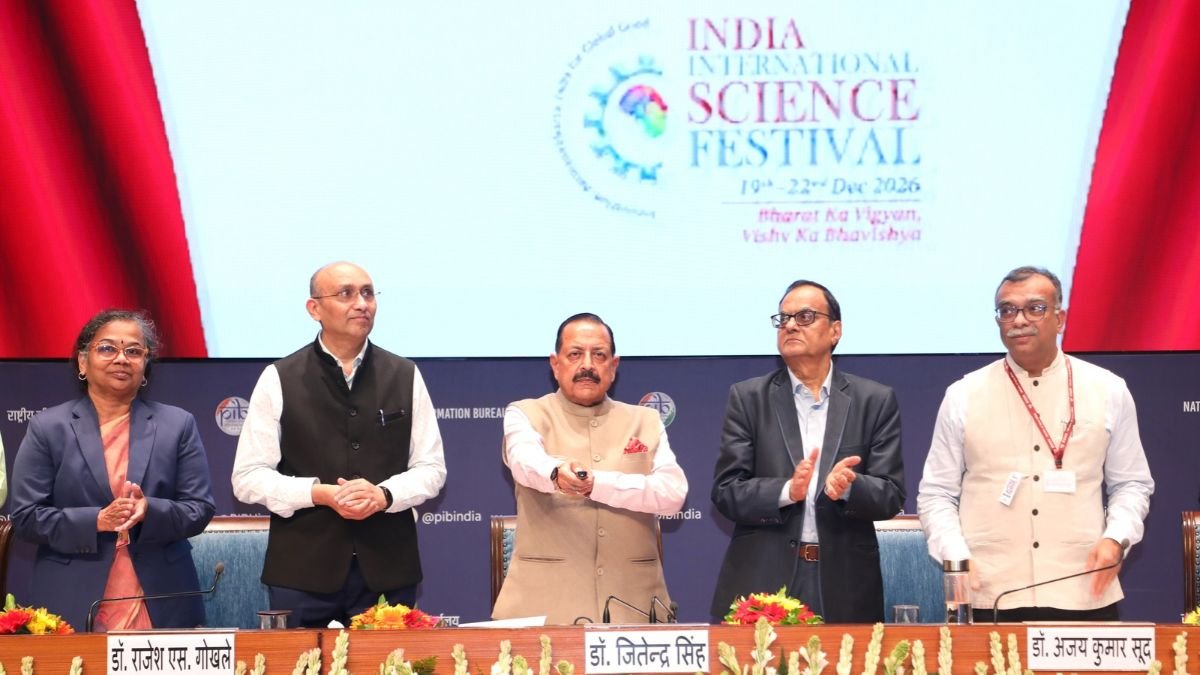
Science often reaches the public through discoveries, research papers and laboratory breakthroughs. But what happens when people get to experience it themselves? The 12th edition of the India International Science Festival (IISF) aims to bring science closer to the public, particularly students, teachers, women and aspiring entrepreneurs. Scheduled to take place in Pune from December 19 to 22, the festival will bring together researchers, academic institutions, industry representatives and young innovators under the theme India’s Science, World’s Future.
Union Minister of State for Science and Technology Dr Jitendra Singh launched the curtain-raiser for the festival in New Delhi on November 18, unveiling its official website and brochure. He called for taking science beyond laboratories and making it accessible to young people and emerging startups.
The festival will be organised across five research and academic campuses in Pune: the BRIC–National Centre for Cell Science (NCCS), CSIR–National Chemical Laboratory (NCL), Indian Institute of Science Education and Research (IISER) Pune, Indian Institute of Tropical Meteorology (IITM) and COEP Technological University.
According to the Department of Biotechnology, the event will feature 26 programmes across 17 working laboratory venues, with participation from seven Union ministries and departments and 16 national institutions.
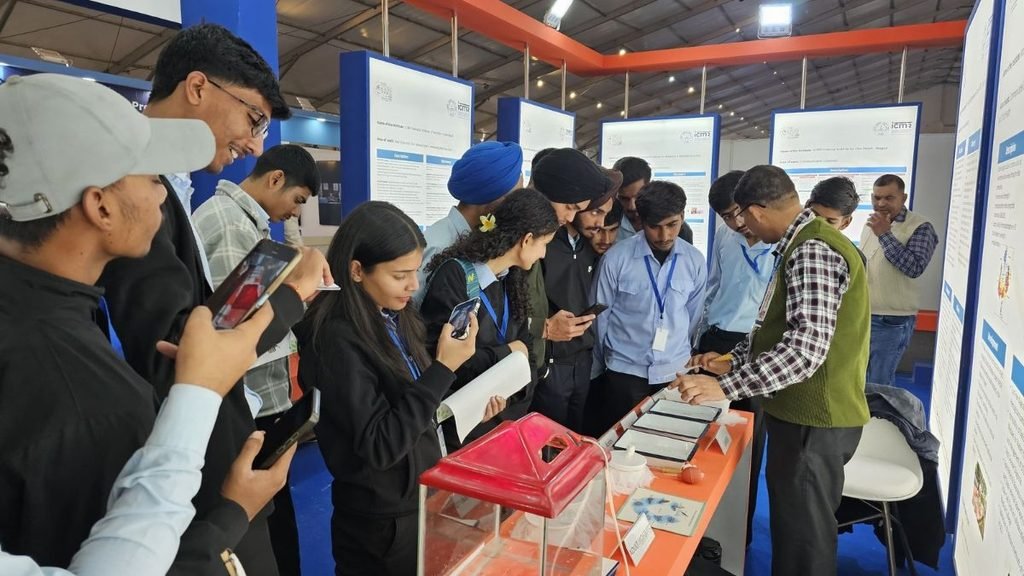
From Gene Editing to Space Technology: India International Science Festival
For visitors, the festival promises an opportunity to encounter scientific concepts that often remain confined to classrooms and research publications. The programme will introduce participants to subjects such as gene editing, antibody development, insulin production and next-generation energy sources. One of its attractions will be an immersive, large-scale, three-dimensional walk-through model of a cell, designed to help visitors understand the structure and functioning of one of the fundamental units of life.
A public Science–Technology–Defence–Space Expo will showcase India’s scientific and technological missions, including Chandrayaan-3, Gaganyaan, INS Vikrant and Mission Shakti. Developments in quantum technology, semiconductors and deep-ocean exploration will also feature in the exhibition. The festival will also host a special lecture by Sir Tim Hunt, the 2001 Nobel Prize winner.
Dedicated Programs For Students and Teachers
A significant part of IISF 2026 will focus on introducing young people to scientific research and helping them interact with those working in the field. The New Nalanda Science and Technology Village will bring together 1,800 students and 200 teachers. Another programme will facilitate interactions between 1,200 students and scientists, giving participants an opportunity to learn about research careers and scientific developments directly from researchers.
Teachers will also have a dedicated space through The Gurukula, a workshop designed for educators. An eight-zone Science Safari will offer another avenue for exploring different areas of science. These initiatives are intended to make scientific learning more interactive and help students discover their interests beyond conventional classroom instruction.
Connecting Research With Entrepreneurship
The festival will also explore how scientific discoveries can move from laboratories into products, services and businesses. A Global Summit on Biomanufacturing, aligned with India’s BioE3 Policy, will bring together stakeholders working in the sector. A Clinicians–Academia Conclave will create opportunities for discussions between medical professionals and academic researchers.
For startups and aspiring entrepreneurs, the festival will include business-to-business meetings and hackathons. These platforms are expected to encourage collaboration between researchers, industry representatives and innovators. The organisers also plan to identify promising student innovations for mentoring and incubation, potentially helping young people take their ideas towards practical applications.
Nationwide Build-up Ahead of the Festival
The Pune event will be preceded by curtain-raiser programmes across 13 cities, organised in collaboration with Vijnana Bharati (VIBHA). The outreach is intended to connect students, women, farmers and entrepreneurs with working laboratories and scientific institutions.
Since its inception in 2015, IISF has sought to bring together different sections of society through science. Department of Biotechnology Secretary Dr Rajesh S. Gokhale described the festival as a platform connecting society, government and markets, with societal needs guiding research and innovation translating discoveries into public benefits.
The 2026 edition will also include a Science Diplomacy Conclave, a Global Science and Technology Alliance spanning three continents, and a gathering of 150 non-governmental organisations under the National Social Organisations and Institutions Meet. Other programmes include Nari Shakti, Vigyanika and SHIV-DURG, which will highlight different dimensions of science, society and engineering heritage.
The organisers expect the festival to produce several policy and institutional outcomes, including a National Roadmap for Biomanufacturing, a statement on science diplomacy and declarations emerging from the Vision Sansad and the National Social Organisations and Institutions Meet. With its mix of laboratory visits, exhibitions, student–scientist interactions and entrepreneurship programmes, IISF 2026 seeks to create more opportunities for people to engage with science. Its broader challenge will be to sustain that curiosity beyond the four-day event and strengthen the connections between scientific institutions and the communities they serve.
Space & Physics
As India’s Space Economy Opens Up, Can Private Investment Deliver Public Value?
India’s space-sector reforms have opened opportunities for private companies, but can investment and start-up growth translate into a competitive and sustainable space economy? Lessons from the US, Europe, Japan and China reveal the challenges ahead.
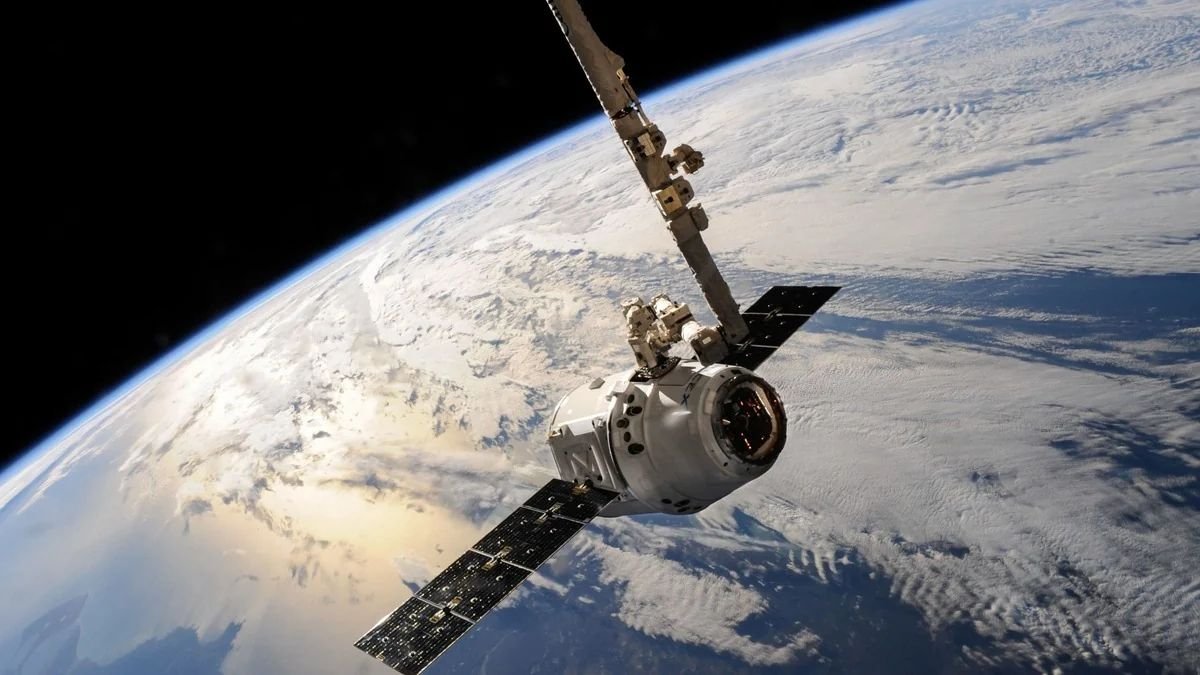
India’s decision to open its space sector to private enterprises marks a significant change in how the country approaches space research, manufacturing and commercialisation. Since the reforms announced in June 2020, private companies have gained opportunities to develop launch vehicles, manufacture satellites and provide space-based services. However, the expansion of commercial participation raises a more fundamental question: whether India can turn this policy opening into a competitive and sustainable space economy while ensuring that public investment continues to serve public interests?
Government data estimates India’s space economy at approximately 9 billion dollars as of August 2026, up from 8.4 billion dollars in 2023. It reports that the number of registered space start-ups increased from 1 in 2014 to approximately 440 in August 2026. Cumulative investment in Indian space start-ups reportedly reached 618.5 million dollars by March 2026.
These figures indicate growing entrepreneurial interest. The establishment of the Indian National Space Promotion and Authorisation Centre (IN-SPACe), the commercialisation mandate of NewSpace India Limited (NSIL), the Indian Space Policy 2023 and the liberalisation of foreign direct investment rules have created new institutional pathways for private participation.
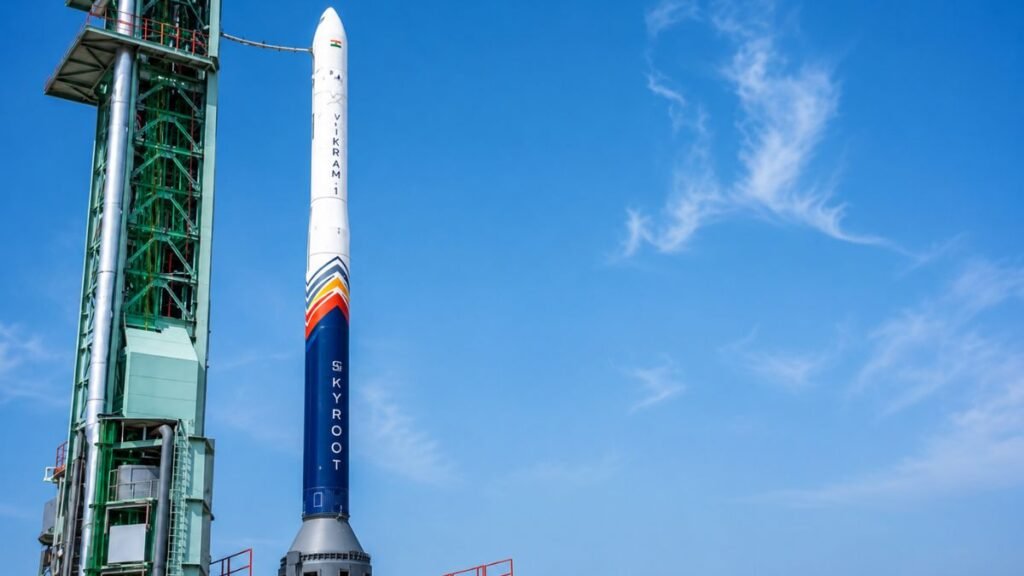
Yet, the number of registered start-ups does not establish how many companies have commercially viable products, recurring customers or sustainable revenue. Similarly, investment raised is not equivalent to industrial capacity. Rocket development, satellite manufacturing and launch infrastructure require substantial capital, long development periods and dependable demand.
A May 2026 assessment by Carnegie India, A Review of India’s 2023 Space Policy and Entrepreneurship Ecosystem, points to the sector’s early-stage challenges. It records a decline in Indian space-technology funding from 130.2 million dollars in 2023 to 59.1 million dollars in 2024, despite an increase in the number of funding deals. This suggests that the availability of capital and investor confidence cannot be assumed to grow continuously.
Learning From the American Model
The United States offers an important example of how government procurement can support private-sector innovation. Through NASA’s Commercial Crew Programme, the government shifted from developing and operating every transportation system itself towards purchasing transportation services from private companies.
In 2014, NASA awarded fixed-price contracts worth 2.6 billion dollars to SpaceX and 4.2 billion dollars to Boeing to develop spacecraft capable of carrying astronauts to the International Space Station. SpaceX’s Crew Dragon received human-rating certification in 2020 and has since completed operational crewed missions. Boeing’s Starliner, however, encountered technical difficulties, delays and additional costs.
A June 2026 assessment by NASA’s Office of Inspector General found that the programme’s contract value had increased from the original 6.8 billion dollars to more than 8 billion dollars, excluding additional resources invested by NASA and the companies. The report also identified shortcomings in NASA’s oversight and delays in Boeing’s certification.
The experience demonstrates both the opportunities and risks of public-private partnerships. Government procurement can provide companies with the dependable demand necessary to develop expensive technologies. However, private participation does not automatically guarantee lower costs, timely delivery or technical reliability.
For India, the lesson is to develop transparent, performance-based procurement systems in which private companies compete to supply launch and satellite services. Government support should be linked to technical milestones, safety standards and actual delivery rather than announcements and projected capabilities.
Japan and Europe: Funding Innovation and Creating Demand
Japan has adopted a longer-term approach to supporting private space enterprises. Its Space Strategy Fund, administered through the Japan Aerospace Exploration Agency (JAXA), aims to mobilise approximately one trillion yen over ten years. The programme supports companies, universities and research institutions working on transportation, satellite technologies and space exploration.
The model recognises that space technology cannot always be developed within conventional venture-capital timelines. Companies need sustained financial support to move from research and prototypes to manufacturing and commercial operations.
India has introduced a 500-crore rupees Technology Adoption Fund and approved a 1,000-crore rupees venture capital fund under IN-SPACe. These are important initiatives, but their effectiveness will depend on funding continuity, transparent selection and the ability to support companies beyond their initial development stages.
Europe offers another useful example. Through the European Space Agency’s European Launcher Challenge, the agency is supporting privately developed launch services. It has earmarked more than 900 million euros for the programme. Selected companies are expected to demonstrate orbital launch capabilities by 2027, with further support linked to operational launches and capacity improvements.
The programme also illustrates that commercialisation involves failures and uncertainty. One of its initially shortlisted participants, Orbital Express Launch, entered administration in February 2026 and withdrew from the challenge.
Rather than guaranteeing commercial success, the European approach attempts to develop competing launch providers through staged technical requirements and public support. India could similarly encourage multiple companies to develop competing technologies while ensuring that public contracts are awarded on demonstrated performance.
China’s approach: Private Companies With Public Infrastructure
China’s commercial space policy offers a different model. Its National Space Administration issued an Action Plan for the High-Quality and Safe Development of Commercial Spaceflight for 2025–2027. The plan proposes opening state-funded research and testing facilities to commercial companies, supporting the commercialisation of publicly funded technologies, expanding government procurement and improving access to tracking, telemetry and testing infrastructure.
It also proposes stronger provisions for space-debris monitoring, satellite data security, insurance and end-of-life disposal. The relevance for India is the recognition that financial assistance alone cannot create an industrial ecosystem. Access to testing facilities, research infrastructure, technical expertise and institutional customers can be equally important.
India’s IN-SPACe already has a mandate to facilitate access to ISRO facilities, subject to safety and operational requirements. The next challenge is ensuring that access is transparent, predictable and available to smaller enterprises as well as established companies.
Where is the Wider Economic Value?
One limitation of the current discussion on India’s space economy is its emphasis on launch vehicles, satellite manufacturing and start-up numbers. The economic value of space technology also lies in its applications on Earth.
Satellite-based services can support agricultural monitoring, weather forecasting, disaster management, fisheries, groundwater assessment, urban planning and environmental monitoring. For instance, satellite imagery can help authorities identify changes in land use, monitor flood-affected areas and assess vegetation conditions.
A May 2026 Carnegie India assessment highlights the need to develop India’s downstream space applications alongside manufacturing and launch capabilities. This is particularly important because the benefits of space technology extend beyond the companies that build satellites. Government departments could become regular customers for commercially developed satellite-data services. Such procurement would create a domestic market for Indian enterprises while improving the availability of information for public decision-making.
Without this demand, India could expand its capacity to manufacture and launch satellites without developing an equally strong ecosystem for processing, analysing and applying the resulting data.
Environmental and Regulatory Cost of Expansion
Commercial expansion also brings responsibilities that cannot be separated from economic growth. Increasing satellite deployments contribute to orbital congestion and raise the risks of collisions and space debris. The OECD’s The Space Economy at a Glance 2026 reports that more than 14,000 active operational satellites were in orbit by the end of 2025. US organisations operated approximately 76% of these satellites. The report also identifies increasing concentration in large commercial satellite constellations, particularly in low Earth orbit.
This raises concerns about access to orbital resources, spectrum coordination and the influence of a small number of operators over essential space infrastructure. India needs effective requirements for collision avoidance, satellite disposal at the end of operational life, debris mitigation and transparent reporting of environmental risks. It must also consider the implications of commercial control over satellite data, communications and other strategically important services.
The institutional framework requires scrutiny as well. IN-SPACe has responsibilities that include promoting private participation and authorising and supervising space activities. As the industry grows, transparent authorisation procedures, independent technical scrutiny and clear accountability become increasingly important.
Building an Economy, Not Just an Industry
The government projects that India’s space economy could reach 44 billion dollars by 2033 and 100 billion dollars by 2040. These figures represent policy ambitions, not guaranteed outcomes. Achieving them will require more than increasing the number of start-ups, satellites and launches. International experience offers a common lesson: commercial space sectors depend on sustained public procurement, long-term financing, access to research infrastructure, reliable regulation and a market for downstream applications. They also require safeguards against market concentration and environmental damage.
India’s reforms have created opportunities for private enterprises to participate in a sector built over decades through public investment and scientific research. The next phase must establish whether those opportunities can translate into viable businesses, technological independence and wider public benefits.

India’s crude oil imports rise 11% as dependence on foreign energy persists

Can India Shift from Landslide Relief to Prevention?

Enacted Career Identity and Why a Career Is a Pattern of Doing, Not a Plan

BepiColombo Enters Mercury’s Orbit Despite Thruster Glitch, Next Mission Milestone Set for December

Stanford’s AI100 Report Warns AI Development Is Outpacing Governance as Technology Enters Mainstream

India’s Richest Agree on One Cause Above All Others: Education

Indian universities lead Asia in research output per faculty, but the country’s top six all slip in QS ranking

Why Delhi’s Geography Makes It Vulnerable to Severe Air Pollution

Europe Braces for Extremes as Commission Unveils Climate Resilience Framework

NASA recruits new astronauts for future Moon Base and Mars missions
-

 Math4 months ago
The 2026 Fields Medals: Four Proofs, Four Decades-Old Problems Solved
-
EP Deep Dive: Data & Solutions4 months ago
After Kerala’s Deadliest Landslide, the Hardest Thing to Rebuild Was Childhood
-
EP Deep Dive: Data & Solutions5 months ago
West Asia Crisis: Can Kerala’s Returning Gulf Migrants Find a Future in the Green Economy?
-
Space & Physics6 months ago
India Semiconductor Mission: ‘It’s Not About Fabs. It’s About Building An Entire Ecosystem’
-
Interviews2 months ago
From Scams to Screens: How the National Stock Exchange Rewrote India’s Equity Story
-
Climate & Environment6 months ago
The Climate World Cup? How Climate Change Could Affect Player Performance at the 2026 World Cup
-
Society5 months ago
What Is Civilisational Diplomacy? Understanding India’s Newest Foreign Policy Tool
-
Education5 days ago
India’s Richest Agree on One Cause Above All Others: Education