

Climate
The World Warms, Extreme Heat Becomes the New Normal
As global temperatures continue to rise, extreme heat is no longer a distant threat. It is a present and growing challenge that will shape health, livelihoods, and living conditions for billions of people unless decisive action is taken.


A new study from the University of Oxford has issued a stark warning about the future of global temperatures, finding that nearly half of the world’s population could be living under conditions of extreme heat by 2050. If global warming reaches 2°C above pre-industrial levels—a scenario climate scientists see as increasingly likely—around 3.79 billion people could experience dangerously high temperatures, reshaping daily life across the planet.
The findings, published in Nature Sustainability, suggest that the impacts of rising temperatures will be felt much sooner than expected. In 2010, approximately 23% of the global population lived with extreme heat; this figure is projected to rise to 41% in the coming decades. The study warns that many severe changes will occur even before the world crosses the 1.5°C limit set by the Paris Agreement.
Central African Republic, Nigeria, South Sudan, Laos, and Brazil are expected to see the largest increases in dangerously hot temperatures
According to the study, countries such as the Central African Republic, Nigeria, South Sudan, Laos, and Brazil are expected to see the largest increases in dangerously hot temperatures. Meanwhile, some of the world’s most populous nations—including India, Nigeria, Indonesia, Bangladesh, Pakistan, and the Philippines—will have the highest numbers of people exposed to extreme heat.
The research also shows that colder countries such as the United Kingdom, Canada, Sweden, Finland, Norway, and Ireland could experience relatively dramatic increases in the number of hot days. Compared with the 2006–2016 period, warming to 2°C could lead to a 150% increase in extreme heat days in the UK and Finland, and more than a 200% increase in countries such as Norway and Ireland.
This raises concerns because infrastructure in colder regions is largely designed to retain heat rather than release it. Buildings that maximise insulation and solar gain may become uncomfortable—or even unsafe—during hotter periods, placing additional strain on energy systems and public health services.
Dr Jesus Lizana, lead author of the study and Associate Professor of Engineering Science at the University of Oxford, said the most critical changes will occur sooner than many expect. “Our study shows most of the changes in cooling and heating demand occur before reaching the 1.5°C threshold, which will require significant adaptation measures to be implemented early on,” he said. He added that many homes may need air conditioning within the next five years, even though temperatures will continue to rise if global warming reaches 2°C.
Dr Lizana also emphasised the need to address climate change without increasing emissions. “To achieve the global goal of net-zero carbon emissions by 2050, we must decarbonise the building sector while developing more effective and resilient adaptation strategies,” he noted.
Dr Radhika Khosla, Associate Professor at Oxford’s Smith School of Enterprise and the Environment and leader of the Oxford Martin Future of Cooling Programme, described the findings as a wake-up call. “Overshooting 1.5°C of warming will have an unprecedented impact on everything from education and health to migration and farming,” she said, adding that sustainable development and renewed political commitment to net-zero emissions remain the most established pathway to reversing the trend of ever-hotter days.
Rising temperatures will have far-reaching impacts beyond discomfort. Demand for cooling systems is expected to rise sharply, particularly in regions that already struggle with access to electricity. At the same time, demand for heating may decline in colder countries, leading to uneven shifts in global energy use.
Dr Luke Parsons, a senior scientist at The Nature Conservancy, said the study adds to evidence that heat exposure in vulnerable communities is accelerating faster than previously predicted. He noted that communities least responsible for climate change often face the harshest impacts, underscoring the environmental justice dimensions of the crisis. Addressing the challenge, he said, will require urgent action on both mitigation and adaptation, including rapid emissions reductions and the expansion of equitable cooling solutions.
As global temperatures continue to rise, extreme heat is no longer a distant threat. It is a present and growing challenge that will shape health, livelihoods, and living conditions for billions of people unless decisive action is taken.











Climate
Climate Change Could Turn Ocean Food into ‘Fast Food’, MIT Study Warns
MIT study finds climate change could shift phytoplankton to low-nutrient “fast-food” forms, impacting marine food webs and global nutrition.

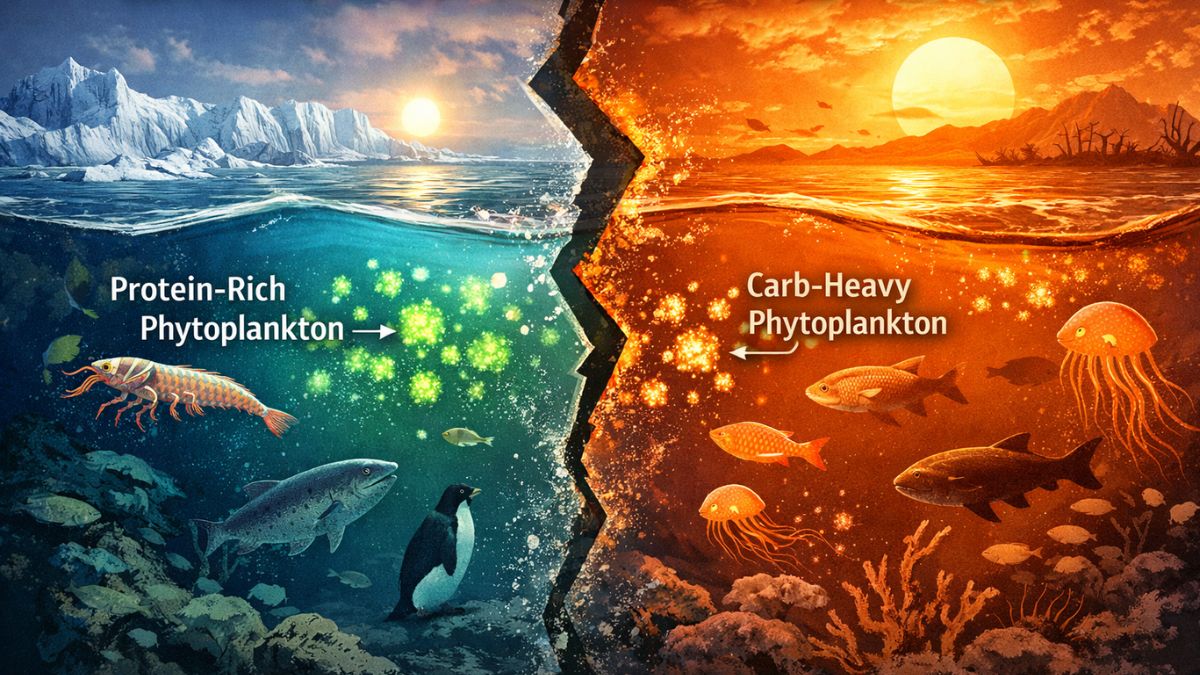
From nutrient-rich to energy-dense but less nourishing—climate change is transforming the composition of ocean food at its source.
Climate change could fundamentally alter the nutritional foundation of the ocean, with new research suggesting that warming waters may turn phytoplankton—the base of the marine food web—into a form of “fast food” with reduced nutritional value.
A study by researchers at the Massachusetts Institute of Technology (MIT), published in Nature Climate Change, finds that rising ocean temperatures could shift phytoplankton composition from protein-rich to carbohydrate-heavy, particularly in polar regions. This transformation could have cascading effects across marine ecosystems and ultimately impact human food systems.
A Shift at the Base of the Food Chain
Phytoplankton are microscopic, plant-like organisms that form the primary food source for a wide range of marine life, including krill, small fish, and jellyfish. These organisms, in turn, sustain larger species and top predators, including humans.
The study suggests that under continued greenhouse gas emissions through 2100, ocean warming will significantly alter the nutritional profile of these organisms. According to the researchers’ model, phytoplankton in polar regions could shift their balance of proteins to carbohydrates and lipids by approximately 20 percent.
“We’re moving in the poles toward a sort of fast-food ocean,” said lead author Shlomit Sharoni, an MIT postdoctoral researcher, in a media statement. “Based on this prediction, the nutritional composition of the surface ocean will look very different by the end of the century.”
Why Nutritional Composition Matters
While previous research has largely focused on how climate change affects phytoplankton populations, this study highlights a less explored dimension: their internal composition.
“There’s been an awareness that the nutritional value of phytoplankton can shift with climate change,” Sharoni said in a media statement, “But there has been very little work in directly addressing that question.”
Phytoplankton are composed of essential macromolecules such as proteins, carbohydrates, and lipids. These components determine their nutritional value for the organisms that consume them. Any imbalance at this foundational level can ripple through the entire food chain.
“Nearly all the material in a living organism is in these broad molecular forms, each having a particular physiological function, depending on the circumstances that the organism finds itself in,” said Mick Follows, professor at MIT.
Warming Oceans, Changing Chemistry
Using a combination of laboratory data and advanced ocean models, the researchers simulated how phytoplankton respond to changing environmental conditions such as temperature, light, and nutrient availability.
Under current conditions, phytoplankton cells are composed of slightly more than 50 percent protein. However, in future climate scenarios where global temperatures rise by around 3°C, this balance shifts significantly.
In polar regions, reduced sea ice allows more sunlight to penetrate the ocean surface, decreasing the need for light-harvesting proteins. At the same time, warmer temperatures and reduced ocean circulation limit the availability of nutrients such as nitrogen and iron.
As a result, protein levels in phytoplankton could decline by up to 30 percent, while carbohydrates and lipids increase.
Uneven Global Impacts
The effects of this shift are not uniform across the globe.
While phytoplankton populations in polar regions may increase, their nutritional quality is expected to decline. In contrast, subtropical regions could see a reduction in phytoplankton populations by up to 50 percent due to reduced nutrient availability.
In these regions, phytoplankton may adapt by moving to deeper waters, where they can access both light and nutrients, potentially increasing their protein content slightly.
Overall, however, the global trend points toward a more carbohydrate-heavy and less nutrient-dense ocean ecosystem.
Early Signs Already Visible
The researchers compared their model with real-world observations from Arctic and Antarctic regions. The findings indicate that this shift is already underway.
“In these regions, you can already see climate change, because sea ice is already melting,” Sharoni said in a statement. “And our model shows that proteins in polar plankton have been declining, while carbs and lipids are increasing.”
Follows added that the implications extend beyond marine ecosystems.
“It turns out that climate change is accelerated in the Arctic, and we have data showing that the composition of phytoplankton has already responded,” he said in a media statement. “The main message is: The caloric content at the base of the marine food web is already changing. And it’s not a clear story as to how this change will transmit through the food web.”
Implications for Marine Life and Humans
The long-term consequences of this shift remain uncertain. Some species may struggle with reduced protein availability, while others that rely on lipid storage could adapt more easily.
However, scientists warn that any disruption at the base of the marine food chain could have far-reaching impacts on biodiversity, fisheries, and global food security.
As the study highlights, climate change is not only altering how much food the ocean produces—but also how nutritious that food is.
Climate
Study Finds Warming Could Slightly Boost Atmosphere’s Methane-Cleaning Capacity
New research suggests climate warming may modestly enhance the atmosphere’s ability to break down methane, though competing chemical processes add uncertainty.
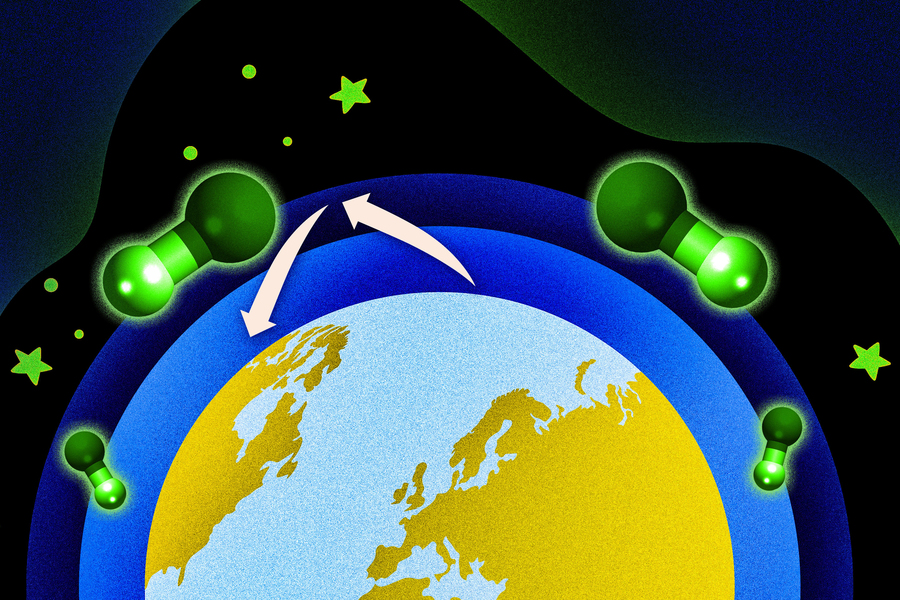
New research suggests climate warming may modestly enhance the atmosphere’s ability to break down methane, though competing chemical processes add uncertainty.
A new study by researchers at the Massachusetts Institute of Technology (MIT) finds that rising global temperatures could slightly increase the atmosphere’s ability to break down methane, one of the most potent greenhouse gases.
Methane is a major driver of global warming, second only to carbon dioxide. However, it does not persist as long in the atmosphere due to the presence of hydroxyl radicals—highly reactive molecules often described as the “atmosphere’s detergent” for their role in breaking down pollutants.
Balancing Effects of Water Vapour and Natural Emissions
The MIT team developed a new atmospheric model to understand how hydroxyl radical (OH) levels may respond to warming temperatures. Their findings reveal a complex balance of competing effects.
As global temperatures rise, atmospheric water vapour is expected to increase, boosting OH levels by about 9%. However, higher temperatures will also lead to increased emissions of natural gases from plants—known as biogenic volatile organic compounds—which can reduce OH levels by approximately 6%.
The net effect, according to the study, is a modest increase of around 3% in the atmosphere’s capacity to break down methane under a 2°C warming scenario.
Why Hydroxyl Radicals Matter
Hydroxyl radicals play a critical role in regulating atmospheric chemistry. They react with methane and other gases, breaking them down into less harmful compounds.
“About 90 percent of the methane that’s removed from the atmosphere is due to the reaction with OH,” said study author Qindan Zhu in a statement.
Beyond methane, OH also helps remove air pollutants and gases that affect public health, including ozone.
“There’s a whole range of environmental reasons why we want to understand what’s going on with this molecule,” said Arlene Fiore, a professor at MIT.
New Model Offers Deeper Insights
To conduct the study, researchers developed a model called “AquaChem,” which simulates atmospheric chemistry under different climate scenarios. The model builds on simplified “aquaplanet” systems, allowing scientists to isolate atmospheric processes without the complexity of land and ice interactions.
Using this model, the team compared current climate conditions with a scenario in which global temperatures rise by 2°C—widely considered a likely outcome without significant emissions reductions.
Uncertainty Around Natural Emissions
Despite the findings, researchers caution that there is still significant uncertainty—particularly regarding how plant emissions will respond to climate change.
Biogenic emissions, such as isoprene released by trees, appear to play a major role in influencing OH levels but remain difficult to predict accurately.
Future research will aim to refine these estimates and better understand how different climate scenarios could affect atmospheric chemistry.
Implications for Climate Projections
Even small changes in hydroxyl radical levels can have significant implications for how methane accumulates in the atmosphere.
“Understanding future trends of OH will allow us to determine future trends of methane,” Zhu said.
As methane continues to rise alongside carbon dioxide, insights into these chemical processes will be critical for improving climate models and informing mitigation strategies.
Climate
Climate change heat impact affected over 2.5 billion people
New analysis shows 2.5 billion people experienced climate-driven heat between Dec 2025 and Feb 2026.

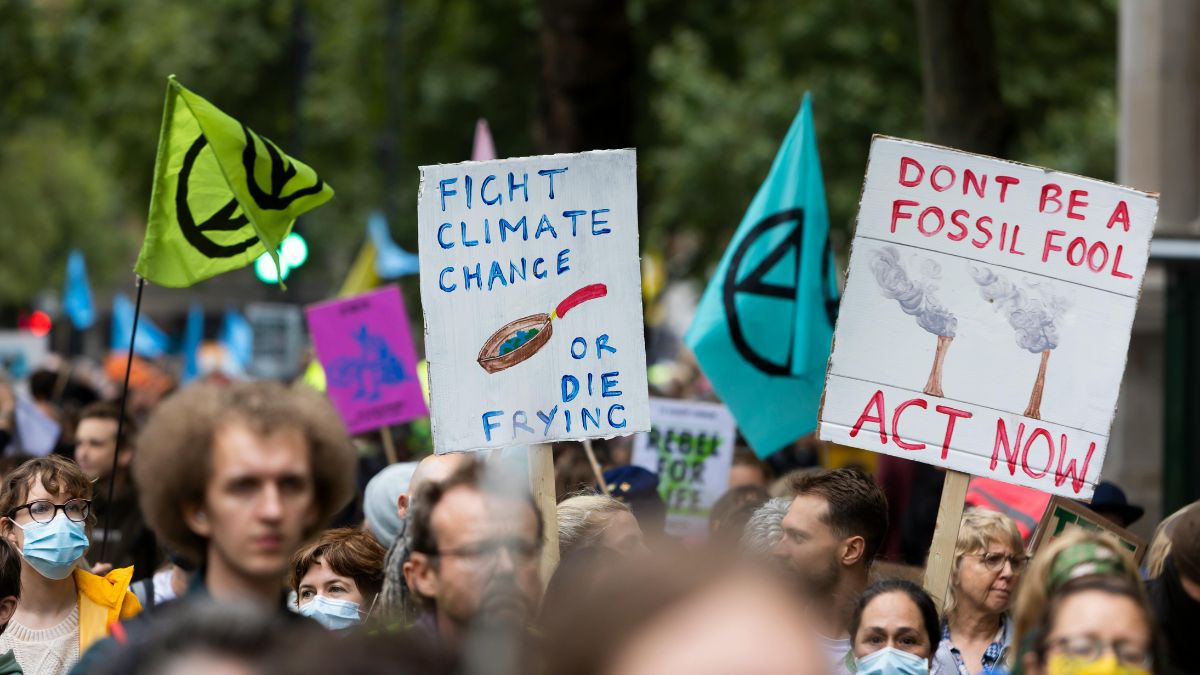
Climate change heat impact: A new global analysis has found that climate change significantly influenced daily temperatures for billions of people worldwide between December 2025 and February 2026, underscoring the immediacy of the climate crisis
Climate change is no longer a distant abstraction—it is now embedded in the daily weather experienced by billions of people across the planet.
A new global analysis from Climate Central has found that between December 2025 and February 2026, more than one in six people worldwide lived through temperatures strongly influenced by climate change every single day.
The scale of exposure is striking. Over the three-month period, 2.5 billion people across 124 countries experienced at least 30 days of climate change-driven heat, pointing to a persistent and widespread shift in how global temperatures are being shaped.
Using the Climate Shift Index, a tool designed to measure the role of human-caused warming in daily temperatures, researchers were able to isolate the extent to which fossil fuel emissions are now influencing everyday weather patterns.
Climate change heat impact: Dangerous extremes
What emerges most starkly from the analysis is not just rising temperatures, but the growing prevalence of heat that directly threatens human health.
In 47 countries, every single day of what scientists classify as “risky heat” was attributable to climate change.
>> 47 countries experienced every single day of risky heat due to climate change
>> Nearly 225 million people faced 30 or more days of such heat
>> 81% of those affected were in Africa
For nearly 225 million people, this translated into a month or more of exposure to dangerous heat conditions—an overwhelming majority of them in Africa, where vulnerability to climate extremes remains high.
These findings suggest a shift from climate change as a contributing factor to climate change as a dominant driver of extreme heat events. In several regions, the report notes, warming did not merely intensify heatwaves—it fully accounted for the most dangerous days.
Dr. Kristina Dahl, Vice President for Science at Climate Central, framed the findings in unequivocal terms: “This analysis makes clear that climate change is not a future problem — it is a present-day driver of extreme heat around the world.”
She added: “Millions of people experienced a month or more of dangerous levels of heat that were made significantly more likely by climate change.”
Climate change heat impact: A world of cascading climate shocks
The same three-month period also revealed how rising temperatures are interacting with other climate systems, producing a cascade of extreme events across continents.
An unusually early heatwave in Australia—made five times more likely by climate change—persisted into the new year before giving way to intense rainfall and flooding. In Argentina, extreme heat strained infrastructure to the point of collapse, contributing to a power outage that left more than a million people without electricity.
Elsewhere, the combination of heat, low humidity and strong winds created conditions for destructive wildfires. In Patagonia, fires claimed lives and forced emergency responses, while similar patterns unfolded in parts of Africa, Australia and the United States.
Drought tightened its grip in parts of East Africa, with Kenya enduring its driest season in more than four decades, placing millions at risk of hunger. At the same time, other regions experienced the opposite extreme. Torrential rains and intensified storms killed more than 1,750 people across South and Southeast Asia, while floods displaced hundreds of thousands in North Africa.
Even cold extremes bore the imprint of a changing climate. Severe winter conditions across North America and parts of Europe caused dozens of deaths, widespread disruption and billions in economic losses, highlighting how warming can destabilise weather patterns in multiple directions.
Climate change heat impact reflects a deeper systemic shift
Taken together, the data points to a broader transformation. Climate change is no longer simply raising average temperatures—it is reshaping the entire spectrum of weather, from heatwaves and droughts to storms and snowfall.

The underlying driver remains consistent: the accumulation of heat-trapping emissions from coal, oil and gas.
As oceans warm and atmospheric systems shift, the result is a more volatile climate, where extremes are not isolated events but interconnected outcomes of the same underlying process.
Dr. Dahl underscored this interconnectedness: “Taken all together, these extremes are the latest signals of how fossil fuel emissions are disrupting livelihoods globally.”
A present reality, not a future projection
What makes the findings particularly significant is their immediacy. The analysis does not project future risks—it documents a present reality in which climate change is already shaping daily life for billions.
For policymakers, scientists and communities alike, the implication is clear: the climate crisis has moved beyond forecasts and into lived experience.


Climate Change Could Turn Ocean Food into ‘Fast Food’, MIT Study Warns

Why Campuses Need a Happiness Officer Now

The hidden fault lines of global energy: why oil and gas chokepoints are a permanent risk

NASA to launch first crewed Artemis Moon mission on April 1

Study Finds Warming Could Slightly Boost Atmosphere’s Methane-Cleaning Capacity
NASA to launch first crewed Artemis Moon mission on April 1

Climate change heat impact affected over 2.5 billion people

How China Is Redrawing the Global Map of Critical Minerals

Study Reveals How Ocean Bacteria Drive Plastic Biodegradation

Weather, Not Just Emissions, Driving PM2.5 Pollution in Indian Cities: Study

-

 Society3 months ago
The Ten-Rupee Doctor Who Sparked a Health Revolution in Kerala’s Tribal Highlands
-
Society3 months ago
From Qubits to Folk Puppetry: India’s Biggest Quantum Science Communication Conclave Wraps Up in Ahmedabad
-
COP305 months ago
Brazil Cuts Emissions by 17% in 2024—Biggest Drop in 16 Years, Yet Paris Target Out of Reach
-
Women In Science6 months ago
The Data Don’t Lie: Women Are Still Missing from Science — But Why?
-
Earth5 months ago
Data Becomes the New Oil: IEA Says AI Boom Driving Global Power Demand
-
COP305 months ago
Corporate Capture: Fossil Fuel Lobbyists at COP30 Hit Record High, Outnumbering Delegates from Climate-Vulnerable Nations
-
Space & Physics4 months ago
Indian Physicists Win 2025 ICTP Prize for Breakthroughs in Quantum Many-Body Physics
-
Health5 months ago
Air Pollution Claimed 1.7 Million Indian Lives and 9.5% of GDP, Finds The Lancet