Space & Physics
Physicists Capture ‘Wakes’ Left by Quarks in the Universe’s First Liquid
Scientists at CERN’s Large Hadron Collider have observed, for the first time, fluid-like wakes created by quarks moving through quark–gluon plasma, offering direct evidence that the universe’s earliest matter behaved like a liquid rather than a cloud of free particles.

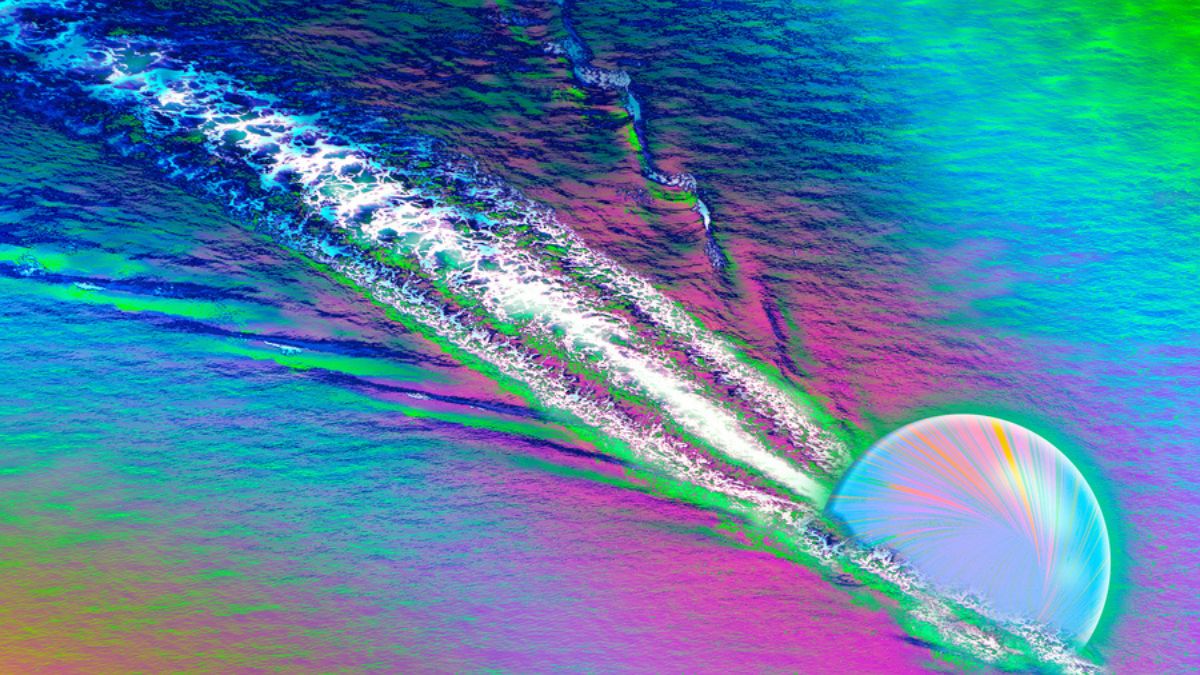
Physicists working at the CERN(The European Organization for Nuclear Research) have reported the first direct experimental evidence that quark–gluon plasma—the primordial matter that filled the universe moments after the Big Bang—behaves like a true liquid.
Using heavy-ion collisions at the Large Hadron Collider, researchers recreated the extreme conditions of the early universe and observed that quarks moving through this plasma generate wake-like patterns, similar to ripples trailing a duck across water.
The study, led by physicists from the Massachusetts Institute of Technology, shows that the quark–gluon plasma responds collectively, flowing and splashing rather than scattering randomly.
“It has been a long debate in our field, on whether the plasma should respond to a quark,” said Yen-Jie Lee in a media statement. “Now we see the plasma is incredibly dense, such that it is able to slow down a quark, and produces splashes and swirls like a liquid. So quark-gluon plasma really is a primordial soup.”
Quark–gluon plasma is believed to be the first liquid to have existed in the universe and the hottest ever observed, reaching temperatures of several trillion degrees Celsius. It is also considered a near-perfect liquid, flowing with almost no resistance.
To isolate the wake produced by a single quark, the team developed a new experimental technique. Instead of tracking pairs of quarks and antiquarks—whose effects can overlap—they identified rare collision events that produced a single quark traveling in the opposite direction of a Z boson. Because a Z boson interacts weakly with its surroundings, it acts as a clean marker, allowing scientists to attribute any observed plasma ripples solely to the quark.
“We have figured out a new technique that allows us to see the effects of a single quark in the QGP, through a different pair of particles,” Lee said.
Analysing data from around 13 billion heavy-ion collisions, the researchers identified roughly 2,000 Z-boson events. In these cases, they consistently observed fluid-like swirls in the plasma opposite to the Z boson’s direction—clear signatures of quark-induced wakes.
The results align with theoretical predictions made by MIT physicist Krishna Rajagopal, whose hybrid model suggested that quarks should drag plasma along as they move through it.
“This is something that many of us have argued must be there for a good many years, and that many experiments have looked for,” Rajagopal said.
“We’ve gained the first direct evidence that the quark indeed drags more plasma with it as it travels,” Lee added. “This will enable us to study the properties and behavior of this exotic fluid in unprecedented detail.”
The research was carried out by members of the CMS Collaboration using the Compact Muon Solenoid detector at CERN. The open-access study has been published in the journal Physics Letters B.





Space & Physics
NASA to launch first crewed Artemis Moon mission on April 1
NASA will launch Artemis II on April 1, marking the first crewed mission around the Moon in over 50 years.

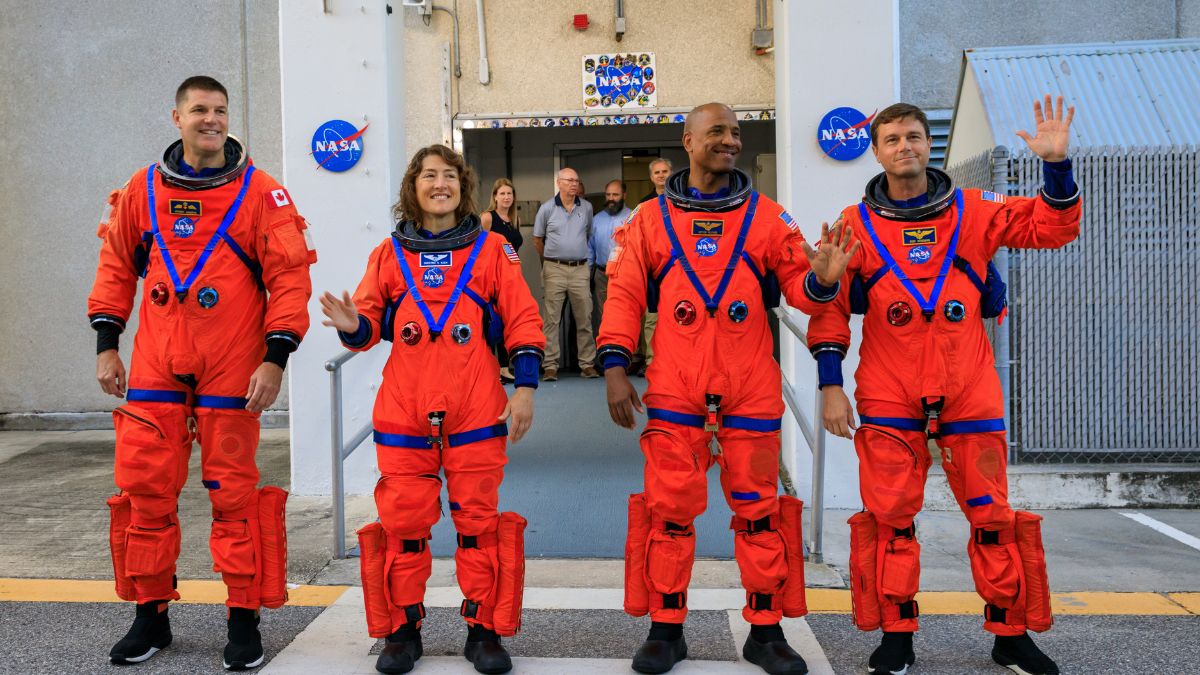
Artemis will be the first human mission to travel beyond low-Earth orbit since the Apollo era, and it is designed as a 10-day journey that will take astronauts on a flyby around the Moon before returning to Earth.
NASA is set to make history with the launch of its first crewed Artemis mission around the Moon, with liftoff targeted for April 1, 2026, marking humanity’s return to deep space exploration after more than five decades.
The mission, known as Artemis II, will carry four astronauts aboard the Orion spacecraft using NASA’s powerful Space Launch System rocket. The launch is scheduled from Kennedy Space Center in Florida, with additional backup launch opportunities extending through early April.
This will be the first human mission to travel beyond low-Earth orbit since the Apollo era, and it is designed as a 10-day journey that will take astronauts on a flyby around the Moon before returning to Earth.
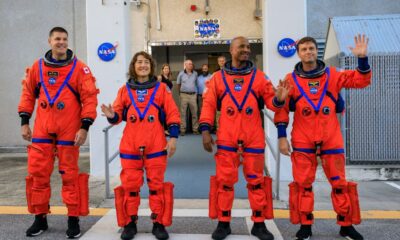
The crew includes NASA astronauts Reid Wiseman, Victor Glover, and Christina Koch, along with Canadian astronaut Jeremy Hansen. The mission is expected to test critical systems such as life support, navigation, and the spacecraft’s heat shield in deep space conditions.
Unlike future Artemis missions, Artemis II will not land on the lunar surface. Instead, it serves as a crucial step toward upcoming missions that aim to establish a sustained human presence on the Moon and eventually enable crewed missions to Mars.
NASA officials say the mission represents a major milestone in space exploration, combining international collaboration and advanced technology to usher in a new era of human spaceflight.
Space & Physics
Magnetic Fields Found to Shape Star Formation Near Milky Way Disc
Scientists map magnetic fields in molecular clouds near the Milky Way, revealing their key role in slowing and shaping star formation.
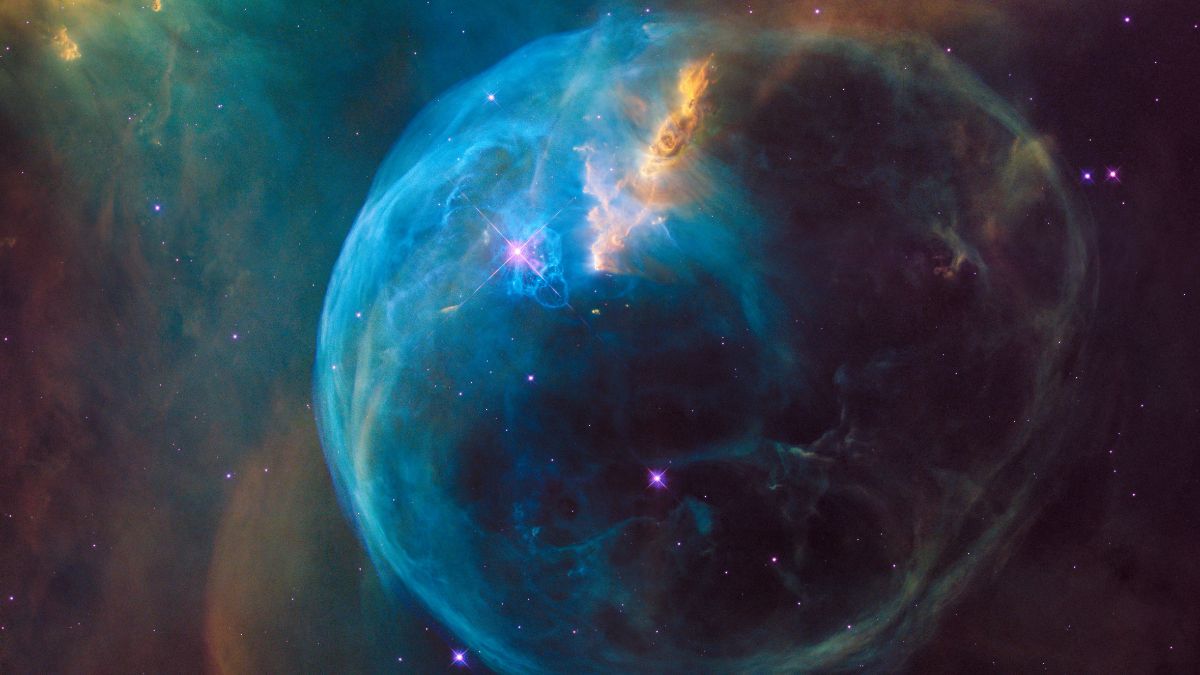
Scientists map magnetic fields in molecular clouds near the Milky Way, revealing their key role in slowing and shaping star formation.
Scientists have uncovered new insights into how stars are formed by mapping the magnetic fields surrounding molecular clouds near the Milky Way’s disc, offering a deeper understanding of one of the universe’s most fundamental processes.
The study focuses on two small molecular clouds—L1604 and L121—revealing how magnetic fields influence the balance between gravity and internal pressure during star formation.
Magnetic Fields Star Formation in Milky Way Clouds
For decades, astronomers have understood star formation as a balance between gravity pulling gas inward and internal pressure pushing outward. However, the new research highlights a third critical factor: magnetic fields.
In a media statement, the researchers explained that magnetic fields act as an invisible force shaping how molecular clouds evolve and collapse to form stars.
The study was conducted by scientists from the Aryabhatta Research Institute of Observational Sciences (ARIES)m Uttarakhand, India and Assam University, using advanced polarimetric techniques to detect otherwise invisible magnetic structures.
Magnetic Fields Star Formation Observed Using Polarimetry
To map these fields, the team used R-band polarimetry with the ARIES Imaging Polarimeter mounted on a 104-cm telescope in Nainital.
This technique measures how starlight becomes polarised as it passes through dust grains aligned by magnetic fields.
In a media statement, the researchers said that by analysing thousands of such light signals, they were able to “see” the skeleton of magnetic fields surrounding the molecular clouds for the first time.
Two Molecular Clouds Reveal Contrasting Behaviour
The study examined two distinct clouds:
- L1604, located about 816 parsecs away, is dense and massive, with strong potential for future star formation
- L121, much closer at 124 parsecs, is less dense but exhibits a stronger and more organised magnetic field
In a media statement, the scientists noted that the orderly magnetic structure in L121 suggests it has not yet undergone intense gravitational collapse, unlike more active star-forming regions.
Magnetic Fields Star Formation Controlled by Energy Balance
By calculating magnetic field strength, the researchers found that both clouds are sub-critical, meaning magnetic forces are strong enough to resist gravitational collapse across most of their structure.
In a media statement, the team stated that magnetic energy dominates over both turbulence and gravity at the outer regions of the clouds.
However, deep within the dense cores, gravity may begin to take over, creating conditions suitable for star formation.
The “Recipe” for Star Formation
The findings suggest that magnetic fields play a crucial role in regulating how quickly stars form.
In a media statement, researchers said that magnetism acts as an “invisible hand,” slowing down star formation and preventing galaxies from converting all their gas into stars at once.
The study positions L1604 and L121 as natural laboratories for understanding the interplay between gravity and magnetism.
Rather than being passive clouds, they represent dynamic systems where fundamental forces interact over millions of years to shape the birth of stars.
The findings offer a clearer picture of how galaxies like the Milky Way sustain star formation over long cosmic timescales, balancing collapse with control.
Space & Physics
Researchers Use AI to Enable Robots to ‘See’ Through Walls
MIT researchers develop AI-powered system using wireless signals to help robots see through walls and reconstruct hidden objects and indoor spaces.
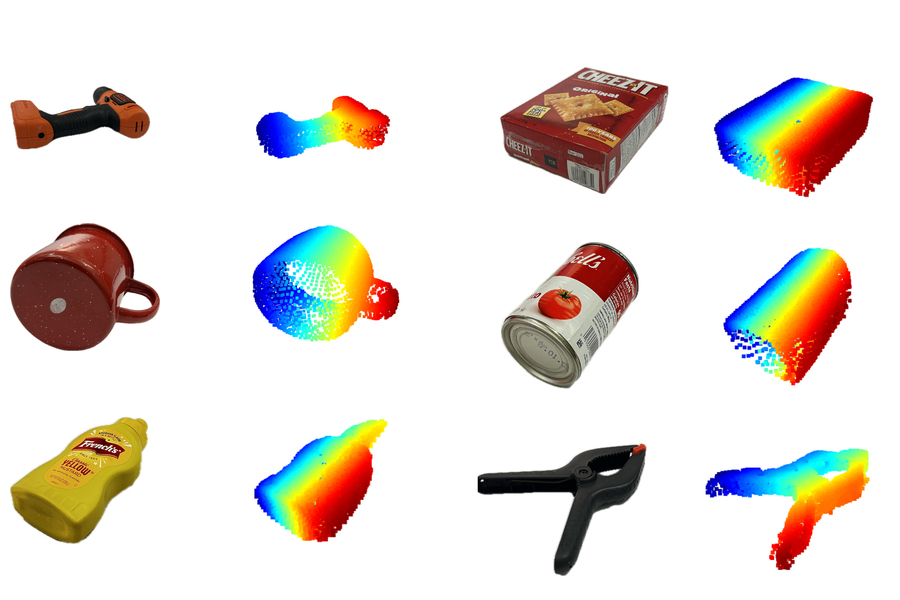
Researchers at Massachusetts Institute of Technology have developed a new artificial intelligence-powered system that allows robots to detect and reconstruct objects hidden behind walls and obstacles, marking a significant breakthrough in machine perception.
The system combines wireless signals with generative AI models to enable what researchers describe as a new form of “wireless vision,” potentially transforming robotics, logistics, and smart environments.
AI See Through Walls Using Wireless Signals
The research builds on over a decade of work using millimeter wave (mmWave) signals—similar to those used in Wi-Fi—which can pass through materials such as drywall, plastic, and cardboard and reflect off hidden objects.
Earlier approaches could only capture partial shapes due to limitations in how these signals reflect.
The new system overcomes this by combining wireless reflections with generative AI, enabling the reconstruction of complete object shapes even when they are not directly visible.
“What we’ve done now is develop generative AI models that help us understand wireless reflections. This opens up a lot of interesting new applications, but technically it is also a qualitative leap in capabilities, from being able to fill in gaps we were not able to see before to being able to interpret reflections and reconstruct entire scenes,” said Fadel Adib, in a media statement.
“We are using AI to finally unlock wireless vision.”
AI See Through Walls Improves Object Reconstruction
The system, called Wave-Former, first creates a partial image of a hidden object using reflected wireless signals. It then uses a trained AI model to fill in missing parts and refine the reconstruction.
In tests, Wave-Former successfully reconstructed around 70 everyday objects—including boxes, utensils, and fruits—with nearly 20% higher accuracy than existing methods.
The objects were placed behind or under materials such as wood, fabric, and plastic, demonstrating the system’s robustness in real-world conditions.
AI See Through Walls Reconstructs Entire Rooms
Beyond individual objects, the researchers developed a second system capable of reconstructing entire indoor environments.
Using a single stationary radar, the system tracks how wireless signals bounce off moving humans and surrounding objects. These reflections—often considered noise—are analysed by AI to map out the room layout.
The system, known as RISE, was tested using over 100 human movement patterns and achieved twice the accuracy of existing techniques in reconstructing indoor spaces.
Privacy-Preserving Alternative to Cameras
Unlike camera-based systems, this approach does not capture visual images, offering a privacy-preserving alternative for indoor monitoring and robotics.
Because it relies on wireless signals rather than cameras, it can detect presence and layout without revealing identifiable details.
Applications in Warehousing and Smart Homes
The researchers say the technology could have wide-ranging applications:
- Warehouses: Robots could verify packed items before shipping, reducing errors and returns
- Smart homes: Robots could better understand human location and movement
- Human-robot interaction: Improved safety and efficiency in shared environments
The system could also pave the way for future “foundation models” trained specifically on wireless data, similar to how large AI models are trained for language and vision.


Why Campuses Need a Happiness Officer Now

The hidden fault lines of global energy: why oil and gas chokepoints are a permanent risk

NASA to launch first crewed Artemis Moon mission on April 1

Study Finds Warming Could Slightly Boost Atmosphere’s Methane-Cleaning Capacity

How China Is Redrawing the Global Map of Critical Minerals

How the Iran–Israel–US Conflict Ripples Through India’s Economy and Energy Future

Climate change heat impact affected over 2.5 billion people

Study Reveals How Ocean Bacteria Drive Plastic Biodegradation

Weather, Not Just Emissions, Driving PM2.5 Pollution in Indian Cities: Study
How China Is Redrawing the Global Map of Critical Minerals

-

 Society3 months ago
The Ten-Rupee Doctor Who Sparked a Health Revolution in Kerala’s Tribal Highlands
-
Society3 months ago
From Qubits to Folk Puppetry: India’s Biggest Quantum Science Communication Conclave Wraps Up in Ahmedabad
-
COP305 months ago
Brazil Cuts Emissions by 17% in 2024—Biggest Drop in 16 Years, Yet Paris Target Out of Reach
-
Women In Science6 months ago
The Data Don’t Lie: Women Are Still Missing from Science — But Why?
-
Earth5 months ago
Data Becomes the New Oil: IEA Says AI Boom Driving Global Power Demand
-
COP305 months ago
Corporate Capture: Fossil Fuel Lobbyists at COP30 Hit Record High, Outnumbering Delegates from Climate-Vulnerable Nations
-
Space & Physics4 months ago
Indian Physicists Win 2025 ICTP Prize for Breakthroughs in Quantum Many-Body Physics
-
Health5 months ago
Air Pollution Claimed 1.7 Million Indian Lives and 9.5% of GDP, Finds The Lancet