

Know The Scientist
Joseph Rotblat: What led the nuclear peace activist to quit the Manhattan Project?
Joseph Rotblat was once associated with the Manhattan Project, which led to the invention of nuclear weapons. But what made him change his heart to quit the project and fight against nuclear weapons for the rest of his career?


Are all scientific advancements beneficial to humankind? No. But then why do we invent them?
Nuclear weapons were seen by many of the Manhattan Project scientists, famously Robert Oppenheimer, thought it was necessary evil.
But Joseph Rotblat, a Polish nuclear physicist was one of the first converts who left the Manhattan Project, to advocate for a total reversal and elimination of nuclear weapons.
A political chain reaction ensued following the war, with world powers scrambling nuclear weapons claiming deterrence. These weapons meanwhile grew ever more powerful in capacity, to cause more misery and damage. In fact, there’s enough nuclear weapons shared between the US and Russia now, to annihilate human civilization itself.
Then, Rotblat entered the fore setting up the Pugwash Conference on Science and World Affairs in 1957, with British philosopher and mathematician Bernard Russell, to advocate for phasing out nuclear weapons. Pugwash Conferences were influential and successful in bringing scientists and scholars across ideological spectrums to debate solutions while advocating for a nuclear weapon-free world. It helped influence policy decisions – pushing for test ban treaties in international politics.
The Cold War then ended, and there was some relief – the world hadn’t gone into For Rotblat and Pugwash’s efforts, they were jointly awarded the 1995 Nobel Peace Prize, “for their efforts to diminish the part played by nuclear arms in international politics and, in the longer run, to eliminate such arms.”
However, it’s perhaps interesting to know what really drove the now revered nuclear peace activist to even join the nuclear weapons program in the first place.
Nuclear fission and World War II
For one, he too was driven like many in his generation, prior to World War II that Adolf Hitler’s Germany could develop and use a nuclear bomb. Germany was then the superpower in physics, although it stagnated following mass resignations and boycotts against Jewish physicists – many of whom heralded the 20th century revolution in physics – including the likes of Albert Einstein and Max Planck.
Rotblat had moved to Liverpool, UK in 1939 from his native Poland to learn how to build a cyclotron with James Chadwick – the physics Nobel laureate who discovered the subatomic neutron particle. As much as he successfully split the uranium nucleus, he was split from his wife in Poland forever – at the onset of World War II.
Tola was ailing from appendicitis, because of which she couldn’t make it to Liverpool before war broke out. Despite Rotblat’s efforts to seek asylum in the UK, she never escaped. The last Rotblat heard from her was through a letter in December 1940. Rotblat was clearly distraught – although at the same time, he spent his time and energy with the fast neutron research group with Chadwick back in Liverpool. Rotblat would never know until the war would end, that Tola and her mother were killed at the Belzec concentration camp in occupied Poland by 1941.
Unbeknownst to him, the British military intelligence did know about Tola’s death back in 1941, though Rotblat wasn’t informed then. Rotblat’s psyche was quite different from other physicists.

Joseph Rotblat’s badge photograph during the Manhattan Project. Credit: Los Alamos Laboratory / Wikimedia
When the Quebec Agreement was signed by the UK to help the US with the Manhattan Project, Rotblat had his conscience stricken. Physicists apparently had their set of reasons to join this war-time effort to develop a bomb. Rotblat, like most others, willingly joined the Project believing inventing the bomb can offer deterrence against a German bomb. Many others, in Rotblat’s own admission, simply joined to not have their careers jeopardized by the government.
A mentor in Ludwik Wertenstein
Rotblat was a ‘pure scientist’ in that he seeked to avoid the moral scrupulousness that he knew would plague him if it turned out that the nuclear weapon would be used. Back in Poland when he was an undergrad, he found a mentor in the Polish experimental physicist, Ludwik Wertenstein. Rotblat mentioned how Wertenstein helped find something about himself – concurring with the belief that science wasn’t neutral, or wasn’t some discipline divorced from our social reality. And thus scientists themselves were partly answerable for reasons of its end-usage. Rotblat saw in Wertenstein who he too was – a strong believer in ethics.
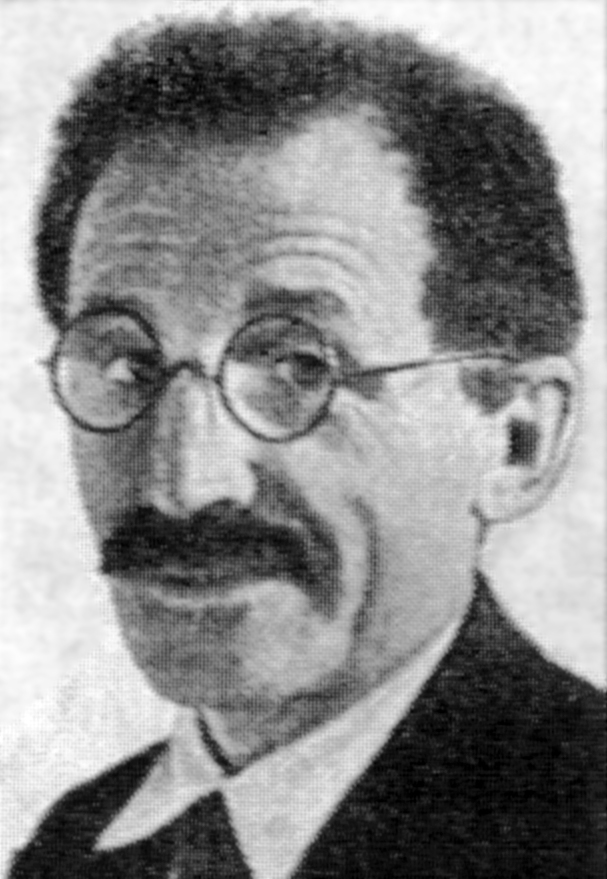
Ludwik Wertenstein. Credit: Wikimedia
Rotblat would have remembered what Wertenstein would advise him when he was stuck between a rock and a hard place. Use your conscience, he would say. To Rotblat, Wertenstein was a ‘counselor and friend’ in addition to being a teacher. Rotblat had briefed Wertenstein, before the latter joined the Polish war effort, about Germany potentially developing a nuclear bomb. Wertenstein was clear that he wouldn’t work on a program to deter Germany, at the cost of abandoning his core moral principle of bringing benefit to all mankind.
Fortunately for Rotblat, he had an option to quit the Manhattan Project almost as soon as he had arrived. Military intelligence in 1944 confirmed the Germans had abandoned their efforts to develop a nuclear bomb. Rotblat, seeing no reason to develop one, was allowed to leave.
Researching ‘nuclear medicine’ to save lives
After learning of his wife Tola’s death, he refused to remarry. He was now armed with a newfound conviction to end his association with his career in nuclear research on a better note.
Wertenstein’s persona captured him truly in that he made advances to unleash nuclear energy in a form to save people’s lives rather than take away them.
In 1949, Rotblat joined Londons’ St. Bartholomew’s Hospital, as Professor of Medical Physics. There, he made phenomenal advances in nuclear medicine, for instance studying the biological effects of radioactivity – and research that would help his case to bring to light the effects nuclear weapons would have on the human body.
He even at one stage suggested young scientists graduate from universities taking a Hippocratic Oath like medical doctors do.
At his Nobel Lecture titled ‘Remember Your Humanity’, Rotblat stressed on the need for scientists to take up ownership for their work’s impact on society.
“You are doing fundamental work, pushing forward the frontiers of knowledge, but often you do it without giving much thought to the impact of your work on society. Precepts such as ‘science is neutral’ or ‘science has nothing to do with politics,’ still prevail. They are remnants of the ivory tower mentality, although the ivory tower was finally demolished by the Hiroshima bomb.”
Rotblat’s journey has some insights for the world we live in today. He said in the same Nobel Lecture, that our post-Cold War world doesn’t require Cold War thinking. Although the major nuclear powers are all signatories of the Non-Proliferation Treaty (NPT), nuclear arsenals are yet to be phased out.
With nuclear powers unwilling to relent and work through a solution, only scientists can play a vital role. How? By simply doing what Rotblat did. Leave holding your head held high.








Know The Scientist
‘You’re admired, because no one understands you’
How does a soft-spoken, late-blooming, introspective young man—once dismissed as lazy and unimaginative—go on to become one of the greatest scientific minds the world has ever known? That story, woven with personal struggles, quiet determination, and an unmatched brilliance, is one of the most inspiring in the history of science. This edition of EP Know the Scientist turns the spotlight on the legend of Albert Einstein

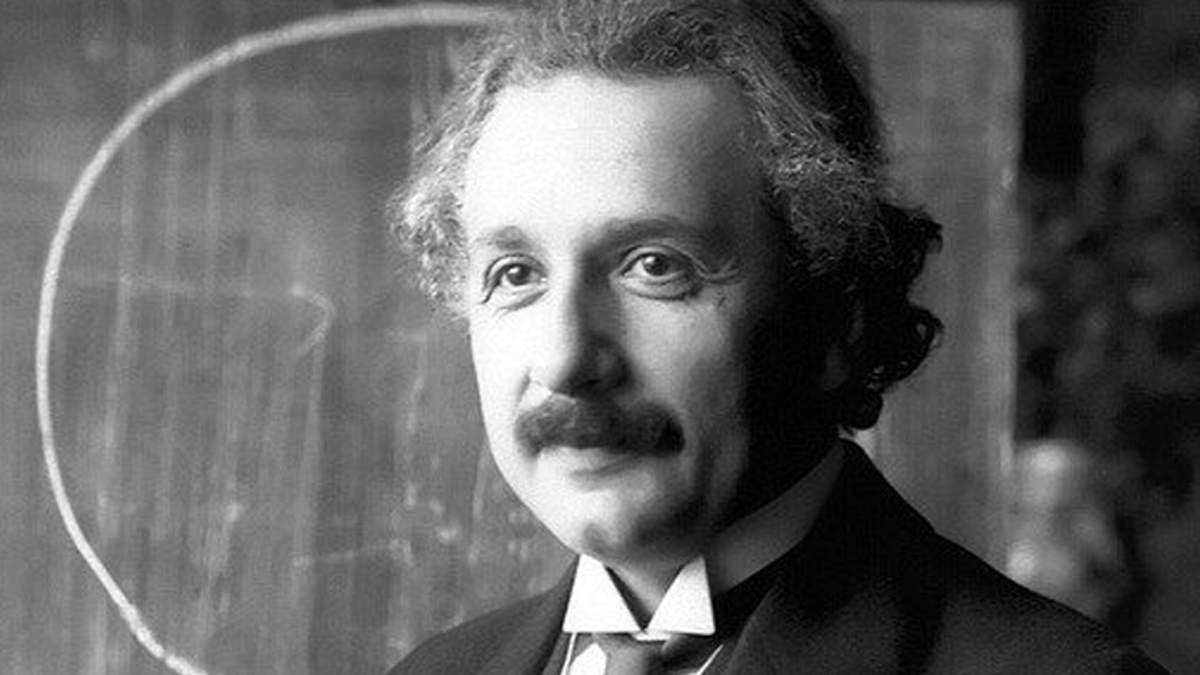
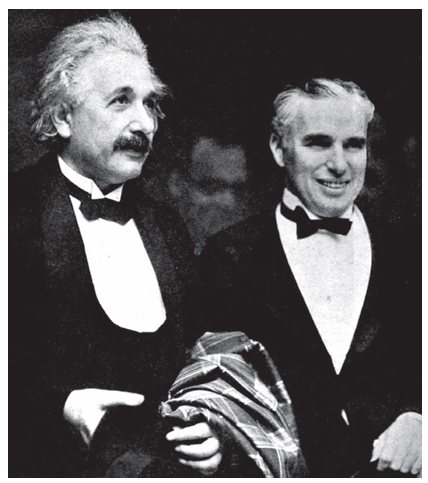
A Meeting of Geniuses
In 1931, two of the most brilliant minds of the 20th century met in Hollywood. One was Albert Einstein, the theoretical physicist who had turned our understanding of the universe on its head; the other, Charlie Chaplin, a master of silent cinema who could move the world to laughter without uttering a word.
“You’re admired because everyone understands you,” Einstein said to Chaplin.
“You’re admired,” Chaplin replied, “because no one understands you.”
That exchange perfectly captured the enigma of Einstein. Though his theories baffled the masses, his influence on science, and on the world itself, was impossible to ignore.
The Face of Modern Physics
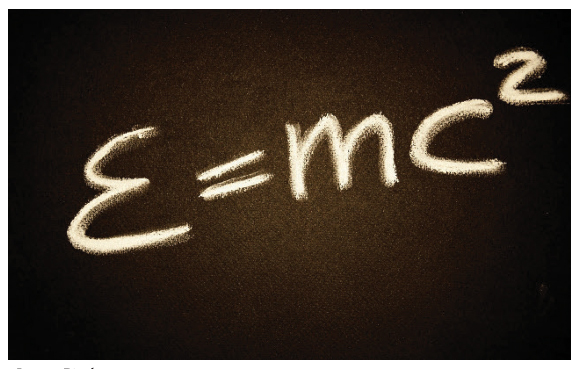
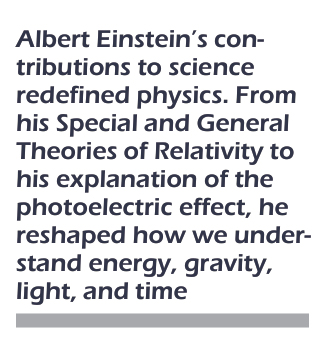
Albert Einstein’s contributions to science redefined physics. From his Special and General Theories of Relativity to his explanation of the photoelectric effect, he reshaped how we understand energy, gravity, light, and time. His famous equation, E = mc², may be the most recognized scientific formula in history—a symbol of human curiosity and intellectual might.
Even today, astronomers rely on Einstein’s insights to decode gravitational waves, explain the bending of light around stars, and predict the paths of planets like Mercury. Long after his passing, Einstein continues to be a guiding force in scientific exploration.
A Curious Child
Born in 1879 in Ulm, Germany, to a middle-class Jewish family, Einstein was a quiet child. His parents worried because he spoke late. Teachers misunderstood his dreamy nature. But from a young age, Einstein was captivated by the invisible forces of the world. A simple compass given to him at age five stirred a lifelong fascination with unseen energies.
By 12, a book on Euclidean geometry filled him with awe. He called it his “sacred little geometry book,” and it gave him a glimpse of the order behind nature’s complexity.
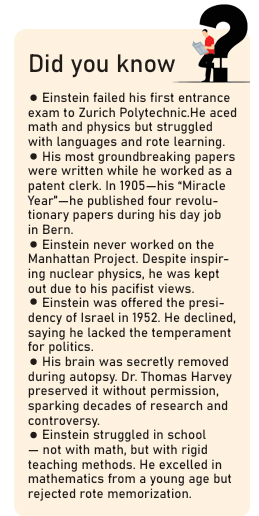
Despite a popular myth, Einstein was not bad at math. He excelled in mathematics and physics, though he struggled with the rigid, memorization-heavy Prussian education system. Creative thinking had little space in such classrooms—and Einstein needed space to think.
Failing to Fit, and Finding a Path
At 16, Einstein dropped out of school. He failed the entrance exam to Zurich’s prestigious Polytechnic School on his first try, performing well only in science and math. Undeterred, he studied on his own and passed the exam the following year.
After graduating in 1901, Einstein struggled to find work as a teacher. Eventually, he secured a job as a clerk at the Swiss Patent Office in Bern—a humble position that gave him time to think, scribble equations, and dream about the cosmos. It was during this period that Einstein’s revolutionary ideas took shape.
The Miracle Year
In 1905, while still a patent clerk, Einstein published four papers that would change the course of physics. He explained the photoelectric effect (which would win him the Nobel Prize in 1921), developed the Special Theory of Relativity, and introduced the idea of mass-energy equivalence. These ideas challenged Newtonian physics and formed the foundation of modern science.
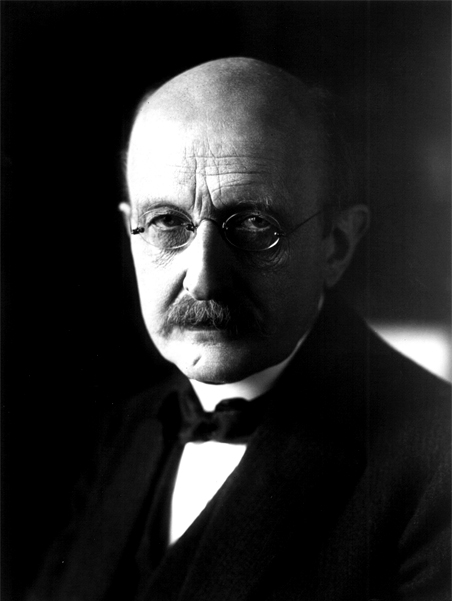
At first, his work went unnoticed. But Max Planck, one of the leading physicists of the time, recognized Einstein’s genius. The world soon followed.
Fame, Flight, and Fear
By the 1910s, Einstein’s fame had spread far beyond academic circles. He was offered positions at the most prestigious universities across Europe. In 1915, he completed his General Theory of Relativity—a breathtaking explanation of gravity as the curvature of space-time.
But in 1933, as Hitler rose to power, Einstein fled Germany for the United States, renouncing his citizenship. The man dubbed the “Pope of Physics” took refuge in Princeton, New Jersey, where he would live and work for the rest of his life.
The Atom Bomb and Moral Dilemmas
Einstein’s equation E = mc² implied that immense energy could be released by splitting atoms. Though he was a lifelong pacifist, in 1939, fearing Nazi Germany’s nuclear ambitions, Einstein co-signed a letter to U.S. President Franklin D. Roosevelt urging research into atomic weapons.
Ironically, he was never part of the Manhattan Project. After World War II, horrified by the bomb’s use in Hiroshima and Nagasaki, Einstein became a leading voice against nuclear weapons.
The Man Behind the Mind
Einstein was more than a physicist. He was a violinist, a humanist, and an outspoken critic of nationalism and racism. Though famously disheveled, his mind was razor-sharp. In 1952, he was even offered the presidency of Israel—a role he declined, saying he lacked the experience and temperament for politics.
His personal life was complex. He married twice, had children, and endured heartbreaks, illnesses, and separations. Yet his work remained a constant force—until the very end.
The Brain that Fascinated the World
When Einstein died on April 18, 1955, at the age of 76, he refused life-prolonging surgery. “I want to go when I want,” he said. But the fascination with his mind didn’t end there. The doctor who performed his autopsy, Thomas Harvey, removed Einstein’s brain—without permission. He sliced it into hundreds of pieces, preserving them for study.
Later analyses suggested Einstein’s brain had unusual features—more folds, a larger inferior parietal lobe, and a higher ratio of glial cells. Some researchers believe these might explain his extraordinary cognitive abilities. But others warn against drawing conclusions from a brain no longer alive.
Regardless, Einstein’s mind remains a symbol of limitless human potential.
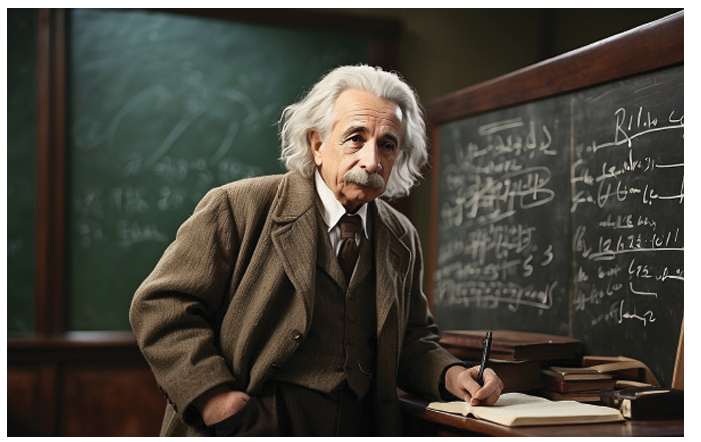
Legacy Eternal
Sixty-six years after his death, fragments of Einstein’s brain are still preserved in museums around the world. But his true legacy isn’t in physical remains—it’s in every scientific equation that bears his fingerprints, every telescope that bends light to measure distant stars, every classroom where young minds imagine the unimaginable.
In a world hungry for quick answers, Einstein stood for slow, deep thinking. “Imagination is more important than knowledge,” he once said. He gave us the tools to measure time and space—and the courage to wonder what lies beyond both.
Know The Scientist
Remembering S.N. Bose, the underrated maestro in quantum physics
Rejected in Britain, celebrated by Einstein, here’s the story of S.N. Bose, the Indian physicist who formulated quantum statistics, now a bedrock theory in condensed matter physics.
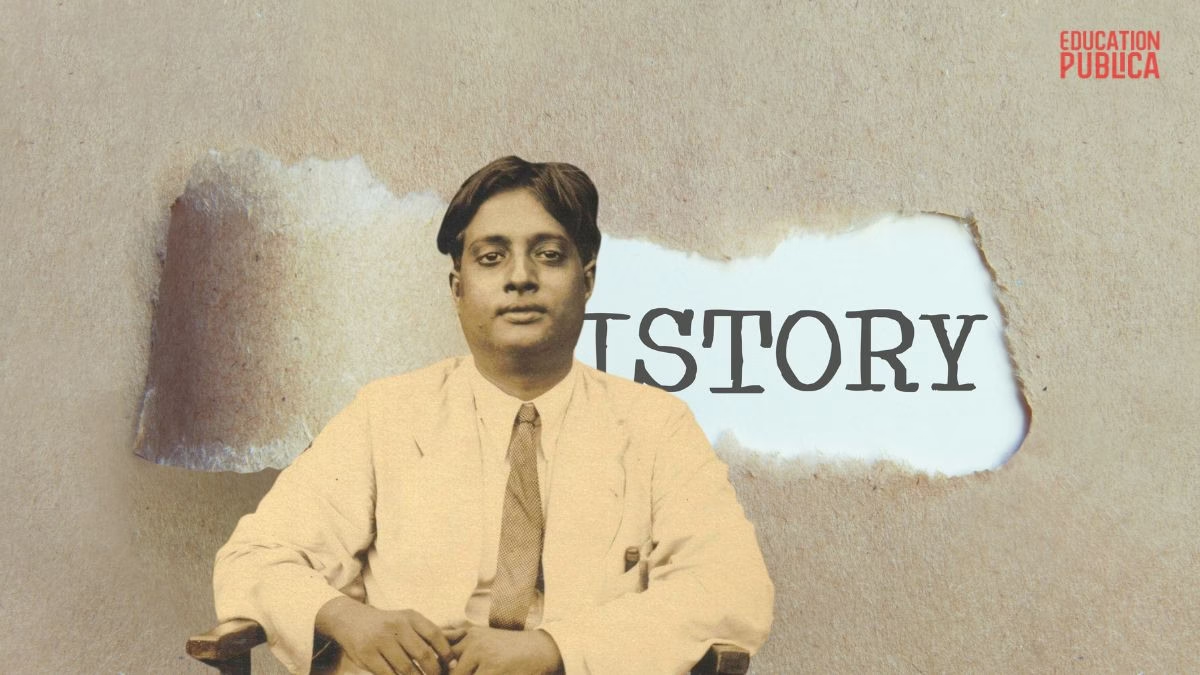
It’s 1924, and Satyendra Nath Bose, going by S.N. Bose was a young physicist teaching in Dhaka, then British India. Grappled by an epiphany, he was desperate to have his solution, fixing a logical inconsistency in Planck’s radiation law, get published. He had his eyes on the British Philosophical Magazine, since word could spread to the leading physicists of the time, most if not all in Europe. But the paper was rejected without any explanations offered.
But he wasn’t going to give up just yet. Unrelenting, he sent another sealed envelope with his draft and this time a cover letter again, to Europe. One can imagine months later, Bose breathing out a sigh of relief when he finally got a positive response – from none other than the great man of physics himself – Albert Einstein.
In some ways, Bose and Einstein were similar. Both had no PhDs when they wrote their treatises that brought them into limelight. And Einstein introduced E=mc2 derived from special relativity with little fanfare, so did Bose who didn’t secure a publisher with his groundbreaking work that invented quantum statistics. He produced a novel derivation of the Planck radiation law, from the first principles of quantum theory.
This was a well-known problem that had plagued physicists since Max Planck, the father of quantum physics himself. Einstein himself had struggled time and again, to only have never resolved the problem. But Bose did, and too nonchalantly with a simple derivation from first principles grounded in quantum theory. For those who know some quantum theory, I’m referring to Bose’s profound recognition that the Maxwell-Boltzmann distribution that holds true for ideal gasses, fails for quantum particles. A technical treatment of the problem would reveal that photons, that are particles of light with the same energy and polarization, are indistinguishable from each other, as a result of the Pauli exclusion principle and Heisenberg’s uncertainty principle.
Fascinated and moved by what he read, Einstein was magnanimous enough to have Bose’s paper translated in German and published in the journal, Zeitschrift für Physik in Germany the same year. It would be the beginning of a brief, but productive professional collaboration between the two theoretical physicists, that would just open the doors to the quantum world much wider. Fascinatingly, last July marked the 100 years since Einstein submitted Bose’s paper, “Planck’s law and the quantum hypothesis” on his behalf to Zeitschrift fur Physik.
With the benefit of hindsight, Bose’s work was really nothing short of revolutionary for its time. However, a Nobel Committee member, the Swedish Oskar Klein – and theoretical physicist of repute – deemed it a mere advance in applied sciences, rather than a major conceptual advance. With hindsight again, it’s a known fact that Nobel Prizes are handed in for quantum jumps in technical advancements more than ever before. In fact, the 2001 Nobel Prize in Physics went to Carl Wieman, Eric Allin Cornell, and Wolfgang Ketterle for synthesizing the Bose-Einstein condensate, a prediction made actually by Einstein based on Bose’s new statistics. These condensates are created when atoms are cooled to near absolute zero temperature, thus attaining the quantum ground state. Atoms at this state possess some residual energy, or zero-point energy, marking a macroscopic phase transition much like a fourth state of matter in its own right.
Such were the changing times that Bose’s work received much attention gradually. To Bose himself, he was fine without a Nobel, saying, “I have got all the recognition I deserve”. A modest character and gentleman, he resonates a lot with the mental image of a scientist who’s a servant to the scientific discipline itself.
But what’s more upsetting is that, Bose is still a bit of a stranger in India, where he was born and lived. He studied physics at the Presidency College, Calcutta under the tutelage that saw other great Indian physicists, including Jagdish Chandra Bose and Meghnad Saha. He was awarded the Padma Vibhushan, the highest civilian award by the Government of India in 1954. Institutes have been named in his honour, but despite this, his reputation has little if no mention at all in public discourse.
To his physicists’ peers in his generation and beyond, he was recognized in scientific lexicology. Paul Dirac, the British physicist coined the name ‘bosons’ in Bose’s honor (‘bose-on’). These refer to quantum particles including photons and others with integer quantum spins, a formulation that arose only because of Bose’s invention of quantum statistics. In fact, the media popular, ‘god particle’, the Higgs boson, carries a bit of Bose as much as it does of Peter Higgs who shared the 2013 Nobel Prize in Physics with Francois Euglert for producing the hypothesis.
Know The Scientist
Narlikar – the rare Indian scientist who penned short stories
Jayant Narlikar has been one of the most prolific scientists, and science communicators India has ever produced. The octogenarian had died at his residence in Pune.
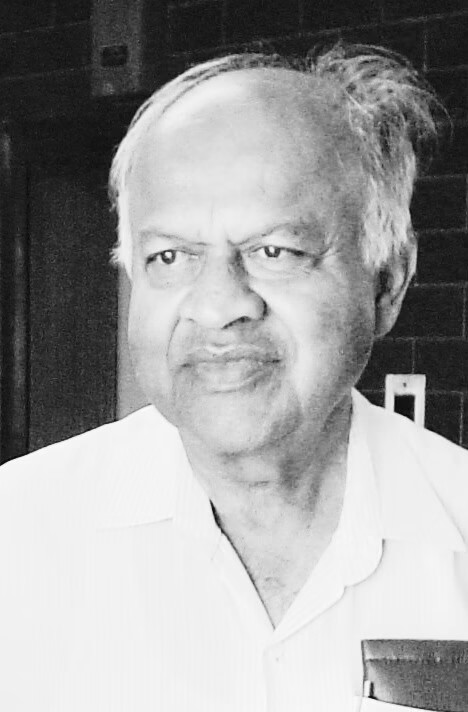
Jayant Narlikar passed away at his Pune residence on Tuesday. He was 86-years old, and had been diagnosed with cancer. With his demise, India lost a prolific scientist, writer, and institution builder.
In 2004, the government of India had honored Narlikar with the Padma Vibhushan, the second-highest civilian award, for his services to science and society. But that was not his first recognition from the Indian government. At the age of 26, he had received his first Padma Bhushan, in recognition for his work in cosmology, studying the universe’s large-scale structures. He helped contribute to derive Einstein’s field equations of gravity from a more general theory. That work, dubbed the Narlikar-Hoyle theory of gravity, was borne out a collaboration with Narlikar’s doctoral degree supervisor at Cambridge; Fred Hoyle, the then leading astrophysicist of his time.
Narlikar and the steady-state theory
Narlikar and Hoyle bonded over a shared skepticism towards the prevalent Big Bang hypothesis, which sought to extrapolate the universe’s ongoing expansion to its birth at some finite time in the past. However, Narlikar and Hoyle could not have been more opposed, mostly out of their own philosophical beliefs. They drew upon the works of 19th century Austrian physicist and philosopher, Ernest Mach, in rejecting a theory discussing the universe’s beginning in the absence of a reference frame. As such, Narlikar was a strong proponent of Hoyle’s steady-state model of the universe, in which the universe is infinite in extent, and indefinitely old. As such, the steady-state theorists explained away the universe’s expansion to matter being spawned into existence from this vacuum at every instant, aka a C-field.
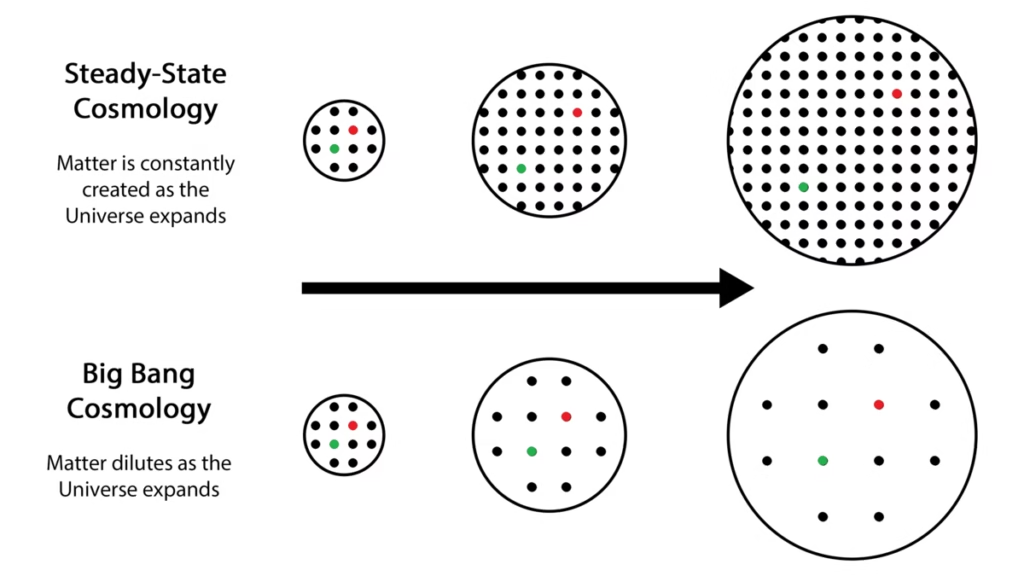
However, the steady-state’s predictions did not hold up in face of evidence the universe expands over time. Nor did its successive avatar, the quasi-steady state theory devised sway scientific consensus. The death knell came when evidence of the cosmic microwave background (aka the CMB) was discovered in 1964.
Despite steady-state’s failure, it provided healthy rivalry to the Big Bang from the 1940s to the 60s, providing opportunities for astronomers to compare observations to precise predictions. In the words of the Nobel laureate Steven Weinberg, “In a sense, this disagreement is a credit to the model; alone among all cosmologies, the steady state model makes such definite predictions that it can be disproved even with the limited observational evidence at our disposal.”
The Kalinga winning short-story writer
Narlikar was more than just a cosmologist, studying the large-scale structure of the universe. He also had been an acclaimed science fiction writer, with his works penned in English, Hindi, and in his vernacular, Marathi. His famous work was a short-story, Dhoomekethu (The Comet), revolving around themes of superstition, faith, rational and scientific thinking. Published in Marathi in 1976, with translations available in Hindi, the story was adapted later into a two-hour film bearing the same name. In 1985, the film aired on the state-owned television broadcasting channels, Doordarshan.
In a way, he was India’s Carl Sagan, airing episodes explaining astronomical concepts, with children being his target audience. The seventeen-episode show, Brahmand (The Universe), aired in 1994, to popular acclaim. One of his most popular books, Akashashi Jadle Nathe (Sky-Rooted Relationship), remains popular. An e-book version in Hindi is available on Goodreads, with 470 reviewers lending an average rating of 4.7 out of 5.
His efforts was honored with an international prize. In 1996, he received the much-coveted Kalinga Prize for the Popularization of Science, awarded annually in India by the United Nations Educational, Scientific and Cultural Organization (UNESCO), “in recognition of his efforts to popularize science through print and electronic media.” Narlikar had been only the second Indian at the time, after the popular science writer Jagjit Singh, to have received the award.
When Narlikar returned to India, accepting a position at the Tata Institute of Fundamental Research (TIFR), he realized that the fruits of astrophysical research did not flourish outside central institutions. Though Bengaluru had an Indian Institute of Astrophysics, Narlikar envisioned basing a research culture paralleling his time at Cambridge. Hence, the Inter-University Centre for Astronomy and Astrophysics (IUCAA) was born in 1988, and Narlikar was appointed its founding director. Arguably, his most visible legacy would have been to shape India’s astrophysical research culture through his work with the IUCAA (pronounced “eye-you-ka”).


How China Is Redrawing the Global Map of Critical Minerals

Magnetic Fields Found to Shape Star Formation Near Milky Way Disc

Researchers Use AI to Enable Robots to ‘See’ Through Walls

India’s Power Future: 70% Non-Fossil Capacity by 2035-36, But Grid Challenges Loom

EVs avoided oil equal to 70% of Iran’s exports in 2025

How the Iran–Israel–US Conflict Ripples Through India’s Economy and Energy Future

AI in Classrooms: Threat to Learning or Catalyst for Educational Transformation?

Climate change heat impact affected over 2.5 billion people

Weather, Not Just Emissions, Driving PM2.5 Pollution in Indian Cities: Study

Study Reveals How Ocean Bacteria Drive Plastic Biodegradation
-

 Society3 months ago
The Ten-Rupee Doctor Who Sparked a Health Revolution in Kerala’s Tribal Highlands
-
COP305 months ago
Brazil Cuts Emissions by 17% in 2024—Biggest Drop in 16 Years, Yet Paris Target Out of Reach
-
Society3 months ago
From Qubits to Folk Puppetry: India’s Biggest Quantum Science Communication Conclave Wraps Up in Ahmedabad
-
Women In Science5 months ago
The Data Don’t Lie: Women Are Still Missing from Science — But Why?
-
Earth4 months ago
Data Becomes the New Oil: IEA Says AI Boom Driving Global Power Demand
-
COP304 months ago
Corporate Capture: Fossil Fuel Lobbyists at COP30 Hit Record High, Outnumbering Delegates from Climate-Vulnerable Nations
-
Space & Physics3 months ago
Indian Physicists Win 2025 ICTP Prize for Breakthroughs in Quantum Many-Body Physics
-
Health5 months ago
Air Pollution Claimed 1.7 Million Indian Lives and 9.5% of GDP, Finds The Lancet