
EP Deep Dive: Data & Solutions
After Kerala’s Deadliest Landslide, the Hardest Thing to Rebuild Was Childhood
In Wayanad, part of the ecologically fragile Western Ghats, a school at Vellarmala had no training in trauma recovery when the landslide hit — so its teachers built their own response, one now echoed by research and by disaster-recovery efforts in Nepal and the Philippines. What worked, what it took, and where it still falls short for the next school this happens to.

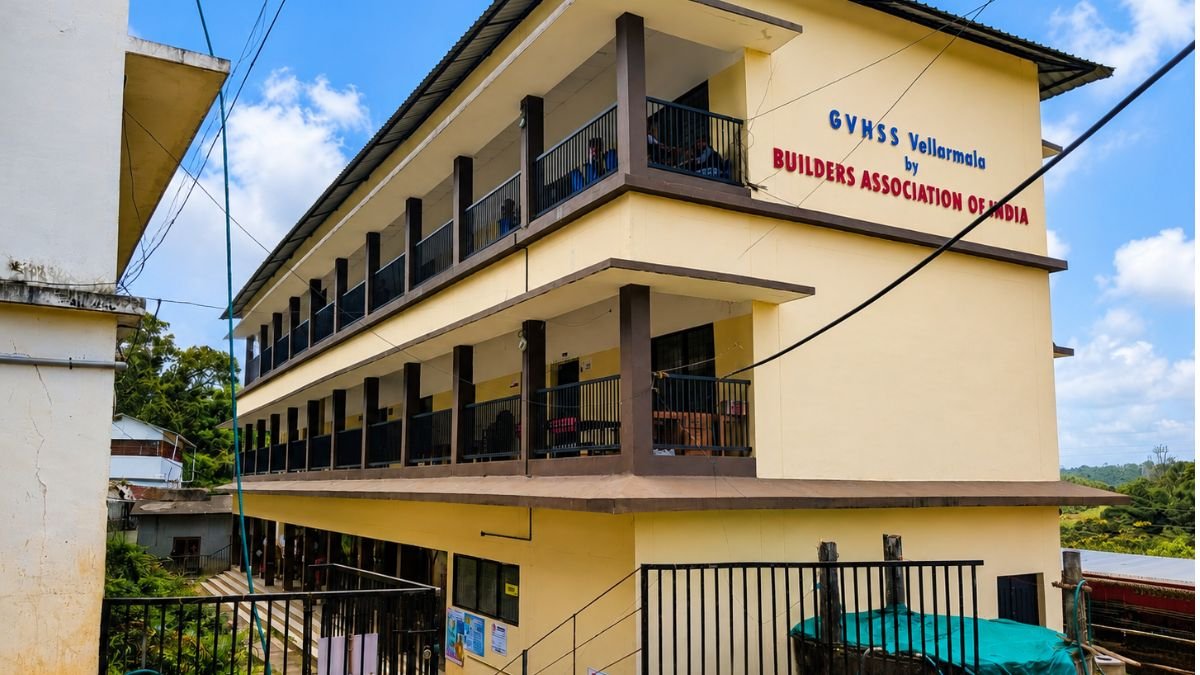
On the morning of July 30, 2024, one of Kerala’s deadliest landslides tore through Chooralmala and Mundakkai in Wayanad. As hillsides collapsed under relentless monsoon rain, entire neighbourhoods were swept away, killing 298 people. Among the dead were 33 students from the Vellarmala Government Vocational Higher Secondary School (VHSS). The school campus itself disappeared beneath mud and boulders, taking with it classrooms, a playground, a library and years of childhood memory.
When classes resumed months later, the children had a school again — but not the one they remembered. Friends were missing. Familiar surroundings were gone. The laughter that once filled the corridors was buried alongside students who never returned.
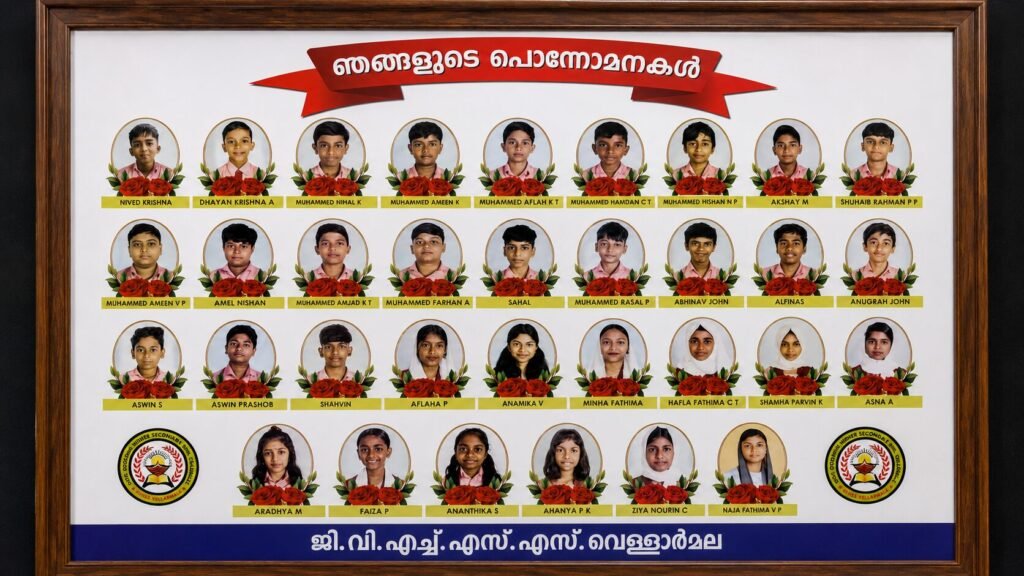
That was when the teachers realised they were not simply reopening a school. They were helping children rebuild a childhood that a disaster had shattered.
Key numbers
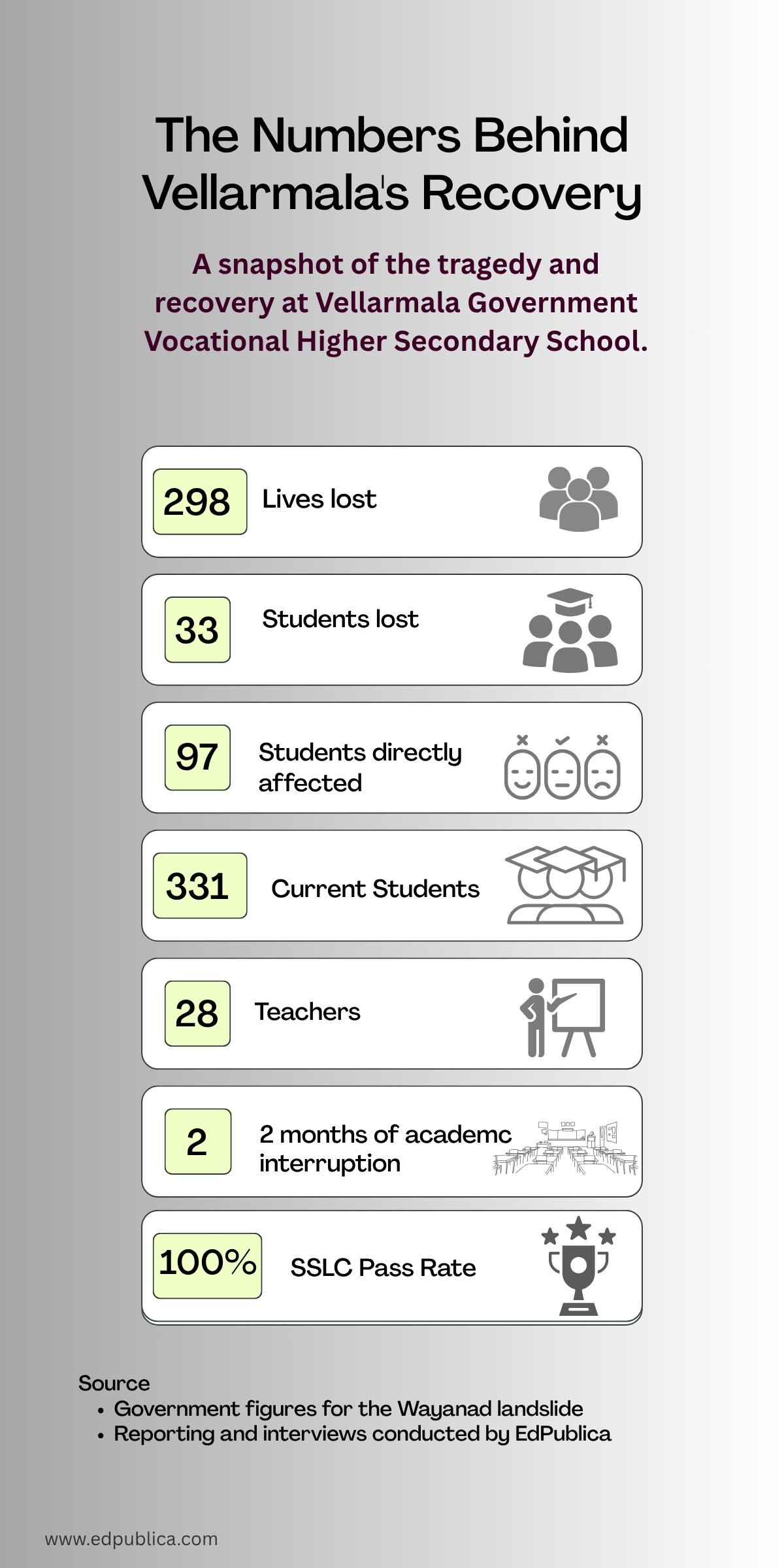
298
People killed in the Chooralmala and Mundakkai landslides
33
Vellarmala students among the dead
97
Students directly affected, from Class 1 to Class 10
331
Students and 28 teachers at the school today
Source: EdPublica reporting. Government figures
When Learning Had to Wait
The Meppadi school today has 331 students and 28 teachers. But in the weeks after the landslide, when the school community was still grappling with loss and displacement, the staff knew that returning to textbooks could not be the first priority.
Ninety-seven students from Classes 1 to 10 had been directly affected by the landslide — either injured, displaced, or bereaved — split almost evenly between girls and boys. Others had lost relatives or friends, including classmates who sat beside them every day. For the first month, the school itself was pressed into service as a relief camp. With the original campus destroyed, students were relocated to the kitchen and dining hall of another school compound.
For two months, academics were set aside entirely. Instead, the teachers focused on one thing: keeping the children together, and giving them a routine. Students arrived in the morning, ate breakfast and lunch, took part in activities, had evening snacks, and stayed through the day.
“We did not give the students a chance to overthink anything,” Unnikrishnan, a teacher who has worked at the school for 20 years, told EdPublica.
But even with the children physically back together, something was missing. “Both children and teachers have a sense of sadness regarding the disaster,” the headmistress Jesna Jose told EdPublica. “Even though they don’t show it often, we can feel it.” The children were together again. The school did not yet sound like itself.
Then Came the Smile
The change began with something that had nothing to do with textbooks.
Two teachers from a government school in Pathanamthitta, a district in south-central Kerala—Manoj Sini and K.S. Binu—arrived at Vellarmala dressed as clowns. They walked into a Class 1 classroom, played music, and began performing comic routines. The children laughed. Then the teachers laughed too.
“All of a sudden, the children started laughing. Seeing the children laugh, the teachers also started laughing,” Unnikrishnan recalls. It was a small moment. But after months of grief, it meant something far larger.
“That’s when we understood that art was the medicine,” he says.
The insight that followed was a quiet but important one: recovery did not have to begin with talking about the disaster. Sometimes, it could begin with giving children a reason to laugh.
“Once there was a smile, we could carry things forward. That was the turning point in rebuilding the school.”
Finding What Each Child Could Do
From there, the teachers began looking beyond what the children had lost and toward what they still had to rebuild the childhood.
They individually studied the 97 directly affected students to identify their interests and abilities. Some were drawn to craft, others to computers, art, sport, or science. Children were grouped by interest, and outside experts were brought in to train them — many arriving without any fee, through the teachers’ own personal networks and friendships.
The school became, for a period, a working studio of drama, oppana (a traditional Muslim wedding dance performed by women), nadan pattu (Kerala folk songs) and vanjippattu (traditional boat songs). A science expert ran demonstrations. A craft teacher introduced bookbinding and art. Students were entered into science exhibitions and arts festivals.
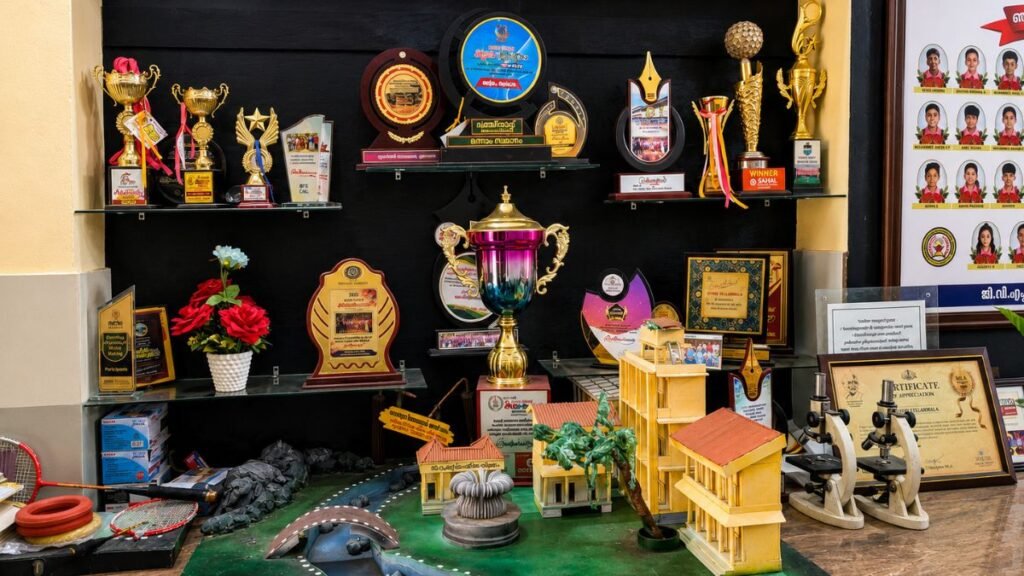
This was not simply keeping children occupied. It was giving them a structured way to discover themselves again — and it is the detail that separates what happened at Vellarmala from a generic “art therapy helped” narrative: the intervention was individually mapped, expert-led, and sustained, not a single feel-good workshop.
The results reached a public stage. Students from the school delivered the first dance programme at the State School Art Festival, and later performed Vellapokkathil (In the Flood) at the Kerala State School Youth Festival 2024 — all seven performers survivors of the Chooralmala landslide themselves.
“We did not give the students a chance to overthink anything.”
Unnikrishnan, teacher, GVHSS Vellarmala
Based on a story by the Malayalam writer Thakazhi Sivasankara Pillai, the play depicts communities and animals caught in a catastrophic flood. For the students performing it, the story was inseparable from what they had lived through months earlier — making the performance both intensely personal and difficult to watch as fiction.
Where Research Meets the Ground
What the Vellarmala teachers arrived at through instinct and trial finds independent confirmation in a study published in 2025 in the journal Development in Practice. Researcher V. Akhila and colleagues, drawing on direct involvement in the relief camps set up after the landslide, documented the same emotional terrain the teachers describe: survivors carrying acute guilt at having lived when neighbours and family did not, a disruption to “sense of security, identity, and hope,” and heightened anxiety, sleep disturbance and fear that did not resolve quickly.
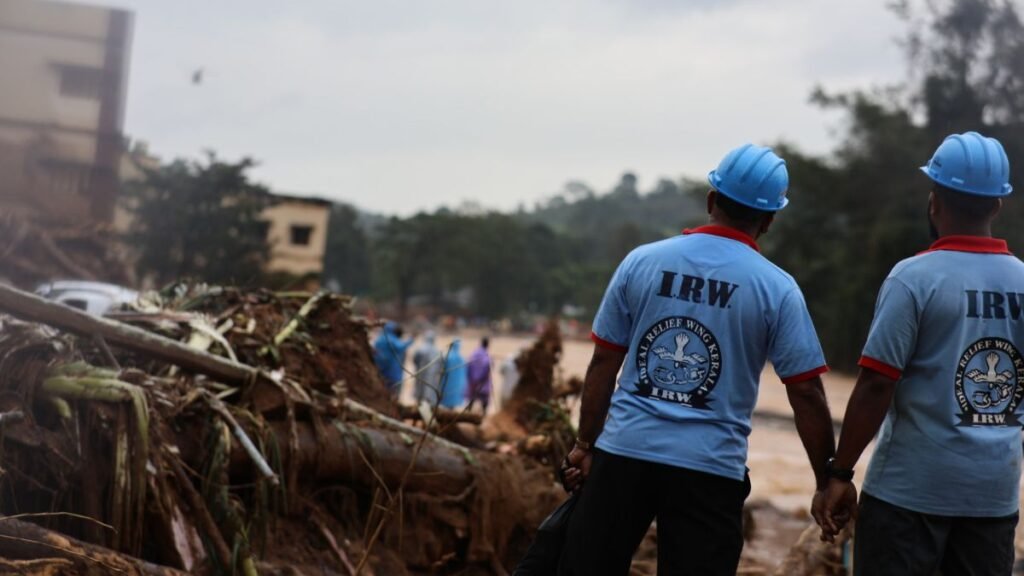
The study examines the toll on first responders, many of whom were themselves survivors or had lost people they knew, and who were frequently deployed into relief work without any prior debriefing — carrying the emotional weight of that period into their daily lives long afterward. It is a reminder that “recovery” in a disaster zone is not a category that applies only to the visibly affected; it extends to everyone who worked to hold the response together, including, arguably, teachers like Unnikrishnan.
The researchers also flag something the Vellarmala experience illustrates directly: that mental health impacts fall unevenly across a population — hitting children, older residents, people with disabilities, and those relocated from outside the immediate community hardest — and that longer-term psychological support after landslides remains patchy and poorly coordinated almost everywhere it has been studied.
When Grief Returned
But there is no single fix for what these students had endured. The return of laughter did not mean the children had forgotten what happened.
As the SSLC (Secondary School Leaving Certificate, Kerala’s Grade 10 board examination) approached, seven students — three girls and four boys — told their teachers they did not want to sit the exam. Many of the friends who should have been sitting beside them had died in the landslide, and the exam hall itself was a reminder of who was missing.
The teachers went to each of the seven students’ homes and persuaded them, one by one, to take the examination. They did. The school went on to record a 100 percent pass rate. At the farewell ceremony that followed, many students cried uncontrollably.
The episode is the clearest evidence that recovery here was never a straight line. There could be laughter one day and grief returning without warning the next. What the teachers had learned by then was not to expect children to simply “move on.” They stayed present through the difficult moments, and kept building spaces where students could learn, participate and be heard.
“Teachers gave them 24-hour support,” Unnikrishnan says. “It was survival. It was also a challenge for the teachers.”
Children and Disasters: A Global Problem
What happened at Chooralmala is a single, closely observed instance of a far larger pattern. UNICEF’s most recent global analysis found that at least 242 million students across 85 countries and territories had their schooling disrupted by extreme climate events in a single year — 2024 — through heatwaves, tropical cyclones, storms, floods and droughts. At least one in seven students worldwide experienced some form of climate-linked disruption to their education that year.
South Asia was the worst-affected region, with 128 million students facing climate-related school disruption in 2024 alone; heatwaves by themselves affected an estimated 171 million students globally. The disruption is rarely confined to missed classes. Extreme heat and other hazards damage school infrastructure, make the route to school unsafe, and measurably affect children’s concentration, memory and physical and mental health — the visible tip of a much larger iceberg of harm.
The scale behind these numbers is worth sitting with. A 2024 narrative review co-authored by researchers at the World Health Organization, synthesising over a decade of peer-reviewed evidence on climate change and child health, notes that 2022 alone saw 387 climate-related disasters worldwide — storms, floods, wildfires and droughts — that killed more than 30,000 people.
The review’s consistent finding across the literature it examined is that these events measurably affect children’s mental and physical health, nutrition, safety, learning, and the caregiving relationships that hold a childhood together — precisely the five domains Vellarmala’s teachers found themselves rebuilding one at a time.
Speaking to EdPublica, Dr Kavitha G. Bhaskaran, a guest faculty member in the Department of Psychology and Disaster Management at Sree Sankaracharya University of Sanskrit, said children exposed to recurrent landslides can experience withdrawal, fear, nightmares and a loss of interest in activities they once enjoyed, along with a lasting fear of loud sounds, rain or even the night itself.
Dr Upasona Ghosh, Technical Expert–Climate Change and Health at the Centre for Environmental Health and a member of the WHO South-East Asia Regional Expert Group on Environmental Determinants of Health and Climate Change, told EdPublica she has observed the same patterns working with children in the Indian Sundarbans, where communities face recurrent flooding. In that setting, children were simply given colours and notebooks and asked to draw their fear — no explanation required. They could draw the sea, the floodwater, or the destruction they had witnessed, without needing the vocabulary to describe it. “The entire page might be black,” Ghosh says. “That could reflect the state of their mind.”
Ghosh also points out that the damage does not stop with the child. When a disaster disrupts a parent’s livelihood, access to healthcare and the ability to seek care for a child both suffer. Children can simultaneously lose access to school-based nutrition, health and hygiene programmes when education itself is disrupted — and they lose something harder to name. “Their school, friends, teachers and other people in their village form an important part of their social world,” she says. When that world is disrupted, recovery requires far more than reopening a classroom door.
Two Other Disasters, Two Other Answers
Wayanad is not the first place to confront this problem, and the responses elsewhere are instructive — both for what worked and for what the Vellarmala teachers had to invent on their own because it did not yet exist as institutional practice.
After Typhoon Haiyan (known locally as Yolanda) devastated the central Philippines in November 2013 — one of the strongest tropical storms ever recorded, affecting some 16 million people — the country’s Department of Education partnered with UNESCO and the Psychological Association of the Philippines to produce a formal teachers’ manual on psychosocial intervention for disaster-affected students.
The underlying premise mirrors exactly what Unnikrishnan and his colleagues discovered through trial and error: that teachers, positioned closest to children day after day, are often better placed than outside specialists to help a child begin processing trauma. In the immediate aftermath, volunteers in Cebu were running storytelling and “bibliotherapy” sessions with children in evacuation centres even before the typhoon made landfall — art and story as a first response, not an afterthought, much as the clown routine became at Vellarmala.
Nepal’s 2015 earthquake response took a more structural approach to a problem the Wayanad school solved through personal goodwill. Finn Church Aid and its Nepali partner CMC-Nepal built a peer-support network for teachers across 61 schools, training “psychosocial focal teachers” who could escalate serious cases to specialists in Kathmandu.
A needs assessment following the earthquake found more than 60 percent of affected children suffering sleep problems, alongside bullying, anxiousness and bedwetting — a set of symptoms that closely tracks what Bhaskaran describes seeing in Wayanad. What Nepal built was, in effect, an institutionalised version of what Vellarmala improvised: a formal mechanism for identifying which children need more than a routine and a smile, and where to send them.
The comparison is worth sitting with honestly rather than folding into the uplift: the expert network the Vellarmala teachers built by calling in personal favours was remarkable, but it was also contingent — a product of one community’s specific relationships and one headmaster’s persistence. Nepal’s model suggests what it might look like scaled and made durable rather than dependent on individual goodwill.
The Losses That Cannot Be Counted
There is a reason the language around this issue keeps reaching for something beyond the vocabulary of disaster economics. A damage assessment can price a destroyed school building, a washed-out road, a flattened home. It is far harder to price a child’s lost friendship, a familiar playground, or the emotional security that came from an intact community.
The UN Framework Convention on Climate Change has a formal category for this: non-economic loss and damage (NELD) — harm that resists financial quantification, spanning loss of life and health to the erosion of territory, cultural heritage, and social and cultural identity.
For children, these losses are acutely personal. Harjeet Singh, climate activist and founding director of the Satat Sampada Climate Foundation, told EdPublica that the destruction of a school should never be filed simply under lost infrastructure. “For children, a school is a sanctuary, a site of identity, and an ecosystem of emotional safety,” he says. What a disaster like Wayanad’s takes, in his framing, includes shattered social bonds and the sudden disappearance of the developmental environment a child grew up inside — which is why, he argues, recovery cannot stop at concrete and steel. “Recovery cannot just be about pouring concrete,” Singh says. “It must be about restoring the social fabric.”
This is no longer only a conceptual argument. The Fund for Responding to Loss and Damage, operational under the UNFCCC since 2022 and hosted in the Philippines with the World Bank as its interim trustee, holds close to $488 million, with a first round of disbursements — roughly $250 million — scheduled to begin rolling out in 2025 and 2026. Mental health and psychosocial support is explicitly listed among the categories countries can submit project proposals for, alongside cultural heritage preservation and dignified relocation.
In principle, this means the kind of psychosocial infrastructure Nepal built with international NGO funding after 2015 — and the kind Vellarmala’s teachers had to invent themselves in 2024 — now has a formal funding channel it could be built through, if Kerala or the Government of India chose to apply.
What India’s Own Guidelines Say
India is not without a policy framework for exactly this problem — which makes the Vellarmala story more pointed, not less. The National Disaster Management Authority, working with the Tata Institute of Social Sciences’ Rahbar programme, updated its National Disaster Management Guidelines on Mental Health and Psychosocial Support Services in Disasters in 2023, setting out a trauma-informed, whole-of-society approach meant to be built into every stage of the disaster management cycle, not bolted on afterward.
Alongside it sits the older National School Safety Policy Guidelines of 2016, which task School Management Committees and a designated “Safety Focal Point Teacher” in each school with disaster preparedness — including, on paper, psychosocial elements, though the bulk of that programme’s implementation history runs toward physical safety: building codes, mock drills, evacuation plans.
Two things are worth sitting with here. First, the guidelines exist — India is not starting from zero the way some of its neighbours were in 2015. Second, none of what the guidelines describe appears to have reached Vellarmala in July 2024. What the teachers built — the interest-mapping, the expert network, the sustained follow-through into exam season — was invented on the ground, by people with no formal psychosocial training, drawing on personal contacts rather than a state or district implementation plan.
That gap between the guideline and the ground is, in its own way, the story: India has written down roughly what Nepal built through international NGO funding, but writing it down and delivering it to a village school in Meppadi panchayat during the actual emergency turned out to be two very different things.
What This Adds Up To
Set side by side, Wayanad, Tacloban and the villages of rural Nepal point toward the same conclusion from three different directions: formal mental health infrastructure for children after a climate disaster is, almost everywhere, arriving late, underfunded, or not at all — and the gap is being filled, when it is filled, by whoever is standing closest to the child. Sometimes that is a trained peer-support teacher network built with international funding. Sometimes it is two teachers in clown costumes who happened to believe art might help.
Both approaches worked, to a point. But only one of them is replicable on demand, in a district that doesn’t happen to have a headmaster with the right personal contacts. That is the uncomfortable finding underneath the uplifting parts of this story: what saved Vellarmala’s children was extraordinary improvisation under pressure, not policy — and extraordinary improvisation is, by definition, not something the next disaster-hit school can count on.
What works
The response
With no training in trauma recovery, the school’s teachers built their own way of bringing children back to learning, starting from what each child could do.
The evidence
Published research, and recovery work after disasters in Nepal and the Philippines, point in the same direction.
The limits
The recovery rested on improvisation, not policy. The school had no training in trauma recovery, little of what India’s own guidelines describe appears to have reached Vellarmala, and grief kept returning: seven students told their teachers they did not want to sit the exam. The next disaster-hit school cannot count on the same.
Rebuilding a Childhood
Chooralmala’s teachers never had the power to restore everything the landslide took. They could not bring back the children who died. They could not recreate the old school, or return the community to what it was before July 30, 2024.
What they did was give children back a routine when their lives had been upended. They found each child’s individual talent when grief had become the only story anyone was telling about them. They brought artists, scientists and experts into children’s lives who would otherwise never have crossed paths with a village school in Wayanad. They encouraged children to dance, sing, perform, experiment and compete — and when children struggled, as the SSLC refusals showed they still would, the teachers stayed rather than declaring the recovery finished.
What Chooralmala’s teachers proved is not that children are resilient. That word is used too easily after disasters, as though recovery is something that simply happens with time. It isn’t. Resilience had to be built—patiently, deliberately, by teachers who chose to replace silence with music, grief with art, isolation with friendship, and fear with purpose.
The tragedy is that none of this should have depended on extraordinary people doing extraordinary things. By the time the next flood, landslide or cyclone tears through another school, children should not have to wait for a headmaster with the right contacts or two teachers willing to arrive dressed as clowns. They should find a system that already knows how to help them heal.
Climate change is making disasters more frequent, putting schools in the path of floods, landslides and storms. When classrooms disappear, books are lost and playgrounds are buried, rebuilding the school is only the beginning. The harder task is helping children rebuild the sense of safety, routine and childhood that the disaster took from them.
How we reported this
This story is based on reporting in Wayanad and interviews with the school’s teachers and headmistress, and with researchers including Dr Kavitha G. Bhaskaran, Dr Upasona Ghosh and Harjeet Singh. It draws on UNICEF’s global analysis of climate-related school disruption, a 2024 review co-authored by WHO researchers, a 2025 study in Development in Practice, and India’s 2023 NDMA mental health guidelines.











EP Deep Dive: Data & Solutions
When the Corridors Close: A Story of Elephants and Displaced Lives
As plantations, roads, settlements and tourism infrastructure fragment elephant habitats, traditional movement corridors are shrinking. From Kerala’s Chinnakanal to community-led conservation initiatives in Assam, the challenge is to protect elephant pathways while safeguarding the livelihoods and rights of communities living alongside them.

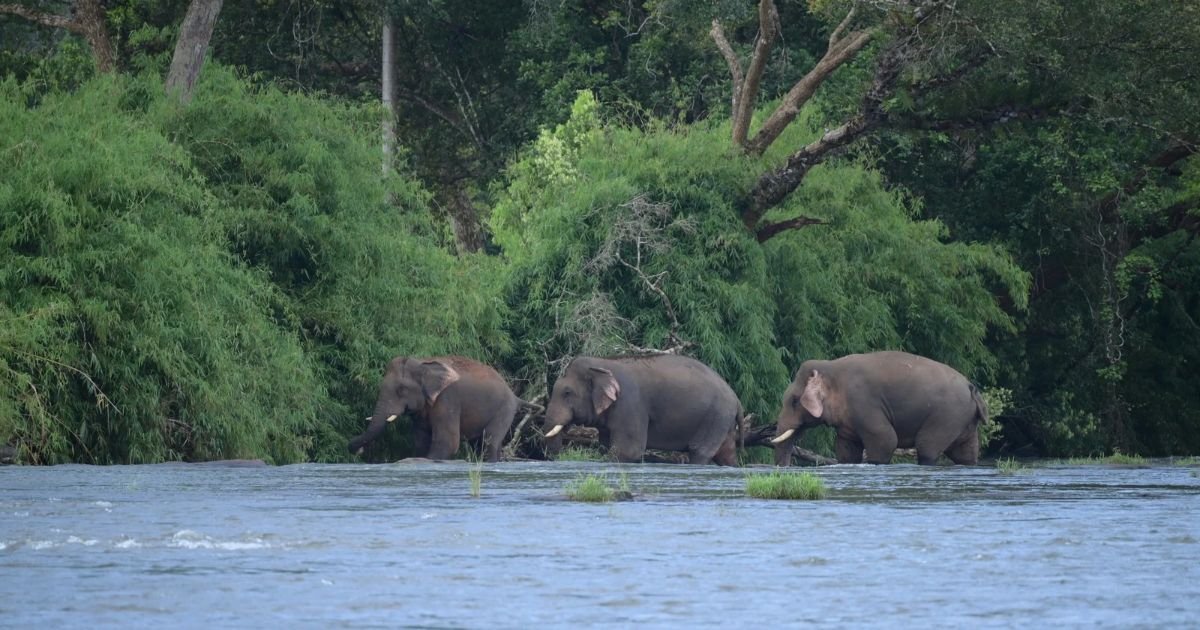
Life has become considerably more difficult for George(name changed) since an elephant destroyed his house for the second time. The damage eventually forced his family to leave their home in 301 Colony at Chinnakanal, Idukki, and relocate to Kanyakumari. George had received the land through a government redistribution programme in 2003. Over the years, he watched the settlement become an increasingly contested space between human habitation and elephant movement.
“Elephants and other wild animals are destroying the majority of our crops. But I can’t leave this land. I have a sibling relationship with these elephants,” he says.
His words carry a contradiction that is familiar to many families living along Kerala’s forest fringes. The elephants that destroy their crops and houses are also part of a landscape they have known for generations. For George, the conflict is not simply a question of land ownership — both humans and elephants are bound to the same landscape, with attachments and needs essential to its functioning. Moving away is not always an easy choice, particularly for families whose land, livelihood and social connections are tied to the place.
But the problem extends beyond the boundaries of George’s settlement. Across India, elephants are trying to move through landscapes that have changed considerably over the years. Forest patches have been separated by roads, plantations, settlements, railways and other infrastructure. Some traditional movement routes have narrowed or disappeared.
When elephants cannot use their familiar pathways, they have to find alternatives. Those routes may pass through agricultural fields and inhabited areas, bringing people and animals into closer contact.
The resulting conflict is often described as a problem of elephants entering human settlements. But there is another question that receives less attention: what happens when human development leaves elephants with fewer places to go?
Key numbers
150
Elephant corridors in India
32
Southern corridors
39.6%
Core forest decline
62%
Forest-cover loss in Wayanad
Source: Wildlife Institute of India / Project Elephant; NCRB; Wayanad forest-cover study; Environmental Monitoring and Assessment study.(Reported forest decline in Wayanad is between 1950 and 2018).
A landscape without continuity
Elephants are highly mobile animals, and their movement depends on the availability of food, water, shelter and suitable habitat across large landscapes. Radio-tracking studies in southern India have recorded elephant clan home ranges of between 105 and 320 sq km, with ranges in the Nilgiri Biosphere Reserve running as large as 562–799 sq km. A 2020 assessment by the IUCN notes that the linear extent of elephant home ranges can vary from 10 to 150 km or more, depending on their overall size, while seasonal resource availability and human disturbance influence movement within these ranges.
“There is a physiological need for elephants to move around. They need continuous pathways in search of food. The presence of plantations, resorts and quarries in these lands disrupts their pathways,” says Dr K. Vidyasagaran, former Dean of the College of Forestry, Kerala Agricultural University.
An elephant corridor is a relatively narrow stretch of natural habitat connecting larger forest patches and protected areas. These connections allow elephants to move between feeding grounds, water sources and breeding areas, and are particularly important where forests have become fragmented.
“It is the problem with island biogeography. Even humans will experience the same if they are isolated,”
Dr P.S. Easa,wildlife biologist formerly with the Kerala Forest Research Institute (KFRI)
“Corridors are important in maintaining connectivity between elephant habitats. If they are not maintained, habitats become isolated,” says Dr P.S. Easa, a wildlife biologist formerly with the Kerala Forest Research Institute (KFRI). “It is the problem with island biogeography. Even humans will experience the same if they are isolated,” he says.
Small, isolated populations are more vulnerable to genetic drift and inbreeding, which can reduce genetic diversity and increase the risk of inbreeding depression — affecting juvenile survival and reproductive rates.
The quality of the habitat also matters. When forests become degraded, elephants may have to travel farther to find sufficient food and water. The Wildlife Trust of India (WTI), in its Right of Passage project, notes that elephant herds in highly degraded and fragmented landscapes may have much larger home ranges than those in relatively better habitats.
“Fragmentation is the main issue in many places. When there is no continuity in elephant pathways, they search for other routes, which include human habitats,” says Dr Vidyasagaran.
The consequences extend beyond individual herds. Elephants are considered a keystone species and play an important role in maintaining forest ecosystems. As they travel, they disperse seeds through their dung, create clearings that influence vegetation growth and contribute to nutrient cycling. Their movement also helps maintain ecological connections across large landscapes, and other species benefit from the habitats they help sustain.
The loss of elephant movement routes, therefore, is not only a wildlife management problem. It can affect the ecological processes that support entire forest systems.
How many corridors can elephants still use?
India has one of the world’s largest populations of wild Asian elephants. Recognising the importance of habitat connectivity, the Government of India launched Project Elephant in 1991–92 as a centrally sponsored scheme. The programme was designed to protect elephants, their habitats and migration corridors, address human–elephant conflict and improve the welfare of captive elephants, and provide financial and technical support to elephant-range states. It is implemented through the Ministry of Environment, Forest and Climate Change in coordination with state Forest Departments and technical institutions, including the Wildlife Institute of India (WII).
The scale of the task became clearer through the nationwide identification of elephant corridors. In a December 2024 parliamentary response, the Environment Ministry said that 150 elephant corridors had been ground-validated across 15 elephant-range states and four elephant-bearing regions. West Bengal accounts for nearly 17% of the reported corridors. Among the four regions, 52 corridors are in the East-Central region, 48 in the North-Eastern region and 32 in the Southern region; the Northern region accounts for the remaining 12.
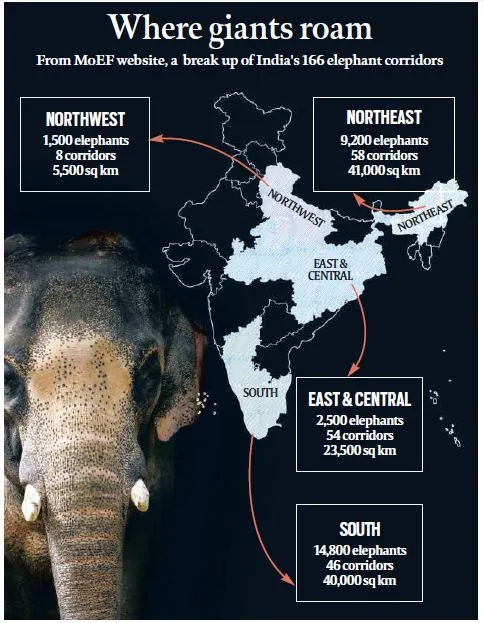
Image credit:Ministry of Environment and Forest
Kerala accounts for seven corridors in the national assessment: Begur–Brahmagiri, Kudrakote–Thirunelly, Kottiyur–Periya, Periya–Pannippad, Nilambur–Appankappu, Nilambur Kovilakam–New Amarambalam and Mudumalai–Nilambur via O’Valley.
But identifying a corridor does not automatically protect it. The routes may pass through different categories of land, including private holdings, plantations, settlements and areas outside protected forests. Securing them requires decisions involving land ownership, development permissions, rehabilitation and the interests of local communities. The management of wildlife habitats, including elephant corridors, remains primarily the responsibility of state governments, raising an important question: how effectively are states translating corridor identification into on-the-ground protection?
Dr Easa points out that the growing number of identified corridors also reflects the increasing fragmentation of elephant habitats. Protecting these routes, therefore, requires more than identifying them on a map. It calls for addressing the land-use changes that have disrupted their continuity.
The law cannot stop at the map
The issue has also reached the Supreme Court. On August 17, 2026, a three-judge Bench headed by Chief Justice Surya Kant, with Justices Joymalya Bagchi and V. Mohana, said states could not construct obstacles in elephant corridors merely because herds damaged crops or threatened livelihoods.
The Court directed the Union Environment Ministry to conduct a fresh nationwide survey of elephant corridors and submit a comprehensive report on steps taken by states to prevent blockades. It also sought information on the use of coercive methods, including fireballs, torches and armed groups used to drive elephants away. The intervention followed concerns about obstructions along elephant movement routes, including pathways used by herds moving between states.
Adv Santosh, legal representative of the Animal and Nature Ethics Committee, says criminal cases should be filed under the Wildlife (Protection) Act for blocking elephant corridors. As Schedule I animals under the Act, Asian elephants are granted the highest level of statutory protection, making the preservation of their migratory routes a binding legal obligation for state administrations. “There is a Supreme Court ruling that elephant corridors should be secured. But governing bodies are brought under severe political pressure while implementing those directives,” he adds.
The Court’s observations bring a difficult question into focus. Human–elephant conflict creates genuine risks for people and livelihoods. But blocking an established movement route does not resolve the ecological conditions behind that conflict — it can force elephants to seek other routes and bring them into contact with more settlements.
The legal status of a corridor and the specific directions issued by courts also matter. Not every elephant movement route automatically has the same legal protection, and the distinction between recognised corridors, protected areas and other habitat connections needs to be considered in conservation planning.
The Supreme Court’s intervention places greater responsibility on governments to examine whether existing corridors remain functional and whether development and conflict-mitigation measures are obstructing them.
A green landscape is not necessarily a healthy elephant habitat
The changing character of elephant habitats is not always visible from the ground. A landscape may appear green while losing the ecological qualities that make it suitable for wildlife.
The scale of forest change is reflected in research across elephant habitats. A study published in the International Journal of Environmental Research and Public Health reported that Wayanad lost 62% of its forest cover over 68 years, between 1950 and 2018, associating the decline with commercial plantations, government timber and bamboo contracts, and forest fires.
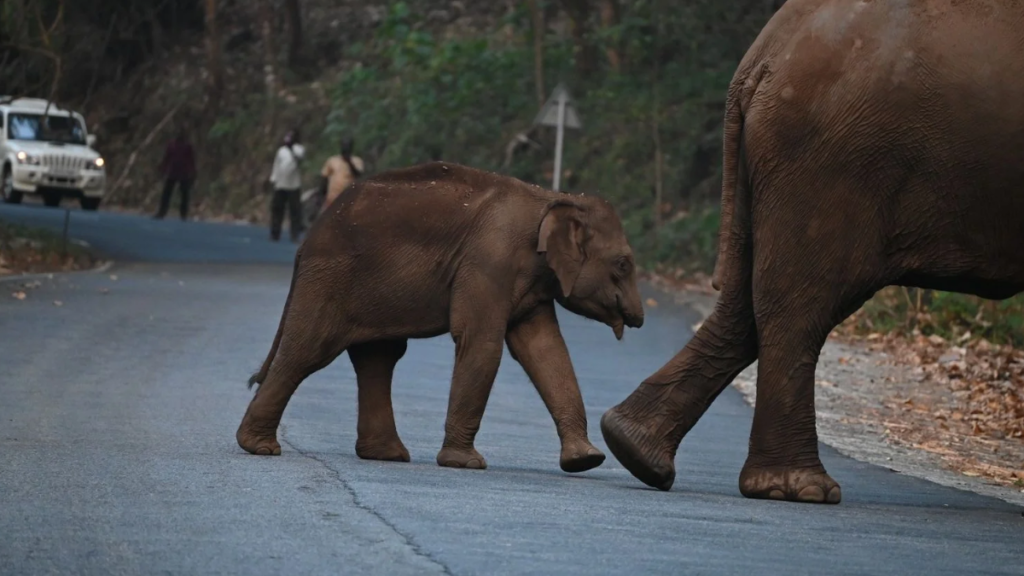
An elephant calf follows an adult across a forest road along the Ezhattumukham–Athirappilly stretch of Kerala, illustrating the challenges of human infrastructure intersecting with traditional elephant movement routes. Photo: Gilesh Chandran
Another study, published in Environmental Monitoring and Assessment, examined forest-cover changes across India’s major elephant ranges between 1930 and 2013. It found that 21.49% of the original forest cover was lost between 1930 and 1975, followed by a further decline of 3.19% between 1975 and 2013. The Southern elephant range recorded the highest forest loss, at approximately 13,084 sq km, followed by the North-Eastern range at 10,188 sq km, the Central range at 5,614 sq km and the North-Western range at 4,030 sq km. Overall, core forest areas shrank by 39.6% during the study period.
More recent, granular research illustrates how this kind of loss can be easy to miss on the ground. A study titled ‘Fragmentation of elephant corridors and community-based human-elephant coexistence in Nagaland, Northeast India’, published in Environmental and Sustainability Indicators in 2026, examined 11 elephant corridors connecting Nagaland and Assam. The researchers combined field observations, interviews with communities, spatial mapping and satellite-based vegetation analysis to assess changes in the corridors.
The study examined vegetation greenness using the Normalised Difference Vegetation Index (NDVI) for 1994, 2009 and 2024. Although vegetation greenness increased after 2009, the researchers found that much of the change was associated with the expansion and maturation of commercial plantations — including rubber, areca nut, teak and tea — rather than the recovery of native forests.
The distinction is important. Satellite images may show increased vegetation, but that does not necessarily indicate improved habitat quality for elephants.
The study classified the 11 corridors as stable, recovering, declining or severed, finding that changes in land use and habitat fragmentation had affected corridor quality and elephant movement, contributing to rising human–elephant conflict.
“Forest degradation is also one of the major pressures behind the current situation. It reduces the carrying capacity of habitats and affects their hydrological functions. Changes in soil and vegetation can make food less accessible, forcing elephants to travel longer distances, says Dr Vidyasagaran. He also points to rising temperatures and extreme heat in deciduous forests as additional pressures that may influence elephant movement.”
Although the research focuses on Nagaland, its findings raise questions about other elephant landscapes, including Kerala. Tea and cardamom plantations, settlements and tourism infrastructure have transformed parts of the Western Ghats. Whether these changes have affected the quality and continuity of elephant habitats in places such as Chinnakanal requires further scientific investigation.
When land distribution and elephant movement collide
Human–animal conflict is not new. Communities have historically experienced elephant raids and crop damage, but traditional knowledge and practices often helped maintain a degree of coexistence. Many indigenous communities viewed forests and animals as integral to their cultural and everyday lives.
Over time, land-use patterns changed. Tea plantations were followed by cardamom plantations, settlements, roads, power infrastructure and tourism facilities. Some settlements also emerged through government land distribution and rehabilitation programmes. The 301 Colony at Chinnakanal is one such complicated example: land was distributed to tribal families in an area also identified as elephant habitat. As human habitation became denser, elephants continued to use the landscape.
George says crop damage has become a persistent concern for residents. “Earlier, conflict was much less. But wild animal attacks have increased over time. We are only able to grow cardamom and mustard. All other crops have no guarantee against attacks,” he says.
He also points to the spread of invasive species and the difficulty elephants face in finding edible vegetation. “The authorities say they are planting grass in inland forest. I am unsure how much of it is actually happening,” he says.
The history of the settlement raises questions that cannot be answered through wildlife management alone. If families were allotted land in an elephant habitat, what assessment of the landscape was made at the time? Were the movement routes known? What rehabilitation options are now available to people whose homes and livelihoods are repeatedly affected?
For George, leaving was not simply a matter of moving from one house to another. It meant leaving behind land and a place to which he had become attached.
Relocation may be necessary in some severely affected areas, but it cannot become a convenient way to transfer the burden of conservation to vulnerable families.
Securing the right of passage
One of the organisations working to address the problem of corridor fragmentation is the Wildlife Trust of India, through its Right of Passage: National Elephant Corridors Project.
Its approach is based on four models. The first involves purchasing strategically important private land, rehabilitating affected residents and transferring the acquired land to the relevant Forest Department for legal protection. The second involves community securement, through which community-owned land is set aside using arrangements such as easements or benefit-sharing agreements. The third is government acquisition, supported by policy advocacy and technical assistance. The fourth involves public participation through a network of local stakeholders known as Green Corridor Champions, who help monitor and protect movement routes. The project is undertaken in partnership with Project Elephant, state Forest Departments and other organisations, and recognises that corridor protection cannot be separated from the livelihoods of people living in these landscapes.
There have been other efforts to restore critical elephant corridors through collaboration between state Forest Departments, the Ministry of Environment, Forest and Climate Change, and non-governmental organisations. These include the Kaniyanpura–Moyar corridor in Karnataka’s Bandipur landscape, the Chilla–Motichur corridor in Uttarakhand’s Rajaji landscape, and the Segur corridor in Tamil Nadu’s Mudumalai landscape.
WTI’s Thirunelli–Kudrakote corridor in Kerala is among the six corridors it lists as secured. Its restoration involved voluntary relocation of affected residents and the acquisition of private land by the Forest Department to facilitate elephant movement.
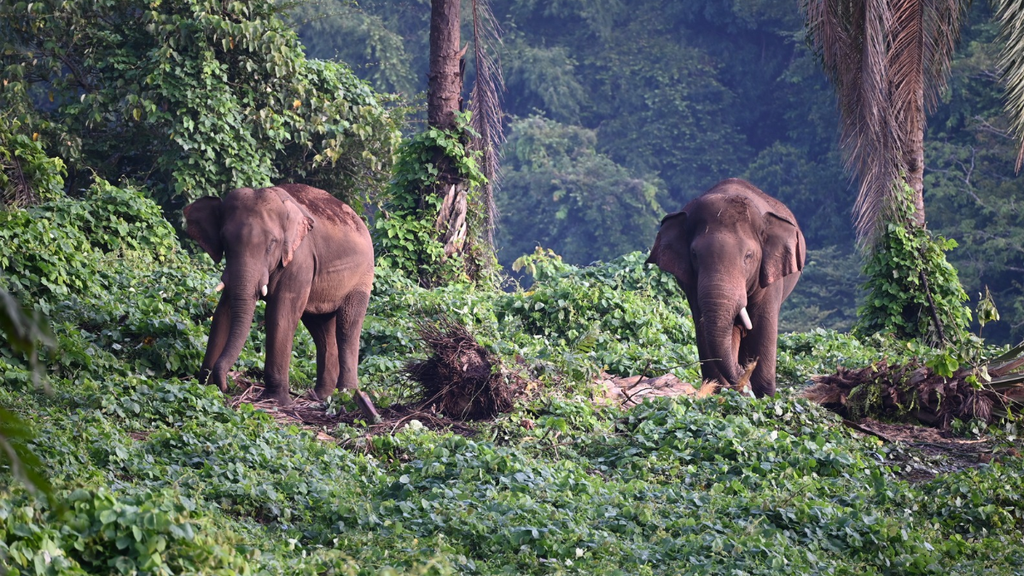
Two Asian elephants moving through dense vegetation in a forest landscape.Photo:Gilesh Chandran
The example offers a possible approach to a problem that often appears difficult to resolve: protecting a movement route while addressing the interests of people living within it. However, the extent of the ecological improvement, the cost of the intervention, and the long-term outcomes need to be assessed independently. How much land was secured? How many families were relocated? Has elephant movement through the corridor improved? What monitoring has been carried out since restoration? These questions matter because the success of corridor protection cannot be measured only by the amount of land acquired; it must also be measured by whether elephants can use the landscape safely.
When communities make space for elephants
In Assam, the Hati Bondhu initiative — meaning ‘Friends of Elephants’ — offers a different approach to human–elephant coexistence. Established under the Osom Educational Trust in 2018, it works with communities to address problems affecting elephants and people in parts of Nagaon district and along the slopes of Karbi Anglong.
One of its early interventions involved raising sagging high-voltage electric lines. With the help of local volunteers and community leaders, the organisation raised 288 such lines in areas where they posed a risk of electrocuting elephants.
Another intervention focuses on the availability of food. In Ronghong village, the organisation worked with farmers and other stakeholders to set aside community land for paddy cultivation, with the fields serving as an alternative feeding area for elephants during the harvesting season. According to Hati Bondhu, around 65 acres of community land are selected annually for this programme.
The organisation reports that a herd of approximately 350 elephants fed in the plantation for three days, allowing farmers in Ronghong and neighbouring villages to harvest their crops without disturbance. It also estimates that around 10,000 acres of agricultural land benefited from the intervention. Beyond paddy cultivation, Hati Bondhu has undertaken habitat enrichment by planting Napier and tiger broom grass, along with fruit-bearing trees such as jackfruit and elephant apple — reducing competition for food by creating alternative feeding areas along elephant movement routes rather than relying entirely on barriers and deterrents.
The programme offers an interesting example of community participation in conflict mitigation, though its reported outcomes need to be examined alongside independent observations from farmers, local authorities and researchers. How much crop damage has been avoided? Who finances the cultivation? How are participating farmers compensated if elephants damage the community paddy? Does the intervention work every year, and can it be replicated in other landscapes? The figures and outcomes cited here are those reported by the organisation.
The model also has limitations. It depends on the availability of community land, sustained participation and the ecological conditions of each area — a feeding buffer cannot replace a functioning elephant corridor or the protection of natural habitat. Its value lies in showing how local communities can become participants in conservation rather than being treated only as people affected by wildlife.
The cost of coexistence
Not every landscape offers the same possibilities. Dr Easa points to an arrangement in the Pakke Tiger Reserve of Arunachal Pradesh, where elephants move through a valley containing paddy fields cultivated by tribal farmers. Rather than treating every movement as a threat, dialogue between communities, the Forest Department and non-governmental organisations has helped establish arrangements that allow elephants to pass, with rice provided as compensation for crop losses.
“Food security has to be ensured by the state. A small farmer will have a much greater burden,” he says. He argues that conservation plans must be designed around the conditions of each landscape — a model that works in one location may not be suitable elsewhere.
Dr Vidyasagaran believes that some severely fragmented landscapes may require difficult decisions, including relocation. “I think relocation might be the only possible method in critically fragile areas. We have reached a tipping point where strict measures and regulations have to be taken against resorts, quarries and plantations,” he says.
Prakriti Srivastava, a former Indian Forest Service officer who retired as Principal Chief Conservator of Forests in Kerala, agrees that conservation requires difficult choices, but cautions that although relocation packages exist under government schemes, vested interests and poor implementation have often undermined them.
“We have to find something viable. The best is always reserved for the rich. Shouldn’t it be the other way around?” she asks, arguing that affected communities must receive meaningful investment and fair rehabilitation. Her observation raises an important issue: conservation cannot succeed by asking people with limited resources to bear the costs of protecting a landscape while leaving more powerful land users and development interests outside the discussion.
The expansion of resorts, quarries and other infrastructure in sensitive habitats also needs scrutiny. Tourism may generate income for local economies, but unregulated construction, noise, lighting and human activity can disturb wildlife and add pressure to already fragmented landscapes.
“They shouldn’t call it ecotourism. They should call it economic tourism.”
Prakriti SrivastaVA,former Indian Forest Service officer
“There is a lack of scientific studies on the carrying capacity of such ecotourism areas. There should be a strict cap on the number of people allowed each day,” says Dr Vidyasagaran, adding that visitor numbers and infrastructure must be regulated according to ecological conditions.
Prakriti Srivastava is more critical of the way the term ecotourism is used. “Ecotourism should not leave a human footprint behind. Whatever is happening right now is madness in the pursuit of making more money,” she says. “They shouldn’t call it ecotourism. They should call it economic tourism.”
She argues that conservation cannot be separated from political accountability and meaningful engagement with affected communities.
Coexistence requires more than conflict mitigation
Human–elephant conflict is often addressed through immediate measures such as trenches, electric fencing, warning systems, barriers and rapid-response teams. These interventions can be important in protecting lives and livelihoods, but they do not necessarily address the fragmentation of the landscape.
A longer-term approach requires identifying areas where elephant habitats can be protected, where people and elephants will continue to share space, and where intensive conflict management may be necessary. One landscape-planning approach discussed in regional conservation planning distinguishes between Elephant Conservation Zones, Human–Elephant Coexistence Zones and Elephant Management or Exclusion Zones.
The first focuses on protecting core habitats and restoring degraded forests. The second covers areas where communities and elephants share space and require early-warning systems, appropriate barriers and community response teams. The third concerns heavily human-dominated areas where persistent conflict may require carefully assessed management measures.
Such planning must be based on ecological evidence, land-use patterns and the willingness and rights of local communities. It cannot be implemented through a uniform formula across all elephant landscapes. Dr Vidyasagaran argues that the Forest Department’s role should extend beyond conventional forest administration to include biological management and the protection of ecological processes. He also stresses that forests belong to the people who depend on them — agriculture departments, panchayati raj institutions, tourism authorities and the Forest Department must work together on decisions that affect land use and habitat connectivity.
The challenge is not simply to prevent elephants from entering human settlements. It is to understand why they are moving into these areas, whether their traditional routes remain accessible and what can be done to reduce the pressures on both sides.
For George, the consequences are already personal. His family has moved, but the questions surrounding the land they left behind remain.
India has identified elephant corridors, established a national conservation programme and begun restoring some critical movement routes. Community-led initiatives have also shown that local participation can contribute to reducing conflict. Yet the gap between identifying a corridor and keeping it functional remains considerable.
The right of passage for elephants cannot mean ignoring the rights of people who live alongside them. Nor can the protection of human livelihoods mean closing the routes on which elephant populations depend.
Both require a landscape where development decisions account for wildlife movement, communities receive fair treatment and conservation commitments are carried through on the ground. The future of coexistence will depend on whether governments and communities can make those decisions before the remaining connections between forests disappear.
“The question is, are we happy to suppose that our grandchild may never be able to see an elephant except in a picture book?” — David Attenborough
EP Deep Dive: Data & Solutions
Kerala’s Pink Water Lily Paradise is in an Ecological Question
How Malarikkal’s spectacular water lily bloom has created a tourism economy while raising concerns about invasive plants, native biodiversity and the ecological future of Kuttanad’s wetlands.
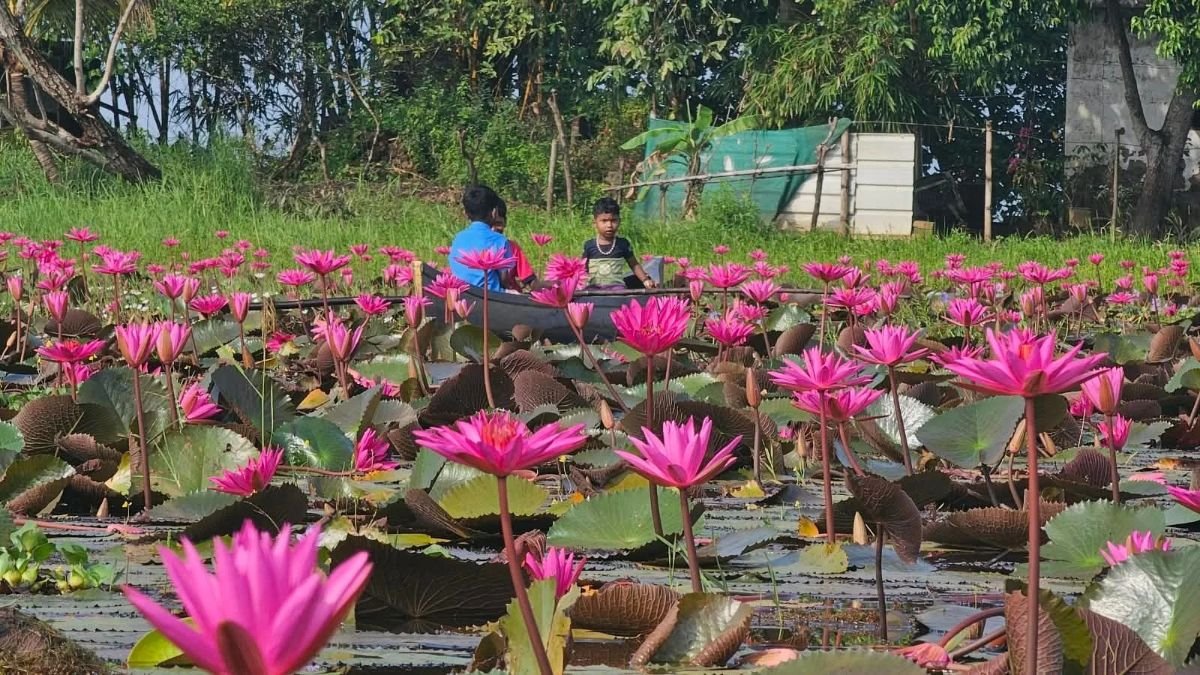
In 2018, a dance video featuring two young girls against a backdrop of pink water lilies went viral on TikTok. Captioned ‘Malarikkal Ambal Padam’, the video brought unexpected attention to a village in Kerala’s Kottayam district. What was once primarily an agricultural landscape soon began attracting visitors eager to see the seasonal flowering for themselves, recalls Lijo John, a resident of Malarikkal.
The spot, locally known as J Block 9000, gradually emerged as a tourist destination. Visitors from across Kerala, followed by tourists from other states, began arriving to see the pink flowers covering the flooded paddy fields. Over the years, the annual bloom has become an important source of seasonal income for the village.
The economic impact has been considerable. Local estimates suggest that Malarikkal generated around 6 crore rupees in tourism revenue over four months in 2026. Nearly 200 boat operators offer rides through the flowering fields, while shopkeepers and flower sellers also benefit from the seasonal rush. One boat operator reportedly earned around 3 lakh rupees from boat services during the season, while local accounts indicate that several others made at least 2 lakh rupees. Land prices have also increased, with an acre reportedly valued at around 15 lakh rupees.
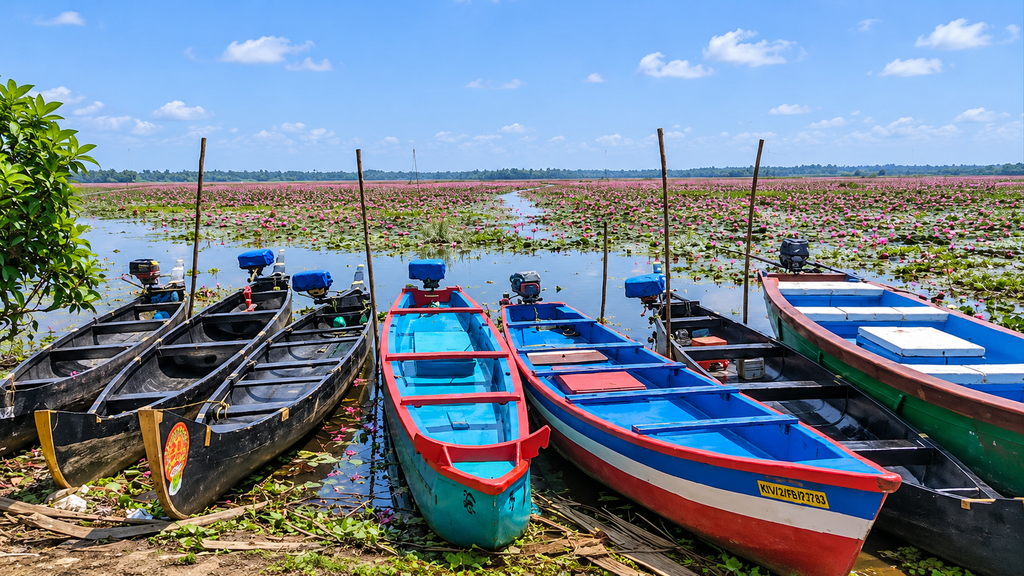
The annual flowering season has grown into a major local attraction, prompting the organisation of a dedicated tourism festival. The Malarikkal Water Lily Fest was inaugurated on August 8, 2023, by Kottayam District Police Chief K. Karthik. It was organised by Thiruvarppu Grama Panchayat, the Malarikkal Tourism Council and other local stakeholders.
Key numbers
₹6 crore
Estimated tourism revenue generated in Malarikkal over four months in 2026
1,850
Acres of paddy fields in Malarikkal
65,300 kg
Estimated fresh water lily biomass produced per hectare
200
Boat operators offering rides through the flowering fields
Source: EdPublica reporting; Plant Science Today (2026 study). Tourism revenue and boat operator figures are local estimates.
The flowers are best viewed between 6 am and 9 am, when they are fully open. The flowering season generally lasts from July to October, when the paddy fields remain flooded between cultivation cycles. But the flowers that have brought Malarikkal economic recognition have also raised ecological concerns. A study published in Plant Science Today identifies the pink-flowered water lily spreading across Malarikkal as Nymphaea rubra Roxb. ex Andrews. Researchers have examined its growth, reproduction and spread across the region’s paddy fields.
An earlier ecological investigation by the Jawaharlal Nehru Tropical Botanic Garden and Research Institute (JNTBGRI), however, examined a different pink water lily in another part of Kuttanad. It identified the plant as Nymphaea × omarana, a hybrid water lily. Although both plants belong to the water lily group and produce pink flowers, they have different scientific identities.
An agricultural landscape under pressure
According to Lijo John, one of the landowners of the area, Malarikkal’s 1,850 acres of paddy fields are owned by around 650 individuals. Water lilies grow during the interval between paddy cultivation cycles, spreading across the flooded fields when rice is not being cultivated. Once the flowering season ends, the fields must be prepared for the next agricultural cycle. This creates a practical challenge for landowners and those involved in tourism. Boat rides, for instance, are not permitted in every field.
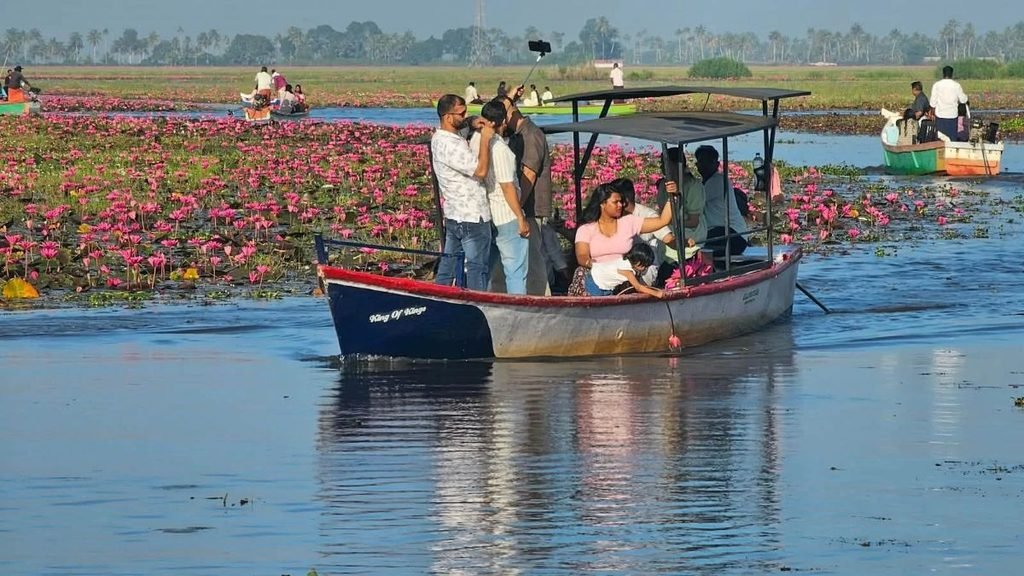
“There is a field nearby called Thiruvaikkiri. Boats are not allowed there now. Once the water in the field is drained, riding a boat through the field is harmful for the plot,” says Restin K Mathew, a boat operator and Malarikkal resident.
Such restrictions reflect the continuing agricultural importance of these fields. Even as tourism provides seasonal income, the land must remain suitable for paddy cultivation. Tourist activities therefore have to accommodate the requirements of farming. The ecological concerns extend beyond the immediate effects of tourism. The 2026 study, titled Drivers of invasion: The spread of pink-flowered Nymphaea rubra Roxb. ex Andrews in paddy ecosystems of Kuttanad, South India, examines the growth and spread of Nymphaea rubra in Malarikkal.
Published in Plant Science Today, the research examines the plant’s growth patterns and reproductive behaviour in the region’s paddy fields. Field observations conducted in J Block 9000 between June and September 2024 helped researchers study its growth under different water conditions.
The study estimates that the plant produces approximately 65,300 kg of fresh biomass per hectare. It also identifies seeds as the primary means of propagation in the fields, with water helping disperse them. The researchers found that water depth influenced the plant’s growth and flowering, with shallow conditions favouring greater leaf and flower production.
Native aquatic plants face competition
Titled The Pink Bloom of Kuttanadu: An Ecological Investigation, the study was undertaken with support from the Kerala State Biodiversity Board. It identified N. × omarana as an introduced horticultural hybrid suspected to have escaped from nurseries into natural wetlands. Field surveys found it widely distributed across Kuttanad, particularly in inland waterways and paddy fields. The study also recorded reports of the plant in Kozhikode.
One of the major concerns identified by the investigation is the displacement of native aquatic vegetation. The study identifies two native water lily species in the region, Nymphaea pubescens and Nymphaea nouchali, whose survival could be threatened by the spread of N. × omarana.
Lotus (Nelumbo nucifera), once common in Kuttanad, has also become increasingly restricted. According to the investigation, it is now almost confined to certain cultivated ponds. The large leaves of N. × omarana form dense layers across water bodies, limiting the amount of sunlight reaching the water. This can alter conditions for algae and other aquatic organisms that depend on these habitats.

The investigation also records reduced natural water flow in affected parts of Kuttanad. Interactions with local residents revealed that the spread of the hybrid water lily had coincided with the accumulation of sludge and decaying plant material, contributing to deteriorating water quality. Traditional water transportation has also reportedly been affected.
The researchers raise concerns about methane production from accumulated decaying vegetation. The extensive foliage is also reported to reduce evaporation, potentially influencing local humidity. These effects require further field measurements to establish their extent. The plant’s resistance to eradication efforts adds to the challenge of controlling its spread. These findings relate to the hybrid water lily examined in the JNTBGRI investigation.
The Ecological Questions Surrounding Its Removal
At Malarikkal, the water lilies are cleared after the flowering season to prepare the fields for the next paddy cycle. According to landowner Lijo John, herbicides are used to eliminate the plants. This raises another set of environmental questions. The ecological impact of the plant’s growth needs to be considered alongside the possible consequences of the methods used to remove it.
The chemicals involved, their concentrations, application methods and the possibility of residues entering the water require further investigation. Their potential effects on fish, aquatic insects, other plants and water quality are particularly relevant in a landscape where agricultural activity and aquatic life share the same water bodies.
Local fish varieties include cheru meen, varaal, vaala and kaari. Whether the seasonal growth of the lilies or the herbicides used to remove them affects these fish populations remains unknown. The available research does not provide measurements of pesticide residues, dissolved oxygen levels or changes in fish populations in Malarikkal.
A site-specific assessment would help establish these effects. Monitoring water quality and aquatic biodiversity during the flowering, plant-removal and cultivation periods could provide a clearer picture of the changes taking place in the fields.
Exploring Alternative Uses For the Water Lily
The economic value of the flowering season makes the management of the water lilies more complicated. The plants now support a tourism economy that provides income to boat operators, shopkeepers and other local businesses. Finding ways to manage their spread while accounting for these livelihoods is an important part of the challenge.
Dr E. A. Siril, Professor and Head of the Department of Botany at the University of Kerala’s Kariavattom campus, is exploring the possibility of developing value-added products from water lilies. The research examines the use of the plant in products such as herbal tea, face wash, incense sticks, leaf plates and soap. Samples have been collected from Attingal and nearby locations to assess their suitability.
“Our study is about making value-added products from water lilies. Herbal tea, facewash etc. As far as we have considered it is economically viable as well. We collected samples from Attingal and nearby places. So far they are going good,” says Siril.
The plant’s seasonal availability, however, poses a challenge for commercial production. “The only problem regarding its economic viability is that it is a seasonal plant. Its unavailability in other seasons can affect the production,” he says. Siril believes that alternative uses could help derive economic value from the plant while addressing concerns about its invasive growth.
“As this is an invasive species, and they generate a lot of income through tourism, what we need to look at is other such alternative methods where we can put them into use,” he says.
The product-development work is still at an exploratory stage. Its commercial viability, production capacity and ability to utilise substantial quantities of harvested plant material will need to be established before it can contribute meaningfully to managing the plants’ spread.
Protecting the Wetland Without Overlooking Livelihoods
Malarikkal’s landowners have reservations about greater government intervention in the fields. Some consider the land private property and are concerned that additional regulations could interfere with how they manage cultivation and tourism.
This presents a challenge for wetland conservation. The fields support agricultural activity, provide seasonal tourism income and form part of the wider Kuttanad wetland ecosystem. Any effort to manage the spread of the water lilies must account for all three. The ecological investigations highlight the need for a better understanding of the plants’ spread and their effects on Kuttanad’s wetlands. For Malarikkal, this would involve examining seasonal changes in native aquatic vegetation, water quality and biodiversity, alongside the effects of clearing the plants before cultivation resumes.
The pink bloom has given Malarikkal a new economic identity. Its future, however, remains closely tied to the health of the paddy fields and the wetland ecosystem that sustains them. Understanding the ecological consequences of the flowering, tourism activities and plant-removal practices will be essential to managing this landscape without undermining the livelihoods it now supports.
EP Deep Dive: Data & Solutions
After a Scorching Summer, Delhi’s Children Are Slow to Return Outdoors
Extreme heat and children are the focus of this EdPublica report. Parents in Delhi and Noida explain how rising temperatures, air pollution and changing routines are keeping children indoors.

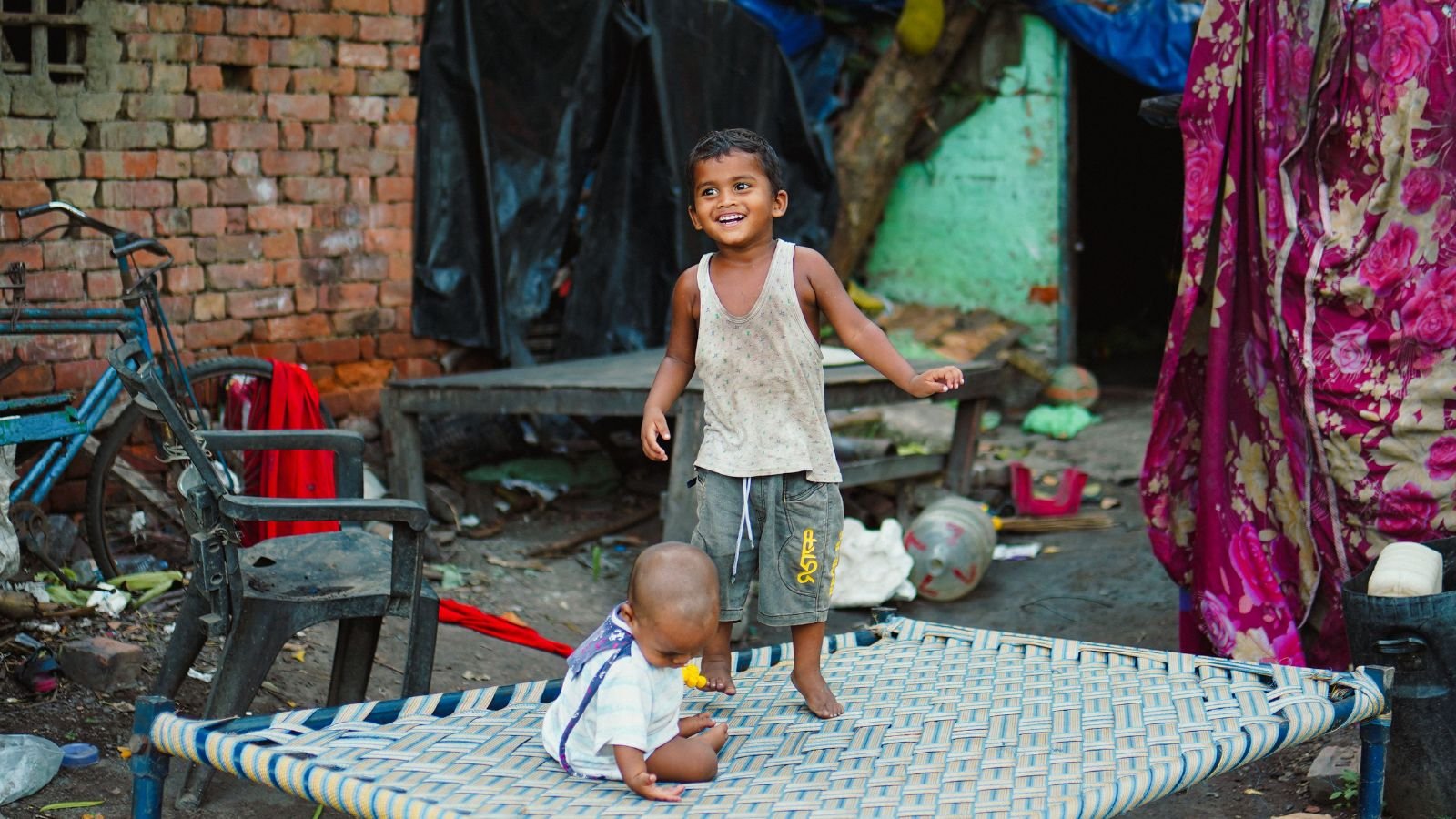
After months of extreme heat, Delhi’s children face another challenge: returning outdoors. Heat, air pollution and changing routines are reshaping how children play. EdPublica spoke to parents in Delhi to understand how extreme heat has changed their children’s play habits and what it might take to bring them back outdoors.
New Delhi: Mohini Bisht is a first-time mother. Her two-year-old son, Shomu (name changed), has just begun to string together his first words. Among the first he learned is “AC” (air conditioner). Living in the National Capital Territory, the family faces daytime temperatures that regularly reach between 42 and 45 degrees Celsius.
“Mummy, garmi lag rahi hai, AC chala do” (“Mummy, it’s hot, turn on the AC”), her son now says. He has learned to turn the AC on and off by himself. On especially humid days, he gets up and flicks the switch on his own.
In April, Delhi saw a maximum of 42.8 degrees Celsius, the hottest for that month in four years. In May, nighttime heat also broke records, with the minimum temperature hitting 32.4 degrees Celsius, the warmest May night in nearly 14 years, according to the India Meteorological Department (IMD).
In June, the heat index, or ‘feels-like’ temperature, soared to 51.3 degrees Celsius, the highest of the year. The heat index combines air temperature and relative humidity to show how hot it actually feels, not just what the thermometer shows.
“The whole day you’re just waiting for evening so you can go out,” Bisht said. As temperatures rose, she stopped taking her son out to play. “If the child gets dehydrated or faces issues, it becomes a big problem,” she said. Her parents and in-laws also advised her not to take him outside.
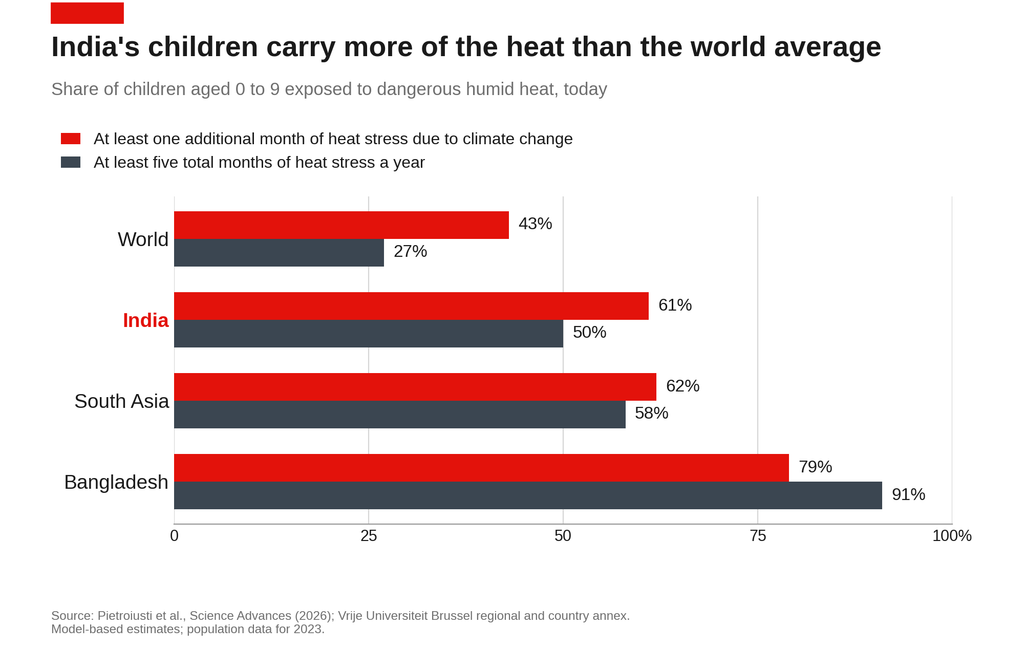
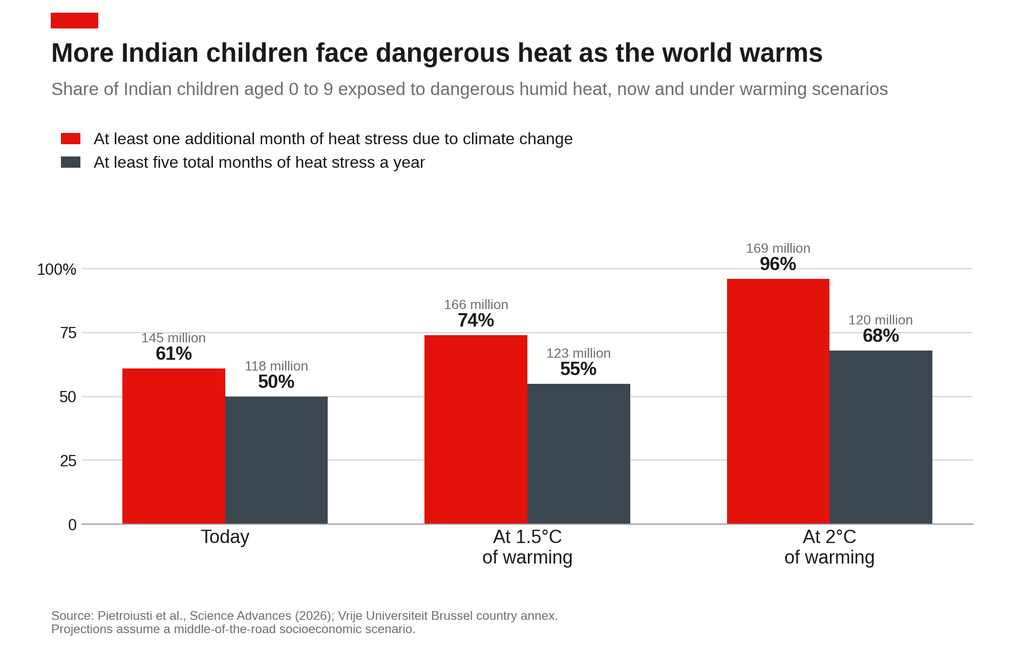
Her caution has a basis. India’s exposure is higher than the global average. Worldwide, up to 560 million children aged 0 to 9, or 43 per cent, live through at least one additional month of heat stress a year because of climate change. In India the share is 61 per cent. For five or more months of total heat stress, the Indian share is 50 per cent, against 27 per cent globally. South Asia is one of the regions with the most children exposed: about 167 million children, or 62 per cent, face an additional month, and in Bangladesh the share is 79 per cent.
Extreme Heat and Children: The Challenge of Outdoor Play
Nearly 145 million Indian children aged up to nine, or 61 per cent of that age group, live through at least one additional month of dangerous heat stress each year because of human-induced climate change, according to a study published in August in Science Advances by researchers led by Vrije Universiteit Brussel. The study estimates that climate change has doubled the number of Indian children facing five or more months of dangerous heat a year, from 59 million to 118 million. The authors note that children are especially vulnerable because their bodies heat up faster than adults’ and regulate temperature less efficiently.
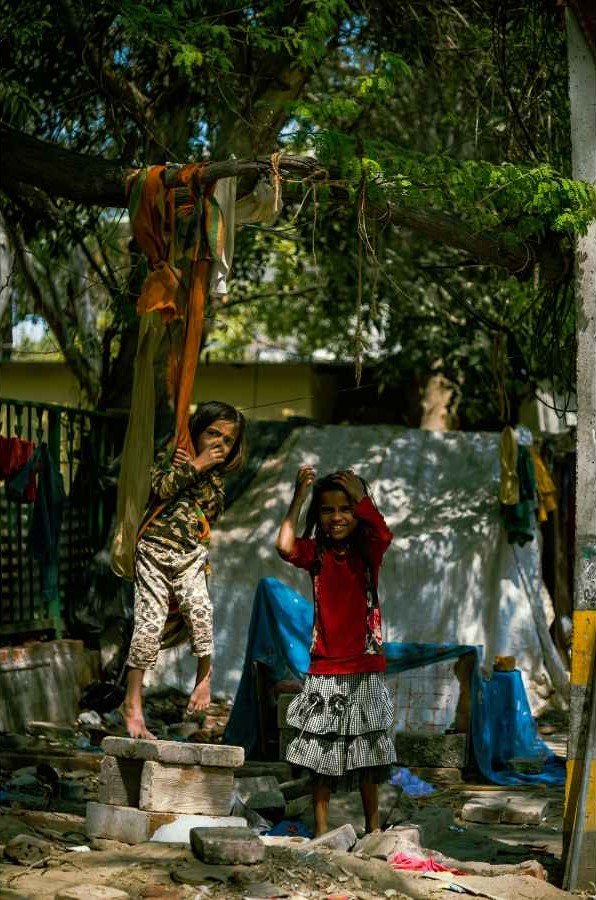
Even as early October brings daytime highs in Delhi that linger in the mid-30s, according to IMD forecasts, summer is retreating from most of north India, bringing the season’s first pleasant evenings. For many families, this raises the question: after months indoors due to oppressive heat, will children return outside?
The challenges don’t end with summer. “Apart from the heat, there is also poor air quality,” said Dr Himani Narula, a development paediatrician in New Delhi. Seasonal illnesses, too, play a role: “Sometimes there is a dengue season and other times there is a flu season.” Parents worry their children will pick up infections, making it hard to let them outside for long. “For all these reasons, children are ultimately at home, even when the weather improves,” she said.
The air is a genuine constraint, not just a parental worry. A 2021 study in Environmental Science and Pollution Research reported an almost 30 per cent rise in daily emergency visits for acute respiratory symptoms among Delhi’s children on high-pollution days. Last winter, the Delhi government suspended outdoor school activities in November and December after the Supreme Court warned against holding outdoor sports in hazardous air.
EdPublica spoke to seven parents from middle-class households in Noida-Delhi, all of whom said they have reorganised their days around the heat, moving their children’s playtime from evening to night to escape gruelling temperatures and humidity. They are not a representative sample, and EdPublica did not measure how much time children actually spend outdoors.
“Dinner is cooked first, then comes the outing, then a late meal and bed. The schedule has changed because of the heat,” said Sunita Kumar, a home tutor and mother of three, including a six-year-old.
Kumar, who lives in Mayur Vihar, New Delhi, worries the routine is changing children’s relationship with the outdoors. “Kids nowadays aren’t seeing the sun,” she said. “They go to school in the morning, stay inside all day, then go home. Even a one-hour tuition is indoors.” This habit, she fears, may outlast the weather. “Kids have built a habit without realising,” she said.
“Kids nowadays aren’t seeing the sun”
The pattern has research behind it. In a 2023 study in JAMA Pediatrics, researchers fitted preschoolers at a university childcare centre in Texas with activity monitors for a week. On hotter days, the children spent more of their outdoor play sedentary, about 70 per cent of it at 35 degrees Celsius against 62 per cent at 22 degrees, and less in moderate-to-vigorous activity, 21 per cent against 27 per cent. The sample was small and the temperatures were milder than Delhi’s summer, but the direction is clear. A 2022 review of more than 150 studies in the journal Temperature also warned that parents’ perception that it is “too hot to play” can further restrict children’s activity.
Moving play to cooler hours is, in fact, what heat-safety guidance advises, alongside hydration and shaded, green outdoor spaces. In that sense, the parents’ adaptation is sensible. The concern is what happens once the heat passes.
The human body and brain tend to acclimatise to repeated exposure of any kind, Dr Narula explained. Keeping children in air-conditioned rooms and away from natural weather, she said, can get their bodies used to the indoor environment and blunt their heat tolerance.
Direct evidence in children is scarce. A small study in Indoor Air compared 20 adults used to air-conditioned and naturally ventilated environments in a climate chamber, measuring skin temperature, sweat rate and thermal comfort. It concluded that long-term exposure to stable air-conditioned environments may weaken thermal adaptability. The study involved adults, not children, and does not show that air conditioning harms a child’s heat tolerance, but it makes Dr Narula’s concern plausible.
But temperature isn’t the only factor shaping how children respond to heat. Bisht notes that her son complains about the heat when alone with her, but behaves differently around friends. “If I bring him with friends or cousins, he plays on the balcony in the sun and enjoys it,” she says. “But if he’s alone with me, he voices his opinions.”
“Children’s tolerance for discomfort changes when other kids are around,” Dr Narula explained. “What the kid is saying is I will accept the discomfort of heat if it means I am enjoying time with peers.” The brain is adapting to these climatic challenges, and according to her, the child needs to get used to this conditioning.
Research on friendship and physical activity points the same way. A 2013 systematised review of friendship networks in the International Journal of Behavioral Nutrition and Physical Activity found that higher activity among friends is associated with higher activity in the individual, and longitudinal studies showed children’s activity shifting to match their friends’. Much of this work is observational, and it is hard to separate influence from children simply choosing similar friends. Still, it hints at what could bring children back outdoors: the company of other children. Parents often tell Dr Narula their kids stay home because there are few other children for them to play with.
Schools, where children already gather, are the obvious place to start, Dr Narula said. Before lessons begin, when the morning heat is lower, children could spend time in the open air, she said: sports, a prayer assembly, physical training, “any kind of activity which children can do with each other in a good setting.”
From toddlerhood through the teenage years, “children look for peers,” something that motivates them far more than being around parents, Dr Narula explained. The outdoors, she said, offers something indoor play cannot, and sunlight helps raise dopamine levels and, with them, mood.
The best-documented benefit of outdoor time in children is for eyesight. A 2024 meta-analysis in Ophthalmic Research found that children and adolescents with the most time outdoors had roughly half the risk of developing myopia of those with the least, and that risk fell as outdoor hours rose: going from 3.5 to 7 hours a week was linked with a 20 per cent lower risk. The leading explanation is that bright outdoor light prompts the retina to release dopamine, which slows the eye’s growth, though the mechanism is not fully settled. Outdoor time did not slow the progression of myopia in children who already had it.
The cooler weeks may be a short window. Whether children use it will depend less on the thermometer than on whether there is anyone outside to play with, and on how long the air stays clear enough to let them.
This article is written as part of the Media Fellowship under the Cities on Fire Initiative in Bangkok, Colombo, Jakarta and Manila and ‘Cooler Cities. Healthier Children. Brighter Futures.’ Initiative in New Delhi.
-

 Math4 months ago
The 2026 Fields Medals: Four Proofs, Four Decades-Old Problems Solved
-
EP Deep Dive: Data & Solutions5 months ago
West Asia Crisis: Can Kerala’s Returning Gulf Migrants Find a Future in the Green Economy?
-
Interviews2 months ago
From Scams to Screens: How the National Stock Exchange Rewrote India’s Equity Story
-
Climate & Environment6 months ago
The Climate World Cup? How Climate Change Could Affect Player Performance at the 2026 World Cup
-
Society5 months ago
What Is Civilisational Diplomacy? Understanding India’s Newest Foreign Policy Tool
-
Education1 week ago
India’s Richest Agree on One Cause Above All Others: Education
-
Society6 months ago
From Bell Labs to the Classroom: A Second Career in Teaching
-
EduNews & Views4 weeks ago
Indian universities lead Asia in research output per faculty, but the country’s top six all slip in QS ranking