
Society
Death toll 280 & counting: what is the science behind Kerala’s deadly landslides?
Haunting images reveal uprooted trees, homes reduced to rubble, and bridges shattered, all swallowed by muddied waters. Each scene tells a story of loss, despair, and the enduring resilience of those affected


The landslides in Wayanad, a tourist-friendly district in the southern Indian state of Kerala, are rapidly becoming one of the most devastating natural disasters the region has ever seen. Entire areas in Chooralmala and Mundakai villages have been washed away, with local media reporting the destruction of over 250 homes. Tragically, the death toll has surpassed 280, marking a grim chapter in the region’s history.
The disaster, the worst since the devastating floods of 2018, has left a heart-breaking trail of destruction. Haunting images reveal uprooted trees, homes reduced to rubble, and bridges shattered, all swallowed by muddied waters. Each scene tells a story of loss, despair, and the enduring resilience of those affected.
Nestled in the rugged terrain of the Western Ghats, Wayanad is renowned for its stunning vistas and is a cherished tourist destination, attracting over 100,000 visitors each year. This picturesque district, home to indigenous tribes and dotted with lush tea and cardamom estates, holds a unique charm. Yet, beneath its beauty lies a history of vulnerability to landslides.
A 2011 report by a panel of experts led by ecologist Madhav Gadgil classified the entire Wayanad region as “fragile, medium fragile, and less fragile,” highlighting its susceptibility to landslides
A 2011 report by a panel of experts led by ecologist Madhav Gadgil classified the entire Wayanad region as “fragile, medium fragile, and less fragile,” highlighting its susceptibility to landslides. This designation underscores the delicate balance of this ecologically sensitive area, where the enchanting landscape masks the underlying risks faced by its resilient inhabitants.

In the past decade alone, landslides have claimed the lives of 255 people in Kerala. In 2018, 109 people died in landslides, and in 2020 and 2021, around 182 lives were lost to these disasters. August 2020 saw a particularly deadly landslide in Pettimudi, which resulted in 66 fatalities.
Understanding Landslides
Landslides, also known as landslips, encompass a dramatic and diverse array of ground movements that can reshape landscapes in an instant. These natural events, ranging from rockfalls and mudflows to slope failures and debris flows, occur across various environments. Whether cascading down steep mountain ranges, eroding coastal cliffs, or shifting underwater as submarine landslides, these movements highlight the dynamic and unpredictable nature of the terrain. As communities and scientists grapple with their impacts, the stories behind these powerful geological forces continue to unfold.
While gravity is the main force behind landslides, various factors influence slope stability, creating conditions that make a slope vulnerable to failure. Often, a specific event like heavy rainfall, an earthquake, or construction activity triggers a landslide, though the precise cause isn’t always identifiable.
Human activities often exacerbate landslides. Urban sprawl, mining, and deforestation contribute to land degradation, reducing soil stabilization by vegetation. Additionally, global warming and other environmental impacts increase the frequency of extreme weather events, further triggering landslides.
The Catastrophe in Wayanad
Mundakai, the epicentre of a series of landslides, received 572 mm of rain in 48 hours. According to the India Meteorological Department, rainfall exceeding 204.4 mm per day is considered extremely heavy. Experts attribute the landslide in the Mundakai region to this heavy rainfall. In 2019, the Puthumala landslide occurred just two to three kilometres from the current disaster site.
Dr. S. Abhilash from the Cochin University of Science and Technology highlighted the region’s geographical vulnerability. He stated in a video shared on the university’s official Facebook page that heavy nighttime rain was the primary cause of the landslide.
The phenomenon, technically known as a mesoscale mini cloudburst, involves 15 to 20 cm of rain falling within two to three hours. Such events are now occurring in North Kerala, significantly impacting the region
In the past two weeks, the Konkan region (a stretch of land by the western coast of India) experienced heavy rainfall due to a low-pressure area from the Gujarat coast to North Kerala. North Kerala received 50 to 70 percent more rain than usual during this period, with areas including Wayanad recording over 24 cm of rain. The thickening of clouds in the southeast Arabian region contributed to this heavy rainfall.
This phenomenon, technically known as a mesoscale mini cloudburst, involves 15 to 20 cm of rain falling within two to three hours. Such events are now occurring in North Kerala, significantly impacting the region.
Mesoscale Cloudbursts and Kerala Floods
An earlier study published in Science Direct linked mesoscale cloudbursts to the 2019 Kerala floods. Researchers at the Advanced Centre for Atmospheric Radar Research (ACARR), Cochin University of Science and Technology (CUSAT), observed that rainfall exceeding 50 mm in two hours was reported in many places from 8 a.m. to 10 p.m. on August 8, 2019.
The Western Ghats, which run through Kerala, are prone to frequent landslides during the biannual monsoon seasons. The Gadgil Committee report classified areas like Kavalappara in Malappuram district and Puthumala in Wayanad district, which experienced fatal landslides in 2020, as Ecologically Fragile Land (EFL). Climate change exacerbates these issues.
Kerala has faced significant challenges due to climate change in recent years. The state endured a severe drought in 2015, followed by the devastating Ockhi cyclone in 2017. In 2018 and 2019, massive floods and landslides wreaked havoc.
The extreme rainfall of August 2019, which caused landslides and mudslides, leading to downstream flooding, was a ‘mesoscale cloudburst’—a rare phenomenon in Kerala usually seen in North India, according to the study published in ScienceDirect.
Given the increasing intensity of rainfall, the probability of landslides in the Western Ghats’ high to mid-land slopes during the monsoon seasons rises. Human intervention, primarily for crop cultivation, has altered the Western Ghats, making the region more prone to landslides of various scales.









Society
Artificial Intimacy: Sherry Turkle’s Warning About the Chatbot Age
Artificial Intimacy by Sherry Turkle examines how chatbots may reshape empathy, attachment and human relationships, from childhood to old age.


The MIT sociologist’s new book argues that talking to machines wears down the skills we need to live with each other, and that this starts in the nursery.
Sherry Turkle asked ChatGPT to play her mother. She had already fed it her own memoir, which describes a strained relationship with a woman who died in 1968. The chatbot obliged. Turkle describes the result in her new book as seductive and disturbing, and she comes away convinced that bringing the dead back as chatbots is dangerous: “playing with fire”, she writes.
The episode sits in Artificial Intimacy: Who We Become When We Talk to Machines, published by Little, Brown, which runs to 288 pages and sells in the US at $32. It is the fullest statement yet from one of the best-known critics of digital life. Turkle holds the Abby Rockefeller Mauzé chair in the social studies of science and technology at MIT. She trained as a sociologist and as a clinical psychologist. Her view is that heavy chatbot use does harm at every stage of life, from toddlerhood to old age and bereavement.
A career spent on one question
Turkle has been asking what machines do to the people who use them for four decades. The Second Self (1984) and Life on the Screen were early studies of how computers shape identity. Alone Together (2011) looked at social media and social robots, and Reclaiming Conversation (2015) at what phones and texting have done to talk. In 2021 she published a memoir, The Empathy Diaries, which is where the material about her mother comes from.

According to MIT News, she describes her subject as the inner history of technology, meaning not only what a device does but what it does to the person using it. This book applies that approach to chatbots, and it is her most alarmed.
The argument, stage by stage
Unless stated otherwise, Turkle’s remarks and the accounts of the people she interviewed come from material released by MIT. EdPublica did not interview her for this article.
The book is built around the stages of a life, and each section is driven by interviews.
Artificial intimacy, children and attachment
With children, Turkle reports a blurring of categories. One eight-year-old uses the same phone to speak to grandparents and to ChatGPT and files both as things you reach on a phone. A graduate student who uses a chatbot to tell her young daughter bedtime stories says the girl believes there is a person inside the phone. Turkle’s worry is partly about trust, since a device that can state falsehoods without knowing it cannot teach a child what trust is. It is also about solitude. Time alone, she argues, is where children build imagination and a sense of self, and a companion that is always available takes that time away. She calls the stakes for child development existential.
Adults appear as people who started with a practical use and drifted. They include people going through divorce or estrangement who want someone to talk to, students asking for advice on applying to university, and workers who hand assignments to a chatbot. One of her subjects, a middle-aged financial consultant she calls Brian (not his real name), keeps a chatbot with a woman’s name open on a third screen. After a partner ended their relationship, saying he was emotionally unavailable, he put the accusation to the chatbot and asked whether she was right. Turkle’s reading is that he was asking a program with no feelings to rule on feelings.
Her objection is simple to state. A chatbot, she says, produces a performance of empathy. It will tell you it loves you, and it has no stake in whether you hurt yourself or make dinner. People who mistake that performance for the real thing, she argues, begin to find actual people disappointing. Spouses and friends make demands, and the machine only flatters. “We’re starting to define being human as not doing the work,” Turkle said in the MIT material.
On grief, she is blunt. Rebuilding a dead parent or partner as a chatbot, which several people in her book have tried, risks weakening the ability to mourn.
Why people turn to chatbots
Reviewers have noted that Turkle does not treat users as fools. A good part of the book is spent on why the appeal is real. A chatbot gives full attention, never tires, and agrees with you. It spares you the risk of asking someone out or finding the words for a condolence. In her telling, the technology keeps offering to make the harder thing unnecessary, and people keep accepting.
She also admits that some of the demand is a result of a failed supply. Mental health care is hard to reach in the US, and the MIT material says she cites a federal study suggesting only about half of people have access to it. Chatbots are filling the gap, she says, for better or worse. She adds a pointed observation about the industry’s logic: social media thinned out people’s friendships, and chatbots are now sold as the remedy.
The book does not avoid the worst outcomes. Chatbots have been linked to teenagers’ deaths by suicide, in cases that followed long exchanges with chat tools, and Turkle treats these as part of the evidence.
What she wants instead
Her remedy is more cultural than technical. She wants readers to accept that life contains friction and that this is fine. Disagreement, embarrassment and waiting are, in her account, how people learn to cope, and an environment built to remove them leaves people less able to cope. She hopes for a social movement along the lines of the ones against phones in schools and unrestricted social media for the young, and says she would like to be part of it, not alone in it.
She is explicit about her readership. She wanted something that college students and high school seniors could read, and that parents and teachers would not find intimidating. The line she keeps returning to is a question: if the alternative to a richer life in the real world is not clear, what is the point of the exercise?
For the youngest children she is at her most severe. A parent worried that a teenager texts too much is in one kind of conversation, she says. A toddler who thinks a plush toy with a chatbot inside is their best friend is in another, because that touches the foundations of how a person learns to attach. Social media, in her phrase, came for attention, and chatbots come for attachment.
How the book has been received
Publishers’ blurbs have come from Jonathan Haidt, the psychologist behind The Anxious Generation, from former US Surgeon General Vivek Murthy, the author Esther Perel and the philosopher Michael Sandel, among others. Trade reviews have been favourable. Publishers Weekly called it a pointed critique and said it deserved a wide readership, and Kirkus described it as a strong case for resisting the urge to substitute AI for human bonds.
The reservations are of a different kind. Some readers say the book leans on anecdote, and a reviewer for a Christian publication, otherwise admiring, felt a dimension was missing. The method matters here. Turkle is a clinician and an interviewer, and her evidence is case studies and conversations, not controlled trials. That makes the book vivid and persuasive in its details. It also means the question of how common these outcomes are, and whether any chatbot use is benign or helpful, is left largely open. Readers who want the other side of the argument, including from the companies that make these products, will not find it here.
Society
Inside Gas Kitchens, Workers Face Heat as High as 50°C
Commercial kitchen air pollution can exceed health guidelines, with gas kitchens exposing workers to heat, nitrogen dioxide, benzene and carbon monoxide.

Climate
Climate Change, Overfishing and the Uncertain Future of Bangladesh’s Hilsa Fishermen
EDPUBLICA GROUND REPORT: Climate change, overfishing and pollution are putting Bangladesh’s Hilsa fishery under pressure, threatening catches and fishermen’s livelihoods.

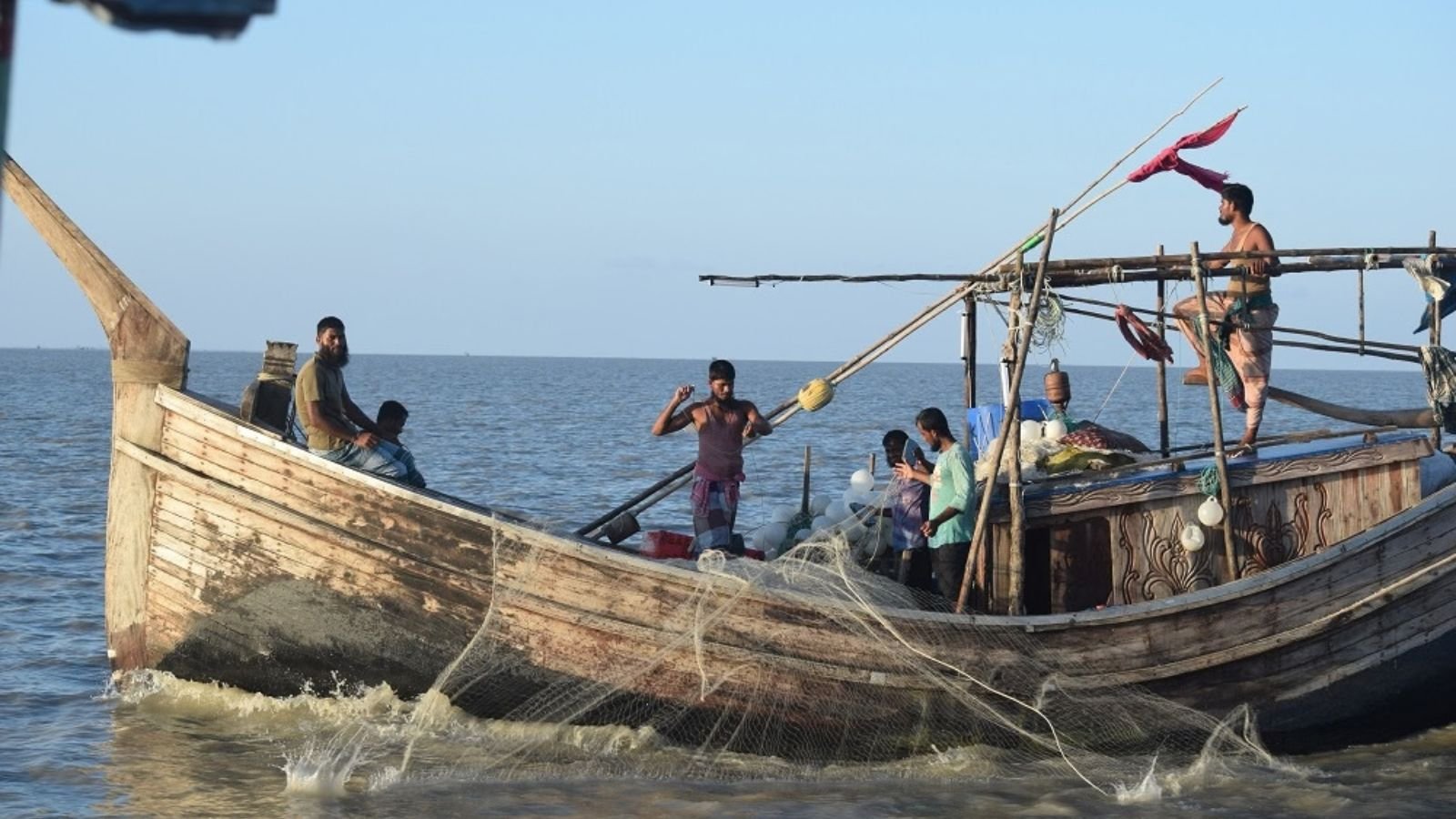
An EdPublica ground report from Bangladesh examines why the Hilsa catch has fallen after nearly two decades of growth, and what climate change and human pressures mean for the fishermen who depend on the fish.
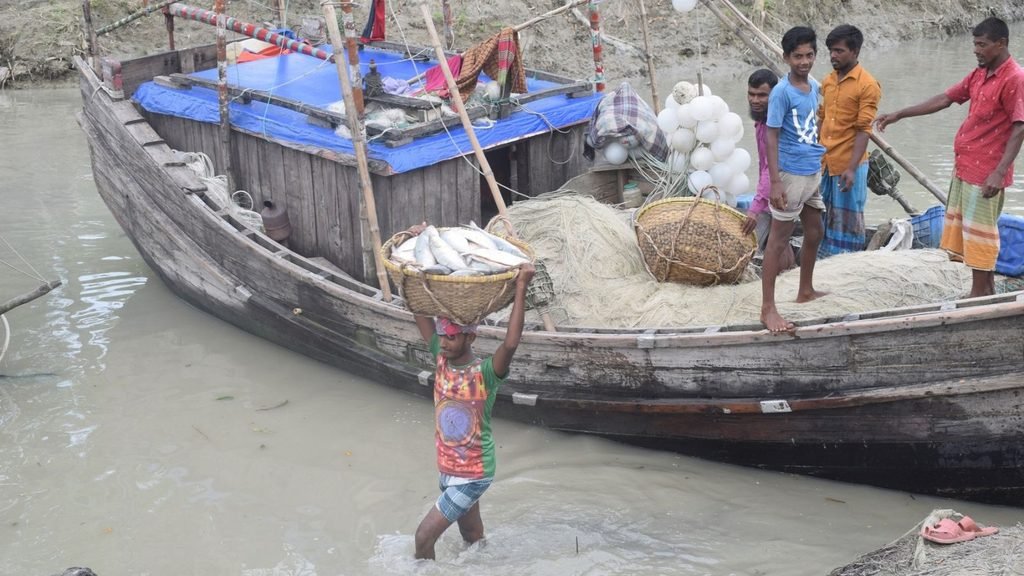
DHALCHAR, Bhola, Bangladesh–At the fish landing centre, boats still come in one after another, and the crowd of fishermen on the shore grows with each arrival. But Ruhul Amin has stopped counting on what they carry.
“I can no longer support my family by catching Hilsa. I have been carrying the burden of debt for years. I wait for the Hilsa season every year with high hopes, but time and again, those hopes are dashed. There is no sign of Hilsa this year either, so I have to return home facing a loss.”
Ruhul Amin, 45, spoke these words amid the clamour of the fish landing centre on Dhalchar Island, situated along the banks of the Meghna River, one of the three principal rivers that form the vast Ganges Delta. Several other fishermen echoed his sentiments.
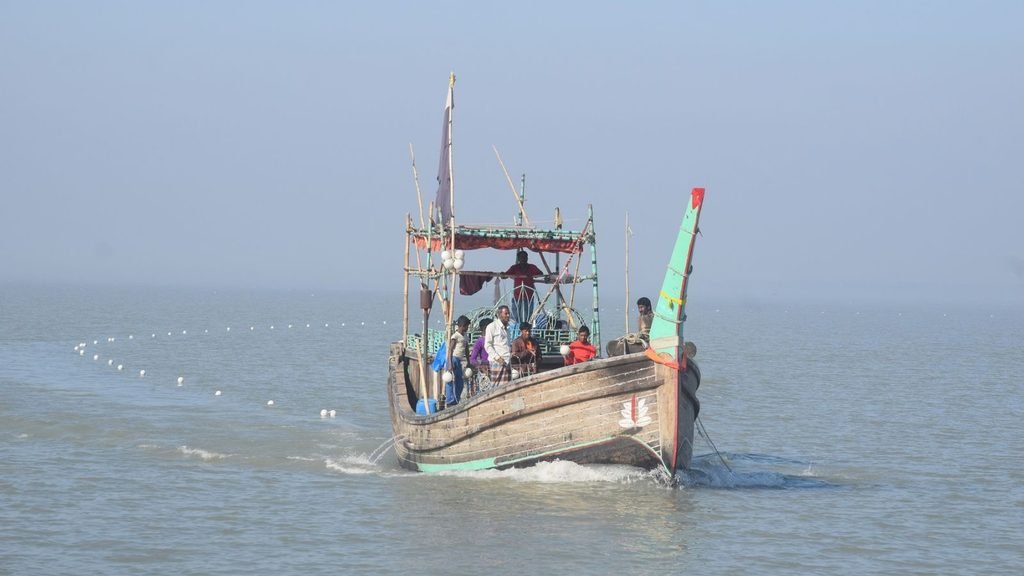
Dhalchar Island, located in the Meghna estuary, lies 100 kilometres from the Bhola district headquarters and 347 kilometres from the capital, Dhaka. Waves from the Meghna River crash against the island’s fish landing centre. The morning sun has just risen. Seagulls fly in flocks alongside the river waves. Boats dock one after another at the landing centre, and the crowd of fishermen grows. Yet, most of the boats arriving at the dock carry no Hilsa.
The area is bustling with activity—tea stalls, eateries, boat repair shops, and other establishments are crowded. However, there is a scarcity of the very fish—Hilsa—around which this landing centre was built. The fragile Dhalchar landing centre is shrinking due to river erosion, yet it remains a lifeline for the fishermen. Dhalchar Island remains quiet for most of the year but comes alive during the Hilsa season. Every year, thousands of fishermen gather here, filled with hope. It is not just Dhalchar Island; numerous fish landing centres along the coast of Bangladesh inspire similar hope among fishermen. About one million fishermen earn their livelihoods by catching Hilsa at these centres. Yet, they can no longer rely on Hilsa for their sustenance.
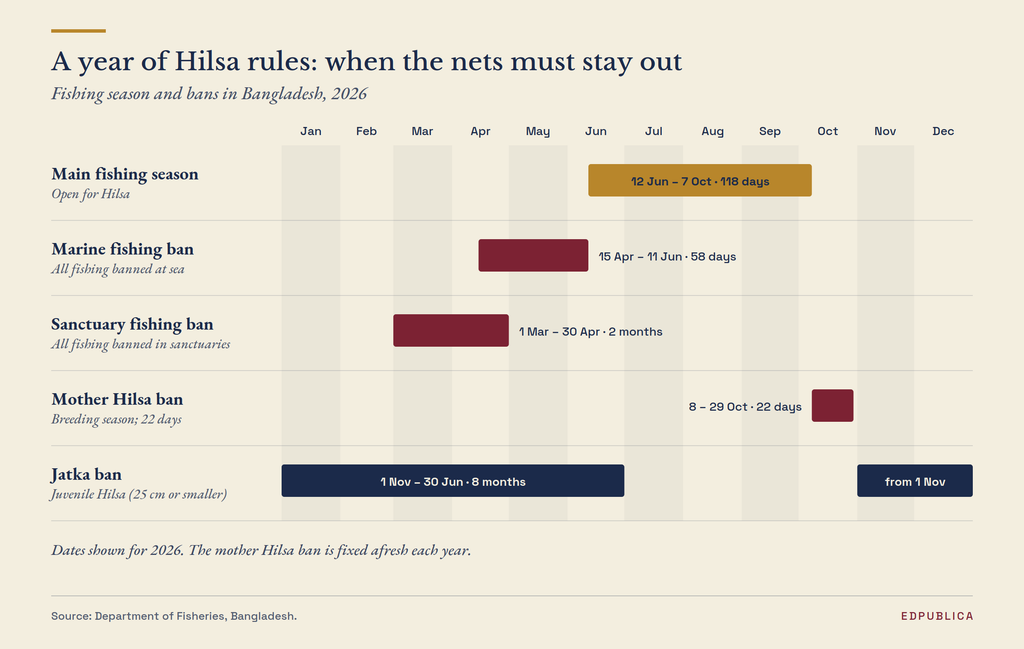
Ruhul Amin is one of those million fishermen. Amidst this despair and financial loss, the four-month-long Hilsa season is set to conclude on 7 October. The government has banned the catching, storing, transporting, and marketing of Hilsa for 22 days—from 8 October to 29 October—during the fish’s breeding season. Fishermen will once again have to wait until the following year for the Hilsa season.
“Fishing no longer sustains a livelihood”
Amidst the bustle and noise of the Dhalchar fish landing centre, Ruhul Amin voiced his frustration: “Every year, I’m forced to take out loans to go fishing with my boat and nets. I cast my nets during the Hilsa season with high hopes, but the catch is so meagre that it doesn’t even cover the operating costs. How am I supposed to repay the loans? How will I support my family? I may have to abandon this ancestral fishing profession; I can no longer bear the burden of debt.”
Bangladesh’s Hilsa Catch Is Falling After Two Decades of Growth
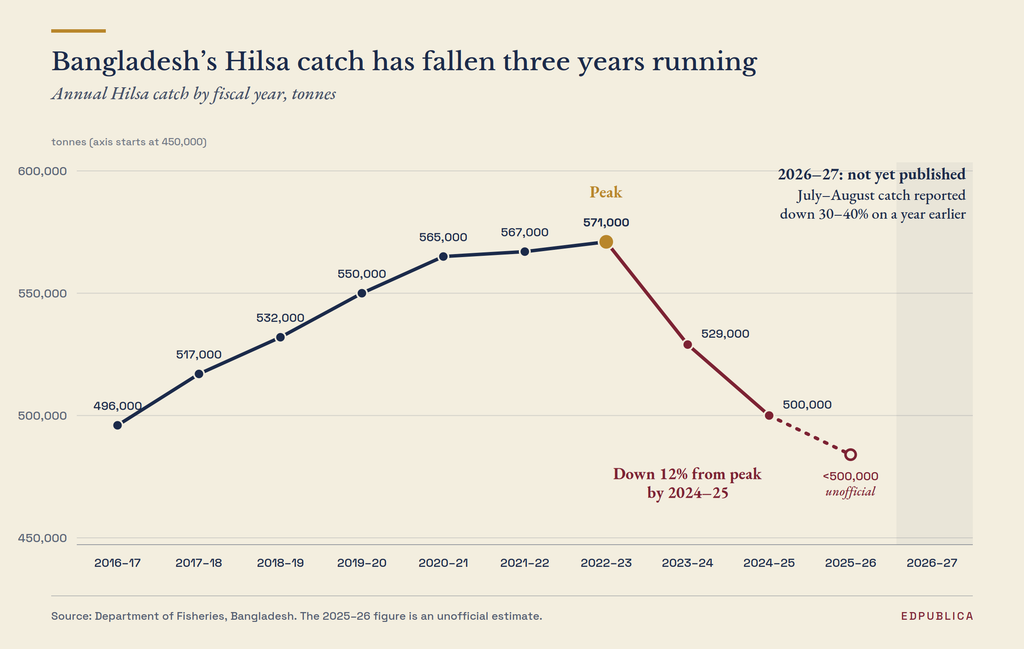
Even as the Hilsa season draws to a close, Ruhul Amin and many other fishermen have failed to recover their fishing expenses; they are ending the season at a loss. After nearly two decades of steady growth in Hilsa production in Bangladesh, the catch has fallen in each of the past three years. Simultaneously, the average weight of the fish is decreasing—a trend that has raised concerns among researchers.
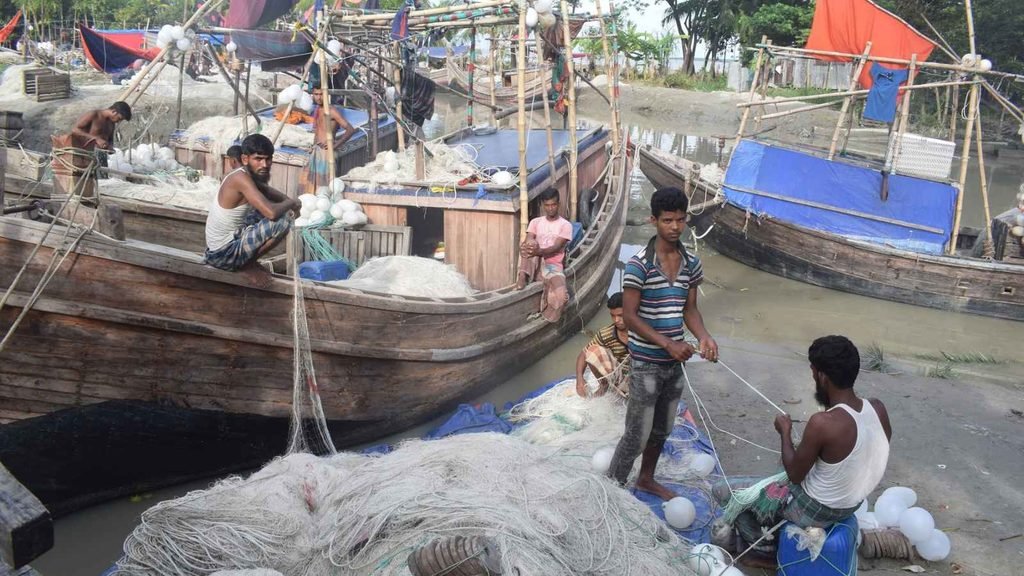
“Same nets, same boats, same rivers. Yet, the spots where we used to catch Hilsa in the past no longer yield any fish,” said Abdur Rob and several other fishermen from Kuakata on the Bangladeshi coast. They explained that as times change, they are encountering new crises while fishing at sea. Fishermen across most coastal districts—including Barguna, Patuakhali, Bhola, Bagerhat, and Lakshmipur—are grappling with professional crises. Climate change has impacted their lives and livelihoods, while natural disasters create obstacles to their fishing activities. Another group of fishermen believes that, beyond natural disasters, government-imposed seasonal fishing bans and various human-induced factors are hindering their profession.
According to records from the Bangladesh Department of Fisheries, the volume of Hilsa catch in Bangladesh began to rise in the 2016–17 fiscal year. That year, 496,000 tonnes of Hilsa were harvested within Bangladesh’s waters. In the 2017–18 fiscal year, the catch rose to 517,000 tonnes. The upward trend continued steadily until the 2022–23 fiscal year, when the harvest reached 571,000 tonnes. However, in the following year—2023–24—the catch volume suddenly dropped to 529,000 tonnes. It declined further to 500,000 tonnes in the 2024–25 fiscal year. Sources indicate that the Hilsa catch during July and August of the current year has fallen by 30–40% compared to the previous year.
According to data from WorldFish and the Department of Fisheries, Bangladesh accounts for roughly 70–86% of the world’s Hilsa catch. India lands about 10–15%, mainly in West Bengal, Odisha, and Gujarat, and Myanmar about 3–10%. The remainder is caught in the coastal rivers and seas of Pakistan, Iran, Iraq, Kuwait, Bahrain, Thailand, Malaysia, and Indonesia.
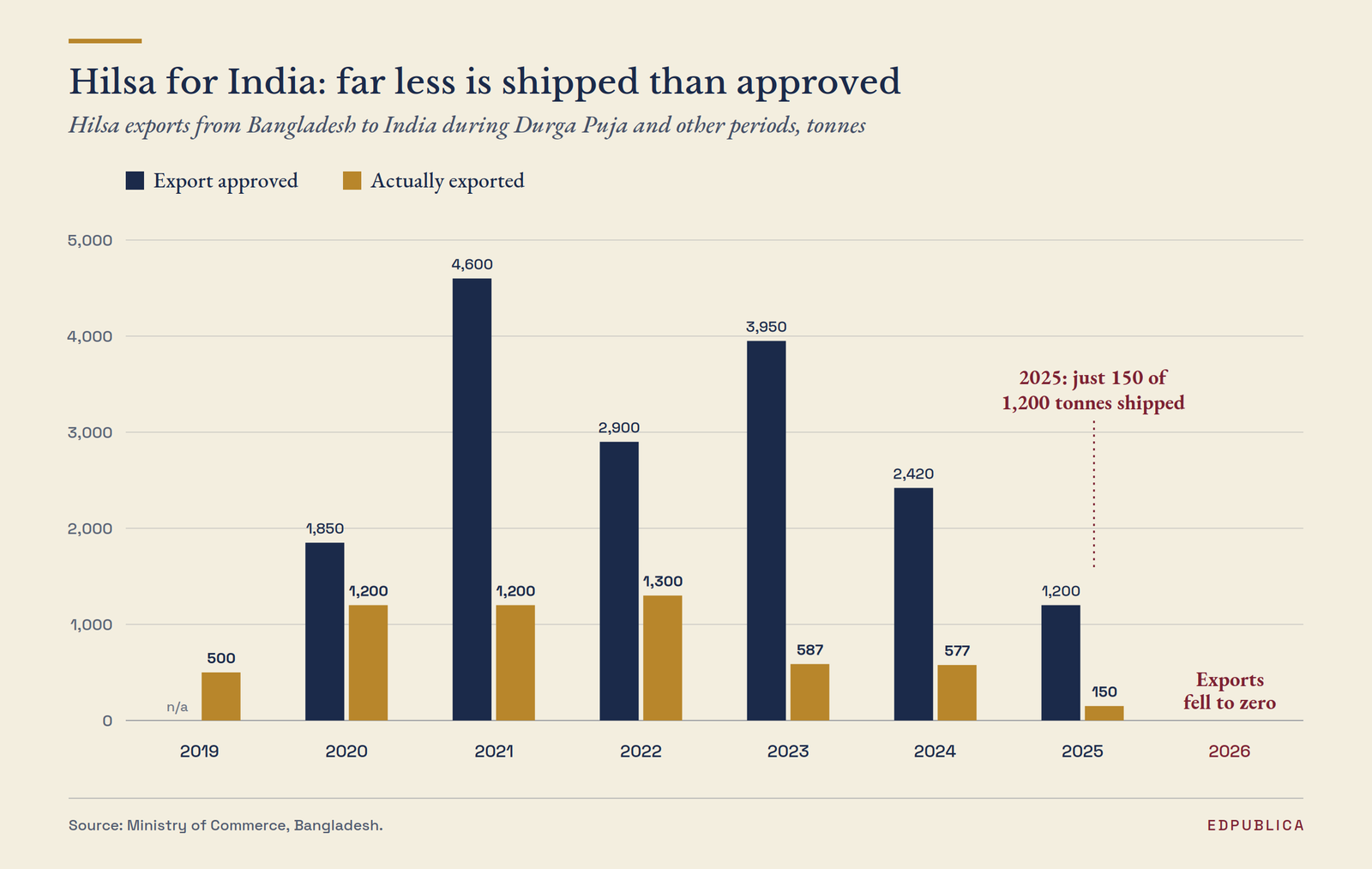
Since 2019, Bangladesh has exported Hilsa to India, particularly during Durga Puja and other occasions; this practice continued until last year. However, this year, the situation reversed, with India exporting Hilsa to Bangladesh.
Climate change has created crises in various marine sectors, including the Hilsa fishery. As catch volumes decline, fishermen are facing new challenges. Scientists fear that marine risks will escalate in the future. A study titled “Climate Change as Observed in the Bay of Bengal” highlights the dangers posed to the marine environment by climate change. Another study by the World Bank also addresses the impact of climate change on fishermen at sea.
Hilsa Is Losing Its Favourable Habitat
Fishermen observe that coastal temperatures, rainfall patterns, and the nature of the monsoon season have all shifted. The timing of freshwater influx into rivers and coastal salinity levels are changing, as are marine environmental conditions. Collectively, these changes influence the migration and breeding cycles of the Hilsa fish. A specific combination of factors—including water temperature, salinity, currents, tides, water density, oxygen levels, and rainfall—is required to create the right conditions for Hilsa migration and spawning. However, the environment essential for the Hilsa has been significantly degraded.
Hilsa experts largely concur with these observations made by fishermen. Anisur Rahman, former Director of the Bangladesh Fisheries Research Institute (BFRI), states, “Hilsa require specific water currents and depths to migrate into inland waters. They need a water depth of at least 10 metres to navigate the rivers, but they are not finding it.”
In some areas, river depth has dropped to just 18–20 feet (about 5.5–6 metres)—far below the 75–80 feet (about 23–24 metres) required for Hilsa breeding. Furthermore, submerged shoals and sandbars have obstructed waterways between Chandpur and Monpura, leaving only narrow channels for navigation. Hilsa migrate from the sea to inland waters by swimming against the current; however, reduced river navigability and diminished water flow are hindering this migration. Hilsa from the Padma River are renowned for their superior taste, yet the fish are no longer entering the Padma in significant numbers.
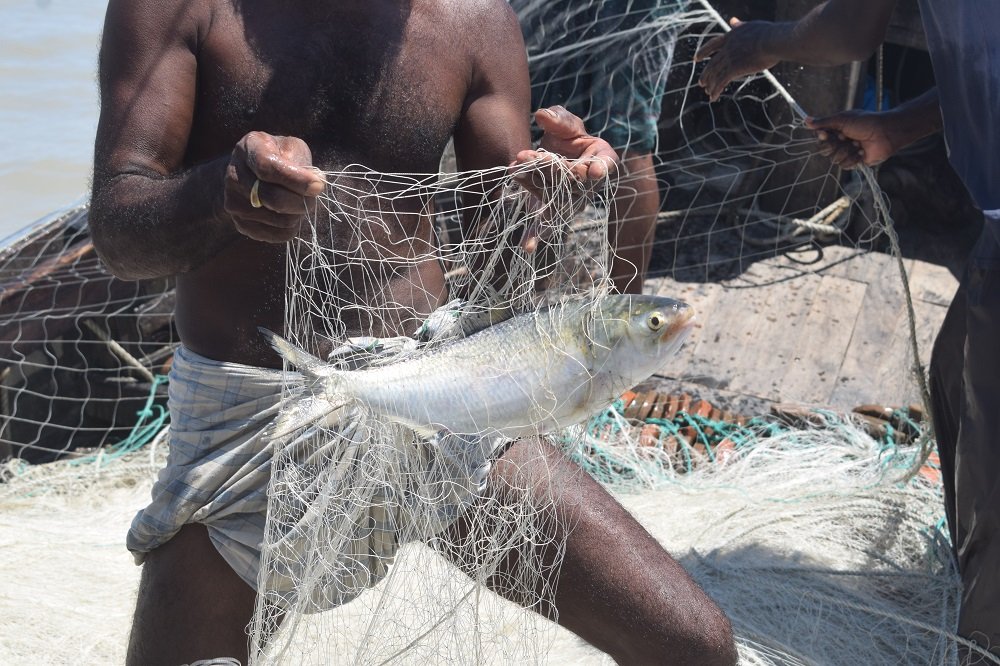
Hilsa production in Bangladesh—which had been steadily rising for two decades—is now declining. This has raised concerns regarding the survival of this popular fish and its affordability for ordinary people. Anisur Rahman has been conducting research on Hilsa for a long time. Expressing concern over the decline in Hilsa catches, he said, “I’m truly worried about the population or stock of Hilsa.”
“The fish’s food chain is being disrupted by falling water levels, rising temperatures, and changes in water quality. This balance is further destabilized by excessive heat and altered rainfall patterns caused by climate change,” added Anisur Rahman.
Dr Md Sajedul Haque, a professor in the Department of Fisheries Technology at Patuakhali Science and Technology University (PSTU), observed, “Hilsa catches used to be higher; now they are lower. This is a global problem. It is happening due to global warming.”
“If Hilsa does not find a suitable environment, it will neither stay there nor spawn. Factors such as water salinity, the availability of plankton for food, and water temperature are crucial for Hilsa. If salinity is too high, they will not spawn, or the eggs will fail to hatch and perish. Without food, they will not grow. If the temperature is not optimal, the eggs will not be fertilized, and the fry will not hatch. The Hilsa’s life cycle is directly linked to these factors,” added Sajedul Haque.
To a fisherman, climate change is not a PowerPoint presentation; it is a harsh reality and a matter of life and death.
Human-Induced Factors
Alongside climate change, human-induced factors are jeopardising the breeding of Hilsa fish. Local fishermen, trawler owners, and wholesalers engage in unregulated and illegal fishing practices. The number of illegal trawlers in the sea has multiplied significantly. Trawlers are essentially large wooden boats powered by high-capacity engines. They operate by dragging illegal ‘Behundi’ nets (bag nets) through the sea for hours using this engine power. These nets catch not only large fish but also small fish fry and juvenile Hilsa (Jatka), thereby destroying the primary breeding grounds of Hilsa and other marine species.
Three power plants are located within Hilsa sanctuaries along the Bangladeshi coast—the Payra Power Plant, the Patuakhali Power Plant on the banks of the Ramnabad Channel, and the Barishal Power Plant at Taltali on the banks of the Bishkhali River. Many have expressed concern regarding the pollution caused by these facilities. These coal-fired power plants discharge waste and heated water into the rivers. A decline in Hilsa populations has been observed since the establishment of these plants. Fishermen are no longer catching Hilsa in the Ramnabad River (Patuakhali district) and the Payra River (Barguna district) as they used to; consequently, many are turning to other professions.
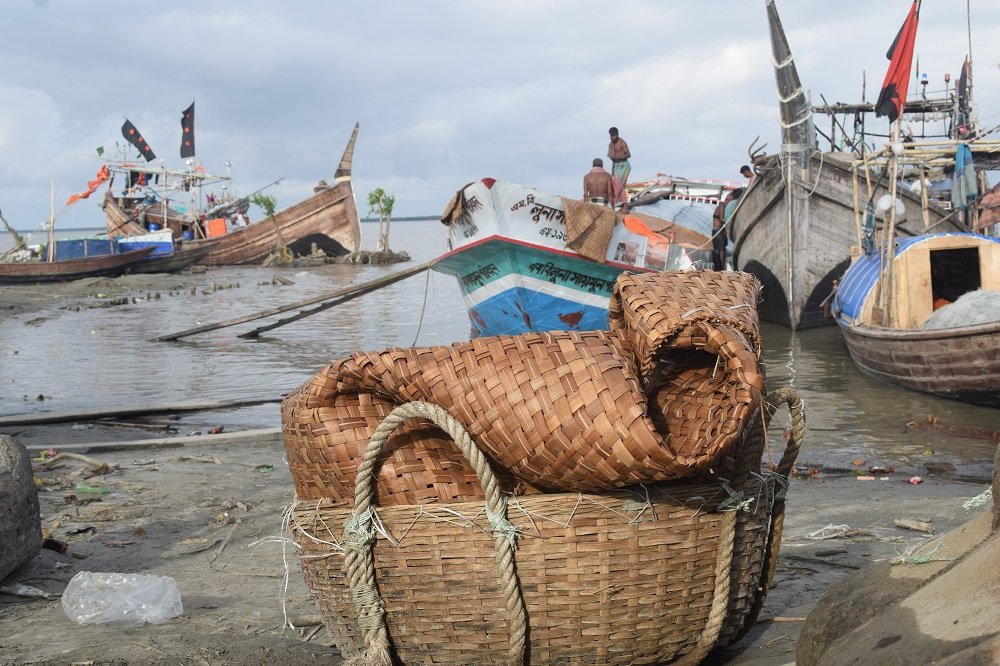
Fishermen Face Growing Risks at Sea
Fishermen report that while Hilsa exists in the deep sea, the fish are not migrating to shallower waters, as the environment there is no longer suitable for their survival. Small-scale fishermen face a dire crisis because the Hilsa do not venture into shallow waters, and many have already abandoned the trade. Those who remain in the profession are forced to venture into the deep sea to catch Hilsa, where they face increasing risks.
Every year, many fishermen go missing due to various natural hazards. The sea is becoming more turbulent than in the past, and the level of danger is rising. Nuruddin, a fisherman from Char Fasson in Bhola district, says, “I have been going out to sea to fish since childhood. I used to have no fear, but now venturing out to sea is frightening for us. I cannot say for certain if it is due to climate change, but the waves are rougher than before. We often face accidents because we do not receive weather warnings in time. I have personally been involved in accidents a few times; fortunately, I survived and returned.”
A study titled “Resilient Bangladesh: Fishermen Cope with Rough Seas” notes that for centuries, the fishermen’s traditional boats were sturdy enough to withstand conditions in the Bay of Bengal. That is no longer the case. Fishermen are increasingly facing more powerful storms and turbulent seas. Every time they head out to fish, they are essentially gambling with their lives.
Even as the risks for fishermen rise, fish stocks in the sea are declining, impacting their livelihoods. Despite this crisis, fishermen continue to struggle for survival. Research titled “Dwindling Coastal Fisheries Biodiversity of Bangladesh: The Causes and Effects” indicates that coastal fish stocks are being overexploited, leading to a depletion of many species. The marine sector’s contribution to the country’s fisheries is shrinking annually. According to assessments by the IUCN (International Union for Conservation of Nature), approximately 28% of coastal fish species now fall under the IUCN Red List of threatened species.
Golam Mostafa Chowdhury, President of the Barguna District Trawler Owners’ Association, states, “In most cases, fishermen go missing when their trawlers capsize. The sea has become rougher than before, and weather conditions have deteriorated. Siltation has occurred in many areas, and many fishermen fail to receive proper weather warnings. These factors are contributing to a rise in the number of missing fishermen. Rescue vessels need to be stationed in areas with high concentrations of fishermen, and arrangements must be made for the rehabilitation of those who go missing.”
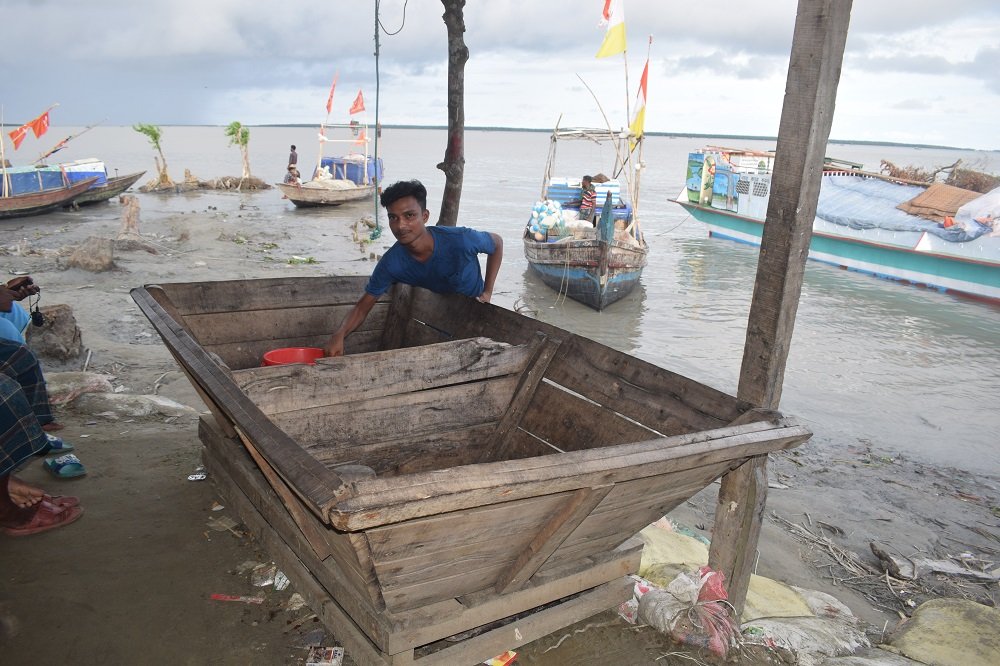
Initiatives to Protect Hilsa
The government is taking various measures to protect the Hilsa fish. Conservation and management activities for Hilsa in Bangladesh are conducted under the Protection and Conservation of Fish Act, 1985. A programme to protect Jatka (juvenile Hilsa) was launched in Bangladesh in 2003–04, leading to a gradual increase in Hilsa production. The Jatka conservation drive runs for two months—March and April—during which fishing of all kinds, including Hilsa, is prohibited in designated sanctuaries across the country. Additionally, fishing for all species, including Hilsa, is banned in marine waters for 58 days, from 15 April to 11 June. Initially, in 2008, the ban on catching mother Hilsa (Ma Hilsh) was set for 11 days, but from the following year onwards, this period was extended to 22 days. A ban on catching mother Hilsa is in effect from 8 October to 29 October this year. For two decades, the trend of Hilsa harvesting had been on the rise; however, research is currently underway to understand why the catch rate has recently begun to decline.
Ruhul Amin, a fisherman, is spending the final days of the Hilsa season at the Dhalchar fish landing centre. He might venture out to sea a few more times with other fishermen to catch Hilsa. Yet, amidst the crowds and grueling labor, a question weighs on his mind: will he be able to take home enough earnings to support his family for the coming months? Ruhul Amin does not know the answer—nor do many other fishermen.
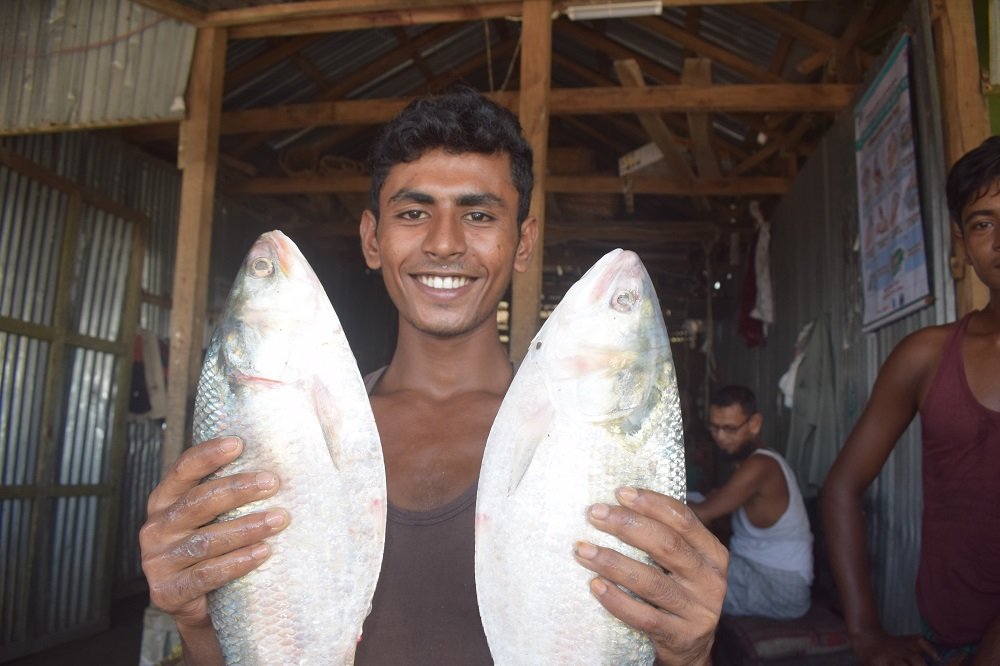
For the fishermen of Bangladesh, the Hilsa season is drawing to a close amidst a period of uncertainty. The voices of the crowd at the fish landing centre fade into the air, carrying with them the indistinct sounds of the fishermen’s suffering.


India Captures 5.7% of Global Greenfield Investment, Outpacing China

World Mental Health Day: How Late-Night Scrolling May Be Disrupting Sleep and Fuelling Anxiety

Climate Science Faces a Deadline: Can the IPCC Deliver Before the 2028 Global Stocktake?

Knowing When to Think for Ourselves: AI, Intuition and the Education of Discernment

Puberty, Pregnancy and Menopause Reshape the Female Brain Differently, Study Finds

From Scams to Screens: How the National Stock Exchange Rewrote India’s Equity Story

Aim for the Stars: Anjali Thomas’s Journey from a Small College in Kerala to the Frontiers of Medical Imaging

Two Chemists Win Nobel Prize for Solving a Century-Old Puzzle: Why Life Picks One Hand Over the Other

India’s AI Moment Rests on More Than Code

Marshall Islands: Why the US Nuclear Legacy Is Back Before the UN

-

 Math3 months ago
The 2026 Fields Medals: Four Proofs, Four Decades-Old Problems Solved
-
Climate2 months ago
After Kerala’s Deadliest Landslide, the Hardest Thing to Rebuild Was Childhood
-
Society3 months ago
West Asia Crisis: Can Kerala’s Returning Gulf Migrants Find a Future in the Green Economy?
-
Space & Physics4 months ago
India Semiconductor Mission: ‘It’s Not About Fabs. It’s About Building An Entire Ecosystem’
-
Interviews2 weeks ago
From Scams to Screens: How the National Stock Exchange Rewrote India’s Equity Story
-
Climate4 months ago
The Climate World Cup? How Climate Change Could Affect Player Performance at the 2026 World Cup
-
Society3 months ago
What Is Civilisational Diplomacy? Understanding India’s Newest Foreign Policy Tool
-
Society4 months ago
From Bell Labs to the Classroom: A Second Career in Teaching