Climate
Hotter Nights, Shorter Sleep: Why South India Is Losing More Rest Than the Rest of India
As nights grow warmer across South India, sleep is becoming another casualty of climate change. A new analysis finds that rising nighttime temperatures are cutting into people’s sleep, with potential consequences for health, productivity and quality of life.


For many people in South India, the day’s heat no longer ends when the sun goes down. Even late at night, bedrooms, and sometimes even the bed itself, remain warm. Ceiling fans only circulate hot air, windows stay open in the hope of a breeze that never arrives, and falling asleep takes longer than it used to. Over time, these restless nights add up to sleep loss. Scientists now say this is more than a seasonal inconvenience. It is one of the quieter ways climate change is beginning to affect everyday life.
An analysis by Climate Central estimates that people across southern India lose between 78 and 91 hours of sleep each year because nights remain too warm. About eight to nine hours of that loss is directly linked to climate change, making southern India one of the worst-affected regions outside the Middle East.
Unlike heatwaves, which make headlines for a few days, sleep loss is harder to notice. It builds slowly. One restless night becomes another, until weeks of poor sleep begin to affect health.
Why South India is Feeling It First
Puducherry records the highest annual sleep loss in the country at 92 hours per person. Andhra Pradesh follows with 88.6 hours, while Kerala is close behind at 88.3 hours. Tamil Nadu records the biggest climate change impact with 7.9 hours of additional sleep loss every year linked to rising temperatures. Karnataka follows at 7.8 hours.
These figures are not surprising when you consider how summers feel across much of South India. Unlike places where temperatures drop sharply after sunset, many parts of the region remain hot and humid well into the night. Humidity makes it harder for sweat to evaporate, which is how the body cools itself. When that cooling process slows down, getting comfortable enough to sleep becomes much harder.
That is why states that are not always the hottest during the day can still have some of the country’s warmest nights.
Cities are Holding on to the Day’s Heat
Roads, buildings and concrete surfaces soak up heat throughout the day. Instead of cooling quickly after sunset, they release that stored heat for hours, keeping neighbourhoods warmer than nearby rural areas.
Among India’s largest metros, Chennai records the highest overall sleep loss at 93 hours a year. Mumbai and Kolkata follow. Bengaluru, however, tells a different story. Known for its mild weather, the city now records the strongest climate change signal among the metros studied, with 12% of its temperature-related sleep loss linked to climate change. Hyderabad is not far behind.
Sleep Needs a Cooler Body
The body naturally lowers its temperature before entering deep sleep.
When nights stay warm, that process takes longer. People may struggle to fall asleep, wake up several times during the night or wake earlier than usual. Even if they spend enough hours in bed, the quality of sleep suffers.

Climate Central’s analysis shows that nighttime temperatures have risen faster than daytime temperatures in many parts of the world. Across the 1,338 cities studied worldwide, climate change has at least doubled temperature-related sleep loss since the early 1970s.
Why Does One Constantly Feel Tired
Older adults, women and low-income communities are among those most affected by warmer nights. Weaker immunity, heart disease, diabetes, anxiety, depression and reduced concentration have all been linked to this. Staying cool is not an option for everyone
Air conditioning can make a difference, but it remains out of reach for many households. In homes with concrete roofs, poor ventilation or unreliable electricity, indoor temperatures often remain high well after midnight. For families living in these conditions, sleep becomes another inequality shaped by climate.
Heat Plans For Day and Sleep Loss at Night
India’s heat action plans are mostly built around daytime temperatures. They issue warnings about afternoon heat, advise people to stay indoors and encourage hydration.
But the night receives far less attention. Yet it is during those cooler hours that the body is supposed to recover from the day’s heat. As nights become warmer, that recovery is becoming more difficult. Cooler buildings, more trees, better-designed neighbourhoods and affordable access to cooling will all matter if cities are to remain livable.
For millions across South India, climate change is no longer measured only by the afternoon temperature. It is measured by how often they wake up in the middle of the night, waiting for the room to cool down.







Climate
Nepal’s Glacier Disaster Exposes the Unequal Cost of Climate Change
Nepal contributes only about 0.1% of global greenhouse-gas emissions, yet its communities face growing risks from glacier loss, floods and landslides. The latest glacier-related disaster shows how climate vulnerability can fall hardest on countries that have contributed little to global warming.
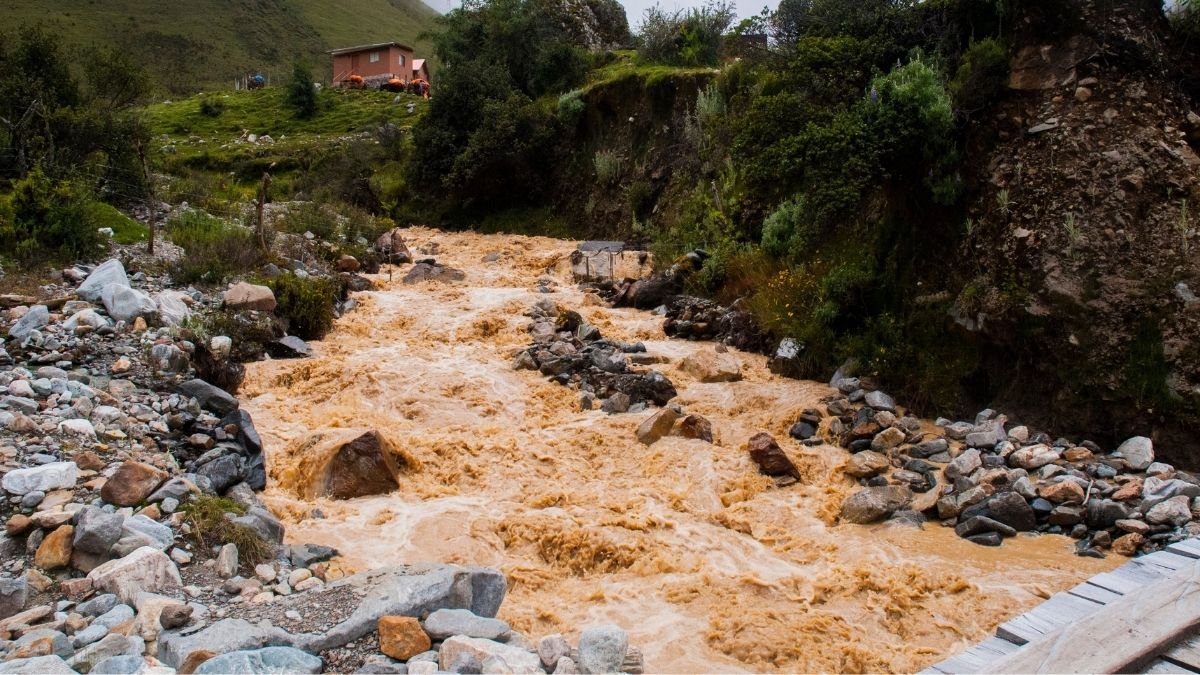
A glacier collapse in Nepal has set off a chain of floods and landslides along the country’s border with China, killing hundreds of people and leaving thousands missing. Roads and bridges have been swept away, hydropower facilities damaged and a key trade route disrupted. The disaster has also brought an uncomfortable question to the surface. Nepal has contributed very little to the greenhouse-gas emissions driving global warming. Yet the country’s mountains are among the places where a changing climate is being felt most sharply.
Nepal’s disaster authorities said on August 29 that 626 people had died and 2,426 remained missing after the floods on August 26. China has reported seven deaths and hundreds of people missing in Tibet. Bad weather has slowed helicopter operations, while damaged roads and other infrastructure have made it difficult for rescuers to reach some areas.
The disaster began high in the mountains, where a large section of glacier broke away, sending ice, rock and debris into the river system below. The resulting surge tore through valleys in Nepal and Tibet, damaging homes, roads, bridges and other infrastructure. Scientists are still working to establish exactly what caused the glacier to collapse.
That uncertainty is important. There is not enough evidence to say that climate change caused this particular event. But the collapse happened in a Himalayan region that is warming rapidly and losing ice at an accelerating rate.
A Country that Emits Little
Nepal’s share of global greenhouse-gas emissions is about less than 0.1%, according to the World Bank. That is a small contribution when compared with the major economies whose industries, transport systems and energy use account for much larger shares of global emissions. Nepal’s economy has not been built around the kind of large fossil-fuel industries that have driven emissions in many wealthier countries.
Yet geography leaves Nepal unusually exposed. Much of the country lies in the Himalayas, where communities live below steep slopes, glaciers and rivers. Floods, landslides, drought and glacial lake outbursts already pose serious risks. When a hazard begins high in the mountains, its effects can travel quickly into valleys where people live and where roads, hydropower projects and other infrastructure are concentrated.
For Nepal, the problem is therefore not simply how much carbon it emits. It is how much damage it can absorb when the climate and its mountain environment change.
The Himalayas are Changing
The August disaster comes as Nepal’s glaciers undergo a profound transformation. The country’s glaciers have lost nearly one-third of their ice in just over three decades, according to estimates cited by the United Nations. The pace of ice loss in the decade before 2023 was about 65% faster than during the previous decade.
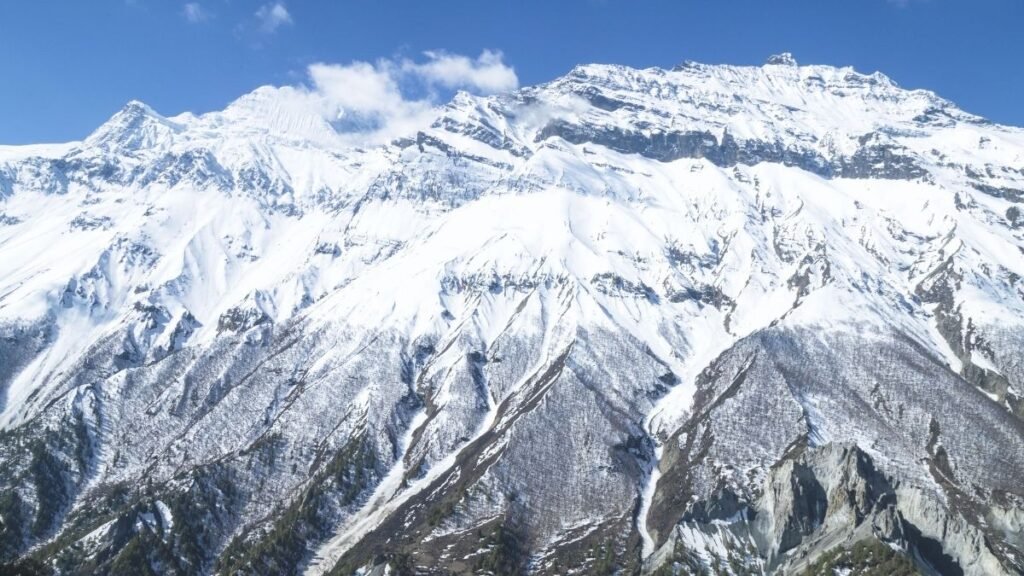
As temperatures rise, glaciers retreat and snow and ice patterns change. Mountain slopes can become less stable, while melting ice and changing water flows can alter the risks faced by communities downstream. The danger is not limited to one type of event. A collapse high on a mountain can trigger an avalanche or debris flow, which can block a river, create a temporary lake and set up another flood further downstream.
That sequence is now playing out in the aftermath of the August 26 disaster. The force of the flood damaged infrastructure and changed parts of the river system. New blockages and lakes have also raised concerns about further flooding. For people living in these valleys, the danger does not necessarily end when the first flood passes. Damaged roads can cut off communities from food and medical care. Disrupted water and sanitation systems can create additional health risks. And rebuilding can take months or years.
When Disaster Meets Poverty
Climate risk becomes harder to manage when a country has limited resources to prepare for it. The World Bank estimates that climate impacts could leave Nepal’s economy at least 7% smaller by 2050 if climate risks are not adequately addressed. Floods, landslides, drought and water stress already threaten livelihoods and infrastructure.
The latest disaster shows what those risks look like on the ground. More than 90,000 people need urgent assistance, while UNICEF estimates that about 17,000 children require humanitarian support. Eighteen schools have been destroyed and another 20 damaged. Entire communities have been swept away, leaving survivors in need of shelter and basic supplies.
The damage is also hitting infrastructure that Nepal depends on for its economy. Hydropower plants, roads and the border crossing with China have been affected, disrupting electricity generation, transport and trade. For a country still working to expand access to basic services and economic opportunities, a disaster of this scale creates a difficult trade-off. Money that could have gone towards schools, healthcare, roads or jobs may instead have to be spent repairing what has been destroyed.
The Cost of a Crisis Nepal did Little to Create
Nepal has committed to reaching net-zero emissions by 2045 and sees hydropower as an important part of its development. But Nepal becoming a lower-emissions economy will not, by itself, stop glaciers from retreating or prevent hazards in the Himalayas. The drivers of global warming extend far beyond Nepal’s borders. That makes adaptation critical. Better early-warning systems can give communities more time to move out of harm’s way. Monitoring glaciers and glacial lakes can help identify dangerous changes before they become disasters. Stronger roads, bridges, schools and health facilities can reduce the damage when extreme events occur.
All of this requires money, something that countries with small economies and limited fiscal space do not always have in sufficient amounts. The August disaster does not prove that climate change caused the glacier collapse. But it has occurred against a clear backdrop of rising temperatures and rapid ice loss in the Himalayas.
Nepal’s predicament is therefore larger than this one disaster. The country has contributed only a small amount to the greenhouse gases accumulating in the atmosphere, yet its communities are being asked to cope with a landscape that is becoming harder to predict. The people living beneath the Himalayas did not build the global carbon economy. But they are increasingly having to deal with what it has left behind.
That is where the climate debate becomes tangible, not in emissions charts alone, but in the homes, schools, roads and livelihoods that can disappear when a mountain gives way.
Climate
The Giant Steel Gates Guarding the Netherlands from the Sea
The Maeslantkering is the Netherlands’ giant movable flood barrier, protecting Rotterdam and South Holland while keeping one of Europe’s busiest ports open.

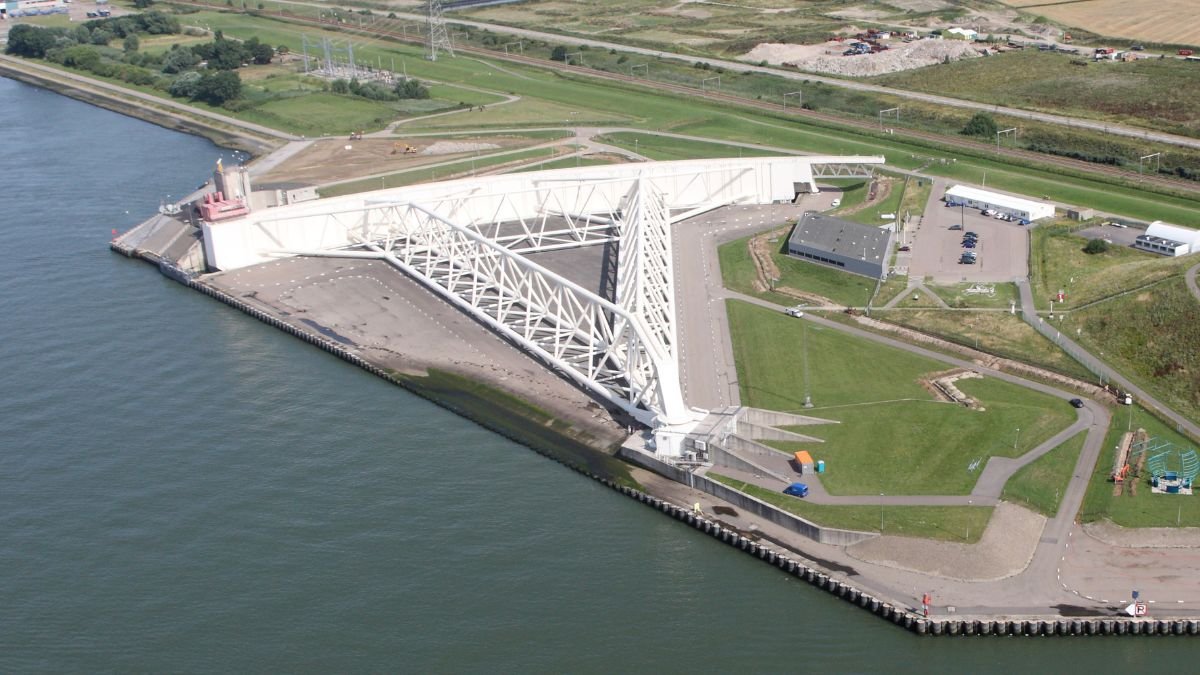
The Maeslantkering uses two enormous movable steel gates to protect Rotterdam and South Holland from extreme storm surges while keeping the river open to ships.
Imagine a wall of water rising from the sea, threatening to flood low lying towns, farmlands, and entire cities. Now picture two massive steel arms, each as long as the Eiffel Tower, floating out from the riverbanks to join together and hold that water back.
This is not a scene from a movie. It is a real piece of infrastructure spanning the Nieuwe Waterweg river channel near Hoek van Holland in the Netherlands. Known as the Maeslantkering, or the Maeslant Barrier, it is the largest movable flood barrier on Earth. For more than three million people living in South Holland, including the port city of Rotterdam, these steel gates are the main defense against extreme ocean storms.
Maeslantkering: Why the Netherlands’ Giant Flood Barrier Matters
Why the Dutch Built a Gate Instead of a Wall The Netherlands has managed water for centuries, as nearly a third of the country sits below sea level. After a devastating North Sea flood in 1953, the Dutch government built a vast network of dams, dikes, and storm surge barriers across the country, known as the Delta Works.
However, the river route leading to Rotterdam created a practical problem. Rotterdam is home to Europe’s largest and busiest seaport. Blocking the river permanently with a fixed dam was impossible because cargo ships need round the clock access. The initial plan was to build higher earthen dikes along the riverbanks. But as engineers examined future sea level projections, they realized standard dikes would have to be enormous. Building them meant demolishing historic neighborhoods and disrupting communities for decades.
The solution was a different approach altogether: a storm surge barrier that stays open during normal weather to keep shipping lanes clear, but swings shut when severe storms approach.
How the Gates Work
The mechanics of the Maeslantkering are straightforward in design, but huge in scale. The barrier relies on two hollow steel gates parked in dry docks on opposite sides of the river.
When a major storm hits, hydraulic engines push the gates out into the waterway, where they float like barges until they meet in the middle. Once aligned, valves open and the gates fill with river water. As they gain weight, they sink onto a concrete bed built into the river floor.
The operation of the Maeslantkering relies heavily on automation. The entire closure process is directed by a specialized computer system called the Decision Support System, known by its Dutch acronym BOS
As the gates lower, water rushes underneath them at high speed. This natural currents sweep away sand and silt so the structures rest flat against the riverbed without getting stuck on sediment. When the storm passes and ocean levels drop, pumps empty the water from inside the gates. The buoyant structures float back up and swing back into their docks, reopening the river to maritime traffic.
Automated Controls with Human Oversight
The operation of the Maeslantkering relies heavily on automation. The entire closure process is directed by a specialized computer system called the Decision Support System, known by its Dutch acronym BOS.
The software constantly monitors weather forecasts, incoming tides, and river flow rates. If calculations show water levels will rise 3 meters above normal in Rotterdam, the system initiates the closure process automatically. Leaving the trigger to software removes the risk of human delay or miscalculation during a sudden storm emergency.
Even with automation running the system, human engineers remain on site. Whenever severe weather threatens the coast, a technical team monitors the operations from a nearby control room, ready to take manual control if a system fault occurs.
Balancing Ships, Farms, and Rising Tides
Closing the barrier stops all ship traffic into Rotterdam, so shutting the gates is never done without cause. The barrier only closes during major storm events, though engineers run a routine test closure every September to keep the machinery and operational teams prepared.
As sea levels change and seasonal river flows shift, the Maeslantkering remains a critical piece of Dutch water management. It demonstrates how civil engineering can function alongside natural waterways, protecting millions of residents while keeping an essential trade route open to the world.
Climate
Why India Is Studying the Arctic to Understand Its Monsoon
As BRICS countries discuss closer cooperation in ocean and polar science, research is drawing attention to a distant climate connection: changes in Arctic sea ice may influence India’s monsoon. The emerging evidence could have implications for rainfall patterns, water security and climate forecasting.
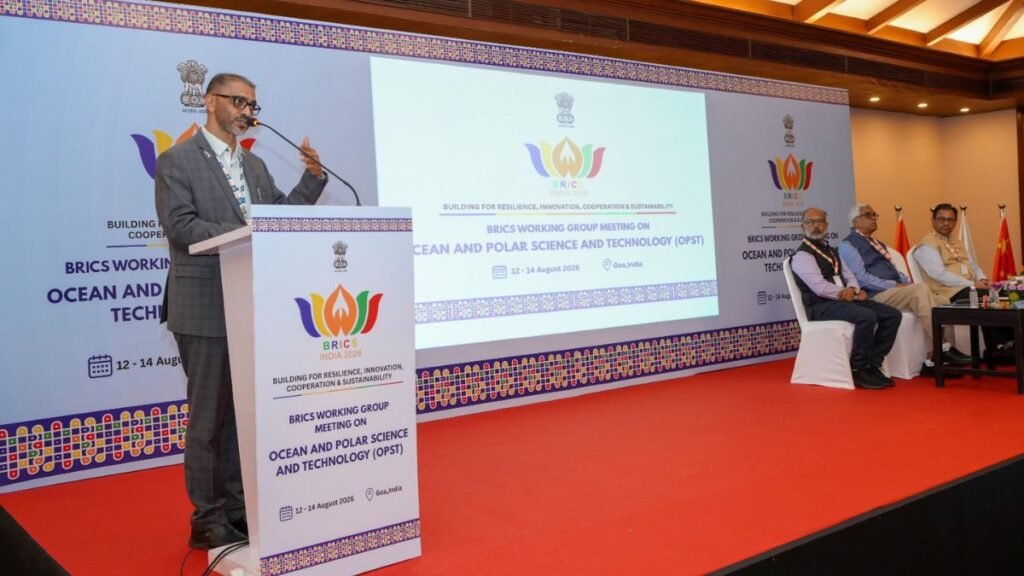
India’s growing interest in polar science comes as researchers are finding stronger links between changes in the Arctic and the climate systems that influence the country. The issue came into focus this month when India hosted the 8th BRICS Working Group Meeting on Ocean and Polar Science and Technology in Goa, bringing together scientists and officials from eight BRICS countries to discuss cooperation in ocean and polar research. The meeting covered scientific collaboration, technology and the use of research to address environmental challenges.
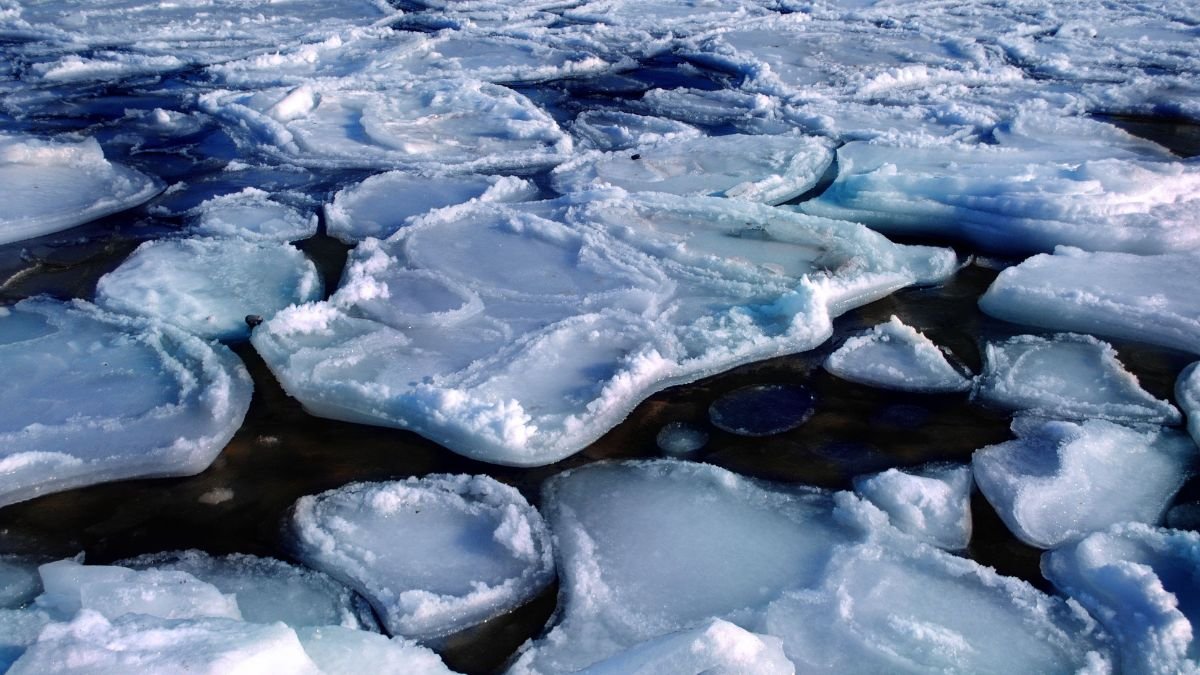
For India, the discussion has a direct climate relevance. The Arctic lies thousands of kilometres away, yet changes in its sea ice and atmosphere can affect large-scale circulation patterns that reach into Eurasia and interact with the South Asian monsoon.
That connection matters because India’s dependence on the monsoon leaves little room for major shifts in rainfall patterns. Agriculture, reservoirs, groundwater recharge, hydropower and flood risk all depend on when and where rain arrives.
The Arctic–monsoon Link
Scientists have been investigating the relationship for several years. A 2026 study examined Arctic sea-ice extent and Indian summer monsoon rainfall using observations and reanalysis data from 1979 to 2022. It found an inverse relationship between Arctic sea ice and Indian monsoon rainfall, particularly during August and September. The researchers reported that periods of lower Arctic sea ice were associated with stronger rainfall over parts of India and changes in the spatial distribution of monsoon rainfall.
The finding does not mean that Arctic sea-ice loss directly determines India’s rainfall. The monsoon is influenced by several interacting systems, including ENSO, the Indian Ocean Dipole, Indian Ocean temperatures and atmospheric circulation.
The significance of the study lies in identifying the Arctic as one component of that larger system. Earlier research has produced similar evidence. A study published in the International Journal of Climatology examined Arctic sea ice and Indian precipitation between 1979 and 2021. It found significant relationships between Arctic sea-ice variability and precipitation over parts of India, with the strength of the relationship changing with the state of the Arctic Oscillation.
A 2024 study in Remote Sensing of Environment looked at different Arctic regions rather than treating the Arctic as a single system. It found significant relationships between spring sea-ice conditions in regions including the Central Arctic and Barents-Kara sector and Indian summer monsoon rainfall. The researchers linked these relationships to changes in atmospheric circulation across Eurasia.
Research in 2025 reached a similar conclusion about the importance of regional differences. It examined the Atlantic and Pacific sectors of the Arctic separately and found that their relationships with Indian rainfall differ. The study also examined interactions involving the North Atlantic Oscillation and ENSO.
Together, these studies point towards a climate system in which the Arctic can influence Indian rainfall through several atmospheric pathways.
How can Melting Sea Ice Affect Rainfall in India?
The mechanism begins with the loss of sea ice. Ice reflects a large proportion of incoming solar radiation. When ice retreats, darker ocean water is exposed and absorbs more heat. The reduction in sea ice also changes exchanges of heat and moisture between the ocean and atmosphere.
Those changes can alter atmospheric pressure patterns and generate or modify large-scale waves in the atmosphere. Some of these disturbances can propagate towards Eurasia and South Asia. The 2026 study found evidence that changes associated with Arctic sea ice can modify atmospheric circulation over South Asia, affecting the distribution of monsoon rainfall.
The relationship is particularly relevant during the later monsoon season. That is significant because rainfall in August and September contributes substantially to India’s seasonal water availability, while shifts in rainfall during this period can affect crops and reservoir management.
The research, however, does not establish a simple cause-and-effect relationship for every monsoon season. The influence of Arctic conditions depends on the state of other climate systems at the same time.
India’s Climate has Several Moving Parts
The Arctic is one part of a much larger climate network. The Indian Ocean has a direct influence on the monsoon through sea-surface temperatures, ocean heat and moisture transport. ENSO can alter atmospheric circulation across the tropics. The Indian Ocean Dipole can strengthen or weaken rainfall in different parts of India.
The Himalayas add another layer. Changes in snow cover and glaciers affect the timing of water entering major river systems. Research on the Brahmaputra basin has estimated that snowmelt contributes about 6% of annual basin flow, but its contribution rises to roughly 21% in the upper Brahmaputra. Climate projections indicate declining snowmelt even as changes in precipitation could increase total annual water yield.
This distinction matters for water management. A change in the source and timing of river water can affect agriculture and hydropower even when annual river discharge does not fall.
India therefore has several climate systems operating at different scales: the Arctic and its atmospheric influence, the Himalayan cryosphere, the Indian Ocean and the tropical systems that drive the monsoon. Understanding how they interact is becoming increasingly important for forecasting.
Why India Needs Long-term Polar Observations
India established Himadri, its first Arctic research station in Svalbard, in 2008. Indian research in the region now covers atmospheric science, glaciers, sea ice, marine ecosystems and other aspects of the Arctic environment.
The purpose is not limited to documenting polar warming. Long-term observations allow scientists to compare changes in Arctic conditions with atmospheric circulation, Himalayan processes and Indian rainfall. Satellite observations extend this coverage, while climate models can be used to test possible mechanisms.
This kind of research requires continuity. A single expedition cannot establish whether an Arctic change has influenced the Indian monsoon. Researchers need observations collected over decades, together with historical records and data from other parts of the climate system. That is where international scientific cooperation can become useful.
What BRICS Cooperation Could Add
The BRICS meeting in Goa brought ocean and polar science into the same discussion. That is relevant to India because its climate concerns span both ends of the Earth system. The country has interests in Arctic research, Antarctic research, Himalayan cryosphere studies and Indian Ocean observations.
Ocean and polar research also requires expensive infrastructure. Research vessels, autonomous instruments, satellite observations and specialised equipment are difficult for individual institutions to maintain at the scale needed for long-term climate research.
Cooperation can help researchers share observations, technology and expertise. The value of such partnerships, however, will depend on what they produce after the meetings: shared datasets, joint expeditions, sustained observations, modelling capacity and research that improves understanding of regional climate risks.
What This Means for India
The Arctic–monsoon relationship is scientifically significant, but it should not be turned into a prediction that Arctic sea-ice loss will automatically bring more rain to India. The evidence is more complicated. Different parts of the Arctic appear to influence India differently. The relationship changes with atmospheric circulation and interacts with ENSO, the Indian Ocean Dipole and other climate drivers. Some studies identify statistical associations, while others investigate the physical mechanisms that could explain them.
The next challenge is to determine how these interactions behave as the planet continues to warm. For India, that work has a practical purpose. Better understanding of the Arctic’s influence could improve seasonal monsoon prediction and help identify conditions associated with shifts in rainfall. Combined with observations from the Himalayas and Indian Ocean, it could also improve assessments of water availability and extreme rainfall.
The BRICS meeting provides the diplomatic and scientific setting for that work. The harder task begins after the meeting: collecting enough evidence to understand how changes at the top of the planet can alter weather and water far to the south.


Nepal’s Glacier Disaster Exposes the Unequal Cost of Climate Change

When Health Care Becomes a Target, Patients Pay the Price

Academic Diplomacy: How India Can Build Global Influence Through Universities

Six Months of the Hormuz Crisis: A USD 330 Billion Global Fuel Bill — and India’s USD 22.5 Billion Share

The Giant Steel Gates Guarding the Netherlands from the Sea

When the Monsoon Returns, Fear Returns: How Climate Disasters Are Reshaping Mental Health in Himachal Pradesh

Astronomers Discover a ‘Black Hole Star’, a New Kind of Object in the Early Universe

From Bell Labs to the Classroom: Finding Purpose After Retirement

From Soil to Profit: How Organic Turmeric Changed the Fortunes of a Tribal Farming Family

Kerala Floods Highlight a Recurring Health Crisis as Disease Risks Rise

-

 Math1 month ago
The 2026 Fields Medals: Four Proofs, Four Decades-Old Problems Solved
-
Climate1 month ago
After Kerala’s Deadliest Landslide, the Hardest Thing to Rebuild Was Childhood
-
Society2 months ago
West Asia Crisis: Can Kerala’s Returning Gulf Migrants Find a Future in the Green Economy?
-
Space & Physics3 months ago
India Semiconductor Mission: ‘It’s Not About Fabs. It’s About Building An Entire Ecosystem’
-
Climate3 months ago
The Climate World Cup? How Climate Change Could Affect Player Performance at the 2026 World Cup
-
Society2 months ago
What Is Civilisational Diplomacy? Understanding India’s Newest Foreign Policy Tool
-
Society2 months ago
From Bell Labs to the Classroom: A Second Career in Teaching
-
Space & Physics3 months ago
Engineers Develop Dual-Mode Propulsion System for Next-Generation Small Satellites