Society
India: Big Science in the 20th century and beyond
In this blog post, Ed Publica’s Science Editor, Karthik Vinod, skims over some of the state-funded science projects in India that existed before and after independence.


Science after World War II
Scientific research changed forever in the aftermath of the World War II. Nuclear weapons entered the fray, and scientists worked – not alone anymore – but now in groups rivalling organizations. Governments walked in for the first time, institutionalizing science as a state-project. In the US, Vannevar Bush’s Science: the Endless Frontier advocated for a dichotomy within science, between applied and basic research. India soon advocated for something Though flawed, it’s a blueprint used across the world, including in India. But it needs to change.
Following independence, Jawaharlal Nehru, India’s first prime minister, resorted to building centralized institutions across the country, with the Indian Institute of Technologies (IITs) being famous amongst those pursuing a technical stream. Along with the Indian Institute of Science (IISc.), they’ve attracted the country’s most meritorious and bright students. Nehru viewed and appreciated scientific thinking as a “way of life” and an aspect that’ll break the shackles of superstitious belief in many Indians. He popularized the phrase “scientific temper”, which was later amended into the Indian constitution by his daughter and late prime minister, Indira Gandhi. However, this was during the Emergency Period, when democracy was curtailed, dissidents were imprisoned, and mass sterilization campaigns castrated many men against their will.
Keeping political hypocrisy aside, the administrations since then hasn’t picked up much steam either on being serious about its fundamental scientific research. This is not to say there hasn’t been marvels in technological innovation. Vikram Sarabhai, the technocrat scientist and aristocrat, who helped seed incentives for the country to invest in a space program, envisioned science and technology to enable Indians use of state-of-the-art technology, without going through the rudimentary “stages of growth” that was thought to plague many developing nations. The Indian Space Research Organization (ISRO) builds satellites and rockets, and has been the harbinger rather in public eye for the country’s assertive rise as a space power. Fundamental science research has taken a backseat, with funding woes and political apathy felt even today.
Funding for ISRO virtually trumps anything else that churns in public scientific institutions. Though this is a common attributed share among space faring nations, India’s amongst the lower tier of nations that spends on research and development (R&D) – constituting just 0.64% of the Indian economy, and a continuing decline in funds allocated in yesteryears. India’s next door neighbor China spends some 2.4%, and both the US and UK spend either 3% or more per year.
It’s not like India doesn’t have illustrious or even seminal scientific contributions in the modern age. Scientific research did flourish in British India, amongst a few practitioners, benefitting from uninterrupted time in their laboratories with relatively cheap equipment– as with experimentalists such as Jagdish Chandra Bose and C.V. Raman; to name a few, or theorists including Meghnad Saha and S.N. Bose. Today though, these names remain largely confined to history in public discourse.
Science in pre-independent India
The imperial capital of science in India, Calcutta, was home to top-tier frontier research in quantum mechanics in the early 20th century. In the 1920s, Satyendra Nath Bose, a theorist, solved a particular problem related to the blackbody radiation law that evaded even Einstein. Bose, whom we profiled in our Know the Scientist page, fostered a collaboration with Einstein, culminating in numerous theoretical advances in quantum statistics, especially predicting the fifth state of matter, the Bose-Einstein condensate. Paul Dirac, the English physicist, coined the name bosons, after the class of quantum particles with integer spins, that Bose and Einstein’s statistics describe properties. It was one of these bosons (a word-play on “Bose-ons”) that particle physicists confirmed at the Large Hadron Collider (LHC) in Geneva, Switzerland in 2012.
Science during British India was top-notch, and continued its trend in the immediate aftermath of Indian independence. In 1948, Calcutta was abuzz again, but now with a cyclotron that they were building. A cyclotron’s a device that accelerates particles to near light-speed in the presence of electromagnetic fields, thereby producing radiation. It aided in frontier research in nuclear physics, for example, measuring cross-sections of the uranium nucleus (U-235). Housed at the Saha Institute of Nuclear Physics, accelerator physicists received funding to build a bigger cyclotron at the Variable Energy Cyclotron Centre, touching energies in the MeV range. Today, it’s part of the International Radioactive Ion Beam consortium, helping spread India’s fundamental research reach across the world.
So far, there’s been little coverage about the research in much of central universities and research institutions. It’s surprising how Bose’s contribution to quantum theory found no mention in India’s media discourse. Indian science hasn’t had limelight, not because there’s little research output – though there’s a case to make, as many has made before – but there’s a need for science communicators and journalists to help bridge that gap that exists between scientists and the public. The government has shown little consideration to extend science communication beyond publishing white papers about its importance.
Scientist or engineer?
Media representation of science is confused. The space program, that receives much public adulation and emblematic of national pride, is wrongly perceived as a scientific institution. Space engineers have become scientists in the public eye, despite rocket and satellite development is a matter of engineering, and not science. The former Indian president and “ISRO scientist” Abdul Kalam wasn’t a scientist per se, but an aerospace engineer. Barely mentioned in our public discourse are scientists that’ve done commendable research across the sciences.
Science done in central or local institutions for that matter hasn’t shared the limelight, anywhere as ISRO has since Independence. It’s the government’s pet, and has shaped narratives of technological innovation within and outside India. But this is largely technology history, without much scientific imperative.
Taking initiative
On the flip side, there’s much smaller science projects, that does combine the best of both worlds, combining technology development and science; thus blurring the dichotomy between applied and basic science research.
Govind Swarup, an Indian astronomer, worshiped by his peers as a “father of Indian radio astronomy” had voiced for a radio observatory, the first of its kind in Asia, to be constructed in the 1950s. The Indian government wasn’t interested, unless the astronomers received funds from sponsor countries. Australia had offered to pay and construct, after a long tussle, following which either party withdrew from discussions.
It was not until the 1980s, did India commence building an indigenous radio telescope. In 1995, the country’s first radio telescope, the Great Metrewave Radio Telescope (GMRT) was operational after a decade of construction. The team at GMRT contributed to the first detections of the cosmic gravitational wave background with its European radio astronomy counterparts in the Pulsar Timing Array project.
In 2016, the Indian astronomy community were greenlit to construct a gravitational wave detector in Pune, following confirmation of gravitational waves in February that year. Though this project too bas been plagued by successive delay construction would supposedly take off soon (perhaps late this year). In light of these late developments, politicians and scientists have begun beating the drums about the potential economic impact from involving Indian industry in the construction of the detector – utilizing state-of-the-art quantum technologies – in partnership with international teams. For the scientific community, precious data from the detector is incentive for attracting and inspiring the country’s emerging scientific talent.
Meanwhile, there’ve been hurdles that’ve prevented few other projects from taking off. The India-based Neutrino Observatory (INO), in Tamil Nadu, is one glaring example. Poor policy making amid environmental concerns that wasn’t addressed in time has forestalled construction for more than a decade. In this case rather, neither scientist nor policy maker bothered to engage with the public and hear out their concerns. And it takes much more development in science policies and public engagement to resolve these systemic issues.








Earth
Vantara: Inside a Billionaire-Backed Bid to Build a Global Wildlife University
The launch comes at a time when conservation challenges are becoming increasingly complex.


A new private university focused on wildlife conservation and veterinary sciences is being positioned as an ambitious attempt to reshape how the world trains the next generation of conservation professionals—backed by one of Asia’s most influential business families.
The institution, Vantara University, has been launched in western India by a wildlife initiative founded by Anant Ambani, part of the Reliance group. Framed as an integrated academic ecosystem, the project reflects a growing trend where private capital is stepping into areas traditionally led by public institutions and global nonprofits.
Vantara officially describes the university as the “world’s first integrated global university” dedicated to wildlife conservation and veterinary sciences. While the scale and integration may be distinctive, similar disciplines are already taught across universities worldwide, often through specialised schools, research centres, and veterinary colleges.
The claim, therefore, rests less on the existence of such education and more on the attempt to consolidate it within a single, purpose-built institutional framework.
A Shift Toward Education-Led Conservation
The launch comes at a time when conservation challenges are becoming increasingly complex. Climate change, habitat fragmentation, and the spread of zoonotic diseases are reshaping ecosystems and exposing the limits of traditional conservation models.
There is a growing recognition that protecting biodiversity will require not just field interventions, but a systemic expansion of expertise—from wildlife veterinarians and epidemiologists to policy specialists and conservation planners.
Vantara University aims to respond to this gap by bringing together disciplines such as wildlife medicine, genetics, behavioural sciences, epidemiology, and conservation policy under one academic structure.
Blending Science, Scale, and Philosophy
The university’s vision combines scientific training with a philosophical framing rooted in compassion and stewardship. Its design draws inspiration from historical centres of learning, while positioning itself as a modern, purpose-led institution.
“The future of conservation will depend on how we prepare minds and institutions to serve life with compassion, knowledge, and skill,” Anant Ambani said in a statement.
“Vantara University is shaped by a deeply personal journey of witnessing animals in distress and recognising the need for greater capability in their care… the university seeks to nurture a new generation committed to protecting every life.”
Global Ambitions, Local Foundations
Although based in India, the project is clearly aimed at a global audience.
The university plans to offer undergraduate, postgraduate, and specialised programmes, supported by research infrastructure and international collaborations. It also emphasises action-oriented learning, linking academic work with real-world conservation practices.
This approach reflects a broader shift in higher education, where institutions are increasingly expected to produce not just knowledge, but deployable expertise.
The Rise of Private Influence in Conservation
The initiative also highlights a larger structural shift: the growing role of private capital in shaping conservation agendas.
Historically, conservation has been driven by governments, multilateral agencies, and non-profit organisations. However, large-scale funding gaps and the urgency of environmental crises are opening the door for philanthropic and corporate actors to play a more prominent role.
This raises both opportunities and questions.
Private initiatives can accelerate innovation and investment, but they also bring concerns around governance, accountability, and long-term alignment with public interest.
Questions of Access and Impact
As with many specialised institutions, accessibility will be a critical test.
While the university has announced scholarships aimed at supporting students from diverse backgrounds, the broader question remains: can such models scale inclusively, particularly for communities most directly affected by environmental change?
The effectiveness of the initiative will also depend on its ability to influence policy, contribute to global research, and produce professionals equipped to address complex ecological challenges.
A Changing Conservation Landscape
The launch of Vantara University signals a deeper transition in how conservation is being imagined.
Increasingly, the field is moving beyond isolated interventions toward integrated systems that connect science, education, and practice. In this context, universities are not just centres of learning—they are becoming critical infrastructure in the fight to preserve biodiversity.
Whether this particular model succeeds will depend on execution, collaboration, and its ability to move beyond vision into measurable impact.
But its emergence underscores a central reality:
The future of conservation may depend as much on classrooms and laboratories as it does on forests and protected areas.
Health
Lancet Commission Launched to Tackle Health and Justice Impacts of Rising Sea Levels
A new Lancet Commission will examine how rising sea levels impact health, equity, and global systems, with experts calling it an urgent crisis.
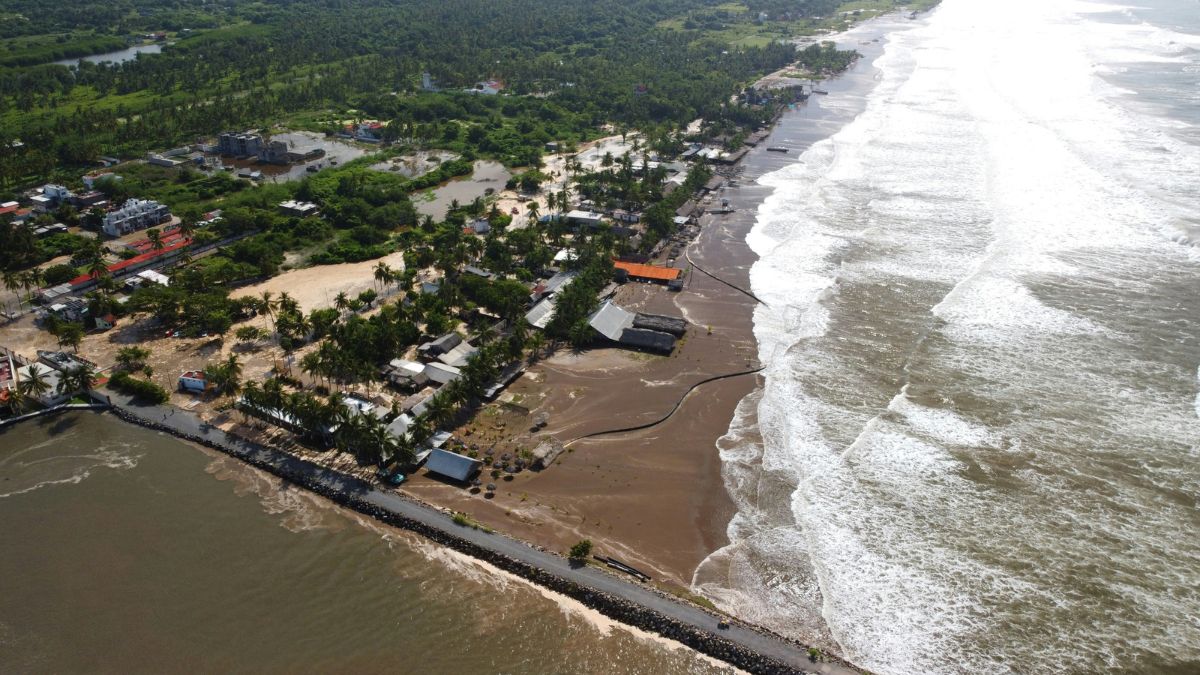
A new global commission led by The Lancet has been launched to examine the growing health and justice impacts of sea-level rise, as climate change accelerates risks for millions living in coastal and low-lying regions.
The Lancet Commission on Sea-Level Rise, Health and Justice, announced on April 8, brings together 26 international experts to assess how rising seas are reshaping public health, livelihoods, and global equity.
A Growing Crisis Beyond Climate
Sea-level rise, driven by anthropogenic climate change, is already contributing to displacement, food and water insecurity, and changing patterns of infectious diseases. The Commission marks the first major effort to analyse these intersecting risks through a health-focused lens.
“This commission comes at exactly the right time… sea-level rise is no longer a distant threat. It is already disrupting lives, health and wellbeing, especially for the most vulnerable,” said Christiana Figueres, Co-Chair of the Commission and a former UN climate chief.
Experts warn that the impacts extend far beyond environmental damage, affecting the social and economic fabric of vulnerable communities.
“Rising seas don’t just threaten coastlines, they threaten lives, livelihoods, and basic fairness. This is not only a climate problem. It is a health crisis, a justice crisis, and an urgent call for collective action,” said Jemilah Mahmood, Commissioner, Lancet Commission, and Executive Director of the Sunway Centre for Planetary Health, Malaysia.
An Urgent Global Health Challenge
The Commission is supported by the WHO Asia-Pacific Centre for Environment and Health and aims to generate evidence-based policy recommendations to strengthen adaptation, resilience, and equitable responses.
Dr Sandro Demaio, Director of WHO ACE, emphasised the immediacy of the crisis.
“Sea-level rise is no longer a distant threat — it is a public health emergency unfolding now. Through this WHO supported global Commission, we are clear: inaction is not neutral, it is a choice that puts lives and justice at risk.”
Human Impacts at the Core
The Commission also highlights the disproportionate burden on vulnerable populations, particularly in coastal and low-income regions.
“Rising sea levels are more than an environmental issue; they quietly contaminate water, displace communities, and increase health risks for those least able to cope. Every centimetre of sea level rise is not just a measure of water, but a measure of injustice,” said Kathryn Bowen, Co-Chair of the Commission.
A Defining Policy Moment
With projections suggesting that hundreds of millions of people could be displaced by the end of the century, the Commission aims to inform global policy and strengthen international cooperation.
“Sea-level rise is not just an environmental issue — it is a test of our commitment to people, equity, and future generations,” said Jiho Cha, Member of Parliament, Republic of Korea and Co-Chair of the Commission.
The Commission will contribute to global policy discussions, including international climate platforms, and aims to place human and planetary health at the centre of climate action.
Society
Why Campuses Need a Happiness Officer Now
Rising student stress and depression highlight the need for a happiness officer on campus to promote wellbeing and prevent mental health crises.


As student stress and mental health challenges rise, educational institutions must move beyond symbolic gestures and invest in structured wellbeing systems—starting with a dedicated happiness officer on campus.
The rising need for happiness
20 March was celebrated as the International Day of Happiness.
The idea of creating an International Day of Happiness is a great one; it deserves to be taken seriously. However, there is a need to do much more than celebrate happiness for just one day a year. This becomes crucial when one considers the rising problem of stress, depression and suicides among young people around the world, including in India.
The challenges of stress, depression and suicides among students
The education system places significant pressure on students, yet they are rarely taught how they, their parents, teachers or the system itself can help them cope with this pressure—or how to view their efforts in the right perspective.
Because of a lack of awareness, education and capability, stress has become a major issue in students’ lives, often leading to depression and, in some cases, suicides. These challenges have far-reaching negative impacts across different aspects of life, as supported by multiple research studies.
A happiness officer on campus
Since happiness is an essential ingredient for a fulfilling life—and also acts as a preventive factor in dealing with stress—it is important to give it greater importance in educational institutions.
Institutions already place heavy demands on faculty and staff, who may not have the time to actively focus on student wellbeing. In this context, employing a dedicated happiness officer to address health and wellbeing on campus could be a significant step forward.

The happiness officer’s primary responsibility should be to raise awareness about happiness, as well as the dangers of stress and depression, among students, faculty, staff and others on campus. This awareness must be continuous rather than occasional.
The second responsibility should be to organise regular programmes in engaging ways, covering themes such as what happiness is, why it matters, and how it can be cultivated, alongside practical approaches to understanding, avoiding and managing stress.
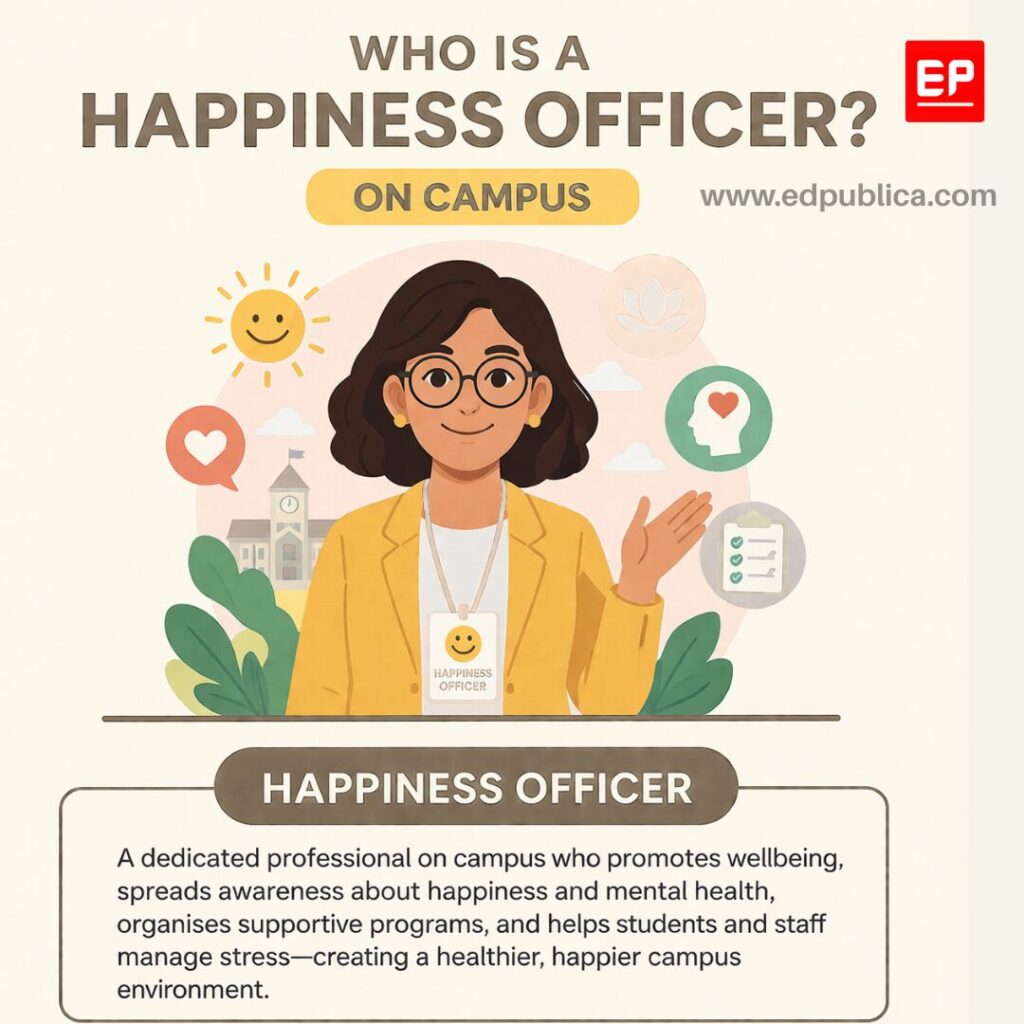
The third responsibility should be to track individuals who may be experiencing stress or depression and ensure they receive timely support. Additional responsibilities can be developed depending on the needs and context of each institution.
Avoiding the trap of tokenism
However, awareness initiatives and programmes must be implemented with sincerity and intent. The happiness officer must work in both letter and spirit to create meaningful impact, rather than simply fulfilling formal requirements.
This role should not fall into the common institutional trap where ticking boxes becomes more important than creating real change on the ground.


Vantara: Inside a Billionaire-Backed Bid to Build a Global Wildlife University

The Universe Is Ringing

Lancet Commission Launched to Tackle Health and Justice Impacts of Rising Sea Levels

India’s $145 Billion Energy Shift: The Financing Challenge Behind a Clean Power Future

NASA’s Artemis II Captures Stunning ‘Earthset’ Over the Moon

NASA to launch first crewed Artemis Moon mission on April 1

Climate change heat impact affected over 2.5 billion people

How China Is Redrawing the Global Map of Critical Minerals

Study Reveals How Ocean Bacteria Drive Plastic Biodegradation

Why Campuses Need a Happiness Officer Now

-

 Society3 months ago
The Ten-Rupee Doctor Who Sparked a Health Revolution in Kerala’s Tribal Highlands
-
Society4 months ago
From Qubits to Folk Puppetry: India’s Biggest Quantum Science Communication Conclave Wraps Up in Ahmedabad
-
COP305 months ago
Brazil Cuts Emissions by 17% in 2024—Biggest Drop in 16 Years, Yet Paris Target Out of Reach
-
Earth5 months ago
Data Becomes the New Oil: IEA Says AI Boom Driving Global Power Demand
-
COP305 months ago
Corporate Capture: Fossil Fuel Lobbyists at COP30 Hit Record High, Outnumbering Delegates from Climate-Vulnerable Nations
-
Space & Physics4 months ago
Indian Physicists Win 2025 ICTP Prize for Breakthroughs in Quantum Many-Body Physics
-
Health5 months ago
Air Pollution Claimed 1.7 Million Indian Lives and 9.5% of GDP, Finds The Lancet
-
Sustainable Energy4 months ago
The $76/MWh Breakthrough: Battery-Backed Solar Becomes the Cheapest Firm Power