

Space & Physics
How Shyam Gollakota is revolutionizing mobile systems and healthcare with technology
His research is already opening up new possibilities for battery-free networks, including underwater Wi-Fi, powerline communication, and even wireless cameras


Prof. Shyam Gollakota, Washington Research Foundation and Thomas J. Cable Endowed Professor at the Paul G. Allen School of Computer Science and Engineering at the University of Washington, has been honored with the Infosys Prize 2024 in Engineering and Computer Science for his groundbreaking contributions to mobile systems and healthcare. His research, which spans multiple engineering domains, has had a profound societal impact, particularly in areas like smartphone-based healthcare tools, battery-free communication, and the augmentation of human auditory perception with artificial intelligence.
Prof. Gollakota’s innovations have not only advanced the field of mobile systems but have also provided scalable, affordable solutions to some of the world’s most pressing challenges. His work is reshaping how we think about the intersection of technology and healthcare, and his pioneering research promises to improve the lives of millions globally, especially in low- and middle-income countries.
At the heart of Prof. Gollakota’s innovations is his ability to repurpose existing technologies to address real-world challenges
“His work on mobile and wireless communications is game-changing. Particularly impressive is his work on active sonar systems for physiological sensing, battery-free communications, and the use of AI to selectively tailor acoustic landscapes. These innovations will continue to benefit humanity for years to come,” stated Jury Chair, Infosys Prize 2024.
Transforming Mobile Devices into Healthcare Tools
At the heart of Prof. Gollakota’s innovations is his ability to repurpose existing technologies to address real-world challenges. One of his most remarkable contributions is his development of contactless physiological sensing using smartphones. By transforming mobile devices into active sonar systems, Gollakota’s research leverages the microphones and speakers in smartphones—components that are ubiquitous in today’s devices—to detect subtle physiological movements such as breathing.
This novel approach has significant implications for mobile health, particularly in resource-constrained areas where access to traditional medical equipment is limited. According to him, the ability to perform contactless physiological sensing with just a smartphone has the potential to revolutionize medical diagnostics, and make healthcare more accessible to billions of people around the world.
Battery-Free Communication: A Leap Forward in Sustainability
In a world increasingly concerned with energy efficiency and sustainability, Prof. Gollakota’s work on battery-free communication stands out as a pioneering achievement. He developed a technique called ambient backscatter, where wireless devices communicate by reflecting existing radio signals, rather than generating their own. This method drastically reduces energy consumption, allowing devices to communicate without the need for batteries.
This research is already opening up new possibilities for battery-free networks, including underwater Wi-Fi, powerline communication, and even wireless cameras. Battery-free devices could transform industries ranging from environmental monitoring to the Internet of Things (IoT). As per his visions, we are creating a future where energy-efficient, sustainable communication systems will be a part of our everyday lives.
Augmenting Human Auditory Perception with AI
In a truly visionary move, Prof. Gollakota’s research also explores how artificial intelligence (AI) can be used to augment human auditory perception. His work in this field enables people to program their acoustic environments, allowing them to focus on specific sounds or filter out others based on semantic descriptions. This breakthrough could have significant applications in hearing aids, earbuds, and assistive listening devices, where users can customize their listening experiences.
Battery-free devices could transform industries ranging from environmental monitoring to the Internet of Things (IoT)
By using AI to isolate and manipulate soundscapes in real time, Prof. Gollakota’s research is poised to improve quality of life for millions, offering individuals greater control over their auditory experiences. This technology will soon be commonplace in consumer electronics, giving people a level of control over their hearing that was once thought impossible.
A Thought Leader and Innovator
Prof. Shyam Gollakota’s career trajectory has been exceptional. A graduate of IIT Madras and MIT, where he received his Ph.D., Gollakota has quickly risen to prominence as a thought leader in mobile systems, machine learning, and human-computer interaction. He has received numerous accolades, including the National Science Foundation CAREER Award, the Alfred P. Sloan Fellowship, and the ACM Grace Murray Hopper Award. His recognition on MIT Technology Review’s 35 Innovators Under 35 list and twice on Forbes’ 30 Under 30 further cements his status as one of the brightest minds in his field.
As the director of the Mobile Intelligence Lab at the University of Washington, Gollakota is at the forefront of cutting-edge research in mobile health, networking, and battery-free computing. His work has already led to the creation of novel technologies that push the boundaries of what mobile systems can achieve, all with the potential to address key societal challenges.
The Future of Computing
Looking to the future, Prof. Gollakota’s research will continue to revolutionize mobile systems and human-computer interaction. His work in programmable sound, battery-free communication, and contactless diagnostics lays the foundation for the next generation of computing technologies. These innovations promise to reshape industries, improve global health, and enhance human capabilities.
With his visionary ideas and transformative research, Prof. Shyam Gollakota’s work will undoubtedly continue to have a profound impact on both the world of technology and the lives of people worldwide.

Space & Physics
Magnetic Fields Found to Shape Star Formation Near Milky Way Disc
Scientists map magnetic fields in molecular clouds near the Milky Way, revealing their key role in slowing and shaping star formation.

Scientists map magnetic fields in molecular clouds near the Milky Way, revealing their key role in slowing and shaping star formation.
Scientists have uncovered new insights into how stars are formed by mapping the magnetic fields surrounding molecular clouds near the Milky Way’s disc, offering a deeper understanding of one of the universe’s most fundamental processes.
The study focuses on two small molecular clouds—L1604 and L121—revealing how magnetic fields influence the balance between gravity and internal pressure during star formation.
Magnetic Fields Star Formation in Milky Way Clouds
For decades, astronomers have understood star formation as a balance between gravity pulling gas inward and internal pressure pushing outward. However, the new research highlights a third critical factor: magnetic fields.
In a media statement, the researchers explained that magnetic fields act as an invisible force shaping how molecular clouds evolve and collapse to form stars.
The study was conducted by scientists from the Aryabhatta Research Institute of Observational Sciences (ARIES)m Uttarakhand, India and Assam University, using advanced polarimetric techniques to detect otherwise invisible magnetic structures.
Magnetic Fields Star Formation Observed Using Polarimetry
To map these fields, the team used R-band polarimetry with the ARIES Imaging Polarimeter mounted on a 104-cm telescope in Nainital.
This technique measures how starlight becomes polarised as it passes through dust grains aligned by magnetic fields.
In a media statement, the researchers said that by analysing thousands of such light signals, they were able to “see” the skeleton of magnetic fields surrounding the molecular clouds for the first time.
Two Molecular Clouds Reveal Contrasting Behaviour
The study examined two distinct clouds:
- L1604, located about 816 parsecs away, is dense and massive, with strong potential for future star formation
- L121, much closer at 124 parsecs, is less dense but exhibits a stronger and more organised magnetic field
In a media statement, the scientists noted that the orderly magnetic structure in L121 suggests it has not yet undergone intense gravitational collapse, unlike more active star-forming regions.
Magnetic Fields Star Formation Controlled by Energy Balance
By calculating magnetic field strength, the researchers found that both clouds are sub-critical, meaning magnetic forces are strong enough to resist gravitational collapse across most of their structure.
In a media statement, the team stated that magnetic energy dominates over both turbulence and gravity at the outer regions of the clouds.
However, deep within the dense cores, gravity may begin to take over, creating conditions suitable for star formation.
The “Recipe” for Star Formation
The findings suggest that magnetic fields play a crucial role in regulating how quickly stars form.
In a media statement, researchers said that magnetism acts as an “invisible hand,” slowing down star formation and preventing galaxies from converting all their gas into stars at once.
The study positions L1604 and L121 as natural laboratories for understanding the interplay between gravity and magnetism.
Rather than being passive clouds, they represent dynamic systems where fundamental forces interact over millions of years to shape the birth of stars.
The findings offer a clearer picture of how galaxies like the Milky Way sustain star formation over long cosmic timescales, balancing collapse with control.
Space & Physics
Researchers Use AI to Enable Robots to ‘See’ Through Walls
MIT researchers develop AI-powered system using wireless signals to help robots see through walls and reconstruct hidden objects and indoor spaces.
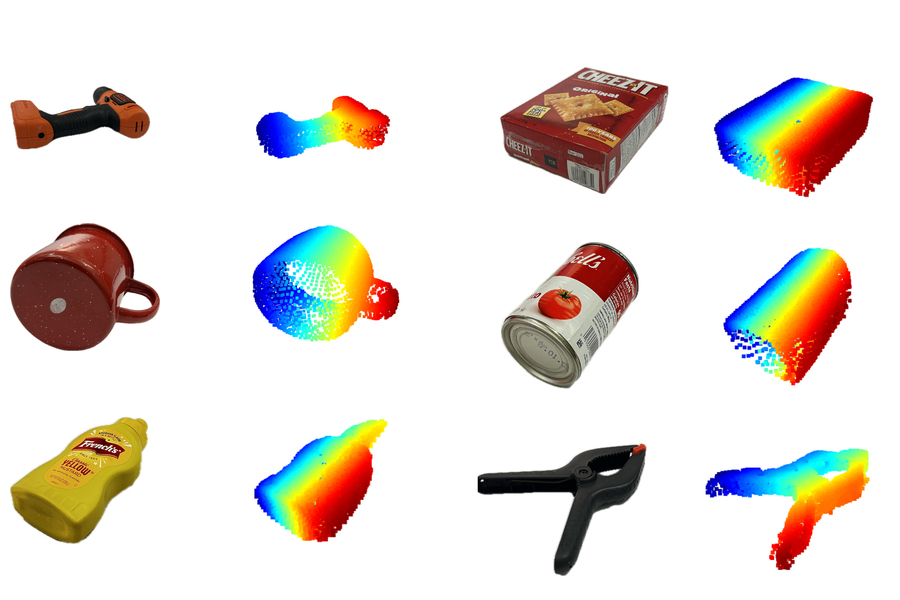
Researchers at Massachusetts Institute of Technology have developed a new artificial intelligence-powered system that allows robots to detect and reconstruct objects hidden behind walls and obstacles, marking a significant breakthrough in machine perception.
The system combines wireless signals with generative AI models to enable what researchers describe as a new form of “wireless vision,” potentially transforming robotics, logistics, and smart environments.
AI See Through Walls Using Wireless Signals
The research builds on over a decade of work using millimeter wave (mmWave) signals—similar to those used in Wi-Fi—which can pass through materials such as drywall, plastic, and cardboard and reflect off hidden objects.
Earlier approaches could only capture partial shapes due to limitations in how these signals reflect.
The new system overcomes this by combining wireless reflections with generative AI, enabling the reconstruction of complete object shapes even when they are not directly visible.
“What we’ve done now is develop generative AI models that help us understand wireless reflections. This opens up a lot of interesting new applications, but technically it is also a qualitative leap in capabilities, from being able to fill in gaps we were not able to see before to being able to interpret reflections and reconstruct entire scenes,” said Fadel Adib, in a media statement.
“We are using AI to finally unlock wireless vision.”
AI See Through Walls Improves Object Reconstruction
The system, called Wave-Former, first creates a partial image of a hidden object using reflected wireless signals. It then uses a trained AI model to fill in missing parts and refine the reconstruction.
In tests, Wave-Former successfully reconstructed around 70 everyday objects—including boxes, utensils, and fruits—with nearly 20% higher accuracy than existing methods.
The objects were placed behind or under materials such as wood, fabric, and plastic, demonstrating the system’s robustness in real-world conditions.
AI See Through Walls Reconstructs Entire Rooms
Beyond individual objects, the researchers developed a second system capable of reconstructing entire indoor environments.
Using a single stationary radar, the system tracks how wireless signals bounce off moving humans and surrounding objects. These reflections—often considered noise—are analysed by AI to map out the room layout.
The system, known as RISE, was tested using over 100 human movement patterns and achieved twice the accuracy of existing techniques in reconstructing indoor spaces.
Privacy-Preserving Alternative to Cameras
Unlike camera-based systems, this approach does not capture visual images, offering a privacy-preserving alternative for indoor monitoring and robotics.
Because it relies on wireless signals rather than cameras, it can detect presence and layout without revealing identifiable details.
Applications in Warehousing and Smart Homes
The researchers say the technology could have wide-ranging applications:
- Warehouses: Robots could verify packed items before shipping, reducing errors and returns
- Smart homes: Robots could better understand human location and movement
- Human-robot interaction: Improved safety and efficiency in shared environments
The system could also pave the way for future “foundation models” trained specifically on wireless data, similar to how large AI models are trained for language and vision.
Health
Researchers Develop AI Method That Makes Computer Vision Models More Explainable
A new technique developed by MIT researchers could help make artificial intelligence systems more accurate and transparent in high-stakes fields such as health care and autonomous driving by improving how computer vision models explain their decisions.

MIT researchers have developed a new explainable AI method that improves the accuracy and transparency of computer vision models, helping users trust AI predictions in healthcare and autonomous driving.
Researchers at MIT have developed a new approach to make computer vision models more transparent, offering a potential boost to trust and accountability in safety-critical applications such as medical diagnosis and autonomous driving.
In a media statement, the researchers said the method improves on a widely used explainability technique known as concept bottleneck modeling, which enables AI systems to show the human-understandable concepts behind a prediction. The new approach is designed to produce clearer explanations while also improving prediction accuracy.
Why explainable AI matters
In areas such as health care, users often need more than just a model’s output. They want to understand why a system arrived at a particular conclusion before deciding whether to rely on it. Concept bottleneck models attempt to address that need by forcing an AI system to make predictions through a set of intermediate concepts that humans can interpret.
For example, when analysing a medical image for melanoma, a clinician might define concepts such as “clustered brown dots” or “variegated pigmentation.” The model would first identify those concepts and then use them to arrive at its final prediction.
But the researchers said pre-defined concepts can sometimes be too broad, irrelevant or incomplete for a specific task, limiting both the quality of explanations and the model’s performance. To overcome that, the MIT team developed a method that extracts concepts the model has already learned during training and then compels it to use those concepts when making decisions.
The approach relies on two specialised machine-learning models. One extracts the most relevant internal features learned by the target model, while the other translates them into plain-language concepts that humans can understand. This makes it possible to convert a pretrained computer vision model into one capable of explaining its reasoning through interpretable concepts.
“In a sense, we want to be able to read the minds of these computer vision models. A concept bottleneck model is one way for users to tell what the model is thinking and why it made a certain prediction. Because our method uses better concepts, it can lead to higher accuracy and ultimately improve the accountability of black-box AI models,” Antonio De Santis, lead author of the study, said in a media statement.
De Santis is a graduate student at Polytechnic University of Milan and carried out the research while serving as a visiting graduate student at MIT’s Computer Science and Artificial Intelligence Laboratory (CSAIL). The paper was co-authored by Schrasing Tong, Marco Brambilla of Polytechnic University of Milan, and Lalana Kagal of CSAIL. The research will be presented at the International Conference on Learning Representations.
Concept bottleneck models have gained attention as a way to improve AI explainability by introducing an intermediate reasoning step between an input image and the final output. In one example, a bird-classification model might identify concepts such as “yellow legs” and “blue wings” before predicting a barn swallow.
However, the researchers noted that these concepts are often generated in advance by humans or large language models, which may not always match the needs of the task. Even when a model is given a fixed concept set, it can still rely on hidden information not visible to users, a challenge known as information leakage.
“These models are trained to maximize performance, so the model might secretly use concepts we are unaware of,” De Santis said in a media statement.
The team’s solution was to tap into the knowledge the model had already acquired from large volumes of training data. Using a sparse autoencoder, the method isolates the most relevant learned features and reconstructs them into a small number of concepts. A multimodal large language model then describes each concept in simple language and labels the training images by marking which concepts are present or absent.
The annotated dataset is then used to train a concept bottleneck module, which is inserted into the target model. This forces the model to make predictions using only the extracted concepts.
The researchers said one of the biggest challenges was ensuring that the automatically identified concepts were both accurate and understandable to humans. To reduce the risk of hidden reasoning, the model is limited to just five concepts for each prediction, encouraging it to focus only on the most relevant information and making the explanation easier to follow.
When tested against state-of-the-art concept bottleneck models on tasks including bird species classification and skin lesion identification, the new method delivered the highest accuracy while also producing more precise explanations, according to the researchers. It also generated concepts that were more relevant to the images in the dataset.
Still, the team acknowledged that the broader challenge of balancing accuracy and interpretability remains unresolved.
“We’ve shown that extracting concepts from the original model can outperform other CBMs, but there is still a tradeoff between interpretability and accuracy that needs to be addressed. Black-box models that are not interpretable still outperform ours,” De Santis said in a media statement.
Looking ahead, the researchers plan to explore ways to further reduce information leakage, possibly by adding additional concept bottleneck modules. They also aim to scale up the method by using a larger multimodal language model to annotate a larger training dataset, which could improve performance further.
This latest work adds to growing efforts to make AI systems not only more powerful, but also more understandable in domains where trust can be as important as accuracy.


Study Finds Warming Could Slightly Boost Atmosphere’s Methane-Cleaning Capacity

How China Is Redrawing the Global Map of Critical Minerals

Magnetic Fields Found to Shape Star Formation Near Milky Way Disc

Researchers Use AI to Enable Robots to ‘See’ Through Walls

India’s Power Future: 70% Non-Fossil Capacity by 2035-36, But Grid Challenges Loom

How the Iran–Israel–US Conflict Ripples Through India’s Economy and Energy Future

AI in Classrooms: Threat to Learning or Catalyst for Educational Transformation?

Climate change heat impact affected over 2.5 billion people

Weather, Not Just Emissions, Driving PM2.5 Pollution in Indian Cities: Study

Study Reveals How Ocean Bacteria Drive Plastic Biodegradation

-

 Society3 months ago
The Ten-Rupee Doctor Who Sparked a Health Revolution in Kerala’s Tribal Highlands
-
COP305 months ago
Brazil Cuts Emissions by 17% in 2024—Biggest Drop in 16 Years, Yet Paris Target Out of Reach
-
Society3 months ago
From Qubits to Folk Puppetry: India’s Biggest Quantum Science Communication Conclave Wraps Up in Ahmedabad
-
Women In Science6 months ago
The Data Don’t Lie: Women Are Still Missing from Science — But Why?
-
Earth4 months ago
Data Becomes the New Oil: IEA Says AI Boom Driving Global Power Demand
-
COP304 months ago
Corporate Capture: Fossil Fuel Lobbyists at COP30 Hit Record High, Outnumbering Delegates from Climate-Vulnerable Nations
-
Space & Physics3 months ago
Indian Physicists Win 2025 ICTP Prize for Breakthroughs in Quantum Many-Body Physics
-
Health5 months ago
Air Pollution Claimed 1.7 Million Indian Lives and 9.5% of GDP, Finds The Lancet