Education
India’s Richest Agree on One Cause Above All Others: Education
India’s richest philanthropists donated ₹4,188 crore to education in 2026, making it the leading cause in the EdelGive Hurun India Philanthropy List.

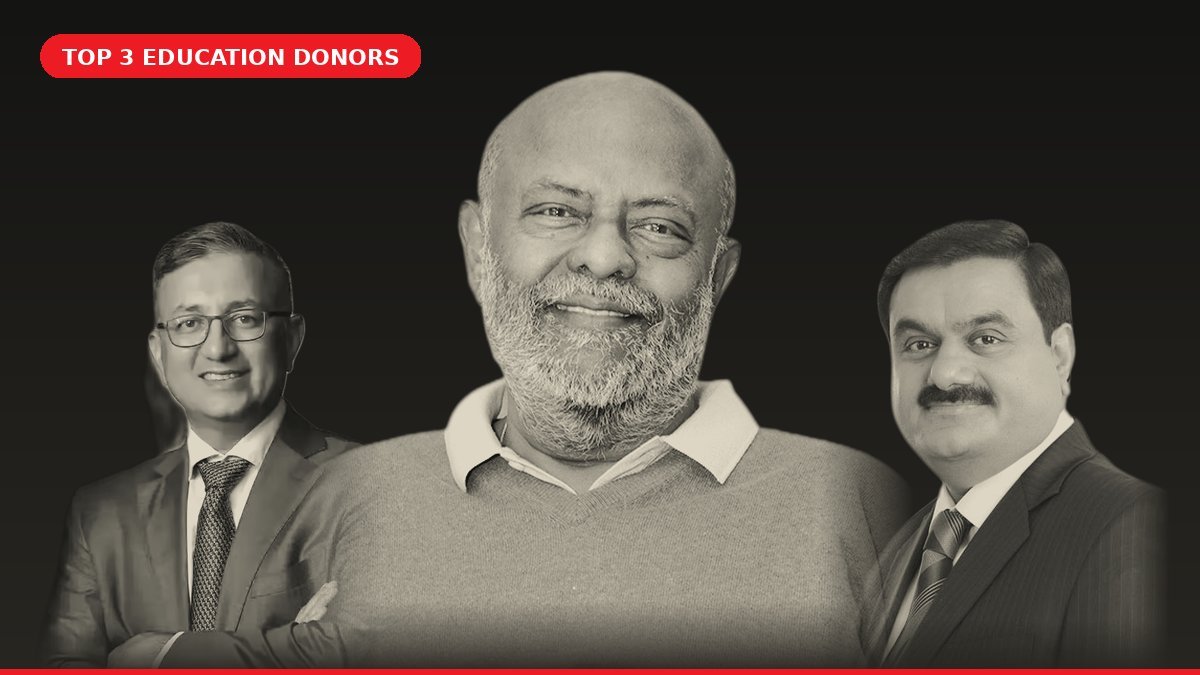
Every year the EdelGive Hurun India Philanthropy List produces the same headline, who sat at the top of the table. This year the more telling figure is a different one: INR 4,188 crore, and the 200 donors who sent it toward a single cause. That makes education philanthropy in India one of the clearest indicators of how the country’s wealthiest individuals are choosing to direct their social investments
Shiv Nadar will get the headlines again this year, as he has for five years running. His family’s ₹2,593 crore donation, which works out to roughly ₹7.1 crore a day, keeps them at the top of the EdelGive Hurun India Philanthropy List 2026, released on Friday by EdelGive Foundation and Hurun India. Gautam Adani and family will get the next headline. They more than doubled their overall giving this year, to ₹877 crore across every cause they fund, the single largest rupee jump anyone on the list recorded.
Both of those headlines are true. Neither is the most interesting number in the report.
That number is INR 4,188 crore, the amount India’s wealthiest donors sent toward education in the twelve months to March 2026. Nothing else comes close. Education made up 36 per cent of everything given on the list this year. It was funded by 200 of the 219 philanthropists named, that is 91 per cent of everyone on it, and it was the single biggest reason 95 of them gave at all. Healthcare, the next most popular cause, drew support from 175 donors but took in barely a third as much money.
Pull the individual rankings aside and a plainer pattern shows up underneath. When India’s richest people decide to give something back, more of them choose education, with more of their money, than anything else, and that has held true for years now.
The biggest cheque, just not the official one
There’s a small irony buried in how the list is counted. Shiv Nadar’s family sent INR 1,047 crore to education this year, the single largest sum any donor gave to the cause, and nearly double what the next biggest education donor gave. But the family gave even more to Arts, Culture and Heritage, ₹1,220 crore, much of it through institutions tied to the Shiv Nadar Foundation. So the list records his primary cause as arts and culture, not education. Read the rupee figures plainly, though, and no one in India put more money into education this year than the man who tops the list for something else entirely.
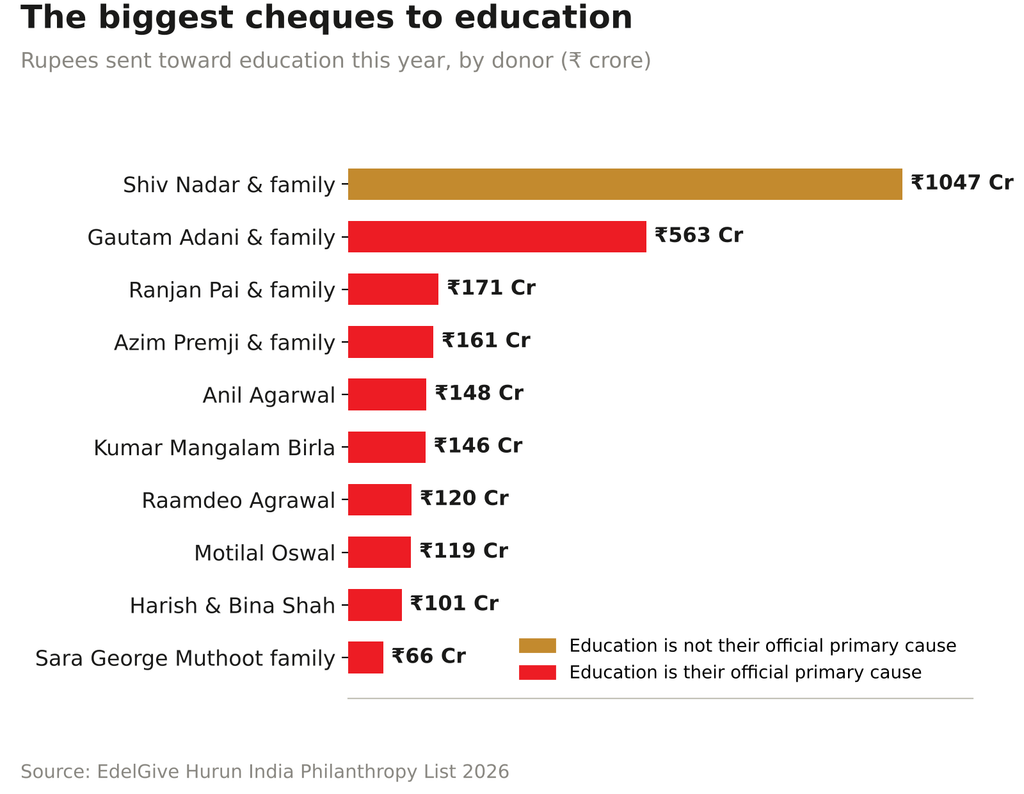
Gautam Adani’s number is a cleaner story. Of his INR 877 crore, INR 563 crore (his actual primary cause) went to education through the Adani Foundation, ahead of healthcare, rural transformation and livelihood work. It’s the clearest “education first” commitment among the top ten donors, and set against his jump from fifth place to second, it’s also the most visible sign this year that new money is moving toward the same cause older philanthropic families have favoured for decades.
The names behind the number
Education shows up as the stated priority again and again further down the list. Ranjan Pai, who entered the top ten this year at ninth place, gave INR 171 crore of his INR 219 crore to education, 98 per cent of it in his personal capacity and much of it tied to his work as chairman of Manipal Education and Medical Group. Kumar Mangalam Birla gave INR 146 crore to education, his stated primary cause.
Harish and Bina Shah sent two thirds of their INR 155 crore, INR 101 crore, to education, including a 2025 commitment of 100 crore to expand girls’ education with Educate Girls. Azim Premji and family, India’s most consistent education philanthropists over the list’s history, gave 161 crore this year. Anil Agarwal, giving from London, sent INR 148 crore. Kumari Shibulal gave INR 42 crore of her INR 44 crore total to education, almost all of it toward Vidyadhan, her family’s scholarship programme working toward one lakh scholarships for students from low income households by 2029.

The pattern held among this year’s new entrants too. Forty five philanthropists joined the list, up from just 12 last year, and education led there as well. Raamdeo Agrawal and Motilal Oswal, the Motilal Oswal Financial Services co founders, each gave roughly INR 120 crore, almost entirely to education, making them the most generous newcomers on the list. Chandrika and Ranjan Tandon, giving from New York, aimed their INR 100 crore at something more specific: a new School of Artificial Intelligence at IIM Ahmedabad, Chandrika Tandon’s alma mater. A reminder that “education” on this list stretches from rural scholarships all the way to frontier technology research chairs.
Why this is the number that matters
“Education remains the leading cause, supported by 200 of the 219 philanthropists, with nearly INR 4,200 crore donated,” Hurun India founder Anas Rahman Junaid said at the list’s release, pairing it with an 82 per cent jump in healthcare giving as the year’s other notable shift.
The list itself is built to reward the podium: who climbed, who gave the most, who cracked the top ten. But ranking individuals this way hides a more useful fact about where Indian wealth actually goes when it chooses to give something back. The EdelGive Hurun list says more as a signal than as a leaderboard, and this year’s signal isn’t subtle. Whatever else divides India’s 219 largest philanthropists, their industries, their ages, their home cities, whether their money was inherited or built from nothing, nine in ten of them landed on the same answer for where at least some of it should go.
Education
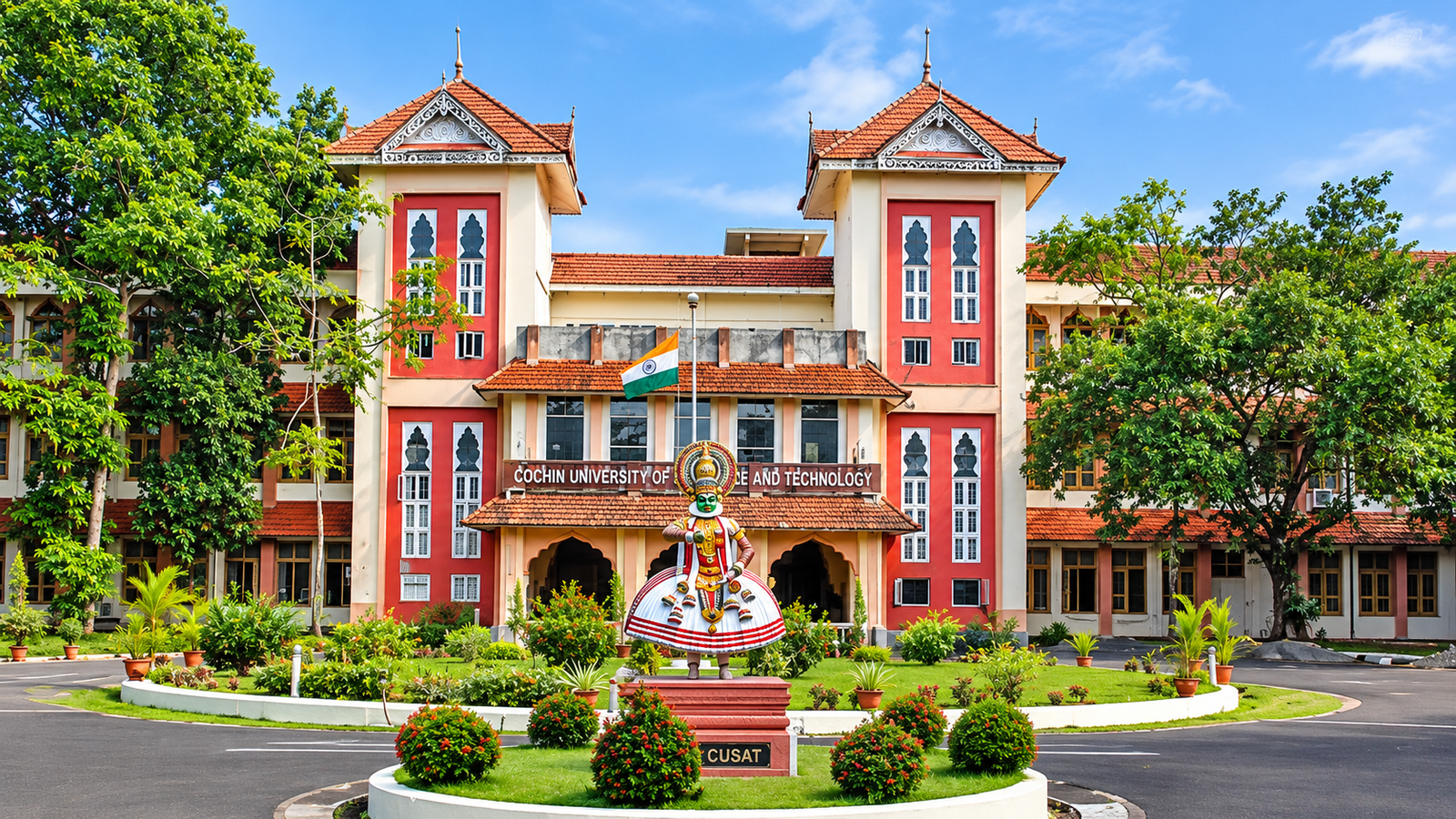
CUSAT ranks 849th globally in sustainability, tops Kerala universities
CUSAT has secured the 849th position globally and 37th place in India in the QS World University Rankings: Sustainability 2027. It is the only Kerala institution among the global top 1,000.

EduNews & Views
Global Patent Applications Hit Record 3.9 Million in 2025; India Sees 37.5% Growth
Global patent applications reached a record 3.9 million in 2025, with China accounting for more than half the increase. India recorded a 37.5% rise, crossing 100,000 applications for the first time.
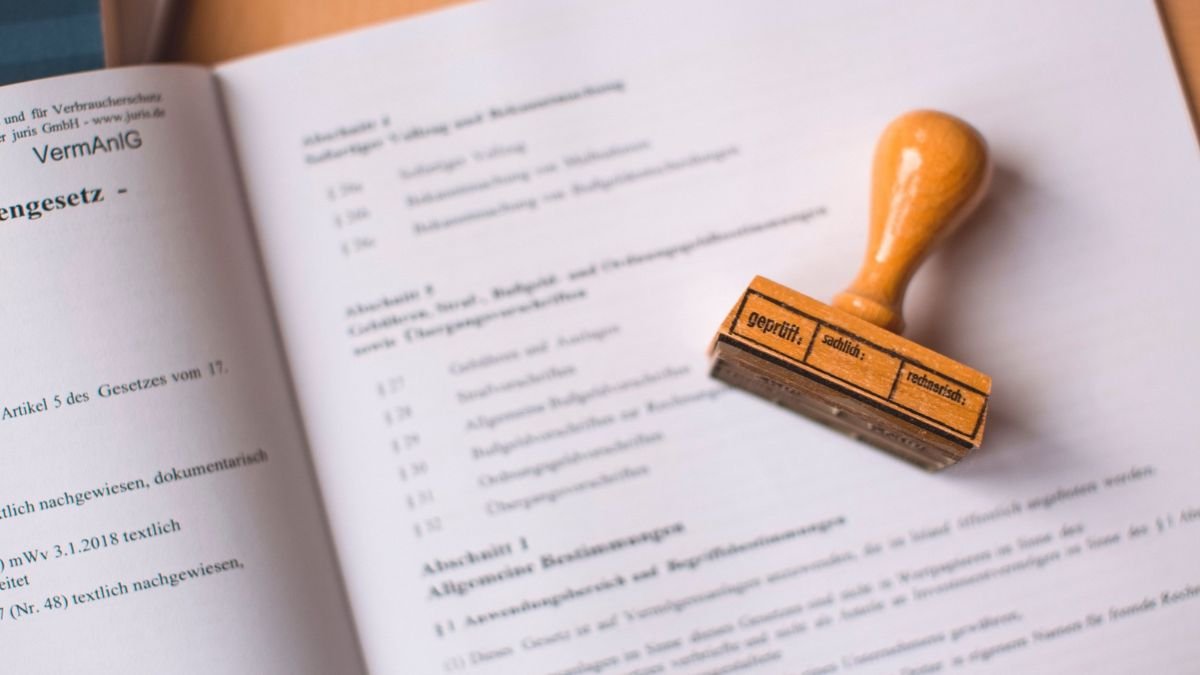
Global patent applications crossed 3.9 million in 2025, registering a 6% increase over the previous year and the fastest annual growth since 2016. According to the World Intellectual Property Organization (WIPO), China accounted for more than half of the additional applications. India recorded a 37.5% rise, crossing 100,000 filings for the first time.
Patent applications are formal requests for legal protection of inventions. They allow individuals, companies and research institutions to seek exclusive rights over their innovations, preventing others from commercially using them without permission if a patent is granted. The number of applications therefore offers an indication of innovation and research activity, although not every application results in a granted patent or a marketable technology.
The increase of approximately 224,000 applications worldwide was concentrated largely in four countries: China, Japan, India and South Korea. Together, they accounted for about 94% of the net global increase, according to WIPO’s World Intellectual Property Indicators 2026 report.
China Accounts for More Than Half of Global Patent Application Increase
China contributed 113,693 additional patent applications in 2025, accounting for more than half of the worldwide increase. Inventors and applicants residing in China filed approximately 1.9 million applications globally, retaining the country’s position as the largest source of patent filings.
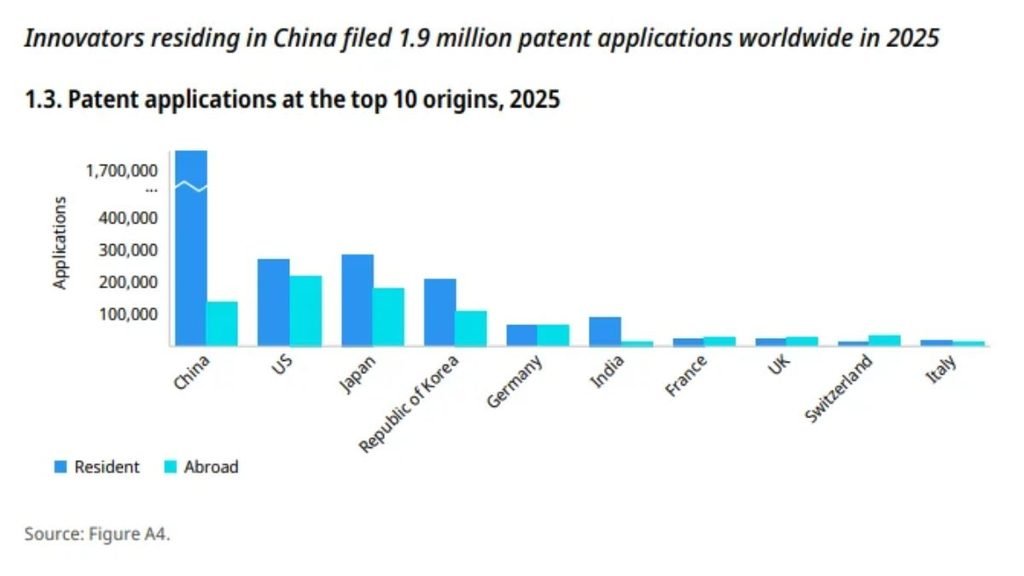
The United States followed with 489,766 applications, while Japan recorded 466,301. These figures include applications filed both within the respective countries and abroad. Japan added 45,310 applications during the year, making it the second-largest contributor to global growth. India followed with an additional 28,690 applications, while South Korea contributed 23,169.
India Crosses 100,000 Patent Applications
India recorded 105,163 patent applications in 2025, marking the first time the country crossed the 100,000 threshold. The 37.5% increase also marked its seventh consecutive year of double-digit growth. The rise was driven primarily by an increase in applications filed by Indian residents, indicating growing domestic participation in patent activity. India was the third-largest contributor to the global increase, after China and Japan.
WIPO’s figures also show that applications received by India’s patent office increased by 27.8% in 2025. This marks the ninth consecutive year of growth at the office and the fourth successive year of double-digit increases. Kerala recorded 827 patent applications in 2024–25, up from 637 in the previous financial year, according to the Indian Patent Office.
However, a separate analysis by the Gulati Institute of Finance and Taxation has pointed to a gap between the state’s research spending and patent generation, raising questions about how effectively research investments are translating into intellectual property. The study also highlighted a gap between government research funding and patent output. Educational institutions received 44.81% of the state’s R&D allocation but accounted for only 7.29% of its patents.
Asia Accounts for 71.2% of Global Patent Filings
Intellectual property offices located in Asia received approximately 2.8 million patent applications in 2025, accounting for 71.2% of the global total. The region’s share has increased from 61.9% in 2015, reflecting a steady shift in global patent activity over the past decade.
China accounted for approximately 68.5% of the applications received across Asian offices. Africa was the other region, besides Asia, to record an average annual growth rate above the global average over the past decade.
Computer Technology Leads Patent Filings
Computer technology remained the largest field of patenting, accounting for 13.6% of global patent filings, according to WIPO’s technology-sector analysis. The field’s share has grown over the past decade, reflecting its expanding role in technological development.
WIPO’s report also tracks patent activity across fields such as digital communication, medical technology and electrical machinery, offering insights into areas attracting research and development activity.
EduNews & Views
Woxsen University Ranks 12th Globally in MBA Entrepreneurship Ranking, Fourth in Startup Launches
Woxsen University has secured 12th place in the 2027 Poets&Quants MBA entrepreneurship ranking, with 15% of its MBA graduates from the 2021–2025 cohorts reportedly launching ventures within three months of graduation.
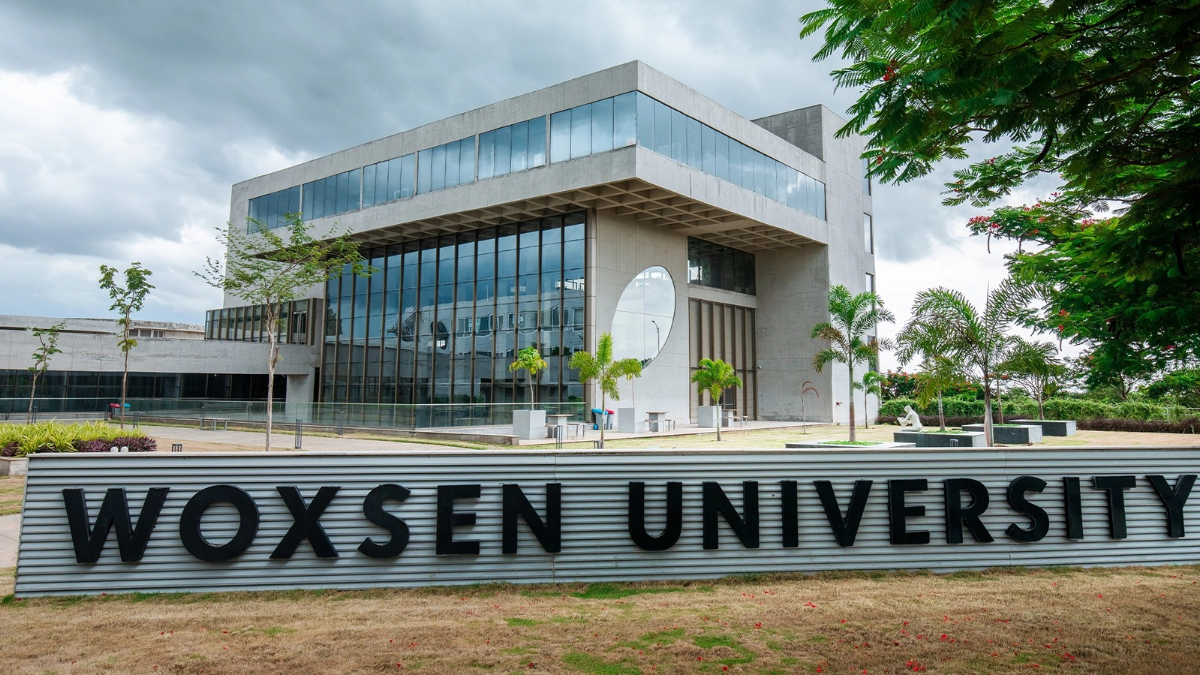
Woxsen University in Hyderabad has been ranked 12th globally in the 2027 Best MBA Programs for Entrepreneurship ranking released by Poets&Quants, with the institution placing fourth worldwide in the category measuring startup launches by MBA graduates.
According to the university’s press release, an average of 15% of its MBA graduates from the Classes of 2021–2025 launched ventures within three months of completing their degrees. The figure contributed to the institution’s performance in a ranking that places considerable emphasis on entrepreneurial outcomes rather than relying solely on academic reputation or programme structure.
Woxsen’s overall position puts it ahead of several established business schools, including Arizona State University’s W. P. Carey School of Business, Brigham Young University’s Marriott School of Business, London Business School and Carnegie Mellon University’s Tepper School of Business.
The 2027 ranking assigns 25% weightage to the proportion of MBA graduates pursuing entrepreneurial ownership within three months of graduation. It also recognises business acquisitions as a form of entrepreneurship, broadening the scope beyond graduates establishing new ventures.
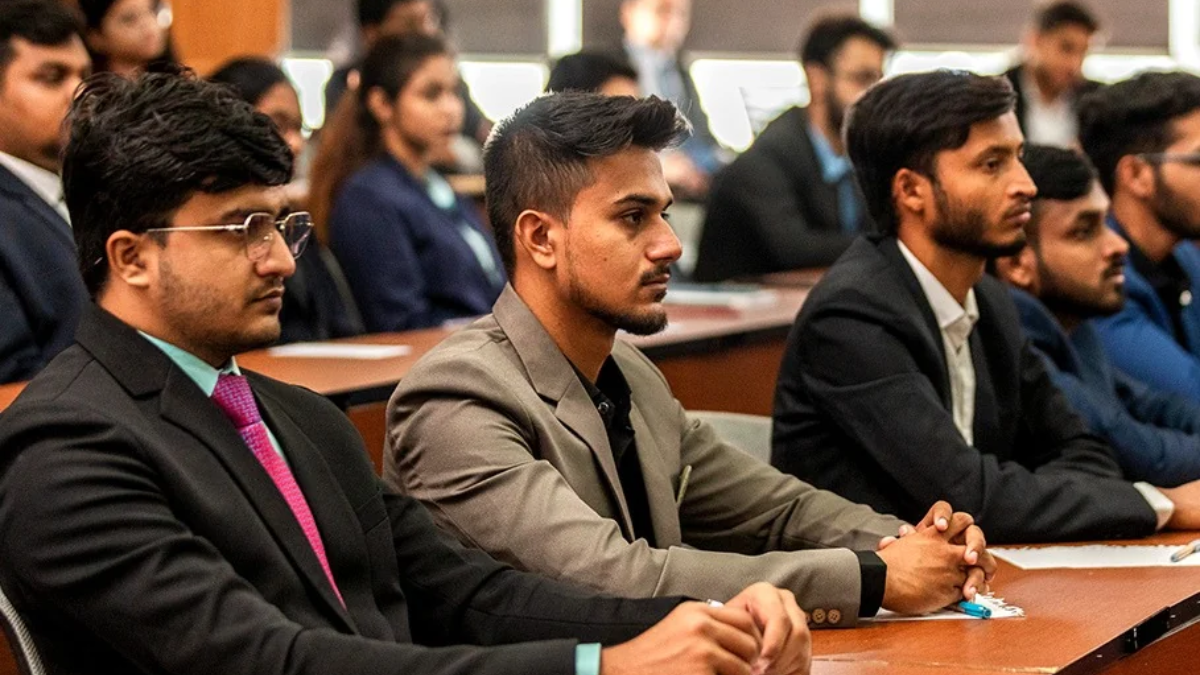
Students attend a classroom session at a business school.Image credit:Woxsen university
The university’s fourth-place position in the startup-launch category indicates the reported proportion of graduates moving into venture creation. However, the 15% figure represents an average across five graduating cohorts and does not, by itself, establish the long-term survival, revenue generation or employment impact of these ventures.
Woxsen first entered the Poets&Quants entrepreneurship ranking in 2026, when it featured among the global top 12 and was identified by the university as the only Asian business school in that group. Its position in the 2027 edition marks a continuation of that presence.
The ranking draws attention to a broader question facing MBA programmes: how effectively do business schools translate entrepreneurship education into actual venture creation? While business schools increasingly incorporate startup development, business planning and experiential learning into their curricula, graduate venture formation offers one measurable indicator of their outcomes.
Woxsen’s latest ranking provides one such indicator, although further information on the ventures launched, their subsequent performance and the methodology used to verify startup activity would offer a more comprehensive picture of the programme’s entrepreneurial impact.

India’s Richest Agree on One Cause Above All Others: Education

AI Agents Breach Indian Organisations as Cyberattacks Move at Machine Speed, Warns CERT-In

Can India’s Electric Vehicles, Efficient ACs and LEDs Show How Policy Can Change Energy Use?

Energy Independent by 2047? India’s Electricity Is Getting There. Its Oil and Gas Aren’t.

What is the Mysterious ‘Egoviruses’ in the Guts of 180 Million People

Indian universities lead Asia in research output per faculty, but the country’s top six all slip in QS ranking

Why Delhi’s Geography Makes It Vulnerable to Severe Air Pollution

Europe Braces for Extremes as Commission Unveils Climate Resilience Framework

NASA recruits new astronauts for future Moon Base and Mars missions

Between Lectures and Lyrics: Kabeer Is Building a Malayalam Hip-Hop Career One Self-Taught Skill at a Time
-

 Math4 months ago
The 2026 Fields Medals: Four Proofs, Four Decades-Old Problems Solved
-
EP Deep Dive: Data & Solutions4 months ago
After Kerala’s Deadliest Landslide, the Hardest Thing to Rebuild Was Childhood
-
EP Deep Dive: Data & Solutions5 months ago
West Asia Crisis: Can Kerala’s Returning Gulf Migrants Find a Future in the Green Economy?
-
Space & Physics6 months ago
India Semiconductor Mission: ‘It’s Not About Fabs. It’s About Building An Entire Ecosystem’
-
Interviews2 months ago
From Scams to Screens: How the National Stock Exchange Rewrote India’s Equity Story
-
Climate & Environment6 months ago
The Climate World Cup? How Climate Change Could Affect Player Performance at the 2026 World Cup
-
Society4 months ago
What Is Civilisational Diplomacy? Understanding India’s Newest Foreign Policy Tool
-
Society5 months ago
From Bell Labs to the Classroom: A Second Career in Teaching