EDUNEWS & VIEWS
From Classrooms to Corridors: How India’s Budget Repositions Education
Budget 2026–27 reframes education as economic infrastructure—linking skills, research and industry—while shifting India’s learning system away from rote pathways towards future-ready ecosystems.

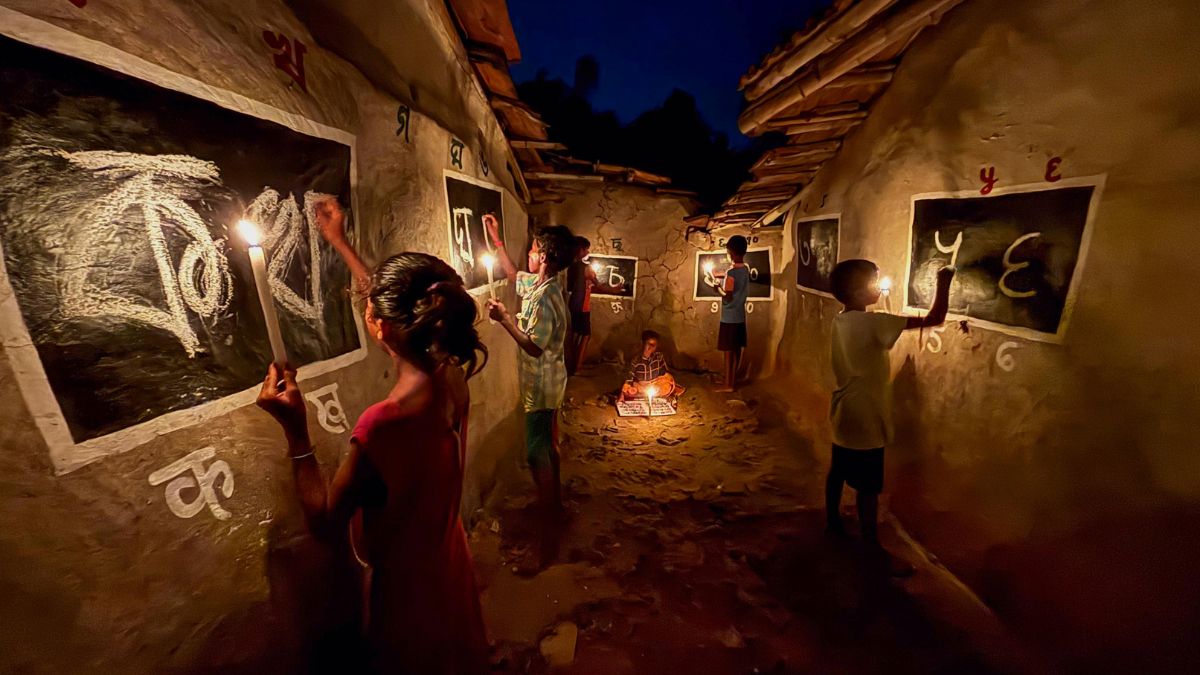
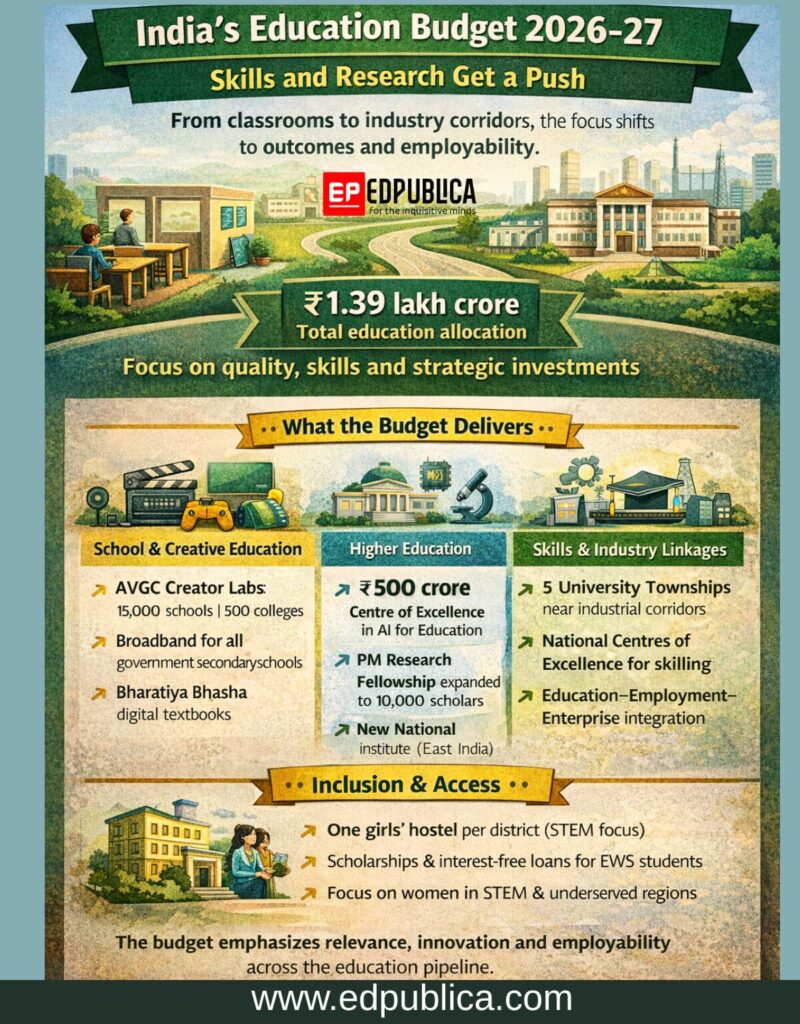
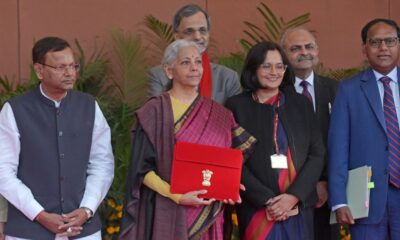
India’s Union Budget 2026–27 does not dramatically expand headline spending on education, but it signals a clear shift in how education is expected to deliver economic value. With a total allocation of Rs1.39 lakh crore—largely in line with last year—the focus moves decisively from enrolment expansion to outcomes, skills, and integration with industry and research ecosystems.
Presented alongside the government’s Viksit Bharat 2047 (Developed India) vision, the education budget positions learning as a strategic economic investment—one that links schools, universities, skilling centres and enterprises into a single pipeline aimed at employability, innovation and global competitiveness.
From Classrooms to Creative Economies
A major thrust of the budget is the expansion of creative and technology-driven learning. The proposal to establish AVGC (Animation, Visual Effects, Gaming and Comics) Content Creator Labs in 15,000 secondary schools and 500 colleges marks a significant bet on India’s “orange economy,” projected to require nearly two million professionals by 2030.
This creative push is complemented by the announcement of a new National Institute of Design in eastern India and expanded digital infrastructure, including mandatory broadband connectivity for all government secondary schools. Together, these measures signal a move away from textbook-centric learning towards experiential, project-based education aligned with emerging industries.
Dr Bushra, Associate Professor – Finance at JIMS Rohini, describes this as a long-overdue alignment between education and the real economy. “The Union Budget’s strong push to strengthen the education, employment, and enterprise continuum is a progressive step,” she notes, adding that University Townships near industrial and logistics corridors can “significantly enhance experiential education by integrating academia with real-world business ecosystems.”
University Townships and the Industry-Education Bridge
Perhaps the most structural reform in the budget is the proposal to establish five University Townships near major industrial corridors, developed in partnership with states. These townships are envisioned as integrated hubs combining universities, research institutions, skilling centres and industry partners—breaking the long-standing silos between education and employment.
This model reflects a broader policy shift: instead of producing graduates first and searching for jobs later, education is being spatially and institutionally embedded within production and innovation ecosystems.
For higher education institutions, this presents both opportunity and pressure. As Dr Bushra points out, institutions now have a chance to “deepen partnerships with industry, embed emerging technologies such as AI and analytics into curricula, and foster entrepreneurial thinking among students.” At the same time, the success of these townships will depend on execution, governance clarity and sustained state-level engagement.
AI, Research and the End of Rote Learning
The budget’s Rs 500 crore allocation for a Centre of Excellence in Artificial Intelligence for education reinforces the pivot towards research-led, technology-enabled learning. The centre is expected to support AI-driven teaching tools, personalised learning and adaptive assessments across school and higher education.
Atishay Jain, Managing Partner at Koncept Global Books, sees this as a clear departure from legacy learning models. “The Budget’s clear emphasis on research-led education and future technologies like AI signals a shift from rote learning to innovation-driven skill development,” he says. According to Jain, structured investments in advanced learning ecosystems encourage institutions to prepare students for emerging industries rather than “legacy roles.”
This emphasis is reinforced through the expansion of the PM Research Fellowship to 10,000 scholars, new national centres of excellence for skilling, and a stronger focus on translational research that connects academic output with industry application.
Equity, Access and Gender Inclusion
Alongside innovation, the budget also addresses access and equity—albeit selectively. The announcement of one girls’ hostel per district, particularly in STEM-focused institutions, is aimed at improving participation and retention of women in higher education. Scholarships, interest-free loans for economically weaker sections, and continued support for early childhood programmes such as Poshan 2.0 signal continuity in inclusion-focused policy.
“These measures ensure that education remains both aspirational and equitable,” says Dr Bushra, adding that inclusive access must remain central as curricula and delivery models evolve.
What the Budget Still Leaves Open
Despite its forward-looking design, the education budget leaves some structural questions unanswered. Public education spending still falls short of the long-articulated 6 percent of GDP target. Faculty shortages, research commercialisation challenges, and uneven state-level capacity remain persistent bottlenecks.
Moreover, while digital infrastructure and AI integration are emphasised, large-scale teacher upskilling and institutional readiness will determine whether these investments translate into improved learning outcomes rather than isolated pilots.
A Directional Budget for a Knowledge Economy
Union Budget 2026–27 may not be an expansionary education budget, but it is a directional one. By tying education more closely to industry, research and future technologies, it reflects an understanding that India’s demographic dividend can only be realised through relevance, quality and adaptability.
As Atishay Jain notes, strengthening the research and learning foundation will be “critical to nurturing future-ready talent and supporting India’s ambition of becoming a global knowledge powerhouse.” The real test, as with many education reforms, will lie not in intent but in execution—across classrooms, campuses and corridors of industry alike.











Society
Academic Diplomacy: How India Can Build Global Influence Through Universities
Academic diplomacy could give India a new source of global influence as universities, research networks and student mobility become tools of foreign policy.

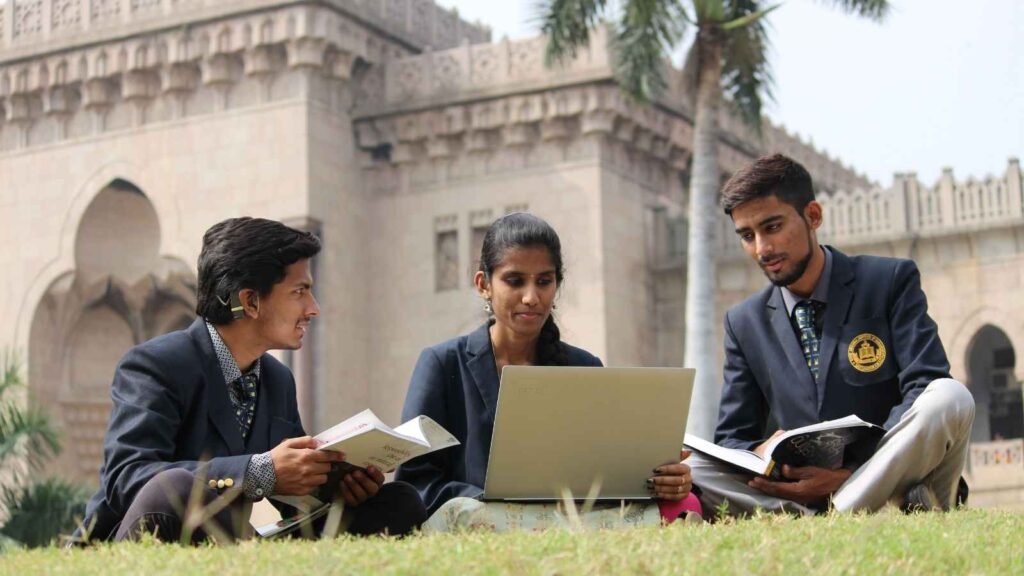
As global power becomes more multipolar, India’s universities could become important instruments of academic diplomacy, building influence through students, research and institutional partnerships.
In an era characterised by fragmented geopolitics, economic realignments, and the gradual decay of unipolar hegemony, statecraft has expanded far beyond classic military projection and commercial leverage. Modern influence relies heavily on attraction, ideological alignment, and institutional networking—the foundational components of soft power. For decades, international relations theorists evaluated soft power through the lens of cultural export, public diplomacy, and foreign aid. However, as global power shifts toward a multipolar architecture, higher education has emerged as one of the most vital strategic arenas for long-term influence. Knowledge ecosystems, research networks, and student mobility are no longer merely domestic educational metrics; they are instrumentalities of geopolitical positioning. Within this evolving international framework, India stands at a critical juncture where its vast higher education apparatus must transform from an internal developmental tool into a primary engine of regional and global academic diplomacy.
Academic Diplomacy: How India Can Turn Universities into Global Influence
Academic diplomacy is different from conventional foreign policy, as it has a different timeline. Economic sanctions and defence alliances yield results in the short term, whereas academic diplomacy makes an impact through generations of diplomatic relationships. This diplomacy includes various strategies, such as having international experts, opening branches of universities abroad and organising joint research projects that create new elite-to-elite relationships. When policymakers, scholars and influential people from abroad are educated in the host country, they acquire knowledge about its culture, legal systems and values. In the past, Western countries have used their educational establishment to promote their liberal values in the world, educating people from underdeveloped countries, and bringing them into their intellectual network.
In the multipolar international order, the balance of academic competition is moving away from being centralised. Emerging economies acknowledge that depending on outside sources of knowledge has implications of certain risks, from intellectual dependency to brain drain. For India, building a strong system of academic diplomacy is more than just prestige, it is a necessity from the geopolitical point of view as the largest democracy institutions are gaining their place as leaders of the Global South. The educational landscape of India provides an opportunity to expand its influence in the regions of Asia, Africa, and beyond.
India’s Historical Legacy and Modern Mandates
The idea of India as a global educational beacon is historically rooted in its ancient heritage. Long before the establishment of the contemporary nation-states, ancient education centres acted as international centres of wisdom, luring people from all over Eurasia with the promise of learning subjects such as philosophy, geography, medicine, and logic. After gaining independence, the Indian government engaged in making use of this heritage through providing training and scholarships to students from various nations of Africa, the Mideast, and South Asia through its Indian Technical and Economic Cooperation (ITEC) Programme.
However, modern academic diplomacy demands a structural transition from historical nostalgia to modern institutional capacity. The contemporary global student population values institutional rankings, research infrastructure, seamless credit transfers, post-study work pathways, and political stability. While India’s premier technical institutions, such as the Indian Institutes of Technology (IITs) and Indian Institutes of Management (IIMs), enjoy immense global brand recognition, their historically insular focus on domestic intake limited their direct role in international student recruitment. Recognising this limitation, recent structural interventions detailed in the official framework of the National Education Policy (NEP) 2020 have sought to reposition Indian higher education as globally integrated, aiming to increase international student enrolment and facilitate internationalisation at home.
Mechanisms of Projection: Institutional Footprints and Internationalisation
India’s contemporary academic diplomacy operates across three major vectors: international student recruitment, institutional offshore expansion, and strategic multilateral knowledge networks. Government-backed platforms like the official Study in India Portal were designed to streamline entry procedures, provide specialised scholarships, and market Indian higher education across target regions in Africa, Central Asia, and Southeast Asia. The value proposition is distinct: high-quality technical, medical, and liberal arts instruction delivered in English at a fraction of the cost of Western universities. By catering to price-sensitive students from developing nations, India builds goodwill and deepens economic and social linkages with emerging markets.
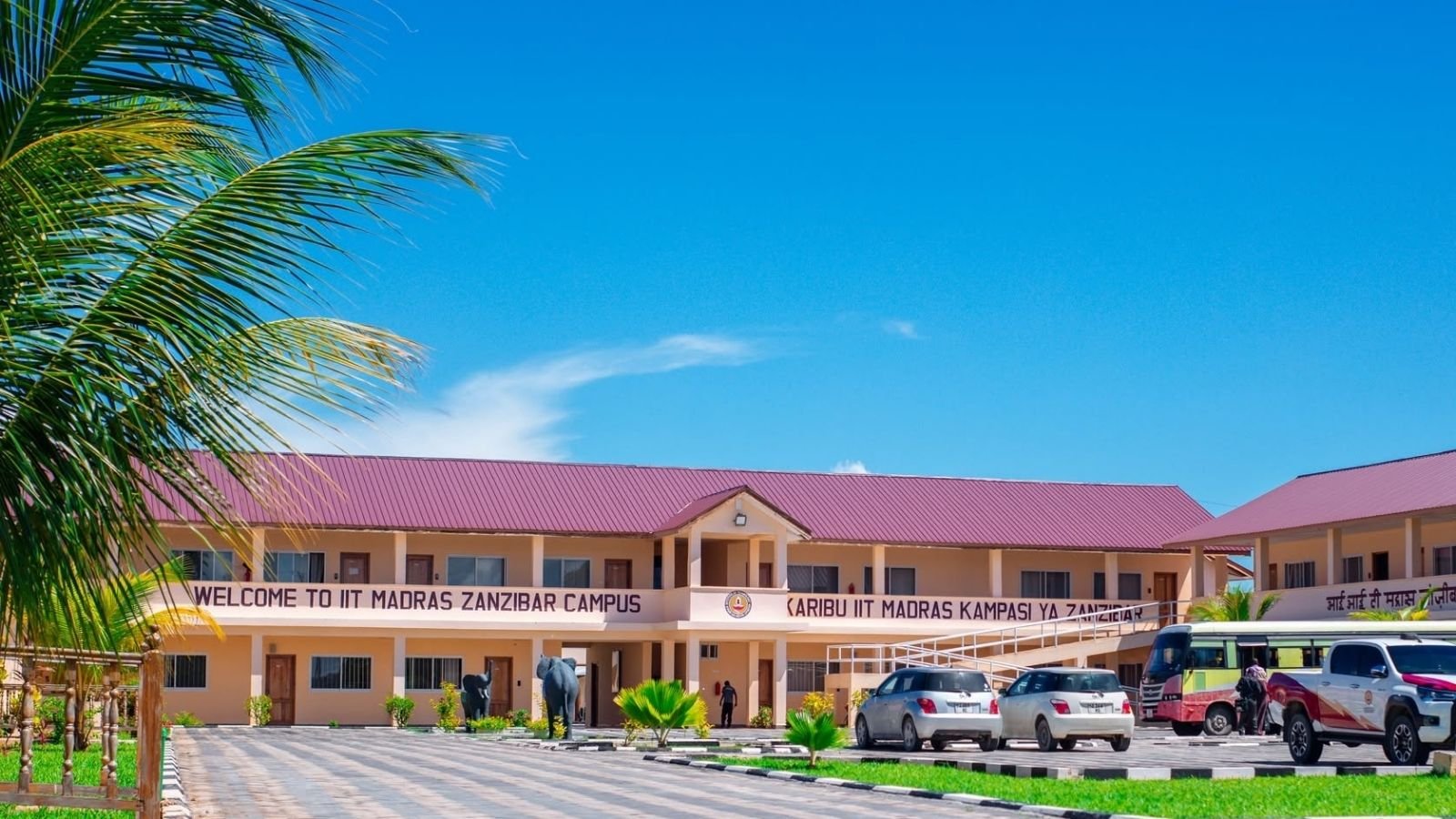
Concurrently, the outbound deployment of Indian public institutions marks a shift in state strategy. The launch of overseas campuses, detailed in official announcements for IIT Madras in Zanzibar and the establishment of IIT Delhi in Abu Dhabi, signals a transition from passive recruitment to active global institutional presence. These campuses serve dual strategic functions. Locally, they address acute capacity deficits in high-tier technical training across host nations. Geopolitically, they establish permanent Indian institutional footholds in key oceanic and economic nodes, acting as hubs for joint technological innovation, industrial collaboration, and strategic regional presence.
Beyond physical campuses, multilateral platforms provide another crucial dynamic for academic influence. Through regional groupings and global South summits, India has increasingly prioritised academic collaboration, joint research grants, and climate-resilience research initiatives. By spearheading collaborative research in fields such as artificial intelligence, renewable energy, tropical medicine, and digital public infrastructure, India positions itself not as an extractive knowledge consumer, but as a co-creator of solutions tailored specifically for the developing world.
Structural Friction: Domestic Realities versus Foreign Policy Ambitions
In spite of its strategic aspirations for higher education, India is blocked by serious structural challenges in fulfilling its potential as an academic global power. The key obstacle continues to be the major disparities within the domestic academic setting. While elite state-owned universities provide first-class educational services, many entities of the academic system suffer from administrative issues, inconsistent infrastructural provisions, lack of teaching staff, and complex regulation. Academic diplomacy of a country depends very much on the quality of the academic institutions available in it; it is essential to maintain high standards at home in order to project one’s image to the world.
In addition, international students have troubles connecting to their academic surroundings, getting qualified help and assistance, and establishing diversity on campus. International researchers arriving in India face a wide range of bureaucratic issues connected to visa fixing, constraints applied to housing, and the lack of practical work opportunities.
Furthermore, the global competition for intellectual capital has intensified dramatically. Middle-income powers across Eurasia and East Asia are heavily subsidising their university sectors to attract international talent, creating a highly competitive landscape for global education. If India seeks to position its universities as preferred destinations for foreign talent, academic diplomacy must receive sustained fiscal backing, simplified regulatory oversight, and dedicated institutional autonomy to design programs tailored for foreign scholars.
The Road Ahead: Building an Intentional Academic Statecraft
To create a robust academic presence in a multipolar world, India should incorporate its higher education strategy into its larger foreign policy framework. Educational diplomacy should work in conjunction with the Ministry of Education and the Ministry of External Affairs in order to function efficiently in time.
First, India must create specific scholarship schemes that would benefit future political, administrative, and technological leaders of the countries in the Global South. By providing fully merited scholarships to aspiring students from other countries, India will be able to reap high immediate diplomatic profits.
Second, authorities should give universities more operational autonomy when collaborating with foreign institutions. Making the process of obtaining dual degrees simpler, promoting joint degrees accreditation, and allowing more flexible systems of exchange can attract foreign universities and colleges to Indian institutions.
Third, academic diplomacy should not only be limited to STEM disciplines but should also span areas like social sciences, public policy, humanities, and environmental studies. In order to tackle complex global issues like climate change, digital ethics, poverty, and public health, India has a significant historical background with which it can be studied. Research institutions working on issues like Global South, simple innovation, and sustainable development should serve to transform Indian higher educational institutions into intellectual centres of the global governance debate.
Ultimately, higher education represents one of the most versatile and durable forms of soft power available to a rising state. In a global order increasingly characterised by geopolitical friction and economic volatility, classrooms and research laboratories offer spaces for sustained collaboration and shared progress. By strengthening domestic academic standards, removing administrative barriers, and projecting institutional capability abroad, India can transform its higher education ecosystem into a pillar of international diplomacy—advancing its national interests while contributing meaningfully to the global pool of knowledge.
EDUNEWS & VIEWS
Peking University and Sunway University Sign Five-Year Pact on Planetary Health
Beijing institute and Malaysian university commit to joint research, training and policy work on climate and health; Sunway planetary health chief named senior fellow at Chinese university

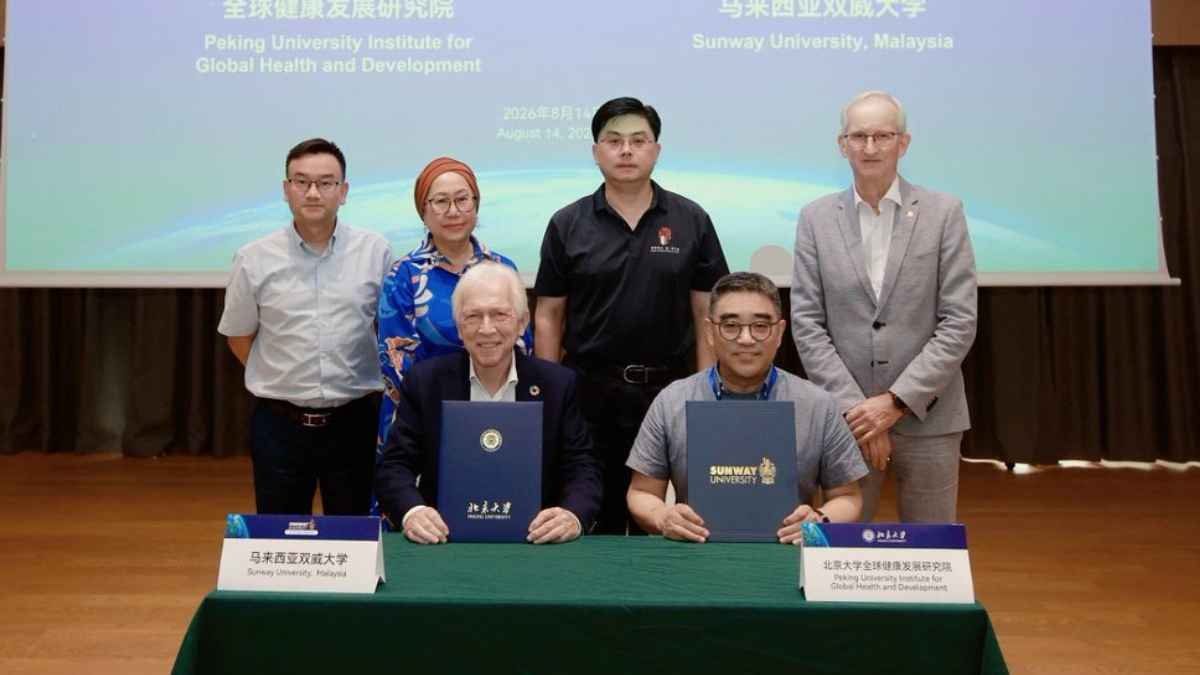
Peking University’s Institute for Global Health and Development (GHD) and Malaysia’s Sunway University have signed a five-year memorandum of understanding (MoU) to collaborate on research, training and policy work in planetary health, the two institutions said.
The agreement was signed on 14 August at the International Planetary Health High-Level Forum in Beijing, hosted by the Institute, before an audience of scientists and policymakers from across China.
Peking University, Sunway University: Health systems resilience, and environmental governance
Under the MoU, the two universities plan to pursue joint research projects, co-authored publications, policy briefs and shared funding applications across climate and health, health systems resilience, and environmental governance.
The agreement also provides for regular conferences, seminars and policy dialogues; exchange programmes for faculty, researchers and students, including visiting-scholar and internship opportunities; and joint curriculum development and capacity-building for early-career researchers in the field.
As part of the agreement, Professor Tan Sri Dr Jemilah Mahmood, executive director of the Sunway Centre for Planetary Health, was appointed Senior Fellow of Global Health at the Beijing institute — a recognition, the institutions said, of Malaysian leadership in the field.
“This partnership brings together two institutions with a shared conviction that the health of people and the planet cannot be separated.”
— Professor Gordon G. Liu, Dean, Peking University Institute for Global Health and Development
Professor Gordon G. Liu, dean of the Institute for Global Health and Development, said the partnership brought together “two institutions with a shared conviction that the health of people and the planet cannot be separated,” adding that the two sides would “build research and training capacity that serves not just our two institutions, but the wider region.”
Professor Sibrandes Poppema, president and vice-chancellor of Sunway University, said the MoU was “an important opportunity to strengthen collaboration across borders and disciplines in advancing Planetary Health,” and that combining the two institutions’ expertise would “deepen research, knowledge exchange and capacity-building to address the complex and interconnected challenges affecting the health of people and our planet.”
The MoU was signed by Liu; Mahmood; and Poppema.
Peking University traces its origins to the Imperial University of Peking, founded in 1898 as China’s first national comprehensive university. It now comprises six faculties, 55 schools and departments, 60 research entities and ten affiliated hospitals, with more than 48,600 students — including nearly 2,500 international students — and over 12,600 faculty and staff, according to the university.
GHD was established in 2020 with Liu as founding dean. The cross-disciplinary institute works across health economics, public health, international relations, environmental science and digital technology, and describes its mandate as addressing global health issues “from the perspective of human development.”
Sunway University is a private Malaysian institution that has been ranked among the world’s top universities by QS, and named ASEAN’s top private university by AppliedHE and Times Higher Education, the university said. Its Centre for Planetary Health, headed by Mahmood, works across three priority areas: healthy cities, health-centred decarbonisation and education reform in the field.
EDUNEWS & VIEWS
The Colleges That Will Never Welcome Another Freshman
AICTE’s closure of 58 engineering colleges is more than a regulatory exercise. It marks the sorting of India’s engineering boom into winners and losers – and leaves thousands of students wondering what happens when their college begins to disappear.

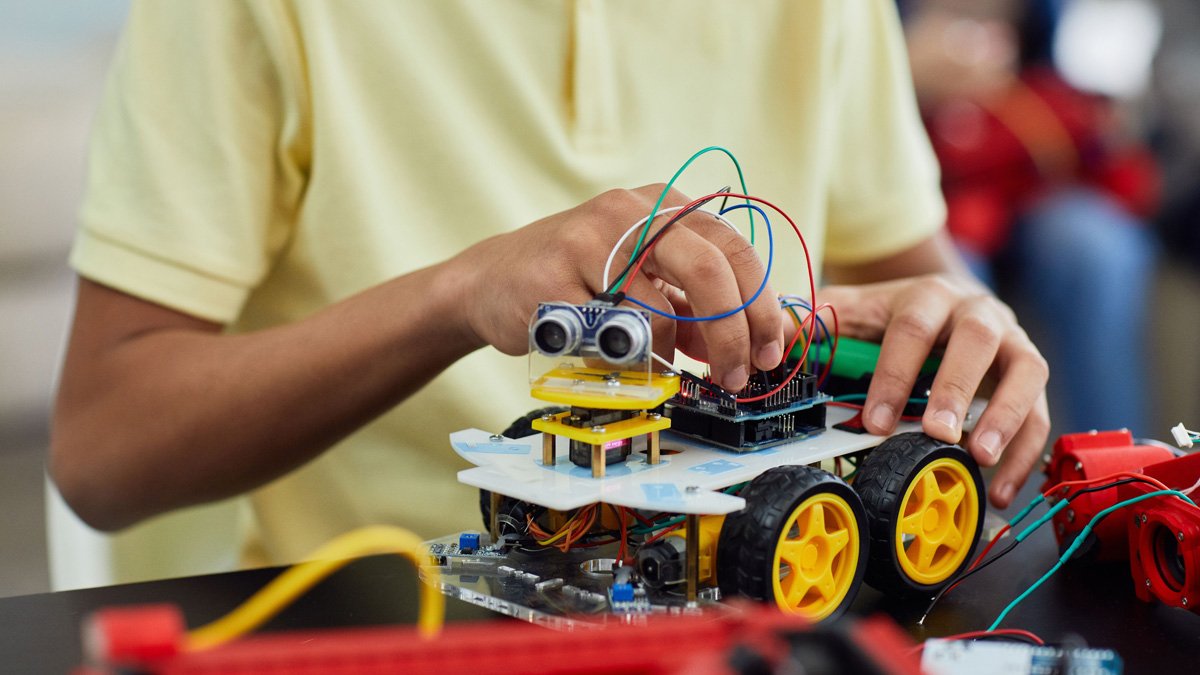
When India’s engineering education boom began in the early 2000s, colleges appeared almost overnight. Across states such as Uttar Pradesh, Maharashtra, Andhra Pradesh and Tamil Nadu, new campuses promised the same dream: an engineering degree, a campus placement, and a pathway into India’s growing technology economy.
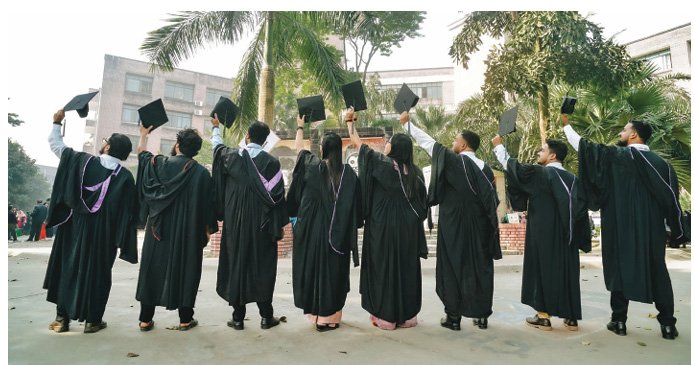
Two decades later, that dream is being quietly re-sorted
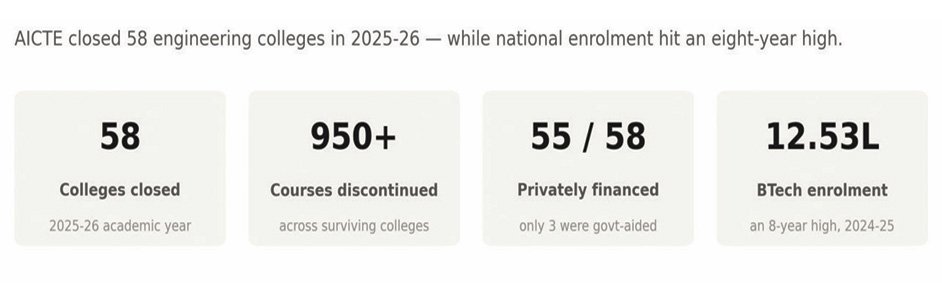
The All India Council for Technical Education (AICTE) has confirmed that 58 engineering and technical colleges were shut through “progressive closure” during the 2025–26 academic year. Under this process, existing students are allowed to finish their degrees, but the institutions will never admit another first-year batch. In the same period, AICTE discontinued more than 950 individual engineering and technical courses — a far larger number that signals a restructuring well beyond 58 campus gates.
Read in isolation, the closures look like housekeeping. Read alongside the rest of AICTE’s own data, they tell a more interesting — and more complicated — story: India isn’t simply running out of appetite for engineering. It is running out of patience for engineering colleges that never had a real reason to exist.
Not a Few Bad Colleges, but a Sector Sorting Itself Out
Engineering remains India’s largest professional education stream. And contrary to the closures’ gloomy optics, national demand has actually been recovering, not collapsing. AICTE data shows undergraduate BTech enrolment hit an eight-year high of roughly 12.53 lakh students in 2024–25 — a 67% jump over 2017–18 — while the national vacancy rate fell to about 16%, down from over 40% earlier in the decade. Approved intake for 2025–26 has climbed further, to nearly 16 lakh seats, and the number of AICTE-approved institutions rose for the first time in six years.
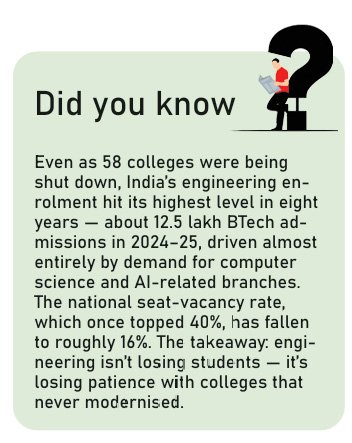
So the headline closures and the headline recovery are happening at once. That is the real story: engineering education in India isn’t shrinking, it’s polarising. Demand is concentrating hard around computer science, AI and allied “new-age” branches, while core disciplines and lower-tier private colleges — often in Tier 2 and 3 towns, propped up on volume rather than reputation — are being left behind. Some institutions have reportedly cut core-branch seats by as much as half just to stay viable.
According to AICTE, the 58 colleges closed this cycle for familiar reasons: persistently low admissions, shortages of qualified faculty, inadequate infrastructure, and failure to meet prescribed operational norms. Of the 58, only three were government-aided; the rest were privately financed.
Those reasons are symptoms, not the disease. Many of these colleges were built during the 2000s and 2010s on the assumption that demand for engineering seats would keep expanding indefinitely. Regulators and state governments largely let it happen, approving new colleges and intake increases with little independent assessment of local demand. When AICTE lifted its moratorium on new colleges and seat expansion in 2023, seats surged again — but overwhelmingly into computer science and AI-adjacent branches, not into the traditional streams these smaller colleges were built around.
The market is correcting itself. It’s simply correcting toward specific colleges and specific branches, not away from engineering as a whole.
The Geography of Decline
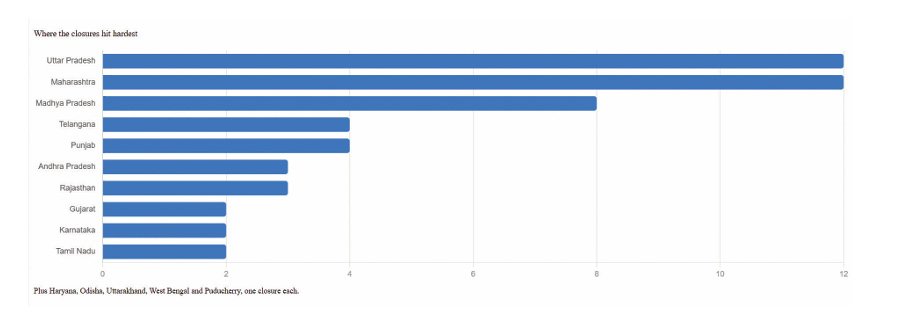
The pattern of closures is revealing. Uttar Pradesh and Maharashtra recorded the highest number, with 12 institutions each, followed by Madhya Pradesh (8). Telangana and Punjab lost four each; Andhra Pradesh and Rajasthan, three each; Gujarat, Karnataka and Tamil Nadu, two each; and Haryana, Odisha, Uttarakhand, West Bengal and Puducherry, one each.
These are not peripheral states — several of them house some of India’s largest engineering education ecosystems, and some (Tamil Nadu, Telangana, Andhra Pradesh) are simultaneously seeing among the sharpest increases in sanctioned seats nationally, almost entirely in CSE and AI streams. That combination — colleges closing at the bottom while seats expand at the top of the same state’s system — is the clearest evidence that this is a quality and relevance sort, not a demand collapse.
It also raises uncomfortable policy questions. Did states encourage the creation of more engineering colleges than their local economies — or student populations — could sustainably support? And now that the moratorium on capacity has been lifted again, is the system simply repeating the mistake in a new, AI-shaped form, this time by over-expanding computer science seats faster than faculty, labs, or the job market can absorb them? Telangana’s High Court, for instance, upheld a state decision this year to deny colleges’ requests for more CSE seats, citing unfilled vacancies and the need to balance emerging and core disciplines — a sign regulators are already worried about repeating history.
The Students No One Is Talking About
AICTE calls this “progressive closure” because students already enrolled are allowed to complete their degrees. On paper, the arrangement protects them.
But regulations cannot account for psychology.
Imagine being a second-year engineering student and discovering that your college will never admit another batch.
The classrooms become quieter every year. Senior students graduate without replacements. Faculty members begin searching for jobs elsewhere. Campus events shrink. Recruiters may wonder whether investing time in campus visits at a closing institution is worth it at all. The institution slowly transforms from a living college into one simply completing its final academic cycle.
AICTE rightly ensures academic continuity, but continuity is not the same as confidence. For students, questions inevitably arise:
Will companies continue to recruit here?
Will laboratories remain fully staffed and operational?
Will experienced faculty stay until we graduate, or leave for stabler institutions?
Will the market start to quietly discount the value of our degree?
These anxieties rarely appear in policy documents, yet they may shape a student’s remaining college years far more than the closure order itself ever will.
The End of the Engineering Gold Rush — and the Start of a New One
India’s engineering sector is not collapsing. The country’s premier institutions — IITs, NITs, and a handful of leading state universities — continue to attract intense competition, and enrolment nationally just hit an eight-year high.
The contraction is happening elsewhere: among institutions that relied on volume rather than academic distinction, and within branches that no longer match student aspiration or employer demand.
Student preferences have shifted decisively. Computer science, AI, cybersecurity, semiconductor engineering, robotics and data science are pulling in applicants, while traditional branches at many private colleges — mechanical, civil, and others — struggle to fill classrooms even as they remain, in AICTE’s own words, “critical” to the economy. Employers, meanwhile, increasingly evaluate graduates on skills, internships, portfolios and demonstrated problem-solving rather than the degree certificate alone. The discontinuation of more than 950 individual courses this cycle reinforces just how granular this restructuring has become — it isn’t only whole colleges being cut, but entire programmes within colleges that otherwise survive.
A Moment for Rethinking Technical Education
The closure of 58 colleges shouldn’t be read simply as a story of institutional failure, and it shouldn’t be read as proof that engineering itself is in decline — the enrolment numbers say otherwise. It is, instead, a reminder that India’s engineering education model, built during an era of rapid, largely unscrutinised expansion, needs a different philosophy for a very different moment: one where CSE and AI seats are growing so fast that regulators are already debating whether to cap them, even as the colleges that bet everything on the old core-branch, mass-enrolment model run out of road.
The challenge is no longer producing more engineers. It is producing engineers — across every branch, not just the fashionable ones — whose education stays relevant to a labour market being reshaped by automation, artificial intelligence and advanced manufacturing. That demands fewer empty classrooms, stronger industry partnerships, updated curricula, and real accountability for both old-guard core-branch colleges and the new wave of AI-branded ones — not simply more campuses chasing whichever keyword is trending this admissions cycle.
For the thousands of students still studying at institutions now in progressive closure, the concern is intensely personal: finishing a degree without losing confidence in its value.
For policymakers, the question is bigger, and it cuts both ways. If the old engineering boom is over for some colleges, and a new one is already inflating around AI and computer science for others — what should replace the model that let both of these things happen unsupervised the first time?


Nepal’s Glacier Disaster Exposes the Unequal Cost of Climate Change

When Health Care Becomes a Target, Patients Pay the Price

Academic Diplomacy: How India Can Build Global Influence Through Universities

Six Months of the Hormuz Crisis: A USD 330 Billion Global Fuel Bill — and India’s USD 22.5 Billion Share

The Giant Steel Gates Guarding the Netherlands from the Sea

When the Monsoon Returns, Fear Returns: How Climate Disasters Are Reshaping Mental Health in Himachal Pradesh

Astronomers Discover a ‘Black Hole Star’, a New Kind of Object in the Early Universe

From Bell Labs to the Classroom: Finding Purpose After Retirement

From Soil to Profit: How Organic Turmeric Changed the Fortunes of a Tribal Farming Family

Kerala Floods Highlight a Recurring Health Crisis as Disease Risks Rise

-

 Math1 month ago
The 2026 Fields Medals: Four Proofs, Four Decades-Old Problems Solved
-
Climate1 month ago
After Kerala’s Deadliest Landslide, the Hardest Thing to Rebuild Was Childhood
-
Society2 months ago
West Asia Crisis: Can Kerala’s Returning Gulf Migrants Find a Future in the Green Economy?
-
Space & Physics3 months ago
India Semiconductor Mission: ‘It’s Not About Fabs. It’s About Building An Entire Ecosystem’
-
Climate3 months ago
The Climate World Cup? How Climate Change Could Affect Player Performance at the 2026 World Cup
-
Society2 months ago
What Is Civilisational Diplomacy? Understanding India’s Newest Foreign Policy Tool
-
Society3 months ago
From Bell Labs to the Classroom: A Second Career in Teaching
-
Space & Physics3 months ago
Engineers Develop Dual-Mode Propulsion System for Next-Generation Small Satellites