
Sustainable Energy
The $76/MWh Breakthrough: Battery-Backed Solar Becomes the Cheapest Firm Power
The battery price collapse that just made solar a 24/7 power source. Utility-scale battery storage is now cheap enough to make dispatchable solar power economically viable in markets outside China and the US.

For years, clean-energy advocates spoke about a coming inflection point — a moment when renewable energy would stop being intermittent and start behaving like the dependable backbone of a modern grid. Has that moment quietly arrived? And it didn’t come from a single breakthrough technology, but from something more subtle and powerful: a sudden, cascading collapse in the cost of utility-scale battery storage.
In just two years, the economics of clean electricity have undergone one of the most dramatic shifts since the birth of the solar industry itself. Battery storage systems — long considered the missing link in renewable-dominant grids — have become so inexpensive that they now make solar energy dispatchable, not just abundant.
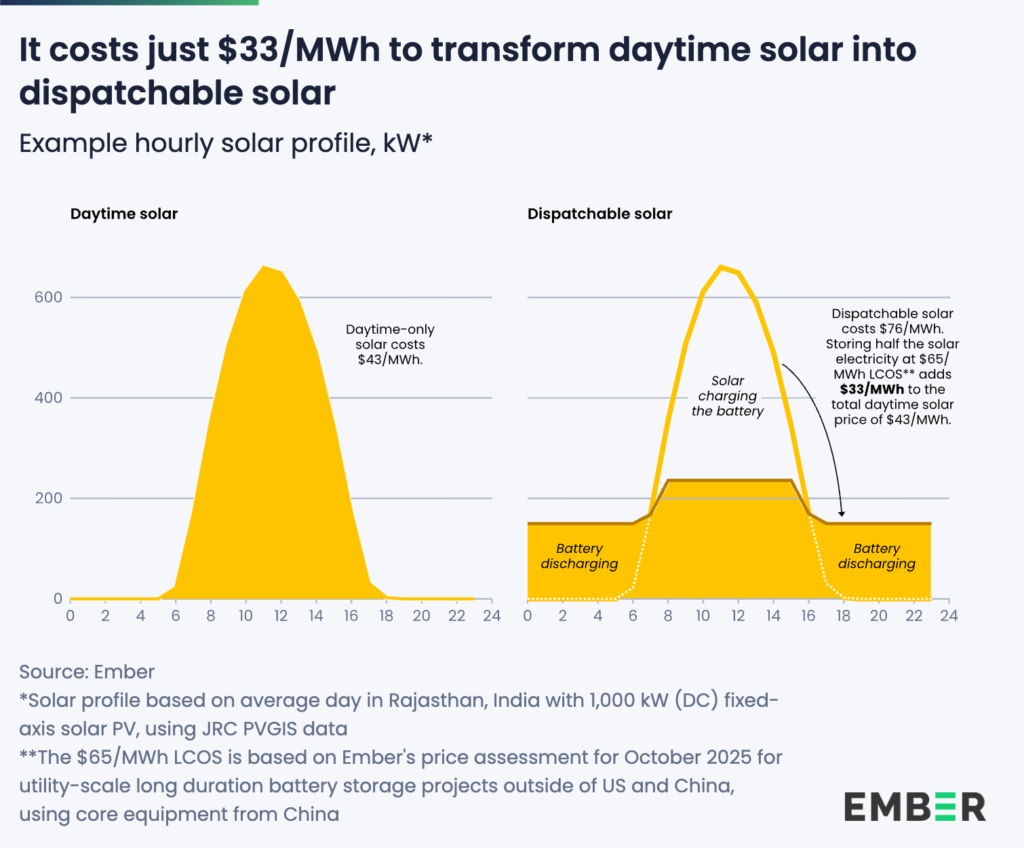
Utility-scale battery storage has crossed a decisive economic threshold in 2025. Fresh data from energy think tank Ember shows that the cost of turning abundant daytime solar power into on-demand, anytime electricity has fallen to $65/MWh, making stored solar competitive with fossil-fuel-based power in many markets.
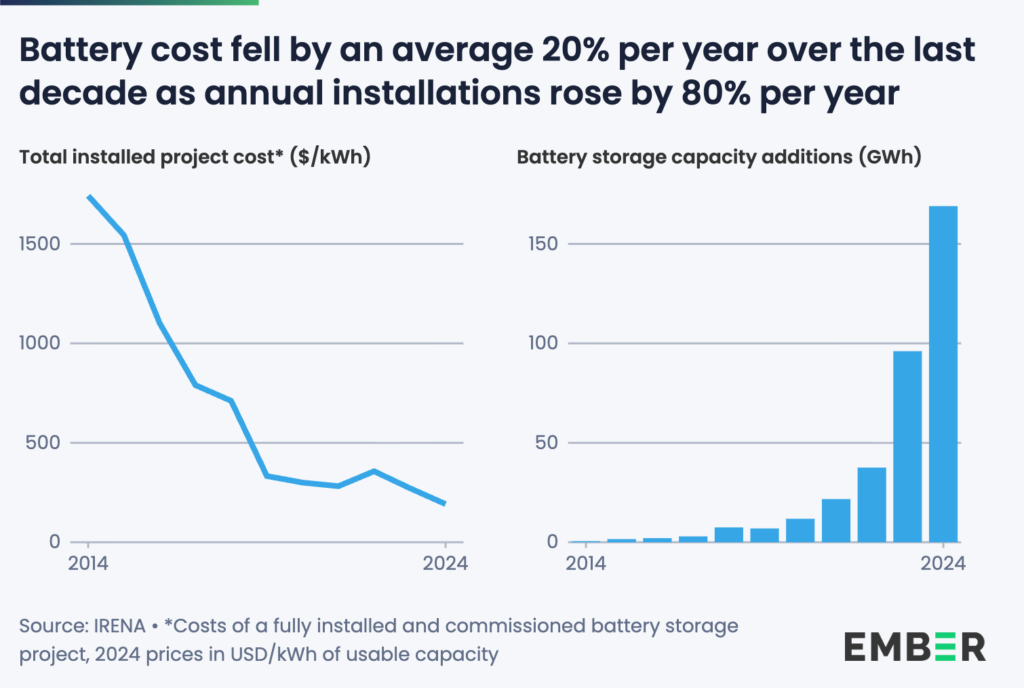
The shift is not hypothetical. It is real, measurable, and unfolding at extraordinary speed. Across India, Italy, Saudi Arabia, and beyond, a pattern is emerging: utility-scale battery projects clearing auctions at around US$120–125/kWh, with core equipment priced near US$75/kWh, and installation, grid integration, and civil-works accounting for the remainder.
Kostantsa Rangelova, Global Electricity Analyst at Ember, points out the scale of the transformation with unusual bluntness: “After a 40% fall in 2024 in battery equipment costs, it’s clear we’re on track for another major fall in 2025. The economics for batteries are unrecognisable, and the industry is only just getting to grips with this new paradigm.”
The Silent Revolution Inside a Battery
The collapse in cost is only part of the story — the other half is technological maturity. Modern utility-scale batteries now offer:
- 20-year lifetimes
- 10,000–12,000 cycles
- Round-trip efficiency above 90%
This is not incremental improvement. It is structural change.
For decades, the energy world assumed batteries were too fragile, too short-lived, too expensive for grid infrastructure. In 2025, they are emerging as among the most reliable long-duration assets in the power sector — often outliving the fossil-fuel plants they are replacing.
And just beneath the lithium boom lies something even more consequential: the arrival of sodium-ion batteries, which skip the need for lithium, nickel, or cobalt — promising prices once considered impossible.
When Cheap Batteries Meet Cheap Solar
The most important number in all the new data is not the capex, or cycle life, or equipment pricing. It is this:
US$76 per megawatt-hour.
That is the cost of delivering solar electricity whenever it is needed, day or night — if half of solar output is stored in batteries at US$65/MWh and the rest supplied directly during the day. In other words: solar + storage has become a dispatchable baseload resource.
For countries with rising electricity demand, this is seismic.
Rangelova puts it simply: “Solar is no longer just cheap daytime electricity, now it’s anytime dispatchable electricity. This is a game-changer for countries with fast-growing demand and strong solar resources.”
Gas markets — especially those reliant on imported LNG — cannot compete with $76/MWh firm clean power without subsidies or regulatory advantage. Coal plants — once symbols of energy security — now struggle to match either the cost or flexibility of storage-backed solar.
A Lesson from Kerala: Cheap Solar Isn’t Enough Without Storage
Even in regions with abundant solar potential and strong rooftop adoption, intermittency remains a barrier. Take the example of Kerala’s celebrated Perinjanam Energy Project, which electrified hundreds of households through community-driven rooftop solar and inspired nationwide interest.
Despite the early promise, the project — like many others across the state — struggled to scale. Limited land, regulatory uncertainty, low uptake of storage solutions, and weak incentive frameworks meant that daytime solar generation rarely translated into reliable electricity at night. The result: solar remained supplemental, not transformative.
This Kerala story captures a broader truth: solar panels alone don’t solve energy access and reliability problems. Without cost-effective storage, solar output — no matter how abundant — remains tied to the sun. The battery price collapse of 2025 changes that equation entirely, paving the way for renewable energy systems that are not just clean, but dependable.
What Happens Next
The global power system is entering an era in which:
- Solar is the world’s cheapest electricity.
- Batteries are the world’s cheapest way to deliver that electricity when it’s needed.
- And the combination is now cheaper than building most new fossil-fuel plants.
The implications are enormous. Fossil-fuel peakers — long viewed as indispensable for evening demand peaks — are likely to be replaced by four-hour battery systems. Energy planners are questioning whether large gas or coal plants still make sense. Countries with surging power demand are increasingly designing energy systems around solar + storage from the outset.
Cheap batteries, in short, have not just made solar better. They have made solar inevitable.
And as Ember’s analysts conclude in their report: “Cheap batteries do not just complement solar — they unlock its full potential.”












Sustainable Energy
India Wants 100 GW of Nuclear Power. Can Opening the Sector Deliver It?
India wants to expand nuclear power from 8.78 GW to 100 GW by 2047, with private participation expected to provide a significant share. But financing, construction risks, safety, liability and long-term environmental concerns could determine whether the ambitious target is achievable.

India is preparing to open its civilian nuclear power sector to wider private participation as it attempts to increase nuclear capacity more than elevenfold by 2047. The country currently has 8.78 GW of installed nuclear capacity across 24 reactors, contributing about 3.1% of electricity generation. The government wants to raise this to 100 GW by 2047.
That means adding more than 91 GW in two decades.
The scale of the ambition explains the policy shift. The government expects nuclear capacity to reach around 22 GW by 2031–32. Beyond that, NPCIL is expected to account for about 54 GW by 2047, while the remaining 46 GW is expected to come from other public-sector enterprises, state governments, private companies and joint ventures. The 46-GW figure is crucial. Private participation is not simply an experiment in changing ownership. It has become part of the government’s arithmetic for reaching 100 GW.
But opening the sector does not guarantee that the reactors will be built. The harder questions concern finance, construction, technology, safety, liability and who ultimately bears the risks of nuclear power.
Why Nuclear Power When Renewables are Expanding?
India’s nuclear power expansion is taking place alongside a much larger renewable-energy programme. By June 2026, renewable-energy capacity had reached 288.58 GW, including 162.15 GW of solar, 57.44 GW of wind and 57.24 GW of hydropower. So why invest heavily in nuclear?
The government’s argument is that the two technologies perform different functions. Solar and wind generation varies with weather and time of day, while nuclear reactors are designed to provide continuous generation.
Nuclear power is therefore being positioned as a source of firm, low-carbon electricity alongside renewables, rather than as a replacement for them. That distinction matters as electricity demand rises. Government projections put India’s peak demand at around 446 GW in 2034–35, with electricity requirements of about 3,215 billion units.
The projected power mix for that year includes 22 GW of nuclear, 679 GW of renewable and 327 GW of thermal capacity. The question, then, is not whether India needs electricity. It clearly does. The question is how much nuclear capacity makes economic sense within an electricity system increasingly dominated by renewables and supported by storage and other technologies.
What Actually Changes Under the New Framework?
The SHANTI Act, 2025 provides the legal framework for wider participation in specified civilian nuclear activities. This is not unrestricted privatisation. Private entities remain subject to government licensing and nuclear-safety requirements.
The significance is that the pool of potential participants can now extend beyond the traditional state-controlled nuclear establishment. The government expects this to create opportunities for private investment, manufacturing, technology development and new project structures. But permission to participate is not the same as willingness to invest.
Nuclear power projects are expensive, technically complex and slow to build. Investors have to commit large amounts of capital long before a plant begins generating revenue. That is why the success of the reform will depend less on how many companies enter the sector and more on whether they are willing to put substantial capital behind actual projects.
Can Private Capital Solve the Financing Problem?
The strongest case for private participation is that it could broaden the pool of capital available for nuclear construction. The government’s own roadmap makes clear that NPCIL is not expected to deliver the entire 100-GW target. About 46 GW must come from other public-sector entities, states, private companies and joint ventures.
But private participation should not automatically be equated with lower costs. Globally, nuclear projects have faced problems with construction delays, cost overruns and high financing requirements. The International Energy Agency has identified these as major challenges for nuclear investment.
For India, the critical questions will therefore be whether private investors can secure affordable financing, whether projects can be completed on schedule and whether the electricity generated can remain competitive with other sources. The reform changes who can invest. It does not remove the underlying economics of nuclear construction.
The SMR Bet
India is also placing considerable emphasis on small modular reactors. The government has allocated INR 20,000 crore to research, development and deployment of indigenous SMRs and aims to have at least five operational by 2033. BARC is developing the 220-MWe BSMR-200 and 55-MWe SMR-55, among other designs. The government sees potential applications in captive industrial power, replacing retiring fossil-fuel capacity and locations where conventional large reactors may be less suitable.
But India’s indigenous SMR designs are still under development. Their eventual contribution to the 100-GW target will depend on whether they can move from demonstration to commercially viable deployment. For now, SMRs are an important part of India’s nuclear power strategy, not a guaranteed solution to its capacity challenge.
The Liability Question
The most consequential issue for private investors may be nuclear liability. The SHANTI framework retains no-fault liability for nuclear operators while establishing graded limits depending on the category and size of a nuclear installation. The draft rules propose operator liability ranging from INR 100 crore to INR 3,000 crore.
The government argues that a clearer liability structure will make investment and insurance more predictable. But there is another side to the question: is the statutory compensation framework sufficient if an accident causes losses far beyond the operator’s liability?
That issue is now before the Supreme Court. On 17 August 2026, the court sought clarification from the Union government on whether constitutional courts would remain able to determine fair and just compensation following a nuclear power accident under the new framework. The court has not struck down the liability provisions. But the proceedings highlight an important tension in the reform: making risk predictable for investors while ensuring that victims are adequately protected.
Nuclear Power: Who Bears the Long-term Risks?
Nuclear power also raises questions that cannot be reduced to the cost of electricity. A major accident could affect workers, nearby communities, livelihoods and ecosystems far beyond the balance sheet of the company operating the facility.
Radioactive waste presents a different challenge. Electricity generated today can create waste that requires management over much longer periods. The government retains responsibility for certain aspects of spent-fuel management, while licensed entities are responsible for managing radioactive waste generated through their activities.
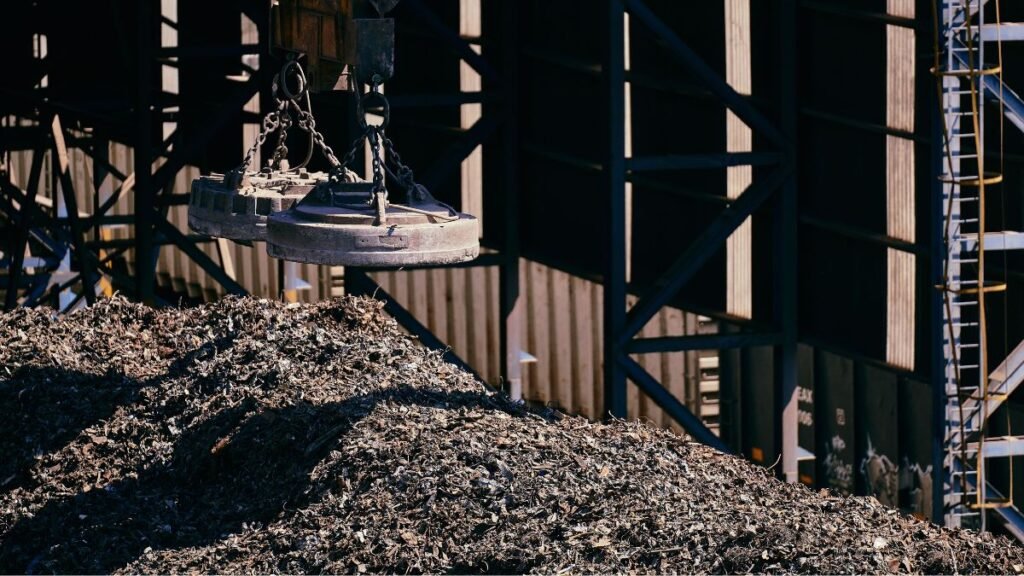
This raises an intergenerational question: How should today’s electricity consumers ensure that future generations are not left with the financial and environmental burden of today’s nuclear expansion?
There is also a question of distribution. Nuclear power facilities require land, water and supporting infrastructure. Communities near proposed projects can therefore bear costs that are spread much more widely across the country than the benefits and electricity generated by the plant.
A larger nuclear power programme will need credible mechanisms for land acquisition, rehabilitation, emergency preparedness, compensation and public participation. Safety cannot become secondary to speed The government maintains that expanding private participation will not mean lowering safety standards.
Does the regulatory system has enough independence, technical capacity and enforcement power to oversee a larger and more commercially diverse nuclear power industry? That becomes particularly important when project developers have strong financial incentives to control costs and meet construction schedules.
A successful private nuclear power model therefore requires more than investment rules. It requires strong regulation that can remain independent of both political and commercial pressure.
The Real Test is Beyond the 100-GW Target
India’s nuclear power ambition is clear: 8.78 GW today, 22 GW by 2031–32, 100 GW by 2047. The government expects NPCIL to deliver roughly 54 GW of that eventual capacity and other public and private entities to account for the remaining 46 GW.
The SHANTI Act makes that wider participation possible. But it does not guarantee that private companies will invest, that projects will be financed cheaply, that reactors will be built on time or that nuclear power will remain economically attractive as renewables and storage expand.
Nor does it settle the ethical questions around liability, waste, community impacts and long-term risk. That is why the success of the reform should not be measured simply by the number of companies that enter the nuclear sector. The real test will be whether India can build enough nuclear capacity at a reasonable cost while maintaining strong safety oversight and ensuring that the risks are not disproportionately transferred to communities, taxpayers or future generations.
Sustainable Energy
When the Sun Goes Down, Is India’s Solar Boom Ready to Face Its Real Test
India’s solar expansion is entering a new phase, where generating electricity is only part of the challenge. A new IECC study examines how battery storage can make solar power available after sunset and during periods of weaker generation, while showing how India’s monsoon and regional climate patterns shape the cost and scale of storage needed.
India’s story of solar energy has largely been a story of scale. More panels, more capacity, more electricity from the sun. The next phase will be less straightforward. A solar panel produces electricity during daytime, while the grid has to function around the clock. The hours when solar generation begins to fall are often the hours when electricity demand starts rising.
That makes energy storage more than an accessory to solar power. It could determine how much of the electricity system solar can ultimately supply. On this scenario, India Energy & Climate Center (IECC), examines whether solar power paired with batteries can provide electricity with the reliability expected from conventional thermal generation. The study uses the recently concluded Solar Energy Corporation of India (SECI) firm renewable energy tender as its benchmark.
During the day, solar electricity meets immediate demand while charging batteries with surplus power, which can then be discharged after sunset, turning intermittent generation into electricity available when it is needed.
Instead of asking developers to supply renewable electricity whenever it is available, the contract imposes delivery requirements across different parts of the day. The requirement rises to at least 90 per cent during six peak hours, falls to 50–60 per cent during solar hours and remains at 70 per cent during the other hours. A shortfall attracts a penalty of 1.5 times the contracted tariff.
Therefore, to make solar power more efficient, the focus shifts from selling sunshine to selling firm electricity.

The Battery is What Makes That Possible
The IECC researchers modelled what it would take to meet this obligation using solar and batteries. They tested 64 combinations of solar and storage across ten states, using ten years of weather data from 2015 to 2024. The solar capacity tested ranged from 2.5 GW to 6 GW, while battery storage ranged from 6 GWh to 24 GWh for a 1 GW grid connection.
The result shows something simple: solar power alone is not enough — batteries are doing a lot of the heavy lifting. To supply just 1 GW of steady electricity, the model suggests you would actually need about 3 GW worth of solar panels and a large battery system that can store 12 GWh of electricity.
With this setup, electricity could be supplied at around ₹5.15 per unit (kWh). In the real government auction, companies agreed to sell it at a very similar price of ₹5.25–₹5.26 per unit. In simple terms, this means solar power becomes reliable and usable at all hours only when it is backed by large batteries — and the cost is already close to what the market is willing to pay.
Why is Coal the Immediate Option?
Coal has traditionally been valuable to the electricity system not merely because it generates power, but because it can generate it on demand, with India’s coal fleet still supplying roughly 70–75% of the country’s electricity in recent years. Batteries begin to close this gap by decoupling the time of generation from the time of consumption, effectively shifting daytime solar energy into the evening peak window, which in India typically occurs between 6 pm and 10 pm when demand remains high but solar output has already declined.
This is also why the amount of storage required cannot be understood without looking at India’s climate.
How Does India and Europe Has Different Solar Problem?
Solar storage is often discussed as if the problem were identical everywhere. But India has a structural advantage in this respect. In Germany or Britain, solar generation varies substantially between summer and winter. A storage system designed to compensate for that seasonal decline would have to deal with periods far longer than a single night.
India’s solar resource behaves differently. The IECC study found that, across its ten years of data, India’s lowest monthly solar output was about 76 per cent of the ten-year monthly average. Annual generation varied by only about 4.5 per cent. By comparison, the study notes that December solar generation in Germany can be only 9–18 per cent of June’s output, while Britain’s can be 10–15 per cent.
India’s central storage problem is largely daily rather than seasonal. Batteries do not necessarily have to carry electricity through an entire winter. They need to carry it through the night. But India’s climate has another complication: the monsoon.
The Monsoon is the Weak Point
Cloudy periods create a double problem. The Rajasthan simulation found that June to September accounted for 56 per cent of the decade’s shortfall. August was the weakest month, with the average shortfall reaching 65 GWh, or 13 per cent of the month’s requirement. In the worst year, it reached 24 per cent.

The pattern changes across the country. In Gujarat, Madhya Pradesh, Karnataka, Kerala, Telangana and Maharashtra, 70–79 per cent of the simulated shortfall occurred during the June–September monsoon. In Kerala, a coastal state with heavy southwest monsoon cloud cover, the shortfall is also concentrated in June–September, with occasional spillover into October–November. Tamil Nadu had a different seasonal weakness, with November and December emerging as its most difficult months because of the northeast monsoon. Haryana’s weakest period was January.
So while India may not need the kind of seasonal storage required in northern Europe, it cannot treat solar generation as uniform throughout the year. The model puts the least-cost solar-plus-storage system at ₹4.93 per kWh in Jammu and Kashmir, ₹5.15 in Rajasthan and ₹5.22 in Gujarat. Tamil Nadu comes in at ₹5.41, while Maharashtra is at ₹5.58. The latter states require more solar capacity to maintain the same level of supply through periods of weaker sunlight.
The battery, in other words, is only one part of the equation. Where and when solar electricity is generated determines how hard the battery has to work.
Climate Question or Power-price Question
The economic case could strengthen as batteries become cheaper. The researchers estimate that every $10/kWh reduction in battery system cost would lower the modelled Rajasthan tariff by about ₹0.28 per kWh. At battery costs of $60–65/kWh, the same configuration could approach ₹4.3–₹4.4 per kWh under the study’s assumptions.
The study points to green steel, data centres and continuous industrial loads such as aluminium as potential users of firm renewable power.
While the results are modelled rather than drawn from long-term commercial operation and depend on assumptions about costs, financing and efficiency, policy is already moving in the same direction. India is no longer treating batteries as experimental add-ons; it is procuring them at scale. The SECI firm renewable energy tender is explicitly storage-linked, and states such as Rajasthan, Gujarat, Maharashtra and Tamil Nadu are issuing or planning multi-gigawatt bids that bundle solar with batteries to meet evening demand. Together, these tenders signal a rapidly expanding pipeline of storage-backed capacity requiring large-scale investment as the system shifts from buying daytime electricity to buying dispatchable power.
Sustainable Energy
Can India Finally Turn Waste Into Fuel? INR 23,731-Crore CBG Push
India invests INR 23,731 crore on compressed biogas (CBG) to reduce fossil-fuel dependence, manage organic waste and strengthen energy security. With 217 plants commissioned and 339 under construction as of August 2026, the new GOBARdhan scheme aims to scale production nearly ten-fold—but can it overcome the infrastructure and feedstock challenges that have slowed the sector so far?
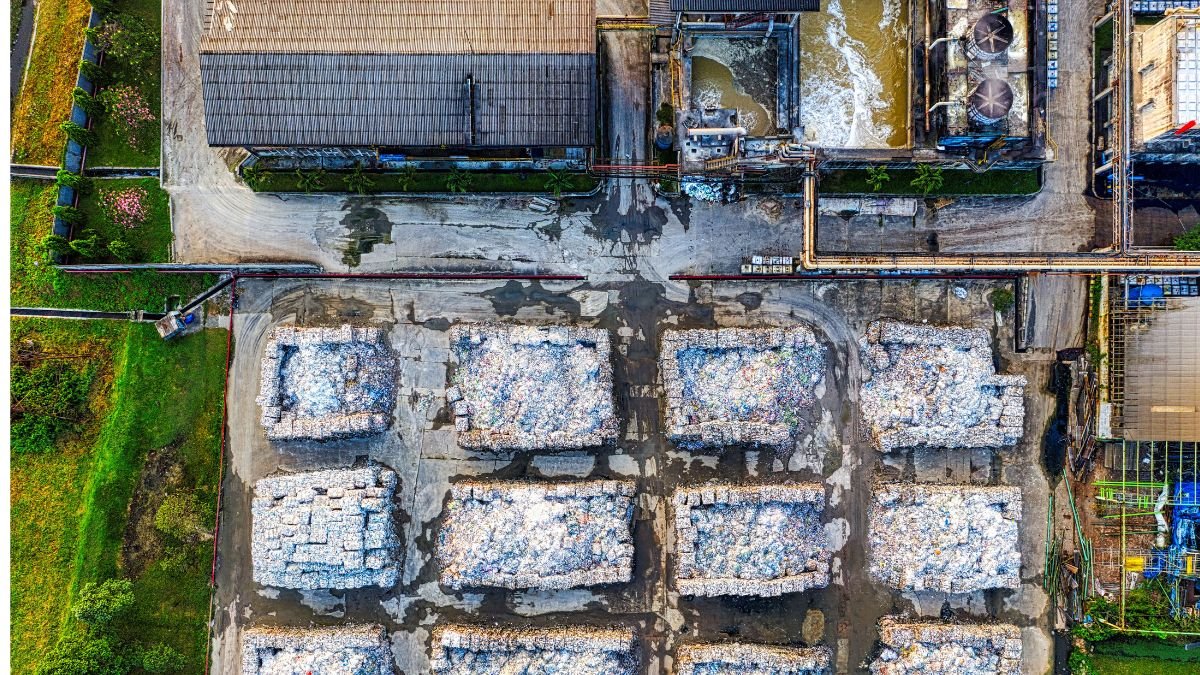
India is putting INR 23,731 crore behind an effort to make compressed biogas (CBG) a larger part of its energy system, with the government targeting nearly ten-fold growth in domestic CBG production by 2035-36. The GOBARdhan scheme will combine assured demand, price support, capital assistance, pipeline connectivity and credit guarantees to expand the industry.
The push comes as India remains heavily dependent on imported gas. The government says nearly 50% of the country’s natural gas requirement is met through imports, while about 55–60% of India’s LNG imports pass through the Strait of Hormuz. This dependence makes domestically produced alternatives more relevant to energy security.
From 5,000 Plants to 217
India’s CBG ambitions are not new. The Sustainable Alternative Towards Affordable Transportation (SATAT) initiative, launched in 2018, envisaged 5,000 CBG plants producing 15 million tonnes annually by 2023-24. The target was missed.
The sector has nevertheless grown. As of August 6, 2026, 1,908 CBG/Bio-CNG plants were registered, of which 217 had been commissioned and another 339 were under construction.
The numbers show both progress and the scale of the challenge: only a fraction of registered projects have reached operation, while hundreds remain under construction.
What is Different This Time?
The new scheme attempts to address one of the industry’s central problems: making CBG projects financially predictable.
City Gas Distribution companies will face a CBG blending obligation of 3% in 2026-27, 4% in 2027-28 and 5% from 2028-29 for CNG transport and domestic PNG. The government will also provide an administered CBG price of INR 2,110 per MMBTU, with a minimum ten-year horizon. Eligible greenfield projects can receive capital assistance of up to INR 2 crore per tonne per day of installed capacity.

The scheme also provides pipeline support and a credit guarantee mechanism, aimed at reducing infrastructure and financing barriers.
In other words, the government is trying to create not just more plants, but a predictable market for the gas those plants produce.
Where is the Industry Growing?
CBG development remains concentrated geographically. Uttar Pradesh is among the leading states, while Gujarat, Haryana, Karnataka and Maharashtra also have significant numbers of projects. The new scheme could allow these existing hubs to expand while opening opportunities in states with large agricultural and municipal-waste streams but limited CBG infrastructure.
Kerala illustrates the latter challenge. The state recently moved into the sector with the Brahmapuram CBG plant in Kochi, commissioned in February 2026 and designed to process 150 tonnes of source-segregated biodegradable municipal waste every day.
This points to one of CBG’s central propositions: waste that would otherwise require disposal can become both fuel and a source of organic manure.
The Waste-to-Energy Opportunity
CBG can be produced from agricultural residue, cattle dung, press mud and biodegradable municipal waste. The process also generates organic fertiliser, potentially creating an additional revenue stream for producers.
But the availability of biomass alone does not guarantee a viable plant. Feedstock must be collected, transported, stored and supplied consistently. This is particularly important for agricultural residues, which are seasonal and geographically dispersed.
The new scheme therefore includes provisions for feedstock mapping and aggregation infrastructure, alongside a district-level challenge fund.
What Does the Government Expect?
The government estimates that the scheme could displace 10 million tonnes of fossil fuel over the next decade and generate around 40,000 crore rupees in foreign-exchange savings. It projects an additional 75,000 crore rupees contribution to GDP, more than 1.5 lakh jobs, over 40 million tonnes of CO₂-equivalent emissions avoided, and production of more than 250 million tonnes of organic fertiliser. These are government projections, not realised outcomes.
The projections underline the government’s broader ambition: CBG is being positioned not simply as an alternative fuel, but as a link between energy security, waste management, agriculture, employment and emissions reduction.
The Implementation Test
India now has a growing pipeline of CBG projects, a policy-backed market and financial incentives. But its earlier experience shows that ambitious targets do not automatically translate into operational plants. The success of GOBARdhan will ultimately depend on whether developers can secure reliable feedstock, obtain financing, connect plants to gas markets and operate them sustainably.
India has no shortage of organic waste. The challenge is turning that resource into a reliable, commercially viable and geographically widespread source of renewable gas.


Meteorite Dust Reveals Evidence of Magnetic Field in the Young Solar System

When Decarbonisation Becomes the Real Conversation at Tiruppur’s Knit Show

Chinese Humanoid Robots Beat Human Records at Beijing Games

Our Algorithm Knows What We Want Before We Do. That is the Problem.

Scientists Map Earth’s Sand Dunes in a New Global Survey

After Kerala’s Deadliest Landslide, the Hardest Thing to Rebuild Was Childhood

When the Monsoon Returns, Fear Returns: How Climate Disasters Are Reshaping Mental Health in Himachal Pradesh

Astronomers Discover a ‘Black Hole Star’, a New Kind of Object in the Early Universe

From Bell Labs to the Classroom: Finding Purpose After Retirement

Why Is India Flooding If El Niño Predicted a Weak Monsoon?

-

 Math1 month ago
The 2026 Fields Medals: Four Proofs, Four Decades-Old Problems Solved
-
Climate4 weeks ago
After Kerala’s Deadliest Landslide, the Hardest Thing to Rebuild Was Childhood
-
Society2 months ago
West Asia Crisis: Can Kerala’s Returning Gulf Migrants Find a Future in the Green Economy?
-
Space & Physics3 months ago
India Semiconductor Mission: ‘It’s Not About Fabs. It’s About Building An Entire Ecosystem’
-
Climate3 months ago
The Climate World Cup? How Climate Change Could Affect Player Performance at the 2026 World Cup
-
Society1 month ago
What Is Civilisational Diplomacy? Understanding India’s Newest Foreign Policy Tool
-
Society2 months ago
From Bell Labs to the Classroom: A Second Career in Teaching
-
Space & Physics3 months ago
Engineers Develop Dual-Mode Propulsion System for Next-Generation Small Satellites