
Learning & Teaching
How Understanding Individual Learning Styles Can Transform Education
Unlocking the power of learning styles: Understanding how we learn best

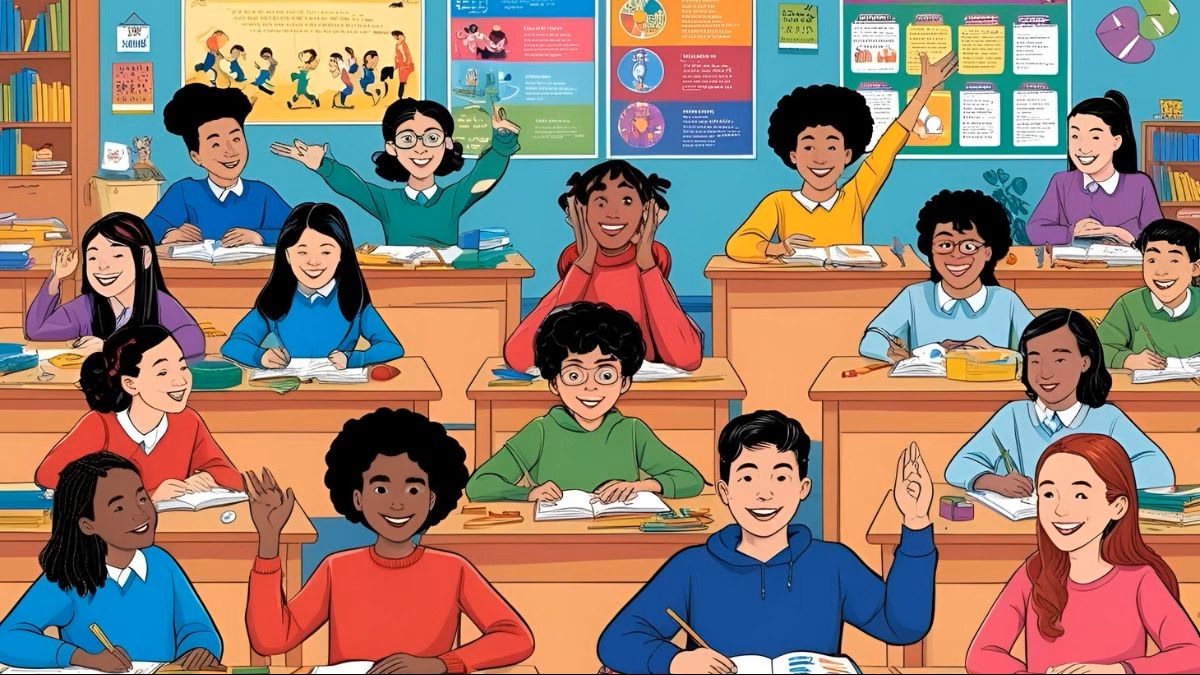
In a world as diverse as ours, it’s no surprise that we each learn in our own unique way. While some of us excel through reading, others thrive through hands-on experiences or visual aids. These distinct ways of absorbing, processing, and retaining information are not just random; they’re deeply tied to our personal preferences—what we now call “learning styles.” But the concept of learning styles isn’t as modern as it may seem. In fact, it’s a topic that has captured the attention of thinkers for centuries, and it’s only more recently that educators have come to fully appreciate its impact in the classroom.
A historical perspective
The idea of individual differences in learning can be traced back to ancient times. Aristotle, in 334 BC, was one of the first to recognize that every child possesses unique talents and skills. His keen observations laid the groundwork for a deeper understanding of individual differences in learning—a concept that would evolve over centuries.
Fast forward to the early 1900s, when the study of personality theories and the relationship between memory and instructional methods began to gain traction. Despite this growing interest, research on learning styles temporarily lost its momentum due to the dominance of the intelligence quotient (IQ) in measuring academic success. However, the second half of the twentieth century saw a revival, sparked in part by the groundbreaking theory of Multiple Intelligences introduced by Howard Gardner in the 1980s. Suddenly, educators and researchers began to see learning styles not as an afterthought, but as an integral component of how we teach and learn.
Defining learning styles
What exactly are learning styles? At its core, a learning style is an individual’s preferred method of processing information. James W. Keefe, a prominent scholar in the field, defines learning styles as the distinctive cognitive, affective, and physiological behaviours that shape how learners interact with their environment (Keefe, J. W. (1979). Learning style: An overview. In J. W. Keefe (Ed.), Student learning styles and brain behavior (pp. 1–17).). He describes these styles as “comparatively stable indications” of how a learner engages with information.
Educational researchers Kenneth Dunn and Rita Dunn provide a more detailed definition, saying learning styles are “the way in which each person absorbs and retains information and/or skills.” ( Dunn, R., & Dunn, K. (1993). Teaching secondary students through their individual learning styles: Practical approaches for grades 7–12.) In essence, these are the deeply ingrained tendencies that make one person excel through hands-on practice, while another thrives in a lecture setting.
Meanwhile, Tan Dingliang offers a broader perspective, defining learning styles as “the way a learner often adopts in the learning process,” emphasizing that these preferences are not just limited to information retention but extend to strategies, stimuli, and even social learning tendencies.( Tan, D. (2003). A theoretical framework for understanding learning styles. Journal of Education Research, 31(2), 123–134)
In simpler terms, a learning style is the unique way an individual learns best. It’s the approach—whether visual, auditory, kinaesthetic, or otherwise—that makes certain information click. While a learning style and a cognitive style may overlap, the former is more about the practical application of learning, and the latter focuses on problem-solving approaches based on intellectual thinking.
Why learning styles matter in education
Understanding learning styles isn’t just academic—it’s essential for creating an environment where every student has the opportunity to thrive. Imagine a classroom where a teacher uses the same teaching method for all students—whether it’s reading from a textbook or lecturing. While this might work for some, others may struggle to grasp the material. The reality is that not every student learns the same way. This is where the relevance of learning styles comes into play.
In simpler terms, a learning style is the unique way an individual learns best. It’s the approach—whether visual, auditory, kinaesthetic, or otherwise—that makes certain information click
A one-size-fits-all approach to teaching can inadvertently leave some students behind. When teachers recognize and adapt to the diverse learning styles in their classrooms, they create opportunities for all students to engage meaningfully with the material. Learning styles aren’t just a theoretical concept; they should directly influence teaching strategies and the way educators design their curriculum.
Research by Dewar and Hartman suggests that students who are actively involved in their learning process are more likely to succeed. When learners feel in control of their education—by engaging in methods that cater to their strengths—they experience an increase in motivation and self-esteem. This sense of autonomy over their learning journey leads to better outcomes and a deeper connection to the material.
The connection to Multiple Intelligences
The importance of learning styles is closely linked to the theory of Multiple Intelligences, which posits that intelligence isn’t a single, measurable trait, but rather a collection of distinct abilities. Gardner’s theory identifies several types of intelligence, including linguistic, logical-mathematical, musical, spatial, bodily-kinesthetic, interpersonal, intrapersonal, and naturalistic. Each student may excel in different areas, and recognizing this diversity is essential for fostering an inclusive and effective learning environment.
This is where the concept of learning styles aligns with Gardner’s theory. A teacher who understands that students may have a preference for a particular style of learning—whether they process information best through images, physical activity, or auditory cues—can tailor their teaching strategies to engage all types of intelligence. Acknowledging that one size doesn’t fit all is the key to unlocking the potential of every learner.
The future of learning: A personalized approach
So, what does the future hold for learning styles? As research continues to evolve, the message is clear: there is no universal method that works for every student. Teachers must embrace the diversity of learning preferences in their classrooms. By using a variety of teaching methods and recognizing the unique strengths of each student, educators can create a dynamic learning environment where every individual has the opportunity to succeed.
Ultimately the lesson is simple: in a world where every learner is different, embracing diversity in how we learn is not just beneficial—it’s essential. And the more we understand about these differences, the better equipped we are to foster environments where every learner can reach their full potential.






Learning & Teaching
AI in Classrooms: Threat to Learning or Catalyst for Educational Transformation?
Artificial Intelligence is transforming classrooms worldwide. Is AI enhancing personalized learning or weakening critical thinking and academic integrity?

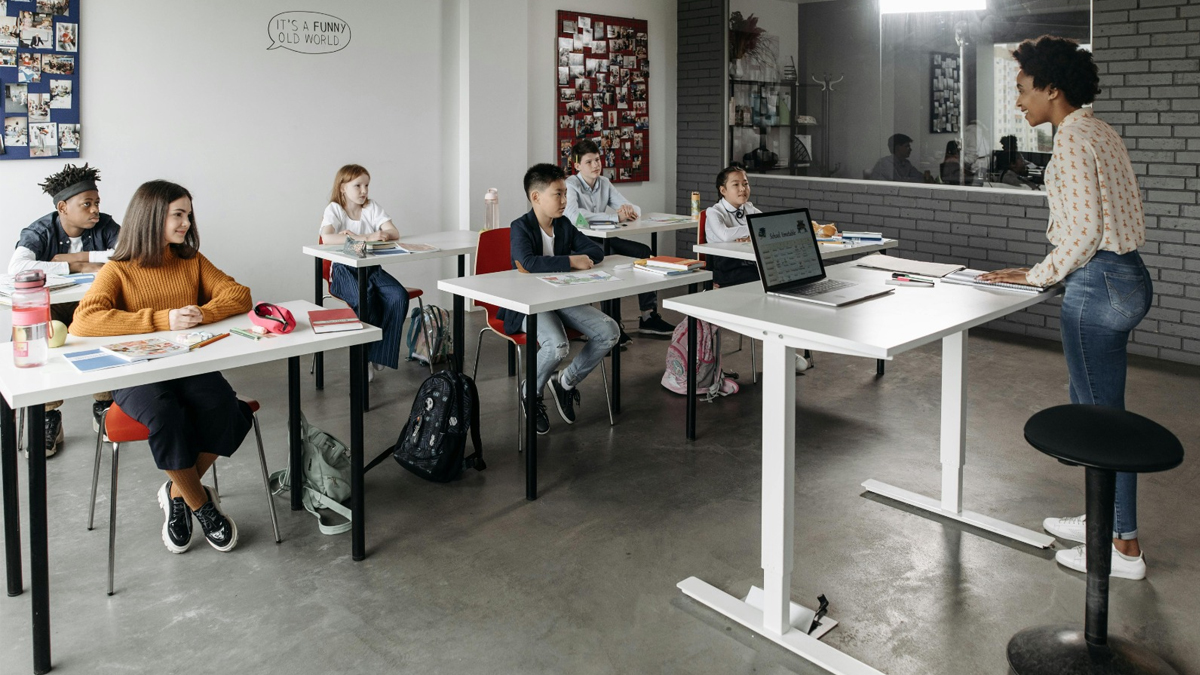
It was 2012 when a fifth-grade student watched her classroom change forever. The long, familiar blackboard was shortened to make space for something new: a smart board. The wall that once carried chalk dust now lit up with colours, sound, and animation.
Learning felt different. Some students still preferred chalk and quiet explanation. Others were drawn to the vivid visuals and interactive content. Teachers began noticing something important — students did not learn in the same way. The monochrome board worked for some; audio-visual tools helped others grasp concepts faster.
With that shift, transformation had quietly begun.
Today, another shift is underway.
A Monday morning might begin with a student completing an assignment she had postponed — not after hours of effort, but within minutes, assisted by an AI chatbot. In another classroom, a teacher reviews essays while an automated system highlights grammar issues and suggests feedback. Elsewhere, students debate whether an AI-generated response is accurate or biased.
These scenes are no longer speculative. They are unfolding in classrooms now.
And with this transformation comes a new tension.
The pressing question
Artificial Intelligence (AI) has moved rapidly from abstract concept to active participant in education. From generative chatbots to adaptive learning systems, AI is reshaping how students learn and how teachers teach. This raises a pressing question: Is AI a threat to traditional education, or a transformative force that enhances it?
One of AI’s strongest advantages lies in personalization
Across schools and universities, educators are navigating this terrain cautiously. Many describe AI not as a replacement, but as an assistant. Educational institutions and research bodies report growing use of AI to personalize learning, streamline lesson preparation, and provide immediate feedback. Students use AI to brainstorm, clarify difficult concepts, and refine writing. Teachers experiment with automated tools to reduce repetitive administrative work, freeing time for deeper classroom engagement.
One of AI’s strongest advantages lies in personalization. Students process information differently — some visually, some through repetition, discussion, or practice. AI-powered platforms can adapt to individual pace, provide tailored examples, and offer instant clarification. Perspectives shared by Cengage Group suggest that many students do not merely seek shortcuts; they want structured guidance on using AI responsibly because they recognize its relevance to future careers. For this generation, AI is not optional — it is expected.
AI also strengthens accessibility. Schools such as Stonebridge School highlight the role of speech-to-text tools, translation software, and grammar support systems in assisting students with learning differences or language barriers. For these learners, AI is not convenience; it is inclusion. It creates entry points into academic participation that were previously difficult to access.
From a psychological standpoint, this aligns with learner-centered education. Immediate, tailored feedback enhances motivation. According to Self-Determination Theory, feelings of competence and autonomy strengthen intrinsic motivation. When students experience structured support that builds mastery, learning deepens. In this sense, AI can support psychological growth rather than undermine it.
Yet, concerns emerge when assistance becomes substitution.
The question of creativity
If students rely entirely on AI to generate assignments, the learning process risks weakening. Educational psychology consistently emphasizes effortful processing — the mental struggle involved in organizing ideas, revising drafts, and solving problems independently. That cognitive effort strengthens memory, comprehension, and critical thinking. When AI eliminates that struggle completely, it may also eliminate valuable opportunities for intellectual growth.
Emerging research on AI integration suggests that while AI can increase short-term engagement, it does not automatically guarantee long-term retention. Students may accept AI-generated responses without questioning them, potentially weakening analytical reasoning and originality. Creativity, too, may suffer if learners default to algorithmic suggestions rather than developing their own ideas.
Academic integrity presents another challenge. AI blurs boundaries between assistance and authorship. Without clear institutional policies, confusion can foster mistrust between students and educators.
Beyond academics lies the human dimension. Teaching is not merely the transfer of information; it involves mentorship, empathy, and social development. A teacher notices shifts in a student’s confidence. A classroom discussion builds emotional intelligence. AI cannot replicate lived experience or genuine human encouragement. Overdependence on technology risks diminishing the relational core of education.
However, rejecting AI outright may be neither realistic nor constructive. History shows that educational innovations — from calculators to the internet — were once met with resistance. Over time, integration replaced fear.
The true transformation lies not in AI’s presence, but in pedagogical adaptation.
Balanced integration appears most sustainable. AI can assist with idea generation, but students can be required to reflect on how they used it. AI can provide explanations, but learners can critique and verify them. Assessments can shift toward oral presentations, in-class writing, debates, and applied problem-solving that demand originality and reasoning.
In this framework, AI becomes a tool for thinking — not a substitute for it.
AI in classrooms is both a threat and a transformation. It threatens depth, independence, and authenticity when misused. It transforms accessibility, personalization, and instructional efficiency when guided ethically.
When the smart board arrived, the blackboard was not erased. It simply shared space.
Perhaps AI, too, does not need to replace human thought or human teachers. It needs boundaries, guidance, and wisdom.
AI has already entered the classroom. The future of education will depend not on whether students use AI, but on whether we teach them to think critically, ethically, and independently — beyond it.
References
https://papers.iafor.org/wp-content/uploads/papers/aceid2024/ACEID2024_79202.pdf
Learning & Teaching
Understanding AI: The Science, Systems, and Industries Powering a $3.6 Trillion Future
Explore how artificial intelligence is transforming finance, automation, and industry — and what the $3.6 trillion AI boom means for our future

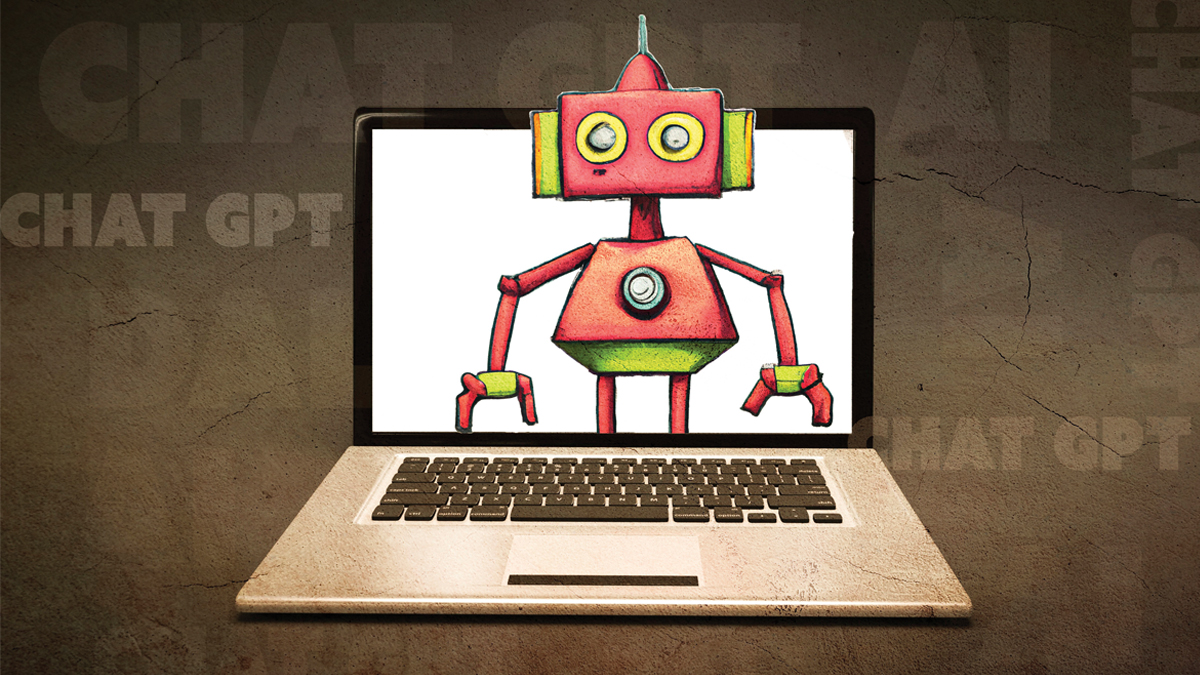
Artificial intelligence has become a major point of discussion and a recent focal point, experiencing remarkable growth in recent years. Artificial intelligence is a branch of computer science that refers to computer systems and machines with the capability to mimic human cognitive abilities, such as learning, critical decision-making, problem-solving, and creativity. Its ability to identify objects, understand human language, and act independently makes it possible to reduce the need for direct human intervention, increasing the feasibility of AI use in industries such as automotive manufacturing, financial services, and fraud detection.
A Market Measured in Billions
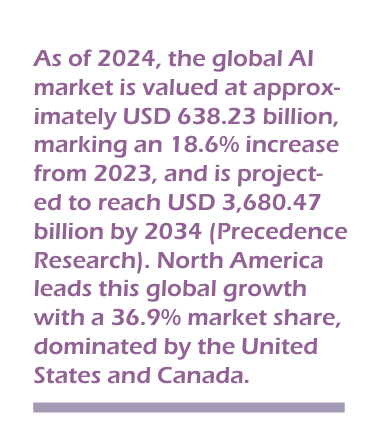
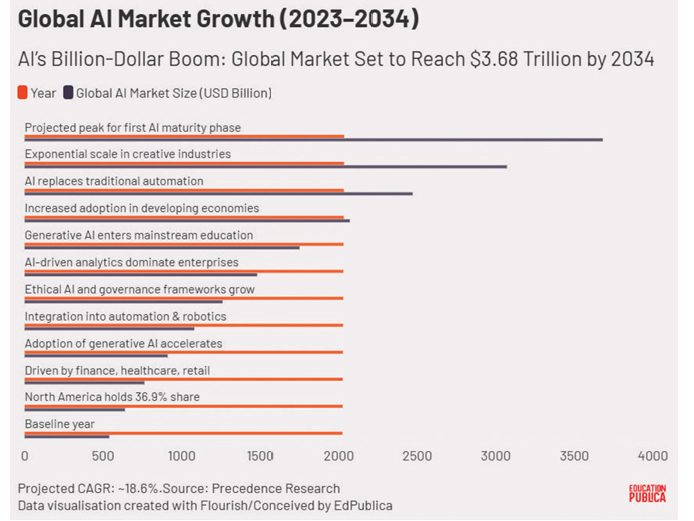
As of now, the projected value of the global artificial intelligence market is approximately USD 638.23 billion, marking an 18.6 percent increase from the 2023 value of USD 538.13 billion. This advancement is expected to continue with a compound annual growth rate (CAGR) of 19.1 percent from 2024 to 2034. Major North American countries, including the United States and Canada, have incorporated AI at scale and accumulated the largest market share, accounting for 36.9 percent of the global AI market. For example, the US artificial intelligence market is currently valued at around USD 146.09 billion in 2024, representing approximately 22 percent of global market value.

Machines That Do Not Learn
The evolution of AI has resulted in several distinct model types. IBM’s Deep Blue chess system is a notable example of a reactive machine model. It was designed using brute-force computation and complex algorithms, enabling it to generate approximately 200 million potential chess positions per second. Deep Blue employed a deep search tree to evaluate optimal moves and was used to challenge human grandmasters, achieving a historic milestone by defeating the reigning world chess champion Garry Kasparov in one game of a six-game match. The system relied entirely on predefined responses and immediate input data, as it had no memory or learning capability.
While this marked a historic achievement in computational performance, the lack of adaptability limited the broader applicability of reactive machines. Their inability to learn from experience or respond effectively to unexpected scenarios restricts their use to narrow, task-specific applications. Despite these limitations, reactive AI systems remain widely used in industrial automation due to their precision and reliability in controlled environments.
Learning From the Past
To address these constraints, Limited Memory AI models were developed. These systems retain historical data from previous experiences, enabling improved decision-making over time. Limited Memory AI is widely used in self-driving vehicle technology, where it analyses traffic patterns, road conditions, and obstacles to make informed real-time decisions. Similarly, in financial forecasting, these systems use historical market data to predict trends and risks. Limited Memory AI gathers data through multiple inputs, stores it temporarily, and applies analytical models to enhance accuracy.
However, such systems still struggle with high levels of complexity, particularly in areas such as advanced natural language processing, where long-term contextual understanding and reasoning are required.
Can Machines Read Minds?
More advanced AI concepts, including Theory of Mind and self-aware models, remain largely theoretical and experimental. Theory of Mind AI aims to interpret and predict human emotions, beliefs, and intentions, enabling more natural social interaction between humans and machines. These systems analyse behavioural patterns derived from user interactions and historical context using advanced algorithms.
Researchers such as Neil Rabinowitz at Google DeepMind have made progress in this area. Rabinowitz and his team developed a system known as ToMnet, which uses artificial neural networks inspired by the structure of the human brain to model decision-making behaviour. Despite this progress, Theory of Mind AI cannot accurately replicate the complexity of human mental states. The intricate nature of human cognition, emotions, and social reasoning means real-world applications remain limited, and widespread deployment is likely years away.
The Idea of Self-Aware AI
The final hypothetical stage of AI development involves systems with genuine self-awareness. Such models would possess the ability to understand their own internal states and adapt behaviour accordingly. Self-aware AI systems could potentially tailor interactions based on environmental and emotional cues, making engagement more effective and personalised.
In environmental management, these systems could predict ecosystem changes, recommend conservation strategies, and assist in biodiversity protection. In education, self-aware AI could personalise learning experiences by adapting to individual learning styles and progress patterns. However, AI remains far from achieving self-awareness, largely because significant aspects of human cognition, including consciousness, memory integration, and proactive reasoning, remain poorly understood.
Furthermore, self-aware AI would require vast quantities of data, raising ethical concerns related to privacy, surveillance, and data exploitation. As a result, the development of such systems necessitates strict regulatory frameworks governing data collection, storage, and use.
Finance Goes Algorithmic
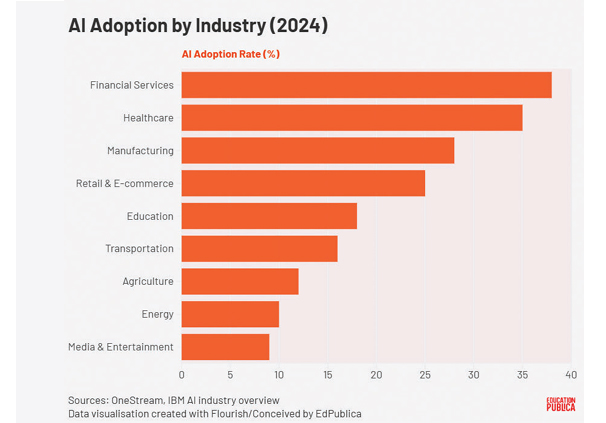
The financial services sector is currently undergoing a significant transformation driven by artificial intelligence. AI has reshaped analytics, operational efficiency, and strategic decision-making across the industry. Corporate Performance Management has benefited from AI-driven tools that enhance speed and accuracy in financial planning, budgeting, and forecasting.
Major financial institutions such as JPMorgan Chase and Goldman Sachs employ Natural Language Processing technologies to analyse large volumes of financial data. NLP enables machines to interpret and generate human language, supporting applications such as chatbots, market analysis, and risk assessment.
Reading the Fine Print at Scale
When combined with Optical Character Recognition, which converts image-based financial documents into machine-readable text, NLP systems can rapidly process reports, contracts, and news articles. Document parsing technologies further enhance efficiency by extracting relevant information from unstructured data sources, including social media content.
However, the effectiveness of NLP systems depends heavily on the availability of diverse, high-quality datasets. Biased or inaccurate data can undermine model performance and lead to flawed decision-making.
Machines That Create
Generative AI has emerged as a powerful subset of artificial intelligence within the financial sector. Generative AI systems can create original content, including text, images, audio, video, and three-dimensional models. These capabilities have advanced significantly due to developments in Large Language Models, which learn patterns from vast datasets and generate outputs that resemble human-created content.
Generative AI systems use techniques such as text generation and image synthesis to produce new samples based on training data. A key underlying technology is the Generative Adversarial Network, which consists of two neural networks: a generator and a discriminator.
Fighting Fraud With Fakes
The generator produces synthetic data, while the discriminator evaluates its authenticity, enabling continuous improvement in output quality. This architecture has proven particularly valuable in fraud detection, where simulated fraud scenarios can be used to stress-test detection systems. Financial institutions such as PayPal and American Express employ generative models to improve fraud prevention mechanisms.
The Transformer Revolution
Transformers have revolutionised both Natural Language Processing and generative AI. This deep learning architecture enables the modelling of complex sequences in text, images, and audio. Transformer-based models underpin systems such as OpenAI’s GPT, which can generate coherent, human-like text.
Financial organisations use transformer models for investment research, analysing market trends, generating reports, and summarising extensive financial documents to accelerate decision-making processes.
Bias, Attacks, and Blind Spots
Despite these advantages, generative AI presents several challenges. These systems are vulnerable to adversarial attacks, in which manipulated inputs produce misleading outputs. Bias in training data remains a critical concern, particularly in financial applications such as lending and credit assessment, where biased outputs can reinforce systemic inequalities.
Automation, Upgraded
Artificial intelligence has also become integral to intelligent automation, significantly transforming business process management and robotic process automation. Traditional RPA systems were limited to repetitive, rule-based tasks. The integration of AI has enabled automation systems to perform more complex activities that require judgement and adaptive decision-making.
This advancement has expanded the scope of automation across industries while maintaining high levels of accuracy and efficiency.
Predicting Failure Before It Happens
Predictive maintenance is another area where AI has demonstrated significant value. By analysing data from sensors and machinery, AI systems can anticipate equipment failures before they occur. This reduces downtime, extends equipment lifespan, and lowers maintenance costs.
In manufacturing and automotive industries, AI-powered machine vision systems use cameras and optical sensors to detect defects during production. These systems analyse images with greater precision than traditional inspection methods, ensuring consistent product quality.
The Building Blocks of Machine Learning
Machine learning models represent one of the most influential branches of artificial intelligence. These systems enable computers to learn from data and improve performance without explicit programming. Three foundational models commonly used across industries are decision trees, linear regression, and logistic regression.
Decision trees break complex decision-making processes into structured branches based on informative data features and are widely used in healthcare diagnostics and financial credit assessment.
From Trends to Probabilities
Linear regression models establish statistical relationships between dependent and independent variables and are commonly applied in financial forecasting. Logistic regression predicts the probability of binary outcomes and is widely used in healthcare and credit risk analysis due to its efficiency and interpretability.
Teaching Machines to Learn
Machine learning algorithms enable systems to learn patterns from data and improve performance over time. The three primary categories are supervised learning, unsupervised learning, and reinforcement learning.
Supervised learning uses labelled datasets for classification and regression tasks, including spam detection and image recognition. Unsupervised learning operates on unlabelled data and identifies hidden structures through clustering and association analysis.
Learning & Teaching
What’s Your Learning Superpower? Here’s How to Find It
Let’s dive into the Honey-Mumford and VAK (Visual, Auditory, Kinaesthetic) models—two of education’s most influential maps for personalizing the learning journey.

Imagine being dropped in a brand-new city where everyone speaks a different language. Some people grab a map and start drawing routes. Others listen intently to locals, some race into the streets to explore by doing, and a few quietly observe from a café, making notes. Which traveler are you? In the world of learning, discovering your “learning style” is like finding your unique superpower—the secret key to faster, deeper, more enjoyable learning.
How do you unlock your own learning?
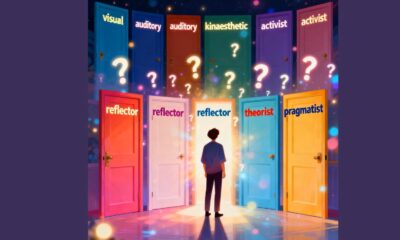
Let’s dive into the Honey-Mumford and VAK (Visual, Auditory, Kinaesthetic) models—two of education’s most influential maps for personalizing the learning journey.
Why Learning Styles Matter (and Why They Change)
It’s important to realize learning preferences aren’t set in stone. Just as a traveler adapts to new cities, learners shift styles based on the challenge. Most of us lean toward one or two favourite modes, but flexibility is key. According to Peter Honey and Alan Mumford’s classic model, being able to “wear all four hats” is crucial for mastering new skills. If you stubbornly avoid certain ways of learning, you may unknowingly tie your own shoelaces together.
Here’s how the four Honey-Mumford learning styles look in action:
Activist: The daredevils of learning! Activists live for new experiences. They’re first to leap into workshops, group activities, and hands-on challenges. They learn best when they’re doing, discussing, and exploring.
Reflector: These learners are the wise owls. Quietly observing first, they watch from every angle, gathering information before jumping in. Their superpower? Drawing connections and insights from deep thinking.
Theorist: Think of the philosophers and scientists. Theorists want the “why” behind everything. They thrive on models, structures, and clear explanations, asking, “Does this make sense?” and “Is there a theory here?”
Pragmatist: These are the builders and fixers. Pragmatists want practical, real-world application. “How can I use this?” is their guiding question. They flourish when they’re solving problems and trying out ideas.
The Visual, Auditory, and Kinaesthetic Adventure
But wait—there’s more! According to neuro-linguistic programming and the globally popular VAK model, everyone navigates the world of knowledge in their own preferred “language”: seeing, hearing, or doing. Here’s how to spot yours:
Visual Learner: You see the world in pictures. Diagrams, charts, videos, and handouts light up your mind. If you sketch ideas or remember faces better than names, visual is your superpower.
Auditory Learner: Sound is your guide. You remember best what you hear—lectures, podcasts, discussions, even recording and replaying information. You may even talk aloud to “think.”
Kinaesthetic Learner: Your hands lead the way. You learn by doing. Whether painting, building, or physically working through problems, motion and touch fuel your brain.
So, How Do You Find Your Style?
No one is 100% one type. Like expert travelers, the best learners pack more than one compass. Educational researcher Niel Fleming expanded on these ideas, showing that all of us use a mix—sometimes favoring one “sense,” sometimes another. Being stuck with just one style can slow you down; flexibility makes the difference.
Educators, coaches, and students can all benefit by asking simple questions—”Do I remember better what I see, hear, or do?”—and using practical inventories from Honey, Mumford, or Fleming to discover strengths.
Want to unlock your learning superpower? Pay attention to how you most naturally enjoy, remember, and apply new information—and don’t be afraid to experiment with new learning adventures. Your secret strength might just surprise you.


Scientists Crack the Genetic Code Behind Seedless Grapes

Climate Change Could Turn Ocean Food into ‘Fast Food’, MIT Study Warns

Why Campuses Need a Happiness Officer Now

The hidden fault lines of global energy: why oil and gas chokepoints are a permanent risk

NASA to launch first crewed Artemis Moon mission on April 1
NASA to launch first crewed Artemis Moon mission on April 1

Climate change heat impact affected over 2.5 billion people

How China Is Redrawing the Global Map of Critical Minerals

Study Reveals How Ocean Bacteria Drive Plastic Biodegradation

Weather, Not Just Emissions, Driving PM2.5 Pollution in Indian Cities: Study

-

 Society3 months ago
The Ten-Rupee Doctor Who Sparked a Health Revolution in Kerala’s Tribal Highlands
-
Society3 months ago
From Qubits to Folk Puppetry: India’s Biggest Quantum Science Communication Conclave Wraps Up in Ahmedabad
-
COP305 months ago
Brazil Cuts Emissions by 17% in 2024—Biggest Drop in 16 Years, Yet Paris Target Out of Reach
-
Women In Science6 months ago
The Data Don’t Lie: Women Are Still Missing from Science — But Why?
-
Earth5 months ago
Data Becomes the New Oil: IEA Says AI Boom Driving Global Power Demand
-
COP305 months ago
Corporate Capture: Fossil Fuel Lobbyists at COP30 Hit Record High, Outnumbering Delegates from Climate-Vulnerable Nations
-
Space & Physics4 months ago
Indian Physicists Win 2025 ICTP Prize for Breakthroughs in Quantum Many-Body Physics
-
Health5 months ago
Air Pollution Claimed 1.7 Million Indian Lives and 9.5% of GDP, Finds The Lancet