The Sciences
Canine Cognitive Abilities: Memory, Intelligence, and Human Interaction
Research on canine cognition shows that dogs have impressive memory retention, which helps them recognize faces, remember commands, and understand their environment.


Dogs are renowned for their ability to adapt and respond to various situations. One of the key features of their intelligence is their memory and how they utilize past experiences to navigate new circumstances. Dogs not only remember specific events but also use those memories to make decisions in future situations. Research on canine cognition shows that dogs have impressive memory retention, which helps them recognize faces, remember commands, and understand their environment. When faced with a new scenario, they often recall previous similar experiences and apply those learnings effectively.
Understanding Human Cues: A Result of Evolution
Dogs’ remarkable ability to understand human cues—whether through body language, vocal tones, or facial expressions—is another significant aspect of their cognitive prowess. Over thousands of years of domestication, dogs have learned to interpret human signals, making them highly attuned to the needs and intentions of their human companions. This phenomenon is often attributed to the domestication hypothesis, which suggests that dogs have evolved alongside humans and, in doing so, developed the ability to read and respond to human cues.

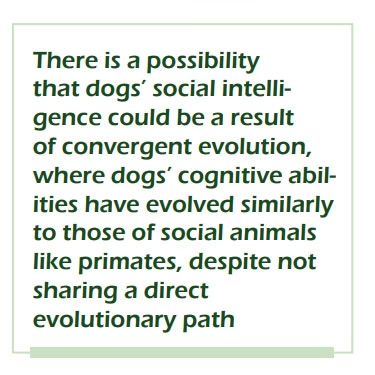
However, some researchers argue that dogs’ ability to understand human cues might not solely stem from domestication. There is a possibility that dogs’ social intelligence could be a result of convergent evolution, where dogs’ cognitive abilities have evolved similarly to those of social animals like primates, despite not sharing a direct evolutionary path. This perspective is still debated in the field, but it underscores the complexity of understanding the roots of canine cognition.
Cognitive Categories in Dogs: Classifying Intelligence
Dogs’ cognitive abilities can be broken down into various categories that reflect the diversity of their intelligence. These categories help researchers study the different aspects of how dogs think, learn, and behave. Some of the key categories include:
• Spatial Intelligence: Dogs possess a strong sense of spatial awareness, allowing them to navigate their environment effectively. They can remember the locations of objects such as toys, food bowls, and leashes. This spatial awareness also extends to their ability to assess distances and understand their surroundings. While most dogs develop this intelligence naturally, some may need training to enhance their spatial skills.
• Intrapersonal Intelligence: This refers to a dog’s ability to understand its own physical abilities, limitations, and needs. For example, a dog might avoid attempting an action, such as jumping over a large gap, if it perceives it to be beyond its capabilities. This form of intelligence reflects the dog’s self-awareness, although the level of this awareness may differ from that seen in humans. Dogs might not have conscious self-reflection, but their behavior indicates an understanding of their limits.
• Interpersonal Intelligence: Dogs are highly social animals, and their interpersonal intelligence is reflected in their ability to communicate with both humans and other dogs. They can interpret social cues and respond accordingly, forming strong bonds with their human families and understanding the dynamics of their social group. This intelligence is particularly evident in their interactions with humans, where they not only respond to verbal commands but also tune into human emotions, following social hierarchies and giving appropriate responses. For example, dogs can respond to human emotions by offering comfort or adjusting their behavior based on the emotional state of their human companions.
The Role of Human-Dog Interaction in Cognitive Development
Dogs’ cognitive abilities, including their ability to understand human emotions, are likely a product of their long history of living alongside humans. Studies show that dogs can often read the intentions of humans, making them exceptionally skilled at interpreting social cues. This human-dog bond has shaped dogs’ social intelligence, allowing them to be highly responsive to the emotional and social cues provided by humans. For instance, when a human expresses frustration or joy, a dog can often sense the change in mood and react accordingly, whether by offering comfort or simply adjusting their behavior.
Interestingly, some studies suggest that domestic dogs might lose some of their problem-solving abilities when raised solely in human environments. This loss might occur because dogs begin to rely on human intervention for problem-solving, rather than using their independent cognitive skills. However, with appropriate training and stimulation, many dogs can retain or even develop complex problem-solving abilities.
Variations and Training
Just as with humans, not all dogs display the same level of cognitive abilities. Some dogs might struggle with spatial awareness or might not respond to certain social cues as effectively as others. This is particularly evident in some breeds or individual dogs that may require additional training to enhance these skills. Spatial awareness, for example, might be challenging for dogs that were not raised in environments where they had to navigate complex spaces. Training exercises can help improve these cognitive areas, allowing the dog to become more aware of its surroundings and capable of responding appropriately.
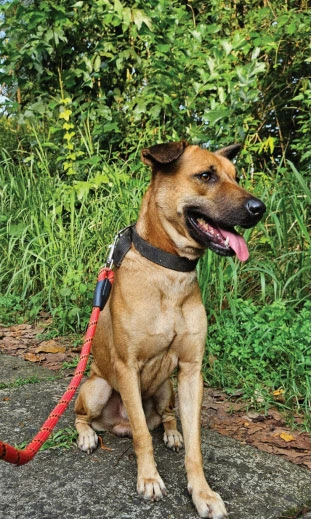
Moreover, self-awareness or intrapersonal intelligence can also vary among dogs. While some dogs might instinctively understand their physical limitations (e.g., recognizing when they can’t jump a certain height), others may require repeated experiences to learn these boundaries.
Complex and Multifaceted
Overall, dogs exhibit a wide range of cognitive abilities that demonstrate both adaptive intelligence and social prowess. Their ability to learn, remember, and apply past experiences to new situations showcases their problem-solving skills, while their social intelligence allows them to communicate effectively with humans and other dogs. While there is still much to learn about the origins and evolution of canine intelligence, it is clear that dogs have evolved to become highly adept at interpreting the world around them, both physically and socially.

The domestication of dogs, along with their interaction with humans, has contributed significantly to the development of their cognitive abilities. These abilities are not only a result of their domesticated lives but also a product of their evolutionary adaptation to social living, both with humans and other animals. Understanding these cognitive abilities in dogs helps deepen the bond between dogs and humans and enriches our appreciation for these remarkable companions.
Technology
Thorium-229 Nuclear Clock Opens New Way to Probe Dark Matter
Scientists have demonstrated a working thorium-229 nuclear clock, opening new possibilities for precision timekeeping and research into dark matter.

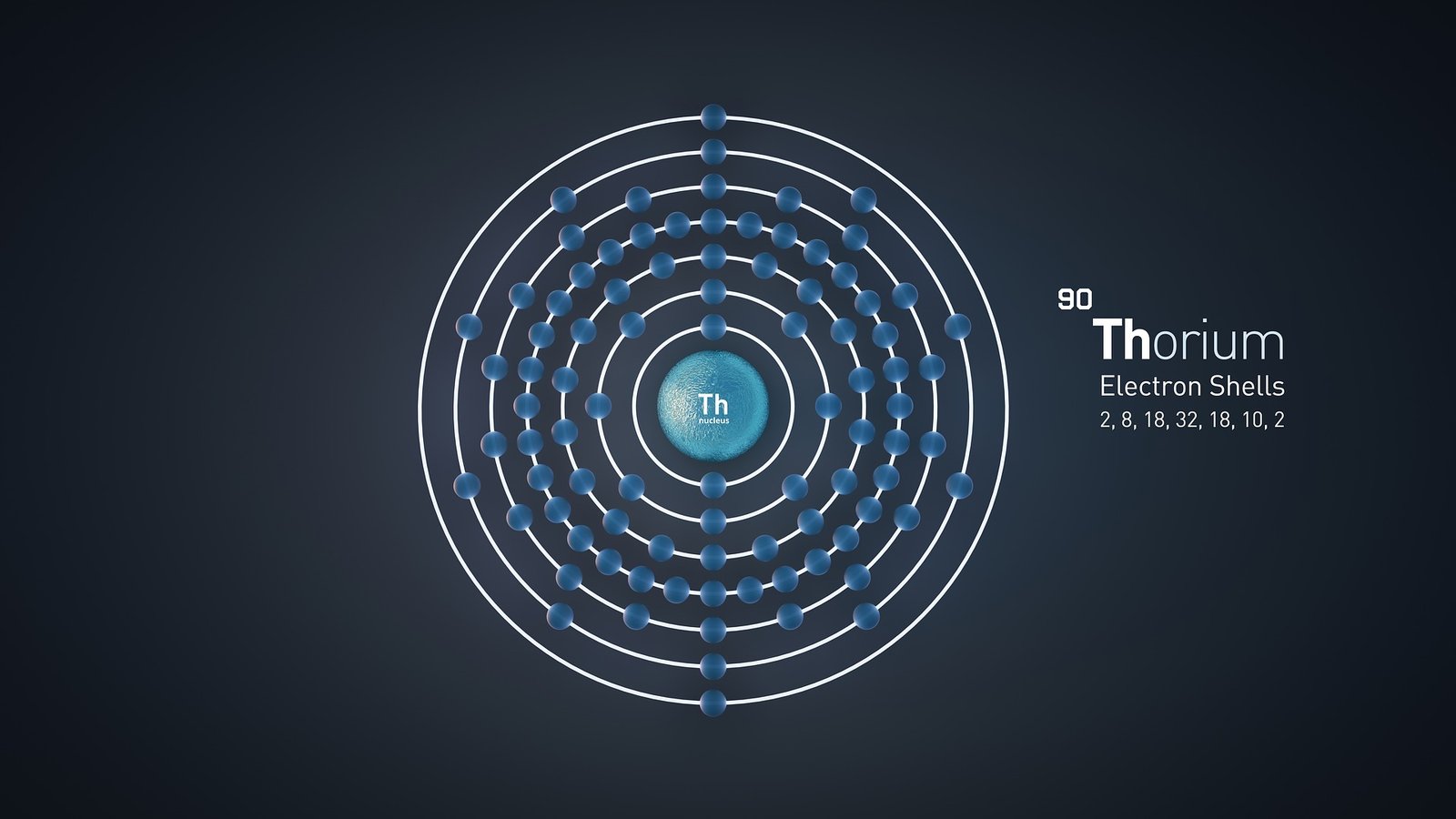
Scientists have demonstrated a working nuclear clock based on thorium-229, an advance that could open new possibilities for precision timekeeping and the search for dark matter. Unlike conventional atomic clocks, which measure transitions involving electrons, the device uses an energy transition inside an atomic nucleus. The clock operates with thorium-229 nuclei embedded in a small crystal at room temperature, offering a potential route towards compact and highly sensitive timekeeping technology.
The findings, published in Nature demonstrate how a laser can be continuously stabilised using the nuclear transition itself. The researchers also used the device to investigate whether dark matter might produce detectable changes in fundamental physical quantities.
From atomic transitions to the atomic nucleus
Modern atomic clocks measure the frequency of radiation associated with transitions between energy levels in atoms or ions. Because these frequencies are highly stable, they provide precise standards for measuring time and testing physical theories.
The proposed nuclear clock uses thorium-229, an isotope with an unusually low-energy nuclear transition that can be excited using ultraviolet light. Researchers have explored this possibility for decades because nuclear transitions are expected to be less sensitive to some external disturbances than electronic transitions.
In the new experiment, the researchers embedded thorium-229 nuclei in a millimetre-sized calcium fluoride crystal. The device operated at approximately room temperature, around 294.7 kelvin. A laser emitting radiation at a wavelength of 148 nanometres was used to probe the nuclear transition.
A central feature of the experiment was its feedback system. The researchers measured how much laser light the nuclei absorbed and used the resulting signal to correct the laser frequency. This allowed the nuclear transition to serve as the reference for stabilising the laser, rather than relying entirely on an external reference.
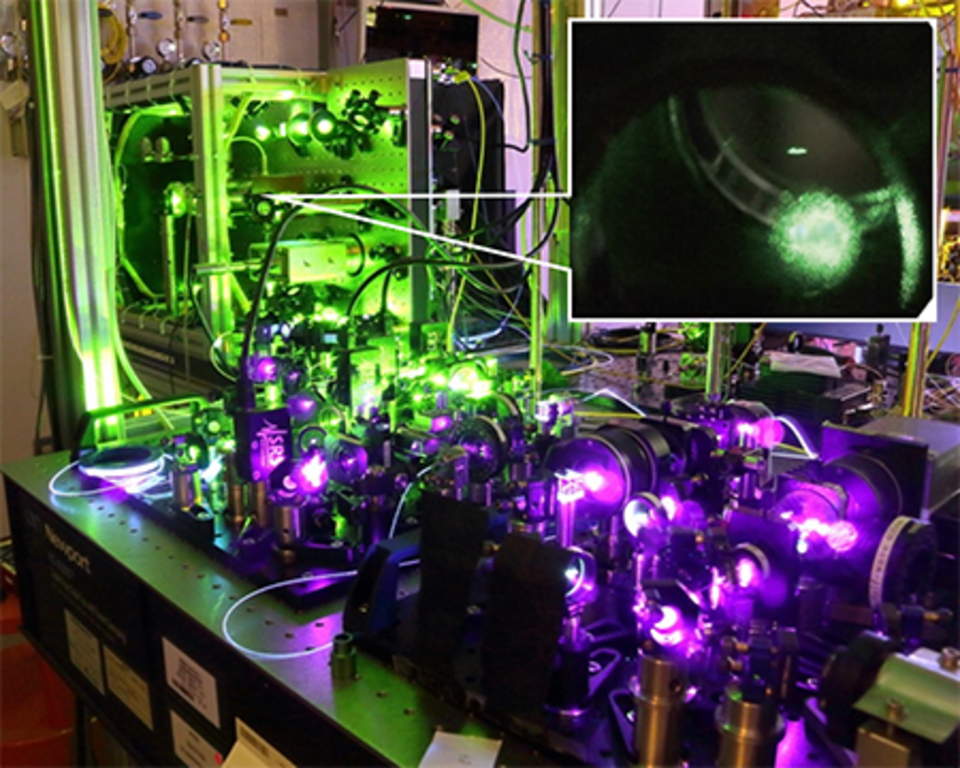
A ytterbium optical lattice clock at NMIJ, National Metrology Institute of Japan used to measure International Atomic Time (TAI).Image credi:Wikimedia commons
The team also compared the nuclear clock with an established ytterbium-ion optical clock. This comparison helped researchers assess the new device’s frequency stability and look for possible changes in the thorium transition.
A new tool in the search for dark matter
Beyond timekeeping, the clock offers a way to investigate possible changes in fundamental constants of nature. Some theoretical models propose that ultralight dark matter could cause these constants to vary over time, producing small changes in the frequencies measured by precision clocks.
The researchers compared the thorium clock’s frequency with that of the ytterbium reference over approximately 23 hours. They searched for periodic fluctuations and gradual drifts that could indicate such changes.
The experiment found no statistically significant periodic signal within the range examined. Instead, the measurements placed new limits on certain interactions between ultralight dark matter and ordinary matter. The resulting constraints were competitive with leading atomic-clock measurements for some photon-related interactions and improved previous constraints involving the strong nuclear force.
These results do not establish the existence of dark matter, nor do they rule out all possible models. They demonstrate how a nuclear clock can be used to test predictions that might otherwise be difficult to investigate experimentally.
Challenges remain
The device is still a developing technology. Its performance is limited by factors including laser power, measurement noise and variations in the crystal’s nuclear transition frequency at different locations. The researchers also identified reproducibility between measurements taken on different days as an important limitation.
They suggest that stronger ultraviolet laser sources and improvements to the crystal material could substantially improve the clock’s stability and sensitivity. Their projections indicate that future versions could approach the performance of leading optical atomic clocks while retaining the practical advantages of a solid-state system.
The demonstration marks a significant step towards nuclear clocks that can operate as standalone devices. Further improvements will determine how effectively the technology can support precision timekeeping and searches for new physics.
The Sciences
Two Chemists Win Nobel Prize for Solving a Century-Old Puzzle: Why Life Picks One Hand Over the Other
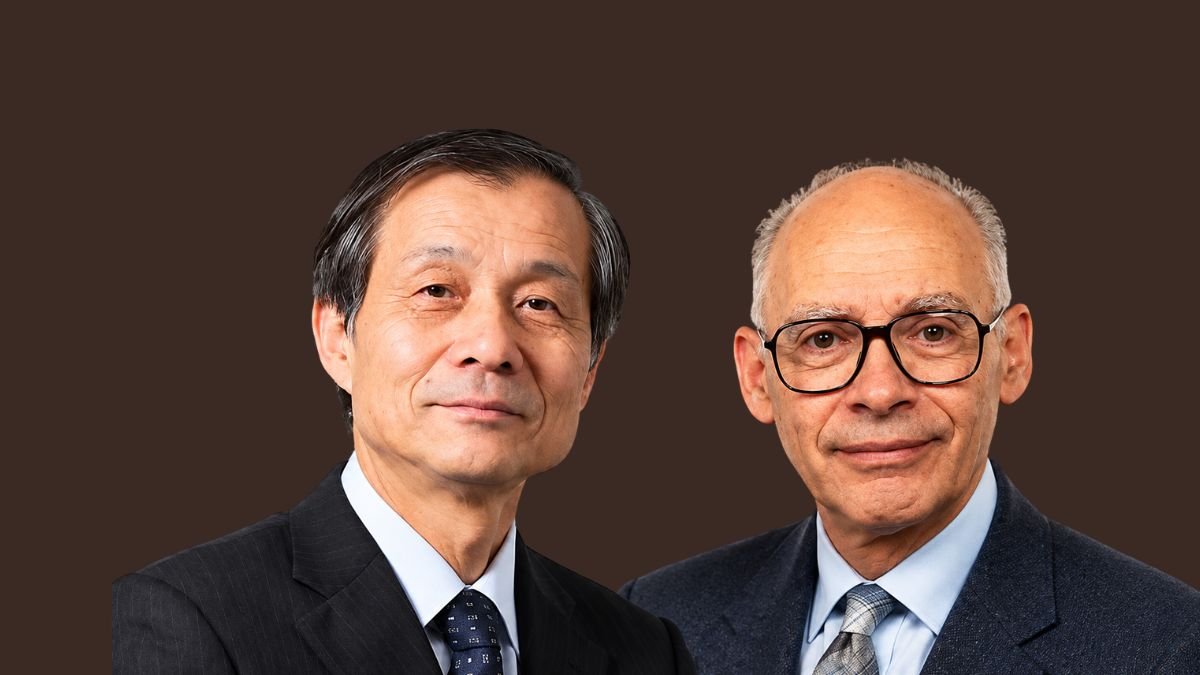
The 2026 Nobel Prize in Chemistry goes to Henri Kagan and Kenso Soai for discoveries that explain how one mirror-image molecule can dominate.
The Sciences
Anxiety Freezes Career Decisions. Curiosity Unfreezes Them
A framework that integrates emotion and identity for modern careers.


Career anxiety is neither a pathology nor a personal failure. Yet most career paralysis stems not from a lack of options but from a fundamental misunderstanding of what career decisions entail. Not more certainty, but more cognitive agility.
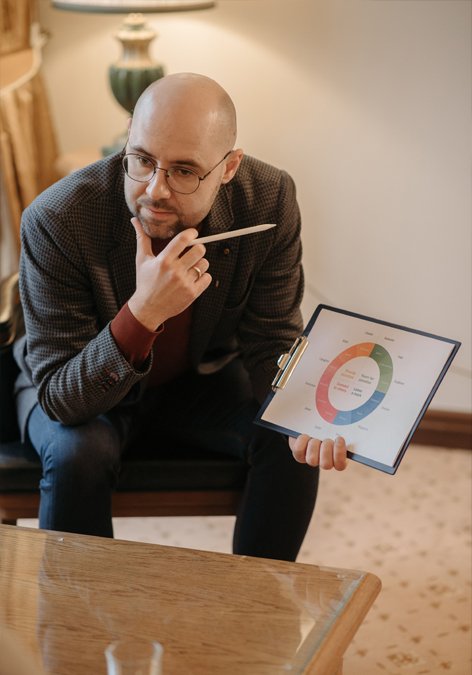
Career paralysis occurs when our minds get stuck in a single cognitive mode. Scanning for threats, seeking certainty, protecting identity. The pathway forward requires the ability to shift between modes. Exploring possibilities while committing to direction, noticing losses while imagining gains, questioning our current self while becoming the next version.
This is the skill that modern careers actually demand. And unlike what anxiety tells us, it is not something we need to possess before we act. It is something we develop through engaging.
Why Career Decisions Feel So Uniquely Terrifying
Career choices combine three elements that the human mind struggles with: uncertainty (outcomes are delayed and ambiguous), identity threat (the choice feels like a statement about who we are becoming), and perceived irreversibility (the haunting sense that choosing one path closes all others).
Psychologists Lazarus and Folkman demonstrated that anxiety emerges when situations feel highly consequential and low in perceived control. Career decisions fit this profile perfectly. Add loss aversion. The psychological fact is that we weigh potential losses more heavily than equivalent gains. And we understand why career anxiety feels so intense.
The anxiety is predictable. The problem is that once it arrives, we treat it as a decision maker rather than a source of information.
The Five Dimensions of Career Cognitive Agility
Career decisions require what cognitive psychologists call cognitive agility. The capacity to move fluidly between different cognitive modes in response to uncertainty. The original research defined this as three components (cognitive openness, focused attention, and cognitive flexibility). This paper adds two more (emotional recalibration and identity enactment) for career-length transitions.
Cognitive Openness. The capacity to notice new information, consider multiple possibilities, and think divergently. This is where curiosity lives. The willingness to explore the unfamiliar.
Focused Attention. The ability to filter out distractions and concentrate on what matters most. Without this, we would be paralysed by the sheer number of options.
Cognitive Flexibility. The capacity to shift between openness and focus as the situation demands. This is the often-overlooked skill. Knowing when to explore and when to execute.
Emotional Recalibration. As we move between cognitive modes, our nervous system must also shift. Curiosity activates reward pathways and opens us to uncertainty. Focused commitment engages different systems. Emotional agility means tolerating the discomfort of each shift without becoming defensive.
Identity Enactment. Professional identity is not fixed. It is continuously created through our moment-to-moment experiences of choices. Exploring options is itself an act of professional identity. We are the people willing to engage, learn, and grow.
These five dimensions working together create the capacity to navigate career uncertainty without being paralysed by it.
A Real Example: When Cognitive Agility Matters
Consider Maya, who is good at engineering. Objectively, demonstrably good. But she is drawn to product design. Both paths matter to her, but in different ways.
Anxiety asks, “What if you choose wrong? Engineering is secure. Design is uncertain. What if you fail at design? What does it mean about your intelligence if you choose design instead?”
The anxiety is not irrational. It is protecting her. But it is also freezing her in a single mode. Threat scanning, certainty seeking, identity protecting.
What cognitive agility looks like for Maya:
Openness. Instead of “Which is the right choice?” she asks, “What would six months in design teach me about my actual interests?” She reaches out to designers, shadows product teams, and builds something.
Focus. She does not float endlessly in exploration. She commits to specific learning goals. She enrols in a design course. She builds a portfolio piece. She sets a decision timeline.
Emotional Recalibration. The shift from “safe engineering” to “uncertain design” creates real discomfort. She has to tolerate anxiety about her capabilities, social pressure about “throwing away” engineering, and fear of starting something afresh. These feelings are real. Cognitive agility does not eliminate them. It means moving forward while holding them.
Identity Enactment. She is not abandoning her “engineer” identity. She is expanding it. Six months of design exploration is a legitimate act of professional identity. She is someone willing to interrogate her path, test her interests, and integrate what she is learning.
Flexibility. She knows the point at which she will shift from exploring to committing. She has decision criteria. When she has gathered enough information, she will move decisively.
What Maya developed was not certainty. It was the cognitive and emotional capacity to navigate uncertainty without being controlled by it. That capacity is what unfroze her decision.
How Curiosity Changes Everything
Curiosity operates through a fundamentally different system than anxiety. While anxiety narrows attention to scan for threats, curiosity expands it. Psychologist George Loewenstein calls this the information gap theory. Curiosity arises from perceived gaps in understanding.
Neuroscience shows that curiosity activates reward-related neural pathways associated with dopamine, increasing tolerance for uncertainty and improving learning under ambiguous conditions.
Most importantly, curiosity does not require confidence in outcomes. It requires interest in the process.
Identity Enactment: Why Career Decisions Are Actually Identity Questions
Here is what makes career anxiety different from other decisions.
Most decisions are choice problems. Comparing options and selecting the best one. Career decisions are also identity problems. We are not just choosing a path. We are choosing who we will become. That is what creates the deeper anxiety.
Organisational psychologist Herminia Ibarra has shown that during career transitions, people often reconstruct their professional identity through narrative reframing. Telling themselves a new story about who they are. This is valuable work. It helps people make sense of change.
But there is something deeper happening in how professionals actually navigate uncertainty. They do not just reconstruct identity. They continuously enact it through their choices and actions.
Identity enactment means this: your professional identity is not stored somewhere waiting to be recovered or reconstructed. It is actively created moment by moment through what we do, what we choose, and how we show up. When we engage with a new opportunity, we are not abandoning an old identity to build a new one. We are continuously constituting who we are through our choices right now.
This distinction matters profoundly because it changes what we need to do.
If identity is fixed and we reconstruct through reflection, then we need to figure it out before we act. We need clarity first. This is where career paralysis lives.
If identity is something continuously enacted through action, then we do not need to figure it out in advance. We create it through engagement. The identity emerges through the doing, not before it.
The deeper fear beneath career anxiety. It is not actually the fear of failure. It is the fear of becoming someone different from what we imagined. It is the fear that choosing engineering (or design, or therapy, or entrepreneurship) means we are becoming an “engineer” (or designer, or therapist, or entrepreneur), permanently and irrevocably.
But this fear assumes identity is fixed. Once we recognise that identity is continuously enacted, we know that we create and recreate our professional self through our choices. The terror diminishes.
We are not choosing an identity. We are choosing an experience through which we will enact our identity. We are not committing to forever. We are committing to what we will learn in this chapter.
How this reframes everything. Exploring options becomes an act of professionalism, not a sign of inadequacy. Taking a step into uncertainty becomes an act of identity creation, not identity abandonment. Changing direction becomes integration of learning, not rejection of our past self.
This is where cognitive agility and identity enactment connect. The ability to shift between exploration and focus, between openness and commitment, between questioning and acting. That fluidity is how enacted career identity actually develops. Each shift is an act of becoming.
The Experiment Mindset
Cognitive agility fundamentally reframes what a career decision means.
Instead of asking, “Is this the right career for me?” — which demands certainty — ask, “What would this option teach me over the next year?” — which invites learning.
Career psychologist John Krumboltz argued for decades that careers are not discovered through prediction — they are constructed through experience, what he called planned happenstance. Contemporary theorist Mark Savickas emphasises that modern careers are built through iterative meaning-making rather than linear planning.
When a choice becomes a time-bound experiment rather than a permanent identity decision, its emotional weight changes. The illusion of irreversibility — one of the primary drivers of career anxiety — begins to loosen.
A 6-month experiment in a new field feels manageable. A permanent identity change feels terrifying. The only difference is our frame.
A Practical Exercise Before Our Next Decision
Before our next career decision, let us pause and work through these questions. They are designed to help us practice cognitive agility across all five dimensions.
1. Name the anxiety. What am I most afraid of losing or getting wrong? This activates our focused attention on real constraints and risks.
2. Reframe the choice. If this were a 6- to 12-month experiment, what would I want to learn? This shifts us into cognitive openness mode — exploration over evaluation.
3. Activate curiosity. What questions am I genuinely interested in answering about this path? This sustains openness by connecting to intrinsic interest. Curiosity is also emotional work. It requires nervous system activation.
4. Lower the risk. What is one small, reversible step that allows exploration without overcommitment? This uses focus to make curiosity actionable — filtering from all possibilities to one concrete action.
5. Build identity coherence. How can I see this choice as continuous with my development rather than discontinuous with my past? This is the identity dimension. We are not abandoning who we were. We are integrating who we are becoming.
6. Build cognitive flexibility. How will I know when it is time to shift from exploring to committing? What signals will tell me I have enough information? This is a metacognitive step — thinking about our thinking — that allows us to move fluidly between modes.
Small voluntary actions increase perceived control, a key factor in reducing anxiety. But this works deeper. We are practising the cognitive agility that modern careers actually demand.
When Structural Barriers Are Real
Let us be clear. Curiosity is not a solution to financial pressure, caregiving responsibilities, or systemic barriers. These are not mindset problems. They are real constraints that demand real scaffolding: parallel plans, incremental transitions, income buffers, and social support.
Cognitive agility operates within constraints, not instead of them.
What Modern Careers Actually Reward
In stable career systems, commitment to a single path was everything. Focus was the entire skill set.
In today’s volatile landscape, a different capacity, cognitive agility, matters more. The ability to flexibly operate with both curiosity and focus. Knowing when to explore and when to execute. When to question and when to commit.
Cognitive agility is not about being indecisive or constantly changing direction. It is about integrating openness, focus, and the flexibility to shift between them as situations demand.
The Final Reframing
Research on career resilience shows something crucial. Cognitive agility does not develop through prior preparation. It develops through engaging with challenges that demand it.
Each time we navigate a career transition — each time we choose openness over defensive closure, shift attention to what matters, integrate emotion without being controlled by it, and act on our evolving identity — we are strengthening the neural networks, emotional systems, and identity integration that enable future navigation.
We do not need to feel cognitively agile before pursuing an opportunity. The pursuit itself develops the agility we will need.
Anxiety wants certainty before action.
Curiosity creates action before certainty.
Modern careers rarely reward those who wait for perfect clarity. They reward those who learn their way forward.


Kashmir’s Traditional Rice Varieties Hold Genetic Clues to Climate Resilience

India Builds Synthetic Biology Capacity for Medicines and Industrial Production

India’s Green Cover Declined by 5.6 Percentage Points in 25 Years as Summer Heat Intensified: Study

Europe’s 2026 Heatwaves Linked to More Than 32,000 Deaths, Study Estimates

What Does Changing Western Disturbances Mean for Himalayan Rainfall?

Knowing When to Think for Ourselves: AI, Intuition and the Education of Discernment

After a Scorching Summer, Delhi’s Children Are Slow to Return Outdoors

Two Chemists Win Nobel Prize for Solving a Century-Old Puzzle: Why Life Picks One Hand Over the Other

Marshall Islands: Why the US Nuclear Legacy Is Back Before the UN

How Wind Turbines Could Produce More Power From the Same Wind
-

 Math3 months ago
The 2026 Fields Medals: Four Proofs, Four Decades-Old Problems Solved
-
EP Deep Dive: Data & Solutions3 months ago
After Kerala’s Deadliest Landslide, the Hardest Thing to Rebuild Was Childhood
-
EP Deep Dive: Data & Solutions4 months ago
West Asia Crisis: Can Kerala’s Returning Gulf Migrants Find a Future in the Green Economy?
-
Space & Physics5 months ago
India Semiconductor Mission: ‘It’s Not About Fabs. It’s About Building An Entire Ecosystem’
-
Interviews1 month ago
From Scams to Screens: How the National Stock Exchange Rewrote India’s Equity Story
-
Climate5 months ago
The Climate World Cup? How Climate Change Could Affect Player Performance at the 2026 World Cup
-
Society4 months ago
What Is Civilisational Diplomacy? Understanding India’s Newest Foreign Policy Tool
-
Society4 months ago
From Bell Labs to the Classroom: A Second Career in Teaching