
Women In Science
‘Significant under-representation of black women in academic and research leadership’
Addressing the significant underrepresentation of Black women in senior academic and research leadership roles in the country, Dr Claudia Ntsapi discusses her latest research, the challenges faced by women in science, and more in an interview with EdPublica.


She has drawn recent attention for her ground-breaking research initiative related to neurodegenerative diseases. Her work explores the potential benefits of medicinal plants as supplementary treatments for neurodegenerative diseases such as Alzheimer’s, Parkinson’s, and Huntington’s. In this edition of ‘EdPublica’s Women in Science’ column, we introduce Dr Claudia Ntsapi, a researcher at the University of the Free State (UFS) in South Africa. Addressing the significant underrepresentation of Black women in senior academic and research leadership roles in the country, she discusses her latest research, the challenges faced by women in science, and more in an exclusive interview with EdPublica.
Dr Ntsapi, PhD, is a registered Natural Scientist (Pri. Sci. Nat) with the South African Council for Natural Scientific Professions (SACNASP). She joined the University of the Free State in late 2019 as a lecturer in the Department of Basic Medical Sciences. In addition to her teaching responsibilities, Dr Ntsapi leads the NeuroCancer Research Group, overseeing a multidisciplinary team specialising in cell biology, cell physiology, microscopy, biochemistry, and pharmaceutical methodologies.
Could you share details about your educational journey and current professional role?
I acquired my undergraduate and postgraduate qualifications at Stellenbosch University, completing a Master of Medical Science in Human Genetics in 2015 and a PhD in Physiological Sciences with a specialization in Neurophysiology in 2018. My current job profile is that of a Senior Lecturer at the University of the Free State’s Faculty of Health Sciences, within the School of Biomedical Sciences, Department of Basic Medical Sciences. In this role, I occupy administrative, academic, research, and leadership positions at both faculty and institutional levels.
“I admired professionals in lab coats and their selfless passion for finding answers and solutions to health-related conditions that remain clinical challenges using scientific methods and evidence
What sparked your interest in pursuing the Sciences, and what were your career aspirations?
As a high school learner, my academic strengths and interests were in chemistry, math, and biological sciences. While I was initially unsure about the exact career field I wanted to pursue, I was inherently curious and fascinated by professionals working in laboratories. I was a huge fan of TV series such as CSI: Crime Scene Investigation, which follows a team of forensic investigators solving crimes using scientific methods and evidence, and Numbers, which combined crime-solving with mathematics. These shows inspired me to aspire to a field reminiscent of what I witnessed in these series. I admired professionals in lab coats and their selfless passion for finding answers and solutions to health-related conditions that remain clinical challenges using scientific methods and evidence. True to my nature as an introvert, I continue to find myself most “at home” when working in a laboratory setting. While I could not have imagined the trajectory that my academic career would take, I am without a doubt in the right profession given my innate curiosity, passion for teaching, skills transfer, and biomedical research.
What do you think about the current status of women in science careers in your country?

Despite the gains in women’s participation in science careers in South Africa, women remain underrepresented in these fields. While there has been significant progress in increasing the participation of women in science-related disciplines, studies have confirmed that men continue to dominate science, technology, engineering, and mathematics (STEM) careers. This gender disparity is further heightened among Black women. Although women represent the majority of young university graduates in South Africa, only 13% of STEM graduates are women, with Black women being significantly underrepresented in higher academic and research leadership positions. This can be attributed to systemic barriers such as gender bias, lack of mentorship, and limited access to resources, which continue to hinder true equality in science careers.
At our institution, the University of the Free State (UFS), there is an increasing commitment to support emerging researchers, especially women, through mentorship and research development opportunities. This is part of our institution’s Vision 130, which aspires to foster excellence in research and increase the impact of our scholars on the broader societal context. I am privileged to be one of the selected candidates in our institution’s Transformation of the Professoriate Mentoring Programme, which aims to grow a critical mass of excellent emerging scholars at the UFS. This programme equips all its candidates with both academic and research mentorship to advance their development towards assuming senior academic and research positions. More importantly, this programme supports candidates in accessing networking and funding opportunities, contributing to their establishment as researchers with the potential to create centres of research excellence in the future. My hope is that those of us who have access to such opportunities can also use our privilege and positions to mentor more women researchers from underrepresented groups in the various fields of science.
“Although women represent the majority of young university graduates in South Africa, only 13% of STEM graduates are women, with Black women being significantly underrepresented in higher academic and research leadership positions
What are your suggestions to improve the participation of more women in science-related careers?
To improve the participation of more women in science-related careers, it is crucial to address the systemic barriers that hinder their progress. This includes creating more mentorship and networking opportunities for women, providing financial support and scholarships for female students in science career fields, and implementing national policies that promote work-life balance and support for working mothers. Additionally, efforts should be made to raise awareness about the contributions of women in science and to challenge stereotypes that discourage girls from pursuing science careers. Encouraging more inclusive and diverse work environments where women feel valued and supported is essential for increasing their participation and retention in science careers. There is also a need for progressive policies that promote the employment of Black women academics in positions of authority in STEM fields. This will ensure the availability of a diversity of women mentors and academics to offer gender-sensitive support to students.
Please tell us about your current research and its impact in the sector?
Our research group is assessing both pharmaceutically uncharacterized and the repurposing of well-known medicinal plants that have been previously reported to improve brain function in aging individuals. While these medicinal plants have shown promise in enhancing brain function in various brain-related conditions, their neuroprotective efficacy against neurodegenerative diseases remains unclear, especially as the disease progresses in severity. This is one of the focus areas of our ongoing research. I am involved in several multidisciplinary projects, collaborating with both national and international research experts from countries such as Denmark, the UK, and various national institutions, as well as colleagues from the University of the Free State. One of the primary goals of our ongoing research projects is to explore the therapeutic potential of underexplored nutraceuticals and indigenous medicinal plants in preserving vulnerable neuronal cell populations using 3D based neuronal cell models.

These models will be developed in collaboration with researchers in the University of the Free State’s School of Clinical Medicine, utilizing the CelVivo ClinoStar 2 System. This cutting-edge technology, mimics ‘animal model-like’, allowing scientists to generate cell-based models that closely resemble in-vivo like conditions. We will specifically focus on the technology’s applications in studying age-related neurodegenerative disorders, such as Alzheimer’s disease. The potential impact of this research is immense, as it may contribute to the development of novel therapeutic strategies for combating the debilitating progression of neurodegenerative diseases, ultimately improving the quality of life for affected individuals and their families.
What is your message to aspiring students who wish to take a career in the sciences?
Pursuing a career in the sciences requires dedication, hard work, relentless effort, and an unwavering commitment to learning and growth. It is a path filled with challenges, but the rewards are immense for those who are passionate about contributing to the betterment of humanity through medical science research. This means working tirelessly to uncover new insights, develop innovative solutions, and share your findings with the world. It means staying committed to your goals, even when faced with setbacks, and always striving to push the boundaries of what is known. Marie Curie once said, “I am among those who think that science has great beauty. A scientist in his laboratory is not only a technician: he is also a child placed before natural phenomena which impress him like a fairy tale.” This sense of wonder and curiosity should be at the heart of your scientific endeavours as an aspirant biomedical researcher. You must be driven by a deep curiosity and a desire to understand the world around you. The journey is not just about personal success but about making a meaningful impact on society. The hard work and perseverance you invest in your studies and research will not only advance your knowledge but also contribute to solving real-world problems and improving the quality of life for others. Lastly, remember that science is a collaborative field.
“Marie Curie once said, “I am among those who think that science has great beauty. A scientist in his laboratory is not only a technician: he is also a child placed before natural phenomena which impress him like a fairy tale.”
Seek out mentors, build networks, stay humble, and be open to learning from others. Your contributions, no matter how small they may seem, are part of a larger puzzle that future generations of researchers will continue to build upon. If you are passionate about making a difference, if you are committed to the relentless pursuit of knowledge, and if you are driven by a desire to contribute to the greater good, then a career in the sciences may be the right path for you. Embrace the journey, stay curious, and never lose sight of the profound impact your work can have on the world.







Women In Science
Protecting Life on the Mountainsides: A Conversation with Prof. Le Roux
In this conversation, she discusses what’s driving rising roadkill risks in Africa’s mountains, how vulnerable species are being affected, and why conservation planning must rapidly evolve to protect these fragile ecosystems. Women in Science is a recurring Education Publica column profiling women scientists from around the world — their work, journeys, and impact
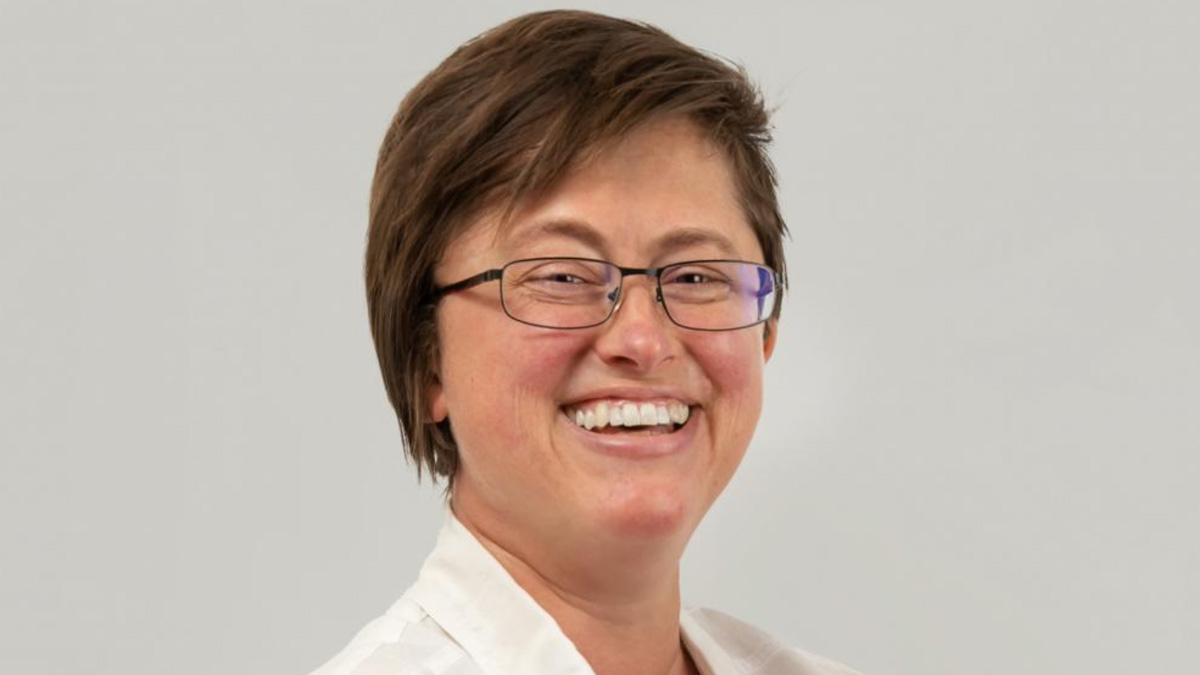
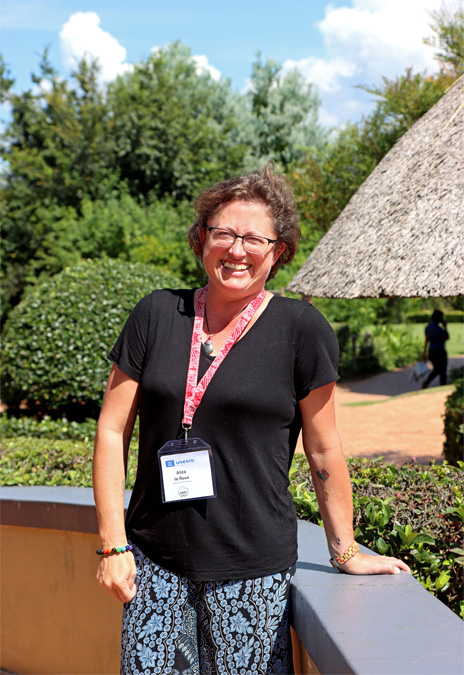
In this edition of Women in Science, Education Publica introduces Prof. Le Roux, a leading behavioural ecologist and Assistant Dean in the Faculty of Natural and Agricultural Sciences, and Associate Professor in the Department of Zoology and Entomology at the University of the Free State. Her work spans biodiversity, mountain ecosystems, and the escalating threat of wildlife mortality on roads. In this conversation, she discusses what’s driving rising roadkill risks in Africa’s mountains, how vulnerable species are being affected, and why conservation planning must rapidly evolve to protect these fragile ecosystems. Women in Science is a recurring Education Publica column profiling women scientists from around the world — their work, journeys, and impact.
You’ve dedicated your career to behavioural ecology and zoological sciences. What inspired you to pursue this path, and how has your journey shaped the way you approach issues like wildlife conservation and mountain biodiversity?
I’ve always loved being out in nature, ever since the first time my father took me for a hike up Table Mountain. Growing up, I experienced first-hand how wild animals and wilderness can be good for the soul (not just for the planet and for our physical health) – and then, as an adult, I saw in Europe and North America how very little wildness remains over there. This has really driven it home to me that we, on this continent, have very precious, living resources that we need to protect – and these resources are particularly unique in mountains. Disregarding this in favour of mining and other capitalistic ventures is really just speeding us along to a dystopian future.
Your research highlights the growing risk of roadkill in mountainous regions, particularly for endangered and vulnerable species. How is the expansion of road networks affecting wildlife in these areas?
Quite simply, these areas were previously less accessible to humans and vehicles, and the expanding road networks are changing that equation. Species at high altitudes now become more exposed to potential invasive species (which humans transport deliberately or accidentally) and collisions with vehicles. Our vehicles move far faster than natural predators do, so escaping the risk of oncoming traffic is not something any species is particularly adapted to. Populations will need to learn to avoid traffic and/or roads, if at all possible. This is not usually possible.
You mentioned that certain species, such as African wild dogs, lions, and elephants, are particularly vulnerable to roadkill. How do IUCN categories help frame the urgency of this problem?
The IUCN sets the global standard for us to understand which species to focus on in terms of conservation efforts. Knowing that nearly 8% of the mammals killed in mountains were of conservation concern, we must realise that we cannot simply ignore the risk. We are not just killing common species—we are killing species already at risk because of hunting pressure, climate change, and other threats.
Your findings show that amphibians are killed at the highest rate in mountainous regions, while mammals face greater risk in low-lying areas. What explains this difference?
It is difficult to answer because there is very limited data on population sizes of amphibians and mammals at different altitudes. Mountains provide more variation in microhabitats, so there may be pockets of ideal amphibian habitats with more freshwater and cooler microclimates. When a road cuts through such a pocket, a single car could kill dozens of amphibians at the “right” time. This should be studied further. These microclimates do not affect large mammals in the same way. It is also unclear whether mammals are killed more in low-lying areas because of more vehicles or more mammals.
Many small species are killed simply because they are less visible. Is there a broader societal or policy bias that undervalues smaller species?
Humans have an affinity for larger, charismatic species. However, the patterns are not only due to our personal biases—it is also practical. Drivers see larger animals more readily and avoid collisions because of potential damage to vehicles. Small animals are easier to disregard. Some drivers even deliberately kill snakes, but this did not create a large spike in the dataset. With effective communication, we could make drivers pay more attention to small but “special” species. We can change our behaviour.
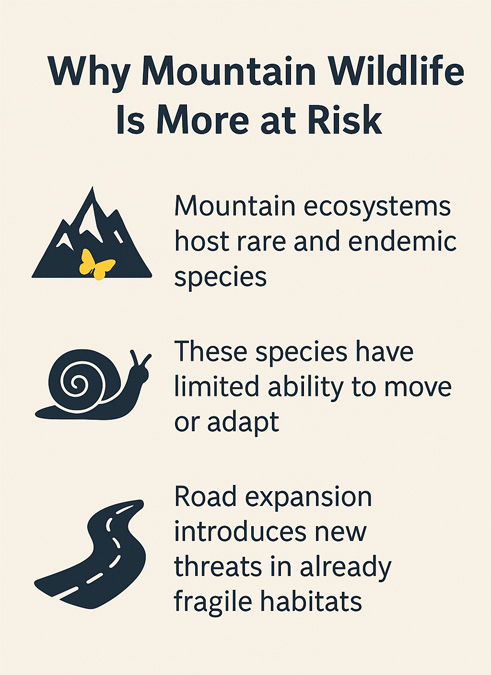
Unpredictable weather patterns and the topography of mountain roads contribute to wildlife-vehicle collisions. How can infrastructure or road design help?
Mitigation often involves wildlife crossing structures—overpasses or underpasses—and warning signs in high-risk zones. For this to work in mountains, planners need to identify these high-risk zones and determine which structures or traffic-calming interventions are feasible. This will be a unique challenge in mountain environments.
Your study, covering 10 countries and spanning more than five decades of data, reveals major gaps in data collection. What are the most pressing gaps?
There are vast gaps in our information on population sizes and densities of vertebrate species in most African countries. If you look at the Map of Life, you’ll see how little biodiversity data we have from central and west Africa. We also found no roadkill studies in these large regions. We need to support scientists in those countries to investigate the challenges and potential solutions.
Mountain regions host unique biodiversity. How does roadkill threaten these rare or endemic species?
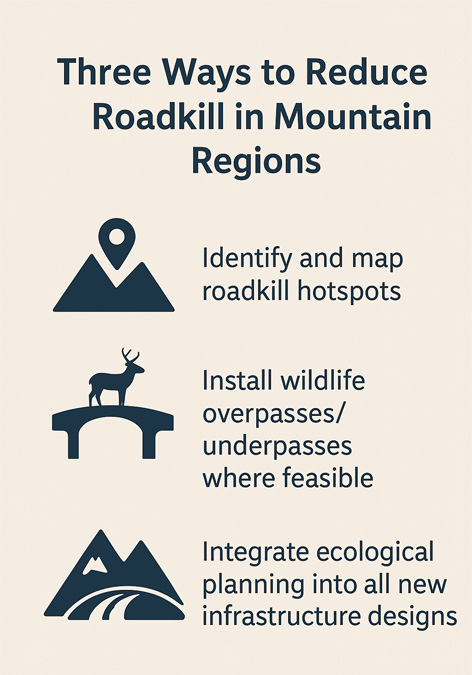
Because of the topography and history of mountains, they frequently host critical, unique biodiversity. Many are biodiversity hotspots. These endemic species cannot easily escape climate or anthropogenic change because physical barriers limit movement. There is also only so far “up” they can move. This is different in lowlands. Roads bring a new threat to species already vulnerable due to climate change.
Data collection on roadkill is often inconsistent. What needs to change to get a more accurate picture of the crisis?
It would be helpful if we had an international body to coordinate monitoring of roadkill risk, but I am not aware of such a body. It is not a methodological issue.
How can governments and conservation groups balance infrastructure development with protection of vulnerable species?
City planners, municipalities, and ecologists need to collaborate. Rather than relying solely on Environmental Impact Assessments, ideas for green spaces, wildlife corridors, and ecological connectivity should be included at the design stage of new developments. Such planning benefits environmental health and human wellbeing. Architects and engineers should also be encouraged to “think green” from the start.
What urgent actions are needed from both the scientific community and the public?
Identifying roadkill hotspots is essential as a first step. There are many areas where roadkill risk is lower, so we need to know where to focus mitigation measures.
Women In Science
Women in STEM Need Systemic Change
Stay committed, stay curious, and never underestimate the impact your work can have on the world

Despite notable gains in women’s participation in science careers in South Africa, women remain underrepresented across STEM fields. While more women are graduating from universities, studies continue to show that men dominate science, technology, engineering, and mathematics careers — a gap that is even more pronounced among Black women. Although women form the majority of young university graduates nationally, only about 13% of STEM graduates are women, and Black women remain significantly underrepresented in senior academic and research leadership positions.
These disparities stem from systemic barriers including gender bias, limited access to mentorship, and inconsistent availability of resources. Such obstacles continue to hinder the full and equitable participation of women in scientific careers.
At the University of the Free State (UFS), where I work, there is a growing institutional commitment to support emerging researchers — particularly women — through mentorship and research development initiatives. This aligns with Vision 130, which aims to foster research excellence and increase societal impact. I am fortunate to be part of the university’s Transformation of the Professoriate Mentoring Programme, designed to build a strong cohort of emerging scholars. The programme provides academic and research mentorship, supports access to networking and funding opportunities, and nurtures candidates toward assuming senior academic and research roles. It also helps lay the groundwork for future centres of research excellence.
Those of us who benefit from such opportunities carry a responsibility to extend mentorship to more women researchers, especially from underrepresented groups. Expanding women’s participation in science requires addressing the barriers that continue to limit progress. Key interventions include expanding mentorship and networking opportunities, increasing financial support and scholarships for women in STEM, and promoting national policies that support work–life balance and the needs of working mothers.
There is also an urgent need to raise awareness about women’s contributions to science and challenge persistent stereotypes that discourage girls from pursuing scientific careers. Building inclusive, diverse work environments where women feel valued and supported is essential to increasing both participation and retention. Progressive policies that promote the employment of Black women academics in STEM leadership roles are also critical. A diverse cohort of women in authority can provide gender-sensitive mentorship and create pathways for future scholars.
Pursuing a career in science demands hard work, resilience, and a commitment to continuous learning. It is a challenging journey, but deeply rewarding for those passionate about contributing to the advancement of humanity through research. It requires uncovering new insights, developing innovative solutions, and sharing knowledge that can transform lives. Marie Curie captured this spirit beautifully when she said, “I am among those who think that science has great beauty… like a fairy tale.” This sense of wonder should fuel every aspiring researcher.
Science is also fundamentally collaborative. Seek mentors, build networks, remain humble, and embrace learning from others. Your contributions — even those that seem small — form part of a larger scientific story that future generations will build on. If you are driven by curiosity, purpose, and a desire to contribute to the greater good, a career in science may be the path for you…
Interviews
Geometry, Curiosity and Finding ‘Her’ Place
Dr Laura Monk has quickly become one of the field’s most exciting young geometers
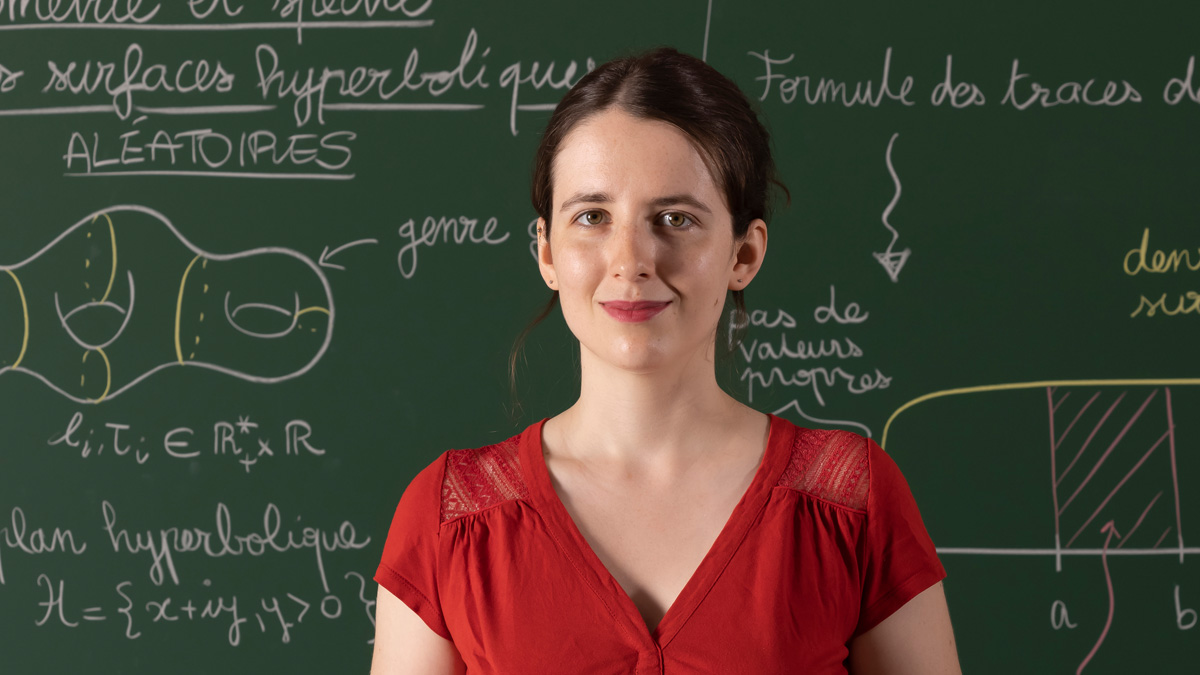
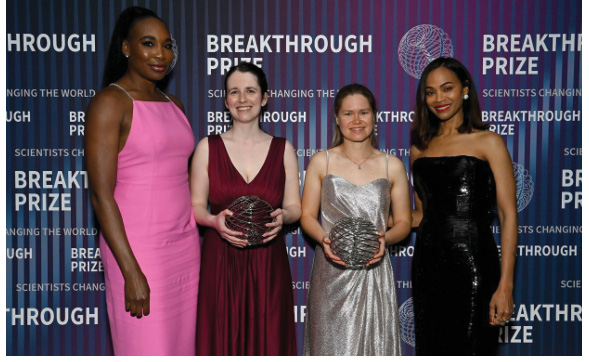
In modern mathematics, where imagination meets deep abstraction, Dr Laura Monk has quickly become one of the field’s most exciting young geometers. In 2024, she was awarded the Maryam Mirzakhani New Frontiers Prize, an honour regarded as one of the most prestigious recognitions for early-career women mathematicians and presented at the Breakthrough Prize ceremony—often called the “Oscars of Science.” A mathematician whose work explores the geometry of negatively curved spaces, Monk’s path into the field was shaped not only by intellectual fascination but also by uncertainty, self-doubt, and the search for belonging—a journey familiar to many women in STEM. Growing up in France, she found early encouragement from teachers who pushed her to think harder and explore deeper. Later, mentors like Nalini Anantharaman and the pioneering legacy of Iranian math genius Maryam Mirzakhani helped her see that mathematics could be a creative, expansive world—not an exclusive club.
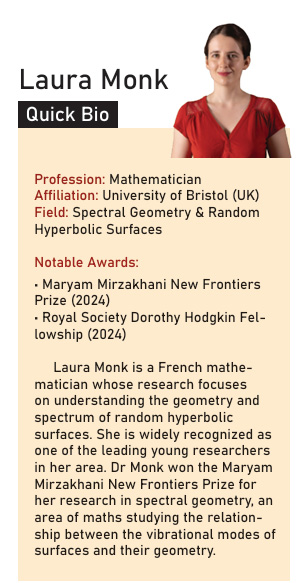
A Royal Society Dorothy Hodgkin Fellow and Lecturer at the University of Bristol, Monk works on the geometry of negatively curved spaces and the behaviour of objects moving within them. In this conversation with Dipin Damodharan, she speaks candidly about intuition, representation, hyperbolic geometry, and the courage required to stay in mathematics when you’re not sure you fit.
‘Go for it! Math is super cool and useful’
To start with, could you tell us how your journey in mathematics began? Was there a defining moment when you realised this would become your life’s work?
I always enjoyed mathematics at school and thought it would be a good idea to study it, as I was interested in it and it opens the door to many jobs. After my first two years of study, I realized I loved the subject itself more than the idea of finding a job using it, and decided I wanted to work in mathematics (probably as a teacher).
I faced many challenges and doubts—I somehow never felt sure mathematics was “for me,” even though I loved it. But I’m very happy I stuck with it and made a few leaps of faith at the right times. At the end of my master’s, I decided to start a PhD because it is required for certain higher education teaching positions in France. I thought: three years is a lot of time, better get excited and really go for it! Luckily, I met my PhD advisor, Nalini Anantharaman, who introduced me to a fascinating research project.
The way she ventured into different areas of mathematics, tackling ambitious new projects with no apparent fear, was an incredible inspiration. She was very different from the image I had of “the mathematician.” Her mentorship made me feel confident I could do it if I wanted to. And then I did!
Growing up in France, were there specific teachers, mentors, or institutions that played a pivotal role in shaping your mathematical thinking?
Mathematics is taught and shared, and I have many teachers to thank for my mathematical upbringing. My high-school teacher had extremely high standards and told me off a few times for doing the minimum instead of pushing myself. My second-year teacher gave me a first glimpse of how exciting venturing into the unknown can be during a research project.
One of the ways maths is taught in France is through a two-year intensive preparatory school followed by further studies at university. I found this structure gave me a strong basis to build on, as well as methods to organize myself and work well.
What were some of the challenges you faced as a young woman entering a field often dominated by men? How did you navigate them?
Mathematics is, indeed, a very masculine field, and one could imagine sexist behaviours to be common. I have to say, luckily perhaps, that this has not been my experience. I have always felt extremely welcomed into this community, whether as a student or a researcher.
However, I did still struggle very much as a student with finding a sense of place and purpose in what I was doing. Though these difficulties are quite universal, I think they were amplified by being one of the only girls in my cohort. Identifying this was very helpful in overcoming these feelings, because it led me to build strong connections with my peers, to find female mentors and role models, and to invest myself in events for young women, all of which helped tremendously.
Much of your work lies at the intersection of geometry and dynamics. Could you explain your research focus in simple terms?
I study certain types of surfaces called “hyperbolic surfaces.” Unlike a piece of paper (which is flat) or a sphere (which is positively curved), hyperbolic surfaces have negative curvature: they look like Pringles. There exist many, many hyperbolic surfaces, and they appear in very different fields of mathematics: number theory, mathematical physics, dynamics…
I am trying to understand what these surfaces “look like” a bit better. In order to do so, I put all of them in a (big) bag, take one at random, and try to describe it.
Mathematics often requires deep abstraction. How do you stay connected to the beauty or “reality” behind these abstractions?
I relate more to the beauty than the reality! To me, mathematics is a gigantic world that we are building or exploring together. I find a lot of joy in how different parts of this world interact and how bridges can be built; simple ideas can come together from far apart and create something new.
What role does intuition play in your mathematical process?
A big role! One of the reasons why I have been drawn to mathematics is that, once you understand a formula or a theorem, you don’t really need to memorize it by heart anymore: it just makes sense. When I learn something new, I go through a lengthy process of unravelling everything and I often feel very confused (or sometimes even a bit desperate!).
But, one day, all of a sudden, everything becomes clear, to the extent that it is even hard to remember why I was so lost initially. I think this is one of the reasons why it is so hard for us to share and convey what we do to one another, or to the general public.
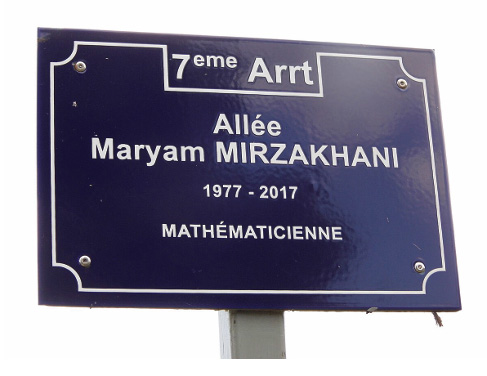
Maryam Mirzakhani’s groundbreaking work in geometry and moduli spaces continues to inspire mathematicians globally. In what ways has her work influenced your own research? You have worked on topics that build upon or are inspired by Mirzakhani’s legacy. Could you speak about this continuity—how do you see her influence evolving in your field?
Maryam Mirzakhani created my research field, and I have studied a certain part of her work in great detail. My research consists in picking a hyperbolic surface at random and looking at it. She was one of the first people to have had this amazing idea. At the time, there existed a probability model allowing one to pick hyperbolic surfaces at random, but it was completely abstract and unusable.
Through several beautiful breakthroughs, she created a method that made this possible. We are still at the beginning of the wide variety of applications following from these advances.
If you could give a message to a young girl fascinated by numbers but unsure about pursuing math, what would you say?
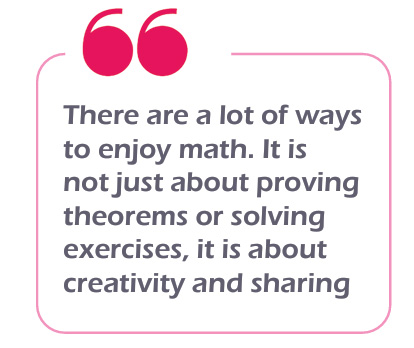
Go for it! Math is super cool and useful, so you will have loads of fun and learn a lot. It is ok if you don’t identify with the image of the “math guy”; there are a lot of ways to enjoy math. It is not just about proving theorems or solving exercises, it is about creativity and sharing.
Outside of mathematics, what brings you joy or fuels your curiosity?
I quite like jigsaw puzzles and knitting, both of which relax me and make me appreciate how a lot of little steps can come together to create something big. Right now, my main source of joy is my two-year-old daughter, and seeing her discover the world. If only we could stay this curious and observant about every single little thing!
Do you think artificial intelligence and computers are changing the way we do mathematics?
Computers definitely have! We used to pay people to perform long lists of computations for researchers, and to publish entire books of randomly generated numbers in order to study probabilities. Now both of these activities seem very silly. Mathematicians use computers all the time, whether to perform experiments, find the answer to a simple question, or write and share their work.
I personally choose to be optimistic about the future of AI. You would have a very hard time conveying to someone in 1980 the role that computers play in everyone’s lives, but for mathematics, they have greatly enlarged our experience and allowed us to go faster, further. Things are scary now because we do not know what is ahead of us.


Scientists Crack the Genetic Code Behind Seedless Grapes

Climate Change Could Turn Ocean Food into ‘Fast Food’, MIT Study Warns

Why Campuses Need a Happiness Officer Now

The hidden fault lines of global energy: why oil and gas chokepoints are a permanent risk

NASA to launch first crewed Artemis Moon mission on April 1
NASA to launch first crewed Artemis Moon mission on April 1

Climate change heat impact affected over 2.5 billion people

How China Is Redrawing the Global Map of Critical Minerals

Study Reveals How Ocean Bacteria Drive Plastic Biodegradation

Weather, Not Just Emissions, Driving PM2.5 Pollution in Indian Cities: Study
-

 Society3 months ago
The Ten-Rupee Doctor Who Sparked a Health Revolution in Kerala’s Tribal Highlands
-
COP305 months ago
Brazil Cuts Emissions by 17% in 2024—Biggest Drop in 16 Years, Yet Paris Target Out of Reach
-
Society3 months ago
From Qubits to Folk Puppetry: India’s Biggest Quantum Science Communication Conclave Wraps Up in Ahmedabad
-
Women In Science6 months ago
The Data Don’t Lie: Women Are Still Missing from Science — But Why?
-
Earth5 months ago
Data Becomes the New Oil: IEA Says AI Boom Driving Global Power Demand
-
COP305 months ago
Corporate Capture: Fossil Fuel Lobbyists at COP30 Hit Record High, Outnumbering Delegates from Climate-Vulnerable Nations
-
Space & Physics4 months ago
Indian Physicists Win 2025 ICTP Prize for Breakthroughs in Quantum Many-Body Physics
-
Health5 months ago
Air Pollution Claimed 1.7 Million Indian Lives and 9.5% of GDP, Finds The Lancet