

Climate
The Climate Perspective of the India–EU Landmark FTA
The India–EU free trade agreement is more than a market-opening deal. It marks a strategic shift where climate policy, geopolitics, and global trade converge across nearly a third of the world’s population.


The long-awaited free trade agreement (FTA) between India and the European Union is being billed as a trade breakthrough. But viewed through a climate and geopolitical lens, it is also a signal moment in how two major economic blocs are attempting to stabilise growth, supply chains, and decarbonisation pathways in a fractured global order.
According to a note by Climate Trends, the FTA arrives at a time when tariffs, carbon taxes, and industrial policy are increasingly weaponised, making the deal as much about strategic alignment as about market access.
The scale of the agreement is hard to miss. Together, India and the EU touch the lives of nearly 1.9 billion people — about 1.4 billion in India and close to 500 million in the EU. Combined, they account for around 30 percent of the world’s population and roughly 25 percent of the global economy, making this one of the most consequential bilateral trade pacts in recent years.
India and the EU together account for 11–12 percent of global trade
In trade terms, the partnership is already substantial. India and the EU together account for 11–12 percent of global trade, amounting to nearly $11 trillion out of an estimated $33 trillion global trade volume. Bilateral trade between the two currently stands at €124 billion ($136 billion) and is expected to double within five years.
India’s Commerce Minister Piyush Goyal and Ursula von der Leyen, President of the European Commission, have described the agreement as the “mother of all deals”.
Trade, geopolitics and climate converge
Beyond headline numbers, the agreement reflects a deeper geopolitical recalibration. With renewed uncertainty around US trade policy and rising economic nationalism globally, both India and the EU are seeking predictable, rules-based partnerships.
For India, the FTA provides diversification away from volatility in Western markets while strengthening its role as a manufacturing alternative under “China Plus One” strategies. For the EU, it secures long-term access to one of the world’s fastest-growing major economies at a time when supply chain resilience and strategic autonomy are becoming policy imperatives.
“The deal signifies strategic alignment at a moment of high geopolitical uncertainty,” said Aarti Khosla, Founder-Director of Climate Trends. “The EU has been the reigning power and India is a rising power. Their coming together, especially on climate goals, green industry and clean technology, signals where money and markets are going,” she said, adding that the agreement offers renewed space for multilateralism shaped by strategic choices rather than pure ideology.
Climate quietly embedded in the trade pact
While the FTA is not explicitly framed as a climate treaty, climate considerations run through the broader India–EU relationship. Cooperation under the Clean Energy and Climate Partnership (CECP), signed in 2016, continues across renewable energy, energy efficiency, and clean hydrogen.
Green hydrogen, in particular, has emerged as a key point of convergence. India has positioned itself as a potential exporter to Europe, backed by a growing domestic electrolyser manufacturing ecosystem. India is targeting $10 billion in foreign direct investment for 10 GW of electrolyser capacity by 2030, a scale that could help meet Europe’s future clean fuel import requirements, the Climate Trends note highlighted.
This cooperation is further reinforced through the EU–India Trade and Technology Council (TTC), which focuses on clean-energy technologies, regulatory interoperability, and joint research and development. India’s presence at European Hydrogen Week in Rotterdam last year underscored these ambitions.
Carbon borders and friction points
One of the most sensitive issues shaping the climate-trade interface is the EU’s Carbon Border Adjustment Mechanism (CBAM) — the world’s first carbon tariff on imports. Once fully implemented in 2026, CBAM could impose costs of $2–4 billion annually on Indian exporters in carbon-intensive sectors.
According to the Climate Trends note, while the FTA does not neutralise CBAM, it creates negotiating space. India has secured a most-favoured nation clause, ensuring it will not be treated less favourably than other trading partners under EU carbon rules. The agreement also includes support for Indian exporters to meet climate-related trade requirements, including cooperation on recognising India’s carbon pricing and verification systems, and assistance to cut emissions.
Beyond tariffs
The strategic significance of the deal lies in its long-term implications. From New Delhi’s perspective, the FTA could boost exports by up to $50 billion by 2031, particularly through services and diversified markets. For Brussels, it offers a pathway to build clean-energy industries without creating concentrated dependencies.
“The EU is already India’s largest trading partner. Conclusion of the FTA, long in the making, is a landmark moment,” said Madhura Joshi, Programme Lead – Asia at E3G. “It can be the building block for something more ambitious — a strategic partnership that goes beyond trade, providing a stable anchor for growth, resilience, and energy security,” she said. “A deeper partnership with clean technology as its foundation would strengthen global clean-energy supply chains,” she added.
Backing trade with finance, the European Investment Bank has already committed €2 billion towards climate-resilient infrastructure in India through the Coalition for Disaster Resilient Infrastructure, signalling that the EU is willing to support its trade ambitions with patient capital.
Taken together, the India–EU FTA represents more than a tariff-cutting exercise. As the Climate Trends note argues, it is both a hedge against protectionism and a springboard for climate-integrated growth — one that links nearly a third of humanity and a quarter of the global economy in an era of uncertainty.
Why the India–EU FTA Raises Eyebrows in a Trump World
While the India–EU free trade agreement is not explicitly targeted by Washington, it intersects with several trade and climate positions closely associated with Donald Trump, making it strategically relevant in the event of a second Trump presidency.
1. A powerful bloc outside US leverage
Together, India and the EU represent nearly 30 percent of the world’s population, around 25 percent of the global economy, and over 11 percent of global trade. Large, rules-based economic alignments formed outside US leadership have historically drawn Trump’s opposition, as they dilute Washington’s ability to use bilateral pressure.
2. Reduced impact of US tariff threats
Trump has relied heavily on tariffs as a negotiating and enforcement tool. The India–EU FTA gives both partners greater market diversification, reducing dependence on the US and limiting the effectiveness of future tariff-based pressure.
3. Climate-linked trade rules Trump opposes
The agreement unfolds alongside the EU’s Carbon Border Adjustment Mechanism (CBAM), which links climate policy directly to trade. Trump has consistently criticised carbon pricing and climate regulations, viewing them as economic constraints. India’s willingness to engage with EU climate-linked trade norms signals a shift towards a global trade architecture shaped by climate rules — even without US leadership.
Why it matters
The India–EU FTA reflects a move toward a multipolar, climate-integrated trade order. While Trump may not challenge the deal directly, its underlying logic runs counter to his preference for bilateral, tariff-driven negotiations — and could face friction in a more protectionist global environment.






Climate
Climate Change Could Turn Ocean Food into ‘Fast Food’, MIT Study Warns
MIT study finds climate change could shift phytoplankton to low-nutrient “fast-food” forms, impacting marine food webs and global nutrition.

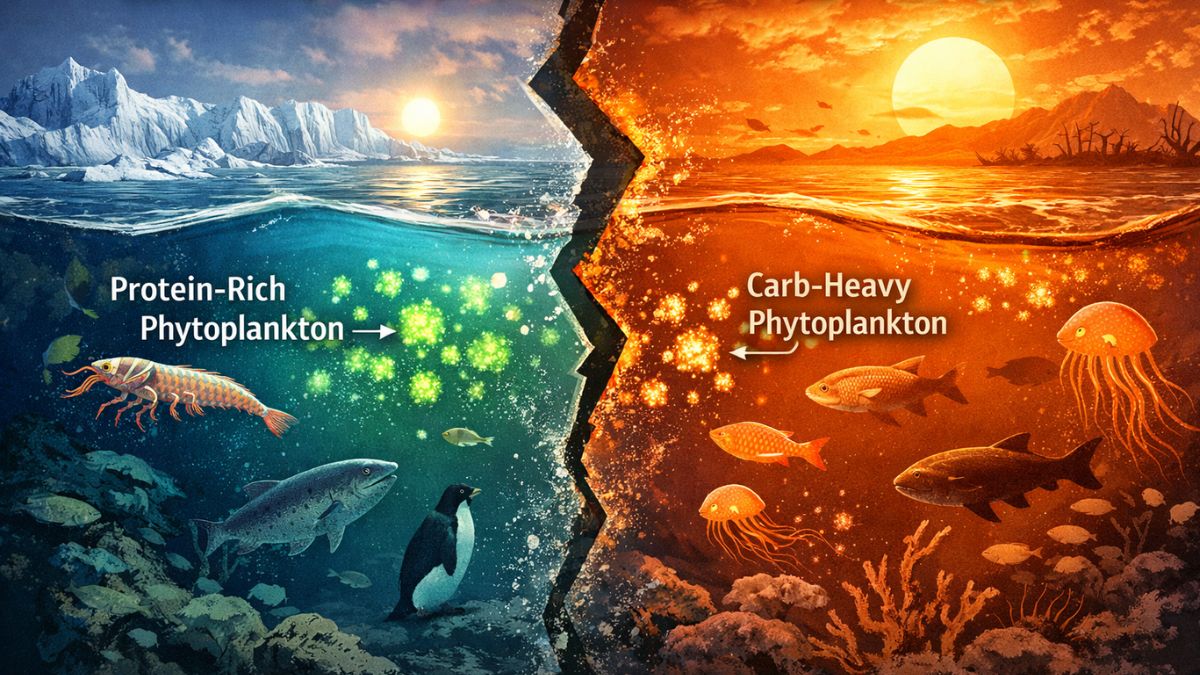
From nutrient-rich to energy-dense but less nourishing—climate change is transforming the composition of ocean food at its source.
Climate change could fundamentally alter the nutritional foundation of the ocean, with new research suggesting that warming waters may turn phytoplankton—the base of the marine food web—into a form of “fast food” with reduced nutritional value.
A study by researchers at the Massachusetts Institute of Technology (MIT), published in Nature Climate Change, finds that rising ocean temperatures could shift phytoplankton composition from protein-rich to carbohydrate-heavy, particularly in polar regions. This transformation could have cascading effects across marine ecosystems and ultimately impact human food systems.
A Shift at the Base of the Food Chain
Phytoplankton are microscopic, plant-like organisms that form the primary food source for a wide range of marine life, including krill, small fish, and jellyfish. These organisms, in turn, sustain larger species and top predators, including humans.
The study suggests that under continued greenhouse gas emissions through 2100, ocean warming will significantly alter the nutritional profile of these organisms. According to the researchers’ model, phytoplankton in polar regions could shift their balance of proteins to carbohydrates and lipids by approximately 20 percent.
“We’re moving in the poles toward a sort of fast-food ocean,” said lead author Shlomit Sharoni, an MIT postdoctoral researcher, in a media statement. “Based on this prediction, the nutritional composition of the surface ocean will look very different by the end of the century.”
Why Nutritional Composition Matters
While previous research has largely focused on how climate change affects phytoplankton populations, this study highlights a less explored dimension: their internal composition.
“There’s been an awareness that the nutritional value of phytoplankton can shift with climate change,” Sharoni said in a media statement, “But there has been very little work in directly addressing that question.”
Phytoplankton are composed of essential macromolecules such as proteins, carbohydrates, and lipids. These components determine their nutritional value for the organisms that consume them. Any imbalance at this foundational level can ripple through the entire food chain.
“Nearly all the material in a living organism is in these broad molecular forms, each having a particular physiological function, depending on the circumstances that the organism finds itself in,” said Mick Follows, professor at MIT.
Warming Oceans, Changing Chemistry
Using a combination of laboratory data and advanced ocean models, the researchers simulated how phytoplankton respond to changing environmental conditions such as temperature, light, and nutrient availability.
Under current conditions, phytoplankton cells are composed of slightly more than 50 percent protein. However, in future climate scenarios where global temperatures rise by around 3°C, this balance shifts significantly.
In polar regions, reduced sea ice allows more sunlight to penetrate the ocean surface, decreasing the need for light-harvesting proteins. At the same time, warmer temperatures and reduced ocean circulation limit the availability of nutrients such as nitrogen and iron.
As a result, protein levels in phytoplankton could decline by up to 30 percent, while carbohydrates and lipids increase.
Uneven Global Impacts
The effects of this shift are not uniform across the globe.
While phytoplankton populations in polar regions may increase, their nutritional quality is expected to decline. In contrast, subtropical regions could see a reduction in phytoplankton populations by up to 50 percent due to reduced nutrient availability.
In these regions, phytoplankton may adapt by moving to deeper waters, where they can access both light and nutrients, potentially increasing their protein content slightly.
Overall, however, the global trend points toward a more carbohydrate-heavy and less nutrient-dense ocean ecosystem.
Early Signs Already Visible
The researchers compared their model with real-world observations from Arctic and Antarctic regions. The findings indicate that this shift is already underway.
“In these regions, you can already see climate change, because sea ice is already melting,” Sharoni said in a statement. “And our model shows that proteins in polar plankton have been declining, while carbs and lipids are increasing.”
Follows added that the implications extend beyond marine ecosystems.
“It turns out that climate change is accelerated in the Arctic, and we have data showing that the composition of phytoplankton has already responded,” he said in a media statement. “The main message is: The caloric content at the base of the marine food web is already changing. And it’s not a clear story as to how this change will transmit through the food web.”
Implications for Marine Life and Humans
The long-term consequences of this shift remain uncertain. Some species may struggle with reduced protein availability, while others that rely on lipid storage could adapt more easily.
However, scientists warn that any disruption at the base of the marine food chain could have far-reaching impacts on biodiversity, fisheries, and global food security.
As the study highlights, climate change is not only altering how much food the ocean produces—but also how nutritious that food is.
Climate
Study Finds Warming Could Slightly Boost Atmosphere’s Methane-Cleaning Capacity
New research suggests climate warming may modestly enhance the atmosphere’s ability to break down methane, though competing chemical processes add uncertainty.
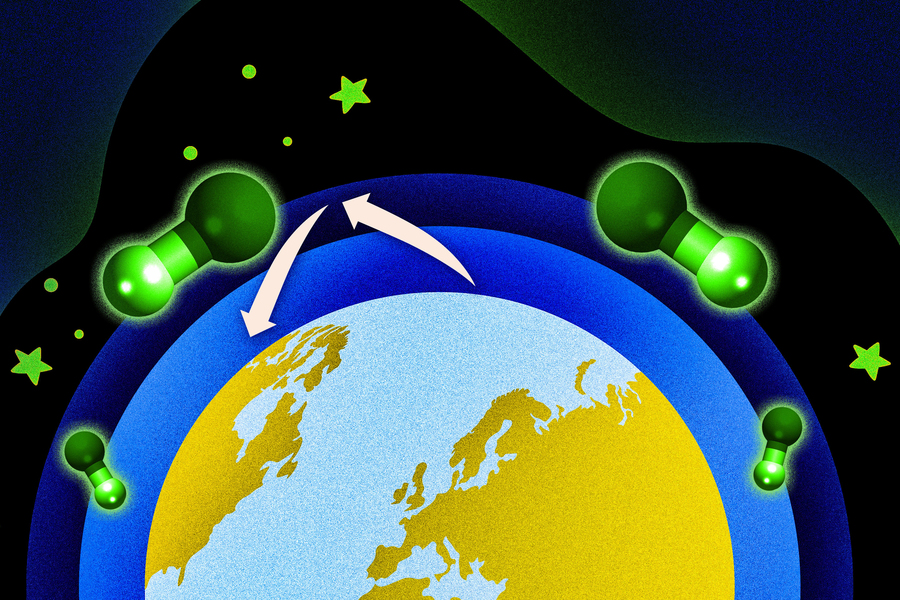
New research suggests climate warming may modestly enhance the atmosphere’s ability to break down methane, though competing chemical processes add uncertainty.
A new study by researchers at the Massachusetts Institute of Technology (MIT) finds that rising global temperatures could slightly increase the atmosphere’s ability to break down methane, one of the most potent greenhouse gases.
Methane is a major driver of global warming, second only to carbon dioxide. However, it does not persist as long in the atmosphere due to the presence of hydroxyl radicals—highly reactive molecules often described as the “atmosphere’s detergent” for their role in breaking down pollutants.
Balancing Effects of Water Vapour and Natural Emissions
The MIT team developed a new atmospheric model to understand how hydroxyl radical (OH) levels may respond to warming temperatures. Their findings reveal a complex balance of competing effects.
As global temperatures rise, atmospheric water vapour is expected to increase, boosting OH levels by about 9%. However, higher temperatures will also lead to increased emissions of natural gases from plants—known as biogenic volatile organic compounds—which can reduce OH levels by approximately 6%.
The net effect, according to the study, is a modest increase of around 3% in the atmosphere’s capacity to break down methane under a 2°C warming scenario.
Why Hydroxyl Radicals Matter
Hydroxyl radicals play a critical role in regulating atmospheric chemistry. They react with methane and other gases, breaking them down into less harmful compounds.
“About 90 percent of the methane that’s removed from the atmosphere is due to the reaction with OH,” said study author Qindan Zhu in a statement.
Beyond methane, OH also helps remove air pollutants and gases that affect public health, including ozone.
“There’s a whole range of environmental reasons why we want to understand what’s going on with this molecule,” said Arlene Fiore, a professor at MIT.
New Model Offers Deeper Insights
To conduct the study, researchers developed a model called “AquaChem,” which simulates atmospheric chemistry under different climate scenarios. The model builds on simplified “aquaplanet” systems, allowing scientists to isolate atmospheric processes without the complexity of land and ice interactions.
Using this model, the team compared current climate conditions with a scenario in which global temperatures rise by 2°C—widely considered a likely outcome without significant emissions reductions.
Uncertainty Around Natural Emissions
Despite the findings, researchers caution that there is still significant uncertainty—particularly regarding how plant emissions will respond to climate change.
Biogenic emissions, such as isoprene released by trees, appear to play a major role in influencing OH levels but remain difficult to predict accurately.
Future research will aim to refine these estimates and better understand how different climate scenarios could affect atmospheric chemistry.
Implications for Climate Projections
Even small changes in hydroxyl radical levels can have significant implications for how methane accumulates in the atmosphere.
“Understanding future trends of OH will allow us to determine future trends of methane,” Zhu said.
As methane continues to rise alongside carbon dioxide, insights into these chemical processes will be critical for improving climate models and informing mitigation strategies.
Climate
Climate change heat impact affected over 2.5 billion people
New analysis shows 2.5 billion people experienced climate-driven heat between Dec 2025 and Feb 2026.
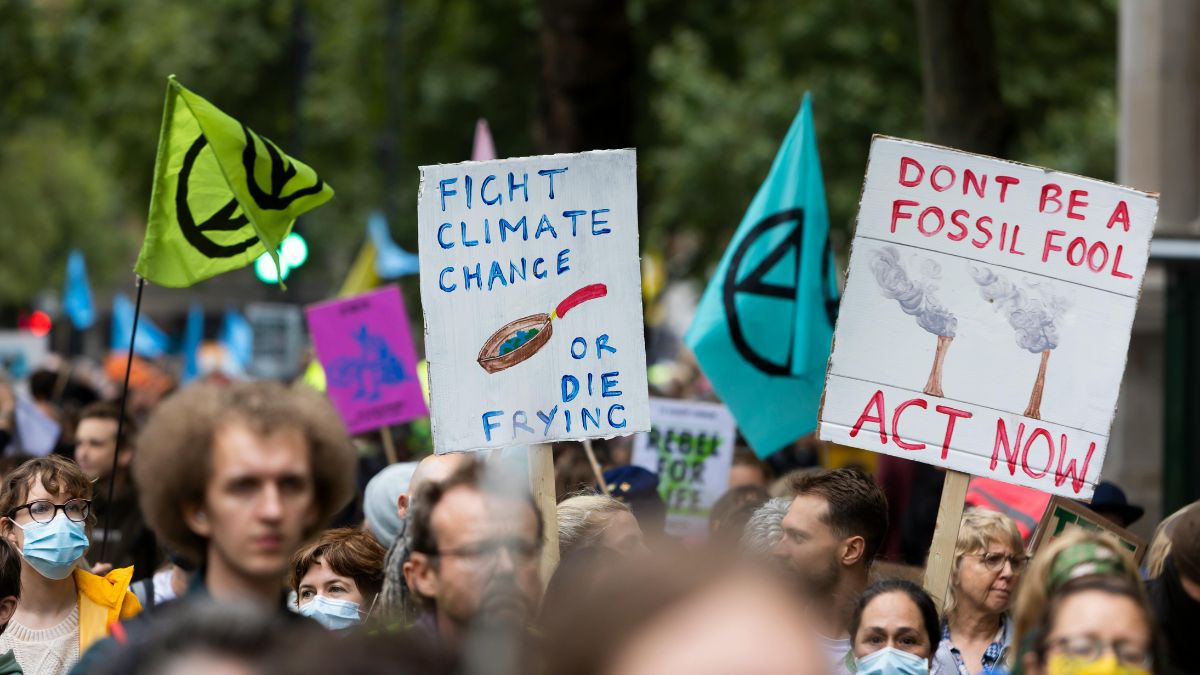
Climate change heat impact: A new global analysis has found that climate change significantly influenced daily temperatures for billions of people worldwide between December 2025 and February 2026, underscoring the immediacy of the climate crisis
Climate change is no longer a distant abstraction—it is now embedded in the daily weather experienced by billions of people across the planet.
A new global analysis from Climate Central has found that between December 2025 and February 2026, more than one in six people worldwide lived through temperatures strongly influenced by climate change every single day.
The scale of exposure is striking. Over the three-month period, 2.5 billion people across 124 countries experienced at least 30 days of climate change-driven heat, pointing to a persistent and widespread shift in how global temperatures are being shaped.
Using the Climate Shift Index, a tool designed to measure the role of human-caused warming in daily temperatures, researchers were able to isolate the extent to which fossil fuel emissions are now influencing everyday weather patterns.
Climate change heat impact: Dangerous extremes
What emerges most starkly from the analysis is not just rising temperatures, but the growing prevalence of heat that directly threatens human health.
In 47 countries, every single day of what scientists classify as “risky heat” was attributable to climate change.
>> 47 countries experienced every single day of risky heat due to climate change
>> Nearly 225 million people faced 30 or more days of such heat
>> 81% of those affected were in Africa
For nearly 225 million people, this translated into a month or more of exposure to dangerous heat conditions—an overwhelming majority of them in Africa, where vulnerability to climate extremes remains high.
These findings suggest a shift from climate change as a contributing factor to climate change as a dominant driver of extreme heat events. In several regions, the report notes, warming did not merely intensify heatwaves—it fully accounted for the most dangerous days.
Dr. Kristina Dahl, Vice President for Science at Climate Central, framed the findings in unequivocal terms: “This analysis makes clear that climate change is not a future problem — it is a present-day driver of extreme heat around the world.”
She added: “Millions of people experienced a month or more of dangerous levels of heat that were made significantly more likely by climate change.”
Climate change heat impact: A world of cascading climate shocks
The same three-month period also revealed how rising temperatures are interacting with other climate systems, producing a cascade of extreme events across continents.
An unusually early heatwave in Australia—made five times more likely by climate change—persisted into the new year before giving way to intense rainfall and flooding. In Argentina, extreme heat strained infrastructure to the point of collapse, contributing to a power outage that left more than a million people without electricity.
Elsewhere, the combination of heat, low humidity and strong winds created conditions for destructive wildfires. In Patagonia, fires claimed lives and forced emergency responses, while similar patterns unfolded in parts of Africa, Australia and the United States.
Drought tightened its grip in parts of East Africa, with Kenya enduring its driest season in more than four decades, placing millions at risk of hunger. At the same time, other regions experienced the opposite extreme. Torrential rains and intensified storms killed more than 1,750 people across South and Southeast Asia, while floods displaced hundreds of thousands in North Africa.
Even cold extremes bore the imprint of a changing climate. Severe winter conditions across North America and parts of Europe caused dozens of deaths, widespread disruption and billions in economic losses, highlighting how warming can destabilise weather patterns in multiple directions.
Climate change heat impact reflects a deeper systemic shift
Taken together, the data points to a broader transformation. Climate change is no longer simply raising average temperatures—it is reshaping the entire spectrum of weather, from heatwaves and droughts to storms and snowfall.

The underlying driver remains consistent: the accumulation of heat-trapping emissions from coal, oil and gas.
As oceans warm and atmospheric systems shift, the result is a more volatile climate, where extremes are not isolated events but interconnected outcomes of the same underlying process.
Dr. Dahl underscored this interconnectedness: “Taken all together, these extremes are the latest signals of how fossil fuel emissions are disrupting livelihoods globally.”
A present reality, not a future projection
What makes the findings particularly significant is their immediacy. The analysis does not project future risks—it documents a present reality in which climate change is already shaping daily life for billions.
For policymakers, scientists and communities alike, the implication is clear: the climate crisis has moved beyond forecasts and into lived experience.


Climate Change Could Turn Ocean Food into ‘Fast Food’, MIT Study Warns

Why Campuses Need a Happiness Officer Now

The hidden fault lines of global energy: why oil and gas chokepoints are a permanent risk

NASA to launch first crewed Artemis Moon mission on April 1

Study Finds Warming Could Slightly Boost Atmosphere’s Methane-Cleaning Capacity
NASA to launch first crewed Artemis Moon mission on April 1

Climate change heat impact affected over 2.5 billion people

How China Is Redrawing the Global Map of Critical Minerals

Study Reveals How Ocean Bacteria Drive Plastic Biodegradation

Weather, Not Just Emissions, Driving PM2.5 Pollution in Indian Cities: Study

-

 Society3 months ago
The Ten-Rupee Doctor Who Sparked a Health Revolution in Kerala’s Tribal Highlands
-
Society3 months ago
From Qubits to Folk Puppetry: India’s Biggest Quantum Science Communication Conclave Wraps Up in Ahmedabad
-
COP305 months ago
Brazil Cuts Emissions by 17% in 2024—Biggest Drop in 16 Years, Yet Paris Target Out of Reach
-
Women In Science6 months ago
The Data Don’t Lie: Women Are Still Missing from Science — But Why?
-
Earth5 months ago
Data Becomes the New Oil: IEA Says AI Boom Driving Global Power Demand
-
COP305 months ago
Corporate Capture: Fossil Fuel Lobbyists at COP30 Hit Record High, Outnumbering Delegates from Climate-Vulnerable Nations
-
Space & Physics4 months ago
Indian Physicists Win 2025 ICTP Prize for Breakthroughs in Quantum Many-Body Physics
-
Health5 months ago
Air Pollution Claimed 1.7 Million Indian Lives and 9.5% of GDP, Finds The Lancet