

Society
Tata’s indelible legacy in science and education
Beyond business, Ratan Tata, the ex-leader of India’s massive business empire, believed in the true power of science and education


Ratan Tata, India’s most admired industrialist who passed away on October 9, 2024, has left behind an indelible legacy that extends well beyond the business sector, profoundly influencing education and scientific advancement in India. His visionary outlook emphasized the transformative potential of knowledge, reinforcing his belief that education is essential for societal growth.
Throughout his life, Tata, the man who built a business empire with revenue of $165 billion, was deeply committed to empowering future generations. Through Tata Trusts, he championed philanthropic initiatives aimed at supporting students from economically disadvantaged backgrounds, offering scholarships that allow them to pursue higher education both domestically and internationally. This commitment reflects his conviction that education should be accessible to all, serving as a vital pathway to opportunity.
Among his significant contributions is the establishment of Tata Scholarships at prestigious institutions such as Cornell University, which facilitate access to top-tier education for deserving Indian students. Tata’s vision also led to the founding of key educational institutions within India, including the Tata Institute of Social Sciences (TISS) and the Tata Institute of Fundamental Research (TIFR). These institutions play a crucial role in nurturing talent and fostering innovative thinking.
In 2014, Tata Trusts, which controls majority stake in Tata Sons, made a significant contribution of $9 million to the Centre for Neuroscience at IISc, aimed at advancing vital research into Alzheimer’s disease.
Under his guidance, the Tata Group greatly increased its investment in research and development, laying the groundwork for India’s rise as a global technology leader. Tata’s focus on innovation not only addressed market demands but also created a foundation for trailblazing advancements that have the potential to transform industries.
One of Tata’s most impactful legacies in science is his unwavering support for leading educational and research institutions. The Indian Institute of Science (IISc) in Bengaluru, which has roots in Jamshedji Tata’s vision, continued to thrive under Ratan Tata’s leadership. A government agency recently ranked IISc as India’s top university.
In 2014, Tata Trusts, which controls majority stake in Tata Sons, made a significant contribution of $9 million to the Centre for Neuroscience at IISc, aimed at advancing vital research into Alzheimer’s disease. This initiative shows his belief in the importance of scientific inquiry and its potential to tackle pressing societal challenges.
In the fields of genetics and biotechnology, Tata’s foresight led to the creation of the Tata Institute for Genetics and Society at the University of California, San Diego
Tata’s dedication to advancing scientific research is further highlighted by the establishment of specialized centres addressing societal needs. The Tata Centre for Technology and Design at IIT Bombay and the MIT Tata Centre of Technology and Design were created to develop engineering solutions for resource-limited communities. These initiatives not only stimulate innovation but also connect academic research with practical applications, ensuring that scientific progress serves society.
In the fields of genetics and biotechnology, Tata’s foresight led to the creation of the Tata Institute for Genetics and Society at the University of California, San Diego, with a substantial $70 million donation. This institute conducts cutting-edge research in genetics, gene editing, and stem cell therapy, placing India at the forefront of global genetic studies.
Tata’s commitment to environmental sustainability is reflected in his support for research at the University of New South Wales Faculty of Engineering, focusing on developing water purification technologies for underserved regions. This dedication highlights his belief in the capacity of science to create sustainable solutions for pressing global challenges.
As India reflects on the loss of this influential leader, Ratan Tata’s enduring legacy in education and science serves as a powerful reminder of his vision. His initiatives have positively impacted around 3.6 million students and teachers across 26 states and 145 districts in India, helping to shape a future where knowledge and innovation drive societal advancement. Ratan Tata’s life and work inspire us to recognize that true success is measured not just by business achievements, but by the positive change we bring to the world through education and research.
Tata’s Education
Ratan Tata’s educational journey began at Campion School in Mumbai, India’s financial capital, where he studied until the 8th grade. He then attended several prestigious institutions, including Cathedral and John Connon School in Mumbai, Bishop Cotton School in Shimla, and Riverdale Country School in New York City, from which he graduated in 1955. Following high school, he pursued higher education at Cornell University, earning a bachelor’s degree in architecture in 1959.
During his time at Cornell, Tata joined the Alpha Sigma Phi Fraternity. In recognition of his commitment to education, he made a historic contribution of $50 million to the university in 2008, marking him as the largest international donor in its history. Additionally, Tata furthered his studies by completing the Advanced Management Program at Harvard Business School in 1975.


Earth
Vantara: Inside a Billionaire-Backed Bid to Build a Global Wildlife University
The launch comes at a time when conservation challenges are becoming increasingly complex.


A new private university focused on wildlife conservation and veterinary sciences is being positioned as an ambitious attempt to reshape how the world trains the next generation of conservation professionals—backed by one of Asia’s most influential business families.
The institution, Vantara University, has been launched in western India by a wildlife initiative founded by Anant Ambani, part of the Reliance group. Framed as an integrated academic ecosystem, the project reflects a growing trend where private capital is stepping into areas traditionally led by public institutions and global nonprofits.
Vantara officially describes the university as the “world’s first integrated global university” dedicated to wildlife conservation and veterinary sciences. While the scale and integration may be distinctive, similar disciplines are already taught across universities worldwide, often through specialised schools, research centres, and veterinary colleges.
The claim, therefore, rests less on the existence of such education and more on the attempt to consolidate it within a single, purpose-built institutional framework.
A Shift Toward Education-Led Conservation
The launch comes at a time when conservation challenges are becoming increasingly complex. Climate change, habitat fragmentation, and the spread of zoonotic diseases are reshaping ecosystems and exposing the limits of traditional conservation models.
There is a growing recognition that protecting biodiversity will require not just field interventions, but a systemic expansion of expertise—from wildlife veterinarians and epidemiologists to policy specialists and conservation planners.
Vantara University aims to respond to this gap by bringing together disciplines such as wildlife medicine, genetics, behavioural sciences, epidemiology, and conservation policy under one academic structure.
Blending Science, Scale, and Philosophy
The university’s vision combines scientific training with a philosophical framing rooted in compassion and stewardship. Its design draws inspiration from historical centres of learning, while positioning itself as a modern, purpose-led institution.
“The future of conservation will depend on how we prepare minds and institutions to serve life with compassion, knowledge, and skill,” Anant Ambani said in a statement.
“Vantara University is shaped by a deeply personal journey of witnessing animals in distress and recognising the need for greater capability in their care… the university seeks to nurture a new generation committed to protecting every life.”
Global Ambitions, Local Foundations
Although based in India, the project is clearly aimed at a global audience.
The university plans to offer undergraduate, postgraduate, and specialised programmes, supported by research infrastructure and international collaborations. It also emphasises action-oriented learning, linking academic work with real-world conservation practices.
This approach reflects a broader shift in higher education, where institutions are increasingly expected to produce not just knowledge, but deployable expertise.
The Rise of Private Influence in Conservation
The initiative also highlights a larger structural shift: the growing role of private capital in shaping conservation agendas.
Historically, conservation has been driven by governments, multilateral agencies, and non-profit organisations. However, large-scale funding gaps and the urgency of environmental crises are opening the door for philanthropic and corporate actors to play a more prominent role.
This raises both opportunities and questions.
Private initiatives can accelerate innovation and investment, but they also bring concerns around governance, accountability, and long-term alignment with public interest.
Questions of Access and Impact
As with many specialised institutions, accessibility will be a critical test.
While the university has announced scholarships aimed at supporting students from diverse backgrounds, the broader question remains: can such models scale inclusively, particularly for communities most directly affected by environmental change?
The effectiveness of the initiative will also depend on its ability to influence policy, contribute to global research, and produce professionals equipped to address complex ecological challenges.
A Changing Conservation Landscape
The launch of Vantara University signals a deeper transition in how conservation is being imagined.
Increasingly, the field is moving beyond isolated interventions toward integrated systems that connect science, education, and practice. In this context, universities are not just centres of learning—they are becoming critical infrastructure in the fight to preserve biodiversity.
Whether this particular model succeeds will depend on execution, collaboration, and its ability to move beyond vision into measurable impact.
But its emergence underscores a central reality:
The future of conservation may depend as much on classrooms and laboratories as it does on forests and protected areas.
Health
Lancet Commission Launched to Tackle Health and Justice Impacts of Rising Sea Levels
A new Lancet Commission will examine how rising sea levels impact health, equity, and global systems, with experts calling it an urgent crisis.
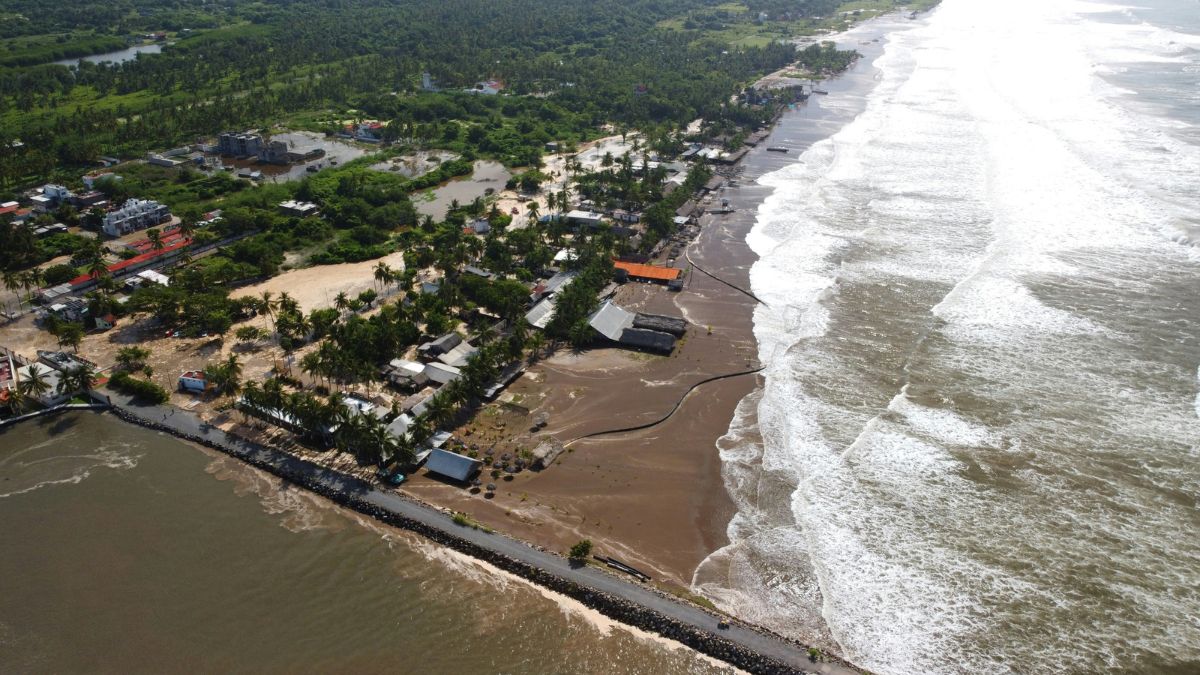
A new global commission led by The Lancet has been launched to examine the growing health and justice impacts of sea-level rise, as climate change accelerates risks for millions living in coastal and low-lying regions.
The Lancet Commission on Sea-Level Rise, Health and Justice, announced on April 8, brings together 26 international experts to assess how rising seas are reshaping public health, livelihoods, and global equity.
A Growing Crisis Beyond Climate
Sea-level rise, driven by anthropogenic climate change, is already contributing to displacement, food and water insecurity, and changing patterns of infectious diseases. The Commission marks the first major effort to analyse these intersecting risks through a health-focused lens.
“This commission comes at exactly the right time… sea-level rise is no longer a distant threat. It is already disrupting lives, health and wellbeing, especially for the most vulnerable,” said Christiana Figueres, Co-Chair of the Commission and a former UN climate chief.
Experts warn that the impacts extend far beyond environmental damage, affecting the social and economic fabric of vulnerable communities.
“Rising seas don’t just threaten coastlines, they threaten lives, livelihoods, and basic fairness. This is not only a climate problem. It is a health crisis, a justice crisis, and an urgent call for collective action,” said Jemilah Mahmood, Commissioner, Lancet Commission, and Executive Director of the Sunway Centre for Planetary Health, Malaysia.
An Urgent Global Health Challenge
The Commission is supported by the WHO Asia-Pacific Centre for Environment and Health and aims to generate evidence-based policy recommendations to strengthen adaptation, resilience, and equitable responses.
Dr Sandro Demaio, Director of WHO ACE, emphasised the immediacy of the crisis.
“Sea-level rise is no longer a distant threat — it is a public health emergency unfolding now. Through this WHO supported global Commission, we are clear: inaction is not neutral, it is a choice that puts lives and justice at risk.”
Human Impacts at the Core
The Commission also highlights the disproportionate burden on vulnerable populations, particularly in coastal and low-income regions.
“Rising sea levels are more than an environmental issue; they quietly contaminate water, displace communities, and increase health risks for those least able to cope. Every centimetre of sea level rise is not just a measure of water, but a measure of injustice,” said Kathryn Bowen, Co-Chair of the Commission.
A Defining Policy Moment
With projections suggesting that hundreds of millions of people could be displaced by the end of the century, the Commission aims to inform global policy and strengthen international cooperation.
“Sea-level rise is not just an environmental issue — it is a test of our commitment to people, equity, and future generations,” said Jiho Cha, Member of Parliament, Republic of Korea and Co-Chair of the Commission.
The Commission will contribute to global policy discussions, including international climate platforms, and aims to place human and planetary health at the centre of climate action.
Society
Why Campuses Need a Happiness Officer Now
Rising student stress and depression highlight the need for a happiness officer on campus to promote wellbeing and prevent mental health crises.


As student stress and mental health challenges rise, educational institutions must move beyond symbolic gestures and invest in structured wellbeing systems—starting with a dedicated happiness officer on campus.
The rising need for happiness
20 March was celebrated as the International Day of Happiness.
The idea of creating an International Day of Happiness is a great one; it deserves to be taken seriously. However, there is a need to do much more than celebrate happiness for just one day a year. This becomes crucial when one considers the rising problem of stress, depression and suicides among young people around the world, including in India.
The challenges of stress, depression and suicides among students
The education system places significant pressure on students, yet they are rarely taught how they, their parents, teachers or the system itself can help them cope with this pressure—or how to view their efforts in the right perspective.
Because of a lack of awareness, education and capability, stress has become a major issue in students’ lives, often leading to depression and, in some cases, suicides. These challenges have far-reaching negative impacts across different aspects of life, as supported by multiple research studies.
A happiness officer on campus
Since happiness is an essential ingredient for a fulfilling life—and also acts as a preventive factor in dealing with stress—it is important to give it greater importance in educational institutions.
Institutions already place heavy demands on faculty and staff, who may not have the time to actively focus on student wellbeing. In this context, employing a dedicated happiness officer to address health and wellbeing on campus could be a significant step forward.

The happiness officer’s primary responsibility should be to raise awareness about happiness, as well as the dangers of stress and depression, among students, faculty, staff and others on campus. This awareness must be continuous rather than occasional.
The second responsibility should be to organise regular programmes in engaging ways, covering themes such as what happiness is, why it matters, and how it can be cultivated, alongside practical approaches to understanding, avoiding and managing stress.

The third responsibility should be to track individuals who may be experiencing stress or depression and ensure they receive timely support. Additional responsibilities can be developed depending on the needs and context of each institution.
Avoiding the trap of tokenism
However, awareness initiatives and programmes must be implemented with sincerity and intent. The happiness officer must work in both letter and spirit to create meaningful impact, rather than simply fulfilling formal requirements.
This role should not fall into the common institutional trap where ticking boxes becomes more important than creating real change on the ground.


Vantara: Inside a Billionaire-Backed Bid to Build a Global Wildlife University

The Universe Is Ringing

Lancet Commission Launched to Tackle Health and Justice Impacts of Rising Sea Levels

India’s $145 Billion Energy Shift: The Financing Challenge Behind a Clean Power Future

NASA’s Artemis II Captures Stunning ‘Earthset’ Over the Moon

NASA to launch first crewed Artemis Moon mission on April 1

Climate change heat impact affected over 2.5 billion people

How China Is Redrawing the Global Map of Critical Minerals

Study Reveals How Ocean Bacteria Drive Plastic Biodegradation

Hormuz Crisis Exposes Global Fertiliser Dependency Risks

-

 Society3 months ago
The Ten-Rupee Doctor Who Sparked a Health Revolution in Kerala’s Tribal Highlands
-
Society4 months ago
From Qubits to Folk Puppetry: India’s Biggest Quantum Science Communication Conclave Wraps Up in Ahmedabad
-
COP305 months ago
Brazil Cuts Emissions by 17% in 2024—Biggest Drop in 16 Years, Yet Paris Target Out of Reach
-
Earth5 months ago
Data Becomes the New Oil: IEA Says AI Boom Driving Global Power Demand
-
COP305 months ago
Corporate Capture: Fossil Fuel Lobbyists at COP30 Hit Record High, Outnumbering Delegates from Climate-Vulnerable Nations
-
Space & Physics4 months ago
Indian Physicists Win 2025 ICTP Prize for Breakthroughs in Quantum Many-Body Physics
-
Health5 months ago
Air Pollution Claimed 1.7 Million Indian Lives and 9.5% of GDP, Finds The Lancet
-
Sustainable Energy4 months ago
The $76/MWh Breakthrough: Battery-Backed Solar Becomes the Cheapest Firm Power