

The Sciences
Canine Cognitive Abilities: Memory, Intelligence, and Human Interaction
Research on canine cognition shows that dogs have impressive memory retention, which helps them recognize faces, remember commands, and understand their environment.

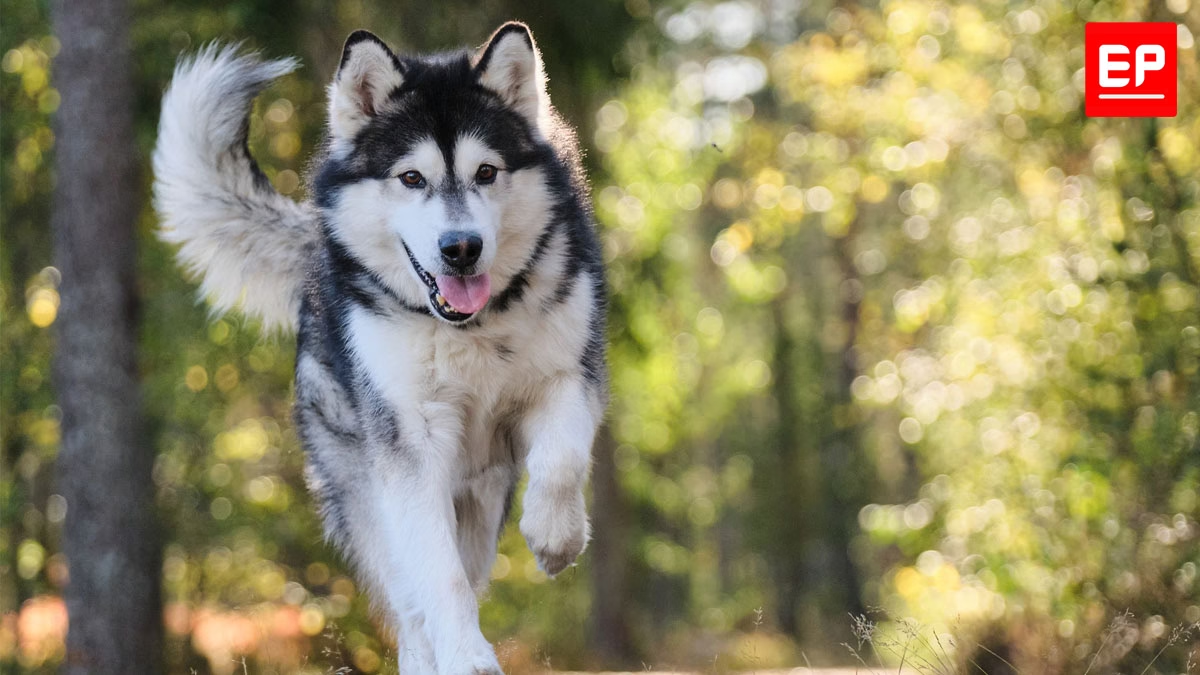
Dogs are renowned for their ability to adapt and respond to various situations. One of the key features of their intelligence is their memory and how they utilize past experiences to navigate new circumstances. Dogs not only remember specific events but also use those memories to make decisions in future situations. Research on canine cognition shows that dogs have impressive memory retention, which helps them recognize faces, remember commands, and understand their environment. When faced with a new scenario, they often recall previous similar experiences and apply those learnings effectively.
Understanding Human Cues: A Result of Evolution
Dogs’ remarkable ability to understand human cues—whether through body language, vocal tones, or facial expressions—is another significant aspect of their cognitive prowess. Over thousands of years of domestication, dogs have learned to interpret human signals, making them highly attuned to the needs and intentions of their human companions. This phenomenon is often attributed to the domestication hypothesis, which suggests that dogs have evolved alongside humans and, in doing so, developed the ability to read and respond to human cues.

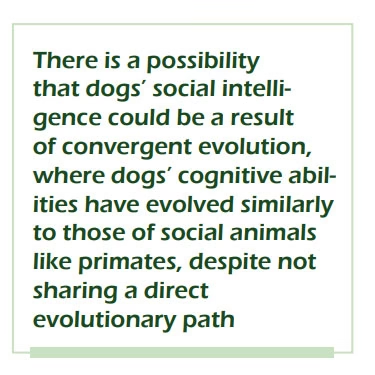
However, some researchers argue that dogs’ ability to understand human cues might not solely stem from domestication. There is a possibility that dogs’ social intelligence could be a result of convergent evolution, where dogs’ cognitive abilities have evolved similarly to those of social animals like primates, despite not sharing a direct evolutionary path. This perspective is still debated in the field, but it underscores the complexity of understanding the roots of canine cognition.
Cognitive Categories in Dogs: Classifying Intelligence
Dogs’ cognitive abilities can be broken down into various categories that reflect the diversity of their intelligence. These categories help researchers study the different aspects of how dogs think, learn, and behave. Some of the key categories include:
• Spatial Intelligence: Dogs possess a strong sense of spatial awareness, allowing them to navigate their environment effectively. They can remember the locations of objects such as toys, food bowls, and leashes. This spatial awareness also extends to their ability to assess distances and understand their surroundings. While most dogs develop this intelligence naturally, some may need training to enhance their spatial skills.
• Intrapersonal Intelligence: This refers to a dog’s ability to understand its own physical abilities, limitations, and needs. For example, a dog might avoid attempting an action, such as jumping over a large gap, if it perceives it to be beyond its capabilities. This form of intelligence reflects the dog’s self-awareness, although the level of this awareness may differ from that seen in humans. Dogs might not have conscious self-reflection, but their behavior indicates an understanding of their limits.
• Interpersonal Intelligence: Dogs are highly social animals, and their interpersonal intelligence is reflected in their ability to communicate with both humans and other dogs. They can interpret social cues and respond accordingly, forming strong bonds with their human families and understanding the dynamics of their social group. This intelligence is particularly evident in their interactions with humans, where they not only respond to verbal commands but also tune into human emotions, following social hierarchies and giving appropriate responses. For example, dogs can respond to human emotions by offering comfort or adjusting their behavior based on the emotional state of their human companions.
The Role of Human-Dog Interaction in Cognitive Development
Dogs’ cognitive abilities, including their ability to understand human emotions, are likely a product of their long history of living alongside humans. Studies show that dogs can often read the intentions of humans, making them exceptionally skilled at interpreting social cues. This human-dog bond has shaped dogs’ social intelligence, allowing them to be highly responsive to the emotional and social cues provided by humans. For instance, when a human expresses frustration or joy, a dog can often sense the change in mood and react accordingly, whether by offering comfort or simply adjusting their behavior.
Interestingly, some studies suggest that domestic dogs might lose some of their problem-solving abilities when raised solely in human environments. This loss might occur because dogs begin to rely on human intervention for problem-solving, rather than using their independent cognitive skills. However, with appropriate training and stimulation, many dogs can retain or even develop complex problem-solving abilities.
Variations and Training
Just as with humans, not all dogs display the same level of cognitive abilities. Some dogs might struggle with spatial awareness or might not respond to certain social cues as effectively as others. This is particularly evident in some breeds or individual dogs that may require additional training to enhance these skills. Spatial awareness, for example, might be challenging for dogs that were not raised in environments where they had to navigate complex spaces. Training exercises can help improve these cognitive areas, allowing the dog to become more aware of its surroundings and capable of responding appropriately.

Moreover, self-awareness or intrapersonal intelligence can also vary among dogs. While some dogs might instinctively understand their physical limitations (e.g., recognizing when they can’t jump a certain height), others may require repeated experiences to learn these boundaries.
Complex and Multifaceted
Overall, dogs exhibit a wide range of cognitive abilities that demonstrate both adaptive intelligence and social prowess. Their ability to learn, remember, and apply past experiences to new situations showcases their problem-solving skills, while their social intelligence allows them to communicate effectively with humans and other dogs. While there is still much to learn about the origins and evolution of canine intelligence, it is clear that dogs have evolved to become highly adept at interpreting the world around them, both physically and socially.
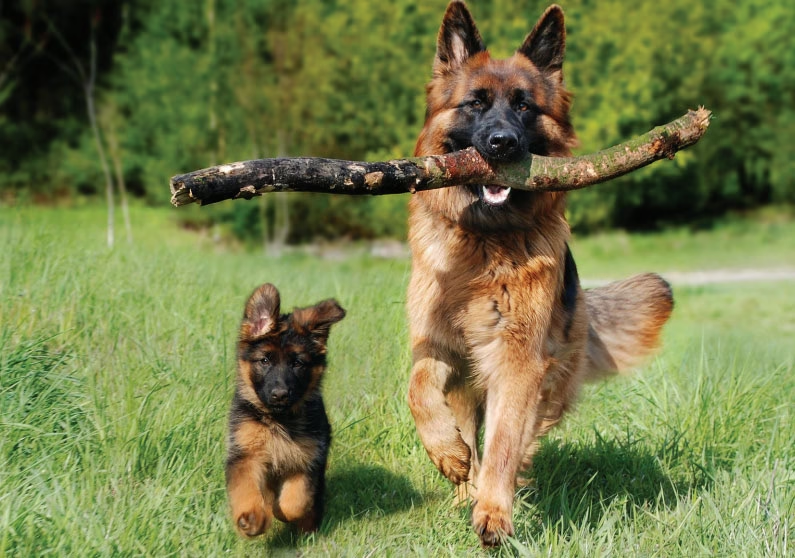
The domestication of dogs, along with their interaction with humans, has contributed significantly to the development of their cognitive abilities. These abilities are not only a result of their domesticated lives but also a product of their evolutionary adaptation to social living, both with humans and other animals. Understanding these cognitive abilities in dogs helps deepen the bond between dogs and humans and enriches our appreciation for these remarkable companions.
The Sciences
Scientists Crack the Genetic Code Behind Seedless Grapes
Indian researchers reveal how genetic mutations create the popular seedless varieties consumers love, opening doors to better grape breeding

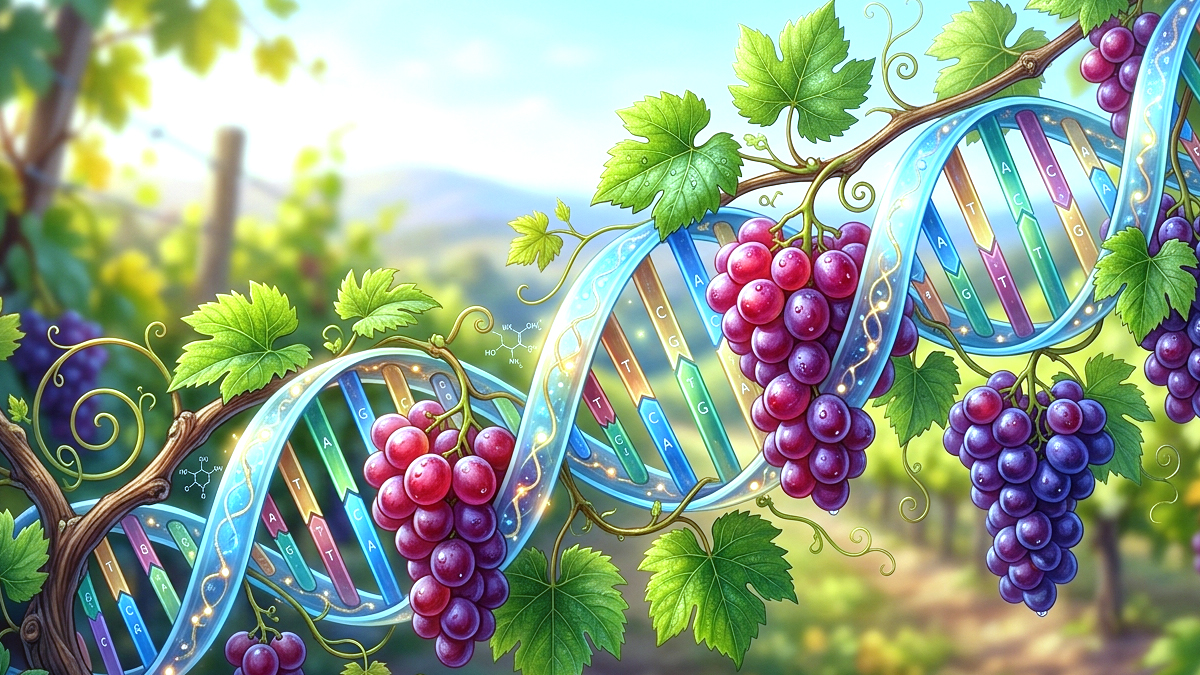
Scientists have finally unlocked the mystery behind one of our favourite fruit features – seedless grapes. A study by Indian researchers has decoded the genetic mechanisms that create seedless grapes, potentially revolutionizing how we breed these popular fruits.
The Science Behind Seedless Success
The research, led by Dr. Ravindra Patil at the Agharkar Research Institute (ARI) in Pune, India, examined why some grapes develop without seeds while others don’t. Published in BMC Plant Biology, the study focused on a seedless mutant derived from the high-yielding grape variety ARI-516.
Using advanced genomic tools, the team discovered that pollen sterility is the key culprit behind seedlessness. The seedless grapes showed:
- Abnormal pollen structure with very low viability
- Complete inability of pollen grains to germinate
- Smaller female reproductive structures compared to seeded varieties
- Disrupted fertilization processes leading to seedless berry formation
Genetic Detective Work
The researchers employed cutting-edge techniques to crack the code:
Transcriptomic Analysis: RNA sequencing revealed that genes crucial for pollen development, cell division, and hormone signaling were significantly “switched off” in seedless varieties.
Whole-Genome Sequencing: This identified multiple insertion-deletion mutations (InDels) in genes responsible for pollen development, essentially breaking the normal seed formation process.
The evidence points to parthenocarpy – a natural process where fruits develop without fertilization due to reproductive defects.
Why This Matters
This discovery isn’t just academic curiosity. Seedless grapes represent a massive global market, with consumers strongly preferring them for:
- Fresh consumption
- Raisins and dried products
- Juices and processed foods
The research provides molecular markers that grape breeders can use to:
- Develop new seedless varieties faster
- Improve fruit quality and yield
- Create grapes better adapted to different climates
Impact on Agriculture
Dr. Patil’s team has conducted one of the most comprehensive studies on grape seedlessness using modern genomic tools. This breakthrough could significantly accelerate breeding programs worldwide, benefiting both grape growers and consumers who enjoy these convenient, seed-free fruits.
The study represents a perfect example of how understanding nature’s genetic mechanisms can lead to practical agricultural improvements, potentially transforming grape cultivation and meeting growing global demand for high-quality seedless varieties.
The research was conducted in collaboration with Savitribai Phule Pune University and represents a significant advancement in horticultural genomics.
Climate
Study Finds Warming Could Slightly Boost Atmosphere’s Methane-Cleaning Capacity
New research suggests climate warming may modestly enhance the atmosphere’s ability to break down methane, though competing chemical processes add uncertainty.
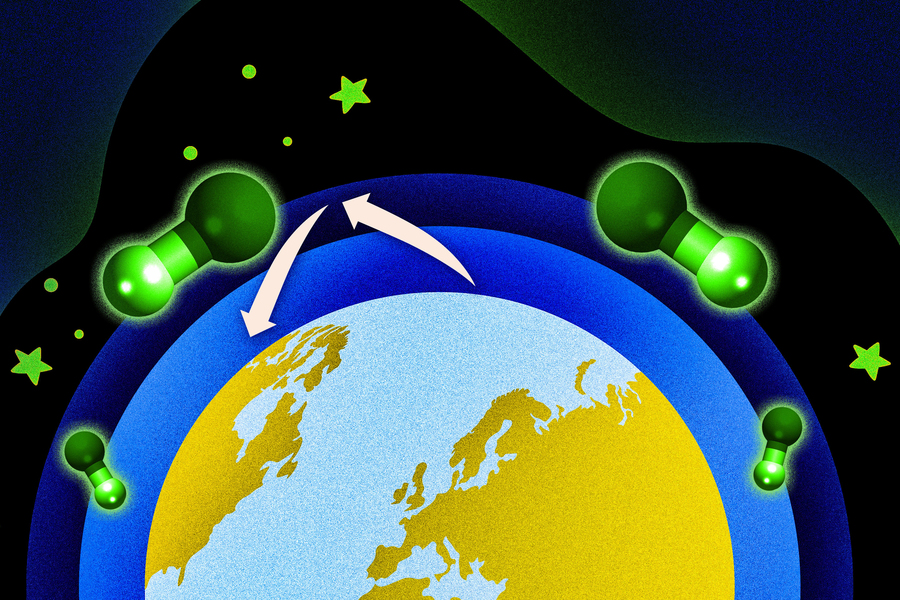
New research suggests climate warming may modestly enhance the atmosphere’s ability to break down methane, though competing chemical processes add uncertainty.
A new study by researchers at the Massachusetts Institute of Technology (MIT) finds that rising global temperatures could slightly increase the atmosphere’s ability to break down methane, one of the most potent greenhouse gases.
Methane is a major driver of global warming, second only to carbon dioxide. However, it does not persist as long in the atmosphere due to the presence of hydroxyl radicals—highly reactive molecules often described as the “atmosphere’s detergent” for their role in breaking down pollutants.
Balancing Effects of Water Vapour and Natural Emissions
The MIT team developed a new atmospheric model to understand how hydroxyl radical (OH) levels may respond to warming temperatures. Their findings reveal a complex balance of competing effects.
As global temperatures rise, atmospheric water vapour is expected to increase, boosting OH levels by about 9%. However, higher temperatures will also lead to increased emissions of natural gases from plants—known as biogenic volatile organic compounds—which can reduce OH levels by approximately 6%.
The net effect, according to the study, is a modest increase of around 3% in the atmosphere’s capacity to break down methane under a 2°C warming scenario.
Why Hydroxyl Radicals Matter
Hydroxyl radicals play a critical role in regulating atmospheric chemistry. They react with methane and other gases, breaking them down into less harmful compounds.
“About 90 percent of the methane that’s removed from the atmosphere is due to the reaction with OH,” said study author Qindan Zhu in a statement.
Beyond methane, OH also helps remove air pollutants and gases that affect public health, including ozone.
“There’s a whole range of environmental reasons why we want to understand what’s going on with this molecule,” said Arlene Fiore, a professor at MIT.
New Model Offers Deeper Insights
To conduct the study, researchers developed a model called “AquaChem,” which simulates atmospheric chemistry under different climate scenarios. The model builds on simplified “aquaplanet” systems, allowing scientists to isolate atmospheric processes without the complexity of land and ice interactions.
Using this model, the team compared current climate conditions with a scenario in which global temperatures rise by 2°C—widely considered a likely outcome without significant emissions reductions.
Uncertainty Around Natural Emissions
Despite the findings, researchers caution that there is still significant uncertainty—particularly regarding how plant emissions will respond to climate change.
Biogenic emissions, such as isoprene released by trees, appear to play a major role in influencing OH levels but remain difficult to predict accurately.
Future research will aim to refine these estimates and better understand how different climate scenarios could affect atmospheric chemistry.
Implications for Climate Projections
Even small changes in hydroxyl radical levels can have significant implications for how methane accumulates in the atmosphere.
“Understanding future trends of OH will allow us to determine future trends of methane,” Zhu said.
As methane continues to rise alongside carbon dioxide, insights into these chemical processes will be critical for improving climate models and informing mitigation strategies.
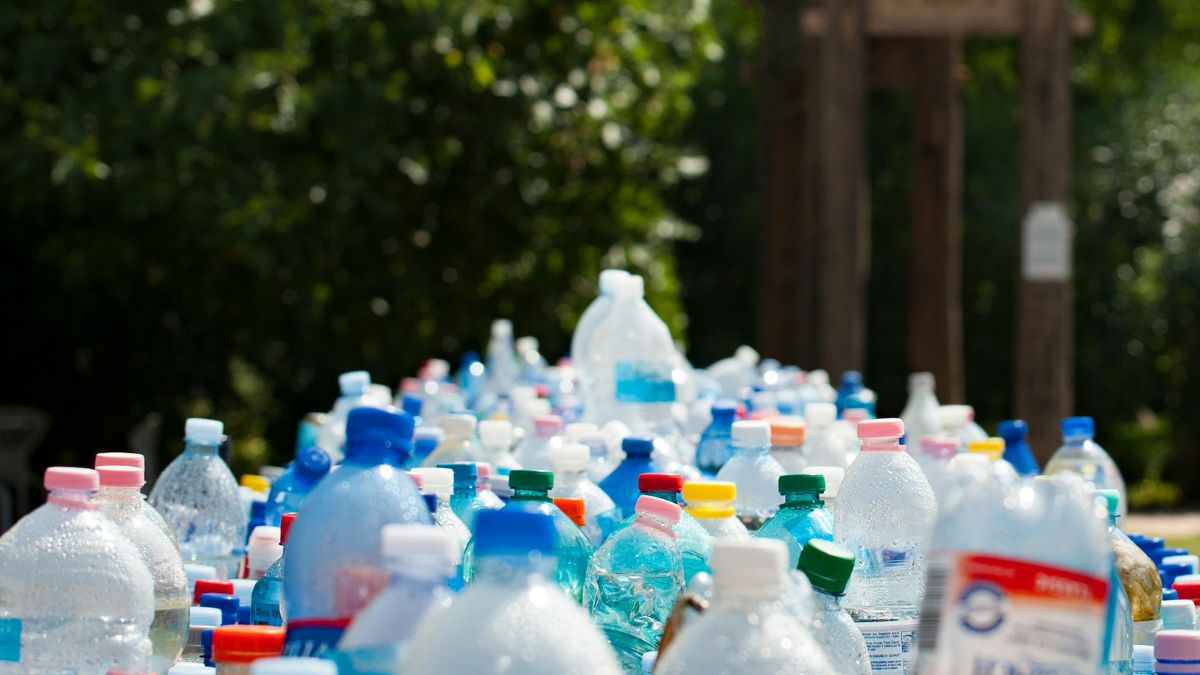
Plastic biodegradation is emerging as a critical solution to the global waste crisis, and new research from Massachusetts Institute of Technology offers important insights into how this process actually works in nature.
A new study by researchers at Massachusetts Institute of Technology has shed fresh light on how bacteria in marine environments collaborate to break down biodegradable plastics—offering critical insights into tackling the global plastic waste crisis.
Biodegradable plastics have long been seen as a potential solution to mounting environmental pollution. However, scientists have struggled to determine how long these materials persist in real-world conditions and how microbial communities contribute to their breakdown.
The study, published in Environmental Science and Technology, marks one of the first efforts to identify the specific roles individual bacterial species play in plastic biodegradation.
“Plastic biodegradation is highly dependent on the microbial community where the plastic ends up,” says lead author Marc Foster, a PhD researcher in the MIT-WHOI Joint Program. “It’s also dependent on the chemistry of the plastic itself.”
Unlike earlier studies that focused on single microbes, the MIT team examined how multiple bacterial species work together—a more realistic representation of how plastics degrade in nature.
The researchers studied a widely used biodegradable plastic known as an aromatic aliphatic co-polyester, commonly found in shopping bags, food packaging, and agricultural films.
Samples of this plastic were first exposed to seawater in the Mediterranean, allowing natural bacterial communities to form biofilms on their surface. Scientists then isolated and analysed these microbes in the lab.
Key findings include:
- One bacterium, Pseudomonas pachastrellae, was able to break down the plastic polymer into smaller chemical components.
- Other bacterial species were needed to consume those individual chemicals, including terephthalic acid, sebacic acid, and butanediol.
- No single bacterium could complete the entire degradation process alone.
When researchers combined five complementary bacterial species, they were able to replicate the full degradation process observed in a larger microbial community.
“This complementary function was essential,” Foster explains. “None of the bacteria alone could achieve the same level of degradation as when they worked together.”
Why Plastic Biodegradation Rates Vary
The findings suggest that the speed and efficiency of plastic biodegradation depend on several key factors:
- Microbial diversity in the environment
- Chemical composition of the plastic
- Environmental conditions such as temperature and depth
Notably, the study also found that the same bacterial community could not degrade a different type of plastic, indicating that microbial systems may be highly material-specific.
Implications for Future Plastic Recycling Solutions
The research represents an important step toward developing microbial recycling systems that could convert plastic waste into useful materials.
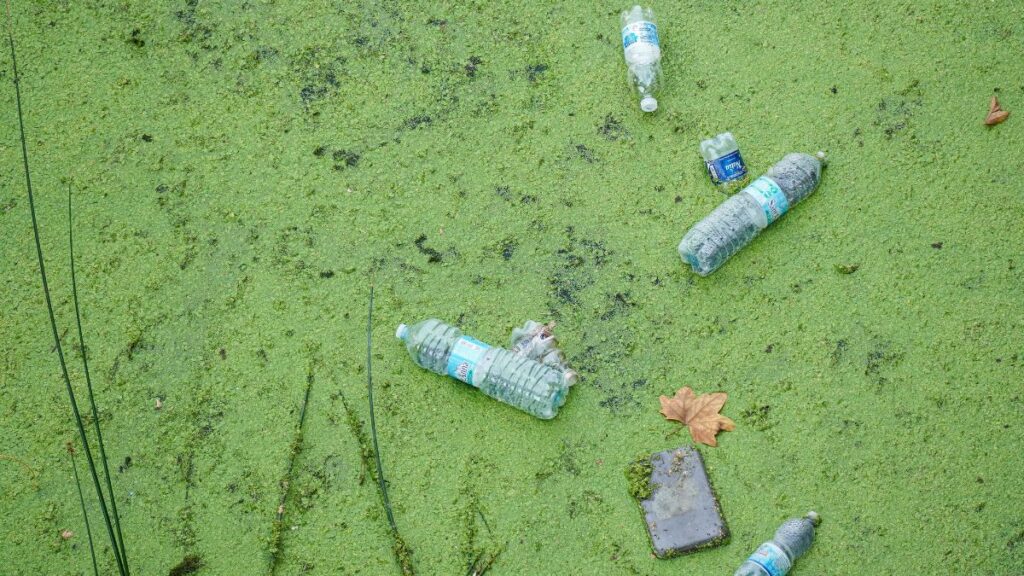
By understanding how bacteria interact with plastics at a molecular level, scientists could:
- Design plastics that degrade more predictably
- Engineer microbial communities for faster plastic breakdown
- Develop biological recycling technologies
Foster notes that future work will explore how to optimise bacterial combinations and improve enzyme interactions with plastic surfaces.
A Step Forward in Tackling the Plastic Waste Crisis
With more than half of global plastic waste ending up in landfills or the environment, understanding plastic biodegradation is crucial for sustainable material design.
This study highlights a fundamental shift in perspective: plastic degradation is not driven by a single organism, but by complex microbial collaboration.
As research advances, such insights could help bridge the gap between biodegradable materials and real-world environmental outcomes—bringing science closer to solving one of the planet’s most pressing pollution challenges.The study, published in Environmental Science and Technology, marks one of the first efforts to identify the specific roles individual bacterial species play in plastic biodegradation.
“Plastic biodegradation is highly dependent on the microbial community where the plastic ends up,” says lead author Marc Foster, a PhD researcher in the MIT-WHOI Joint Program. “It’s also dependent on the chemistry of the plastic itself.”
Unlike earlier studies that focused on single microbes, the MIT team examined how multiple bacterial species work together—a more realistic representation of how plastics degrade in nature.


Scientists Crack the Genetic Code Behind Seedless Grapes

Climate Change Could Turn Ocean Food into ‘Fast Food’, MIT Study Warns

Why Campuses Need a Happiness Officer Now

The hidden fault lines of global energy: why oil and gas chokepoints are a permanent risk

NASA to launch first crewed Artemis Moon mission on April 1
NASA to launch first crewed Artemis Moon mission on April 1

Climate change heat impact affected over 2.5 billion people

How China Is Redrawing the Global Map of Critical Minerals

Study Reveals How Ocean Bacteria Drive Plastic Biodegradation

Weather, Not Just Emissions, Driving PM2.5 Pollution in Indian Cities: Study

-

 Society3 months ago
The Ten-Rupee Doctor Who Sparked a Health Revolution in Kerala’s Tribal Highlands
-
COP305 months ago
Brazil Cuts Emissions by 17% in 2024—Biggest Drop in 16 Years, Yet Paris Target Out of Reach
-
Society3 months ago
From Qubits to Folk Puppetry: India’s Biggest Quantum Science Communication Conclave Wraps Up in Ahmedabad
-
Women In Science6 months ago
The Data Don’t Lie: Women Are Still Missing from Science — But Why?
-
Earth5 months ago
Data Becomes the New Oil: IEA Says AI Boom Driving Global Power Demand
-
COP305 months ago
Corporate Capture: Fossil Fuel Lobbyists at COP30 Hit Record High, Outnumbering Delegates from Climate-Vulnerable Nations
-
Space & Physics4 months ago
Indian Physicists Win 2025 ICTP Prize for Breakthroughs in Quantum Many-Body Physics
-
Health5 months ago
Air Pollution Claimed 1.7 Million Indian Lives and 9.5% of GDP, Finds The Lancet