Women In Science
Protecting Life on the Mountainsides: A Conversation with Prof. Le Roux
In this conversation, she discusses what’s driving rising roadkill risks in Africa’s mountains, how vulnerable species are being affected, and why conservation planning must rapidly evolve to protect these fragile ecosystems. Women in Science is a recurring Education Publica column profiling women scientists from around the world — their work, journeys, and impact

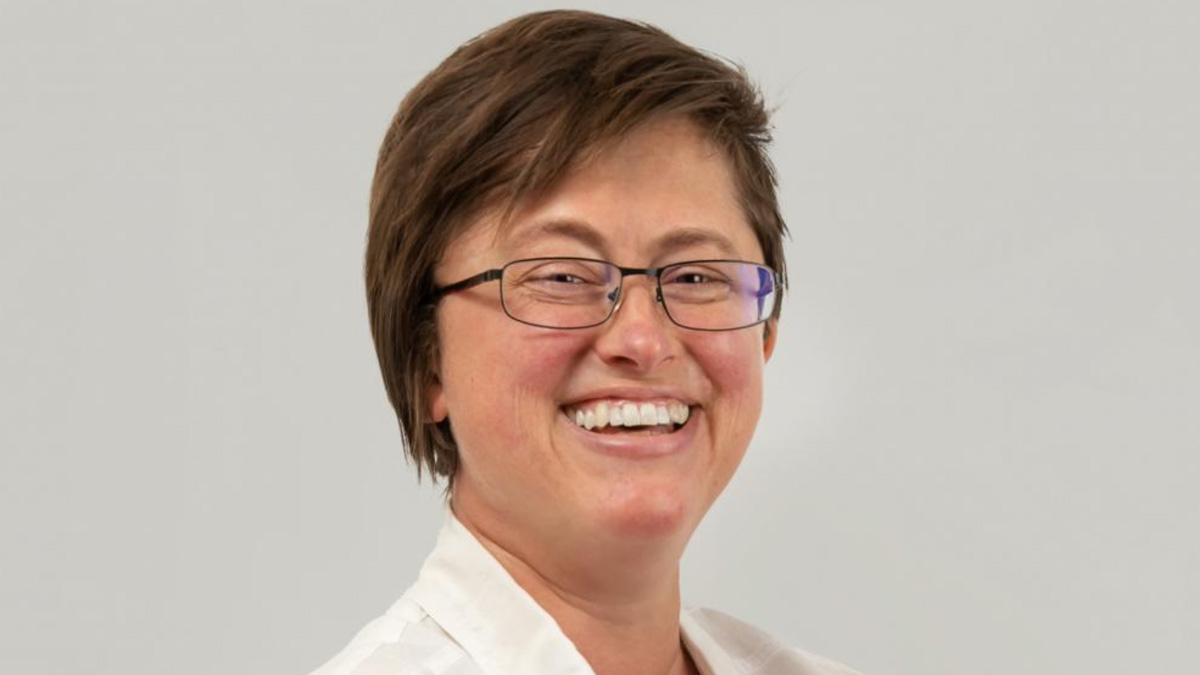
In this edition of Women in Science, Education Publica introduces Prof. Le Roux, a leading behavioural ecologist and Assistant Dean in the Faculty of Natural and Agricultural Sciences, and Associate Professor in the Department of Zoology and Entomology at the University of the Free State. Her work spans biodiversity, mountain ecosystems, and the escalating threat of wildlife mortality on roads. In this conversation, she discusses what’s driving rising roadkill risks in Africa’s mountains, how vulnerable species are being affected, and why conservation planning must rapidly evolve to protect these fragile ecosystems. Women in Science is a recurring Education Publica column profiling women scientists from around the world — their work, journeys, and impact.
You’ve dedicated your career to behavioural ecology and zoological sciences. What inspired you to pursue this path, and how has your journey shaped the way you approach issues like wildlife conservation and mountain biodiversity?
I’ve always loved being out in nature, ever since the first time my father took me for a hike up Table Mountain. Growing up, I experienced first-hand how wild animals and wilderness can be good for the soul (not just for the planet and for our physical health) – and then, as an adult, I saw in Europe and North America how very little wildness remains over there. This has really driven it home to me that we, on this continent, have very precious, living resources that we need to protect – and these resources are particularly unique in mountains. Disregarding this in favour of mining and other capitalistic ventures is really just speeding us along to a dystopian future.
Your research highlights the growing risk of roadkill in mountainous regions, particularly for endangered and vulnerable species. How is the expansion of road networks affecting wildlife in these areas?
Quite simply, these areas were previously less accessible to humans and vehicles, and the expanding road networks are changing that equation. Species at high altitudes now become more exposed to potential invasive species (which humans transport deliberately or accidentally) and collisions with vehicles. Our vehicles move far faster than natural predators do, so escaping the risk of oncoming traffic is not something any species is particularly adapted to. Populations will need to learn to avoid traffic and/or roads, if at all possible. This is not usually possible.
You mentioned that certain species, such as African wild dogs, lions, and elephants, are particularly vulnerable to roadkill. How do IUCN categories help frame the urgency of this problem?
The IUCN sets the global standard for us to understand which species to focus on in terms of conservation efforts. Knowing that nearly 8% of the mammals killed in mountains were of conservation concern, we must realise that we cannot simply ignore the risk. We are not just killing common species—we are killing species already at risk because of hunting pressure, climate change, and other threats.
Your findings show that amphibians are killed at the highest rate in mountainous regions, while mammals face greater risk in low-lying areas. What explains this difference?
It is difficult to answer because there is very limited data on population sizes of amphibians and mammals at different altitudes. Mountains provide more variation in microhabitats, so there may be pockets of ideal amphibian habitats with more freshwater and cooler microclimates. When a road cuts through such a pocket, a single car could kill dozens of amphibians at the “right” time. This should be studied further. These microclimates do not affect large mammals in the same way. It is also unclear whether mammals are killed more in low-lying areas because of more vehicles or more mammals.
Many small species are killed simply because they are less visible. Is there a broader societal or policy bias that undervalues smaller species?
Humans have an affinity for larger, charismatic species. However, the patterns are not only due to our personal biases—it is also practical. Drivers see larger animals more readily and avoid collisions because of potential damage to vehicles. Small animals are easier to disregard. Some drivers even deliberately kill snakes, but this did not create a large spike in the dataset. With effective communication, we could make drivers pay more attention to small but “special” species. We can change our behaviour.
Unpredictable weather patterns and the topography of mountain roads contribute to wildlife-vehicle collisions. How can infrastructure or road design help?
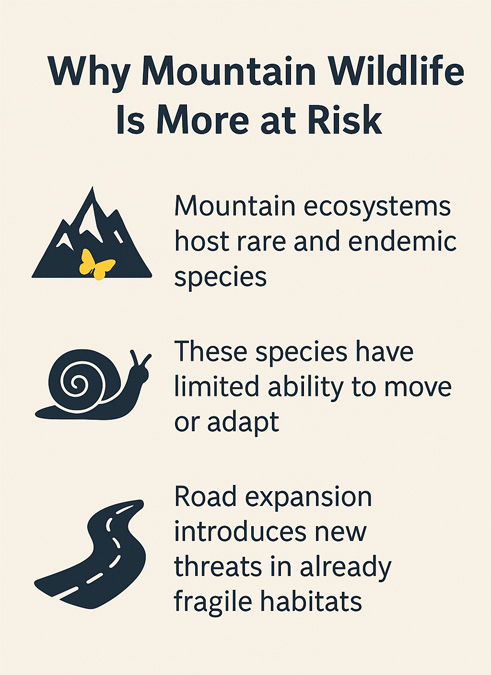
Mitigation often involves wildlife crossing structures—overpasses or underpasses—and warning signs in high-risk zones. For this to work in mountains, planners need to identify these high-risk zones and determine which structures or traffic-calming interventions are feasible. This will be a unique challenge in mountain environments.
Your study, covering 10 countries and spanning more than five decades of data, reveals major gaps in data collection. What are the most pressing gaps?
There are vast gaps in our information on population sizes and densities of vertebrate species in most African countries. If you look at the Map of Life, you’ll see how little biodiversity data we have from central and west Africa. We also found no roadkill studies in these large regions. We need to support scientists in those countries to investigate the challenges and potential solutions.
Mountain regions host unique biodiversity. How does roadkill threaten these rare or endemic species?
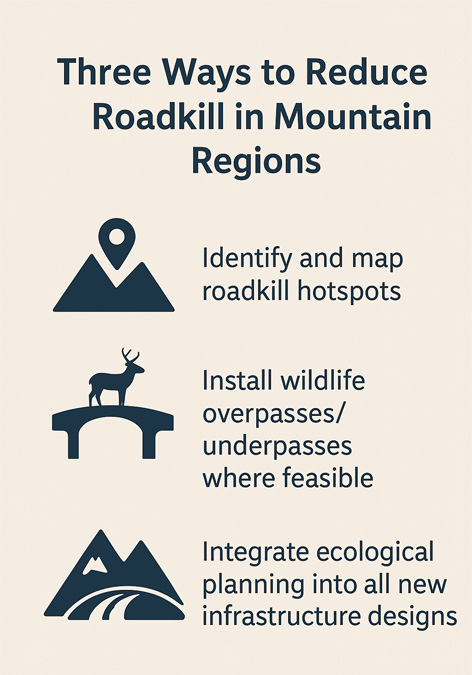
Because of the topography and history of mountains, they frequently host critical, unique biodiversity. Many are biodiversity hotspots. These endemic species cannot easily escape climate or anthropogenic change because physical barriers limit movement. There is also only so far “up” they can move. This is different in lowlands. Roads bring a new threat to species already vulnerable due to climate change.
Data collection on roadkill is often inconsistent. What needs to change to get a more accurate picture of the crisis?
It would be helpful if we had an international body to coordinate monitoring of roadkill risk, but I am not aware of such a body. It is not a methodological issue.
How can governments and conservation groups balance infrastructure development with protection of vulnerable species?
City planners, municipalities, and ecologists need to collaborate. Rather than relying solely on Environmental Impact Assessments, ideas for green spaces, wildlife corridors, and ecological connectivity should be included at the design stage of new developments. Such planning benefits environmental health and human wellbeing. Architects and engineers should also be encouraged to “think green” from the start.
What urgent actions are needed from both the scientific community and the public?
Identifying roadkill hotspots is essential as a first step. There are many areas where roadkill risk is lower, so we need to know where to focus mitigation measures.
Startups & Innovation
From Silicon Valley to Sustainable Period Care; How This Engineer Is Rethinking Menstruation with Science
A mechanical engineer who spent nearly a decade solving manufacturing problems in Silicon Valley has turned her attention to one of the world’s least-innovated products: the sanitary pad. Shagun Maheshwari, founder of Papaya, explains why she stopped trying to make pads absorb menstrual blood – and started asking what would happen if they let it clot instead.

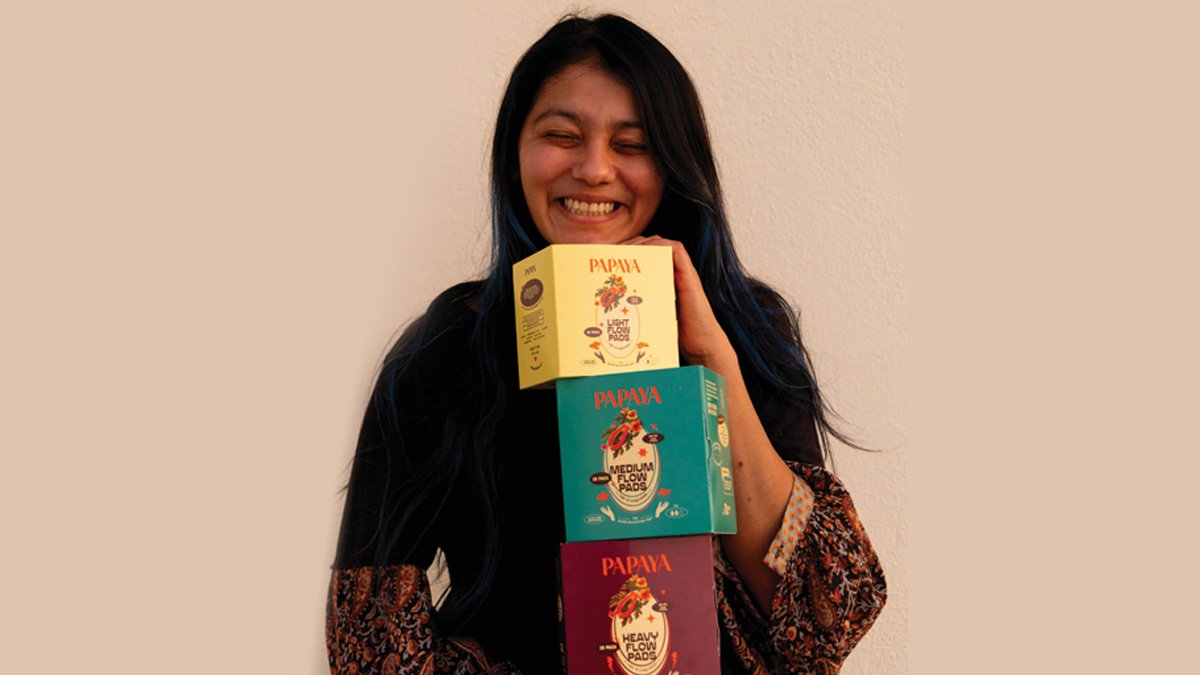
For decades, the sanitary pad has remained largely unchanged. Smart phones have grown smarter and cars have gone electric, yet one of the world’s most widely used healthcare products has seen remarkably little innovation. Most conversations about menstrual health revolve around awareness, accessibility or affordabil ity. Rarely do they begin with engi neering. For Shagun Maheshwari, engineer ing was exactly where the conversa tion needed to start.
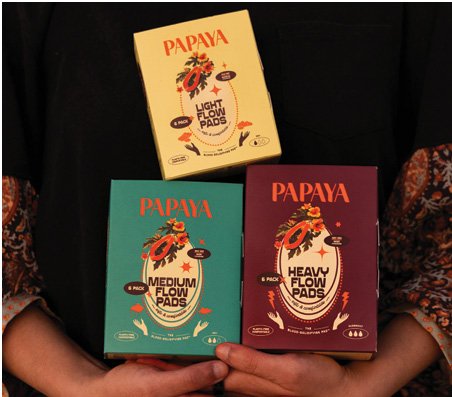
A mechanical engineer by training and founder of Bangalore-based Papaya, Maheshwari is challenging conventional menstrual care with a deceptively simple question: what if we stopped treating menstrual blood like water? That question eventually led to what Papaya describes as the world’s first sanitary pad designed to coagulate menstrual blood rather than simply absorb it — a shift that could redefine comfort, sustainability and the very logic of menstrual product design. Did you know But Papaya’s story began long before the product itself.
An engineer before an entrepreneur
Unlike many start-up founders, Maheshwari never set out to become an entrepreneur. Her journey began in a laboratory. “I did both my bachelor’s and master’s in mechanical engineering,” she says. “After graduating from Duke University, I moved to California for my first job.” For nearly eight years, she worked in Silicon Valley as a process and in tegration engineer, spending her days alongside materials scientists and chemists.
Her work centred on solving manufacturing problems through experimentation rather than conven tional product design. “It wasn’t a typical design role,” she explains. “It was experimental lab work — figuring out how to design processes to manufacture difficult things.” 48 Those years shaped how she approached problems. Rather than accepting existing solutions, she was trained to question assumptions and redesign systems from first principles — a mindset that would eventually lead her into an entirely different field: menstrual health.
When a personal problem became an engineering challenge
Maheshwari had long been in terested in both menstruation and climate change, and for a while, she believed she had found the ideal sus tainable solution. “I fell in love with the reusable silicone menstrual cup,” she recalls. “Engineering-wise, I thought the prob lem was solved.” Convinced she had cracked it, she began recommending menstrual cups to family and friends, assuming they would naturally switch over. They refused. “It doesn’t work for everyone,” she says. “There’s a steep learning curve, and people have different reasons for not using it.” That refusal changed everything.
Rather than asking why people weren’t adopting sustainable products, she began asking a different question: how could sustainable products adapt to people, instead of the other way round? Pads remained the most widely used menstrual product in India, and continued to be used by roughly half of menstruating people in many Western countries too. If she wanted meaning ful impact, the solution had to improve the product people were already using — and at the time, she was also look ing for a more technically demanding creative outlet outside her day job. “It started as a hobby project,” she says.
A laboratory that changed everything
Working on a medical product with out university backing wasn’t easy. Then came an unexpected opportunity. Near her office in California, Maheshwari discovered a community laboratory that rented research space for just fifty dollars a month — a rarity for independent researchers. “If you’re not affiliated with a uni versity, you usually don’t have access to laboratory facilities,” she explains. “I was incredibly lucky.” The lab became her playground. Surrounded by chemicals, testing equipment and countless failed exper iments, Papaya slowly began to take shape.
Why “Papaya”?
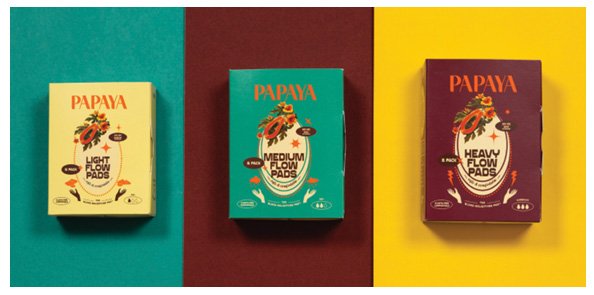
The company’s name often sparks curiosity. In many parts of India, papa ya is wrapped up in menstrual folklore — people are told either to eat it or avoid it altogether, in the belief that it can influence the menstrual cycle. “It’s a tongue-in-cheek reminder not to believe everything you’re told,” Maheshwari says. “We should fact check what we’re told.” And, she admits with a smile, there was another reason: “It also resem bles the vulva.” The name captures Papaya’s personality neatly — playful, sci ence-driven and unafraid of taboo.
Rethinking the sanitary pad
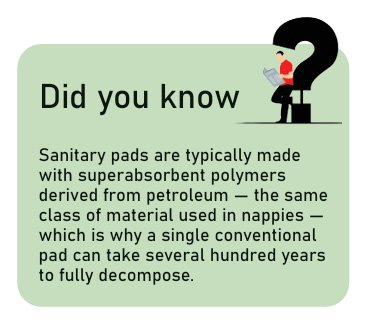
As her experiments progressed, Maheshwari found herself confront ing one of the biggest assumptions in menstrual product design: plastic works. It absorbs exceptionally well, which is why conventional pads rely heavily on petroleum-derived super absorbent polymers. Natural fibres, though kinder to the environment, simply cannot match plastic’s absor bency. Most sustainable products ask consumers to accept that trade-off. Maheshwari refused. “The problem I set myself was that sustainability shouldn’t come at the cost of comfort or performance,” she says. “It shouldn’t be a moral choice, where people say, ‘This isn’t as good, but I’ll use it because it’s better for the planet.”
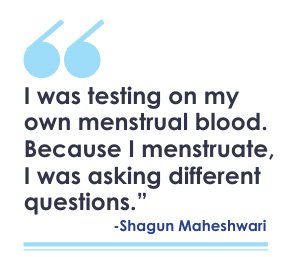
That shift in thinking led to a bigger breakthrough. Instead of asking how to make natural fibres absorb as much liquid as plastic, she asked an entirely different question: what if absorbency wasn’t the problem to solve at all? While experimenting with menstru al blood in the lab, she noticed some thing simple, yet often overlooked: it behaves nothing like water. “So instead of asking how to absorb blood better, we asked how we could work with blood itself, to make people feel drier and more comfortable.” That question became the foun dation of Papaya’s blood-coagulating technology — an innovation born not from making existing pads marginally better, but from rethinking the science behind menstruation itself.
Turning an idea into a product
A breakthrough in the laboratory was only half the battle. Turning it into a product that millions of women could eventually use proved to be an entirely different challenge. Sanitary pads are manufactured at enormous scale, with industrial machines producing hundreds — sometimes thousands — every minute. Maheshwari was starting with nothing more than handmade prototypes as sembled in a lab. “When I first started, I was literally buying cotton from the drugstore, lay ering it together, putting it in a packet and testing it,” she recalls. “But that’s not a product you can sell. It wasn’t even something I could ask people to try.” Without large-scale infrastructure, she began ordering small quantities of materials from different suppliers and approaching manufacturers across India, hoping someone would produce a limited test batch.
Most refused. “I was asking them to stop a machine that produces thousands of pads a minute, just to make about a thousand pads with my materials,” she says. “For them, it wasn’t practical.” Eventually, one manufacturer in Mumbai agreed to help — and that, too, became a lesson in product development. A significant amount of material is wasted while a production line is calibrated. “Out of around a thousand pads we produced, only about a hundred were actually usable,” she says. The experience underlined a reality that consumers rarely see behind an innovative product: great ideas are rarely born fully formed. They are refined through repeated testing, unexpected setbacks and countless iterations before they ever reach a shop shelf.
Designing for people, not profit
For many environmentally con scious consumers, choosing sustain able products comes with an implicit trade-off — less convenience, lower performance or a higher price. Ma heshwari believes that mindset needs 49 Education Publica, July – August 2026 WOMEN IN SCIENCE FRONTIERS to change. “I wanted products that were healthier for people and didn’t harm the planet,” she says. “But I also didn’t want environmental action to feel like a moral responsibility.” In her view, sustainability shouldn’t become another burden placed on individuals — particularly women, during menstruation.
“It’s a strange thing to ask someone to make sustainable choices when they’re already uncomfortable, in pain or irritable,” she explains. “As an engi neer, I think the product should simply be designed better by default.” That philosophy has shaped Papaya from the outset. While reducing plastic waste is an important outcome, Ma heshwari says the company’s primary goal has always been improving wom en’s experience of their periods. “We want women to have better period experiences,” she says. “If we can reduce rashes, skin irritation and discomfort while also cutting plastic waste, that’s the real success.”
Changing the conversation around periods
Beyond product innovation, Ma heshwari believes menstrual health deserves more honest conversation. Too often, advertisements portray menstrual products as miracle solu tions that let women forget they’re on their period at all. “You see adverts suggesting that if you use this pad, suddenly you’re 50 walking on clouds and can do abso lutely anything,” she says, laughing.
“That’s unrealistic.” Rather than marketing perfec tion, she believes companies should involve users in improving their prod ucts. “We shouldn’t treat customers like they don’t understand technology,” she says. “People have valuable ex perience and insight that can help us design better products.” For Maheshwari, innovation isn’t a one-way process in which companies simply create for consumers — it’s an ongoing dialogue between engineers and the people using those products every day.

Why representation matters in science
One of the most striking insights from Maheshwari’s journey is how closely innovation is tied to lived experience. Instead of trying to recreate exist ing products, she explored how men strual blood itself behaves — leading to the insight that blood clots natural ly, and needn’t be treated like water. For Maheshwari, this extends well beyond women’s health.
The peo ple most affected by a problem, she believes, should also be involved in solving it — whether the issue is men struation or climate change. “India is going to be heavily affected by climate change, because of our geography and our long coastline,” she says. “The people experiencing those challenges need to be involved in designing the technologies that address them.” Innovation, in other words, isn’t about diversity for its own sake — it’s about arriving at better solutions.
Beyond labels
Although she is often introduced as a femtech entrepreneur, Maheshwari still sees herself first and foremost as an engineer. “I enjoy lab work. I enjoy experi menting,” she says. “I’m a mechanical engineer, but I spend a lot of time reading chemistry and studying ma terials.” She believes one of the biggest mistakes young professionals make is confining themselves to predefined career paths.
“People ask me, ‘You’re a mechanical engineer — how did you end up making sanitary pads?’ she says. To her, the transition makes perfect sense: “It’s still materials, chemistry, manufacturing and product design. From the outside it looks dif ferent, but for me there’s a continuity.” Her advice is simple: stop putting yourself in boxes.
Instead of chas ing whichever field happens to be fashionable — data science yesterday, artificial intelligence today — she encourages young people to pursue problems they genuinely care about. “When students are choosing careers, they’re always asked, ‘Which field has the most scope?’ But scope for what? Scope for whom?” she asks. “The trends keep changing, but you’re the one who’s going to spend your life doing that work.” For Maheshwari, meaningful inno vation doesn’t come from following trends.
It comes from curiosity, per sistence and a willingness to question assumptions. Her philosophy, ultimately, is a simple one: “Whatever you’re working on, try to do more good than harm. Leave the world a little better than you found it.” In many ways, that philosophy captures Papaya itself — a compa ny born not merely to make another sanitary pad, but to challenge long held assumptions about women’s health, engineering and sustain ability. By questioning one of the most overlooked everyday products, Shagun Maheshwari is showing that meaningful innovation doesn’t always require inventing something entirely new. Sometimes, it begins by asking a different question.
Women In Science
Aim for the Stars: Anjali Thomas’s Journey from a Small College in Kerala to the Frontiers of Medical Imaging
A physicist who once wanted to be a teacher is now developing affordable, portable imaging technology at Erasmus Medical Centre in the Netherlands — and hopes to bring it home to India.

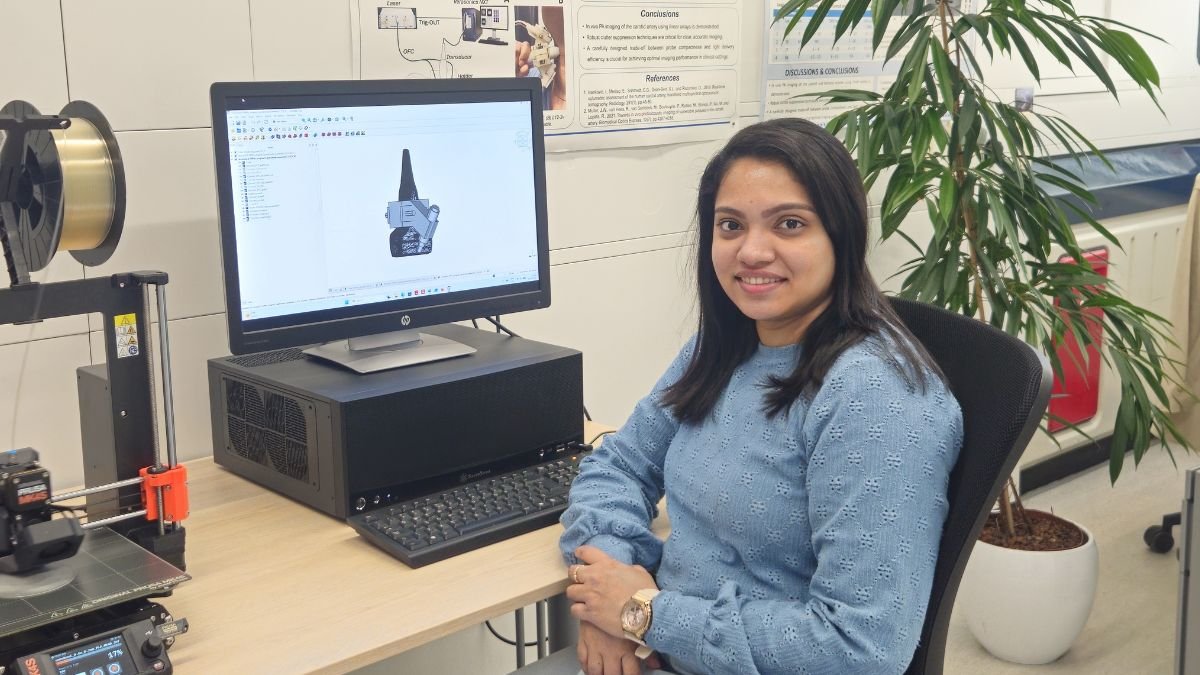
Anjali Thomas is a scientist and researcher based in the Netherlands. Her work focuses on photoacoustic imaging and its applications in medical diagnostics and treatment monitoring. Trained as a physicist, she is developing imaging technologies that are more affordable, compact, and portable, while exploring their potential for clinical use.
You grew up and studied in Kerala. Could you tell us about your journey into science?
I completed all my education, including my PhD, in Kerala—starting at a school near my home in Kannur, then doing my undergraduate and postgraduate studies in the same region, and eventually completing my PhD at IISER Thiruvananthapuram.
I honestly never imagined that I would become a scientist, do research abroad, or meet people from around the world. Growing up, I thought scientists were people who belonged to places like the US or Europe. It felt completely outside my reality.
When I was in Class 8, my class teacher told us to aim for the stars so that, even if we didn’t reach them, we would at least reach the mountains. He then asked us what we wanted to become. At that age, the most ambitious career I could imagine was becoming a doctor, mainly because of the respect that profession received in society. In reality, I actually wanted to become a teacher, but after his speech, I simply blurted out, “Doctor!”
But I was genuinely interested in science, so I followed that curiosity and went to MG College, Iritty, for my undergraduate studies.
That college turned out to be a very special place for me. Our teachers were extremely supportive and constantly encouraged us to pursue our dreams and build careers in science. Many of my classmates and seniors went on to take competitive entrance exams and secure places at prestigious institutions such as CUSAT, the IITs, and various central universities.
I also saw some of my seniors go abroad to pursue their PhDs and eventually become scientists. That was the first time I realised that becoming a scientist was actually possible for someone like me.
I tried the national entrance exams myself, but I only made the waiting lists, so I had to continue my master’s studies locally in Kerala. At the time, I genuinely thought that was the end of my dream of becoming a scientist.
Then everything changed when I got the opportunity to do my final-year project at IISER Thiruvananthapuram. That experience brought my interest in research back strongly and gave me the confidence to try again. I spent some time preparing for competitive exams, taught for a year, returned to exam preparation, and eventually cleared the GATE examination.
That score finally secured my admission to the PhD programme at IISER, and that became the beginning of my journey as a researcher.
What made you choose medical imaging as your area of research?
Coming from a physics background, I had never imagined working in the medical field. In fact, I only studied biology until Class 10 before switching to computer science, so when I started, I didn’t even know many basic biological terms.
At IISER, we had a lab rotation programme where we spent two weeks in different laboratories before choosing one to join. During that rotation, I ended up in the Biomedical Instrumentation and Imaging Lab, and I found the work absolutely fascinating. That was the moment I realised that a physicist could make a real and meaningful contribution to medicine.
Coding, which I genuinely enjoy, was also an important part of the lab’s work—from developing the instruments to processing and analysing the resulting images. At the same time, I have always enjoyed hands-on laboratory work and conducting experiments, so the combination of physics, coding, and experimental work really appealed to me.
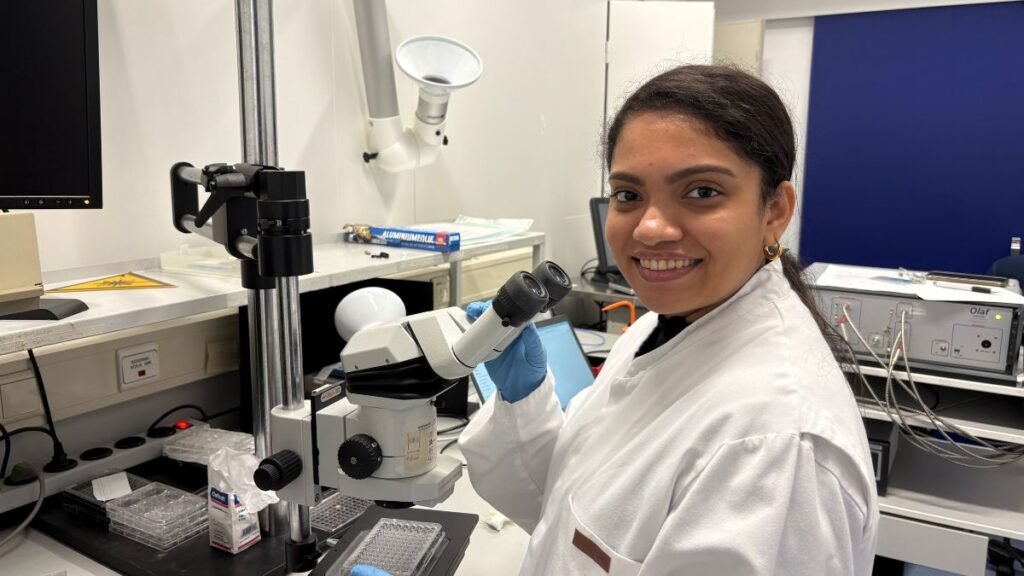
As I progressed through my PhD, I became increasingly interested in medical imaging and started to see the potential real-world impact of my research. That combination of scientific curiosity, hands-on experimentation, coding, and the opportunity to contribute to healthcare is ultimately what drew me into this field.
How did you eventually move to the Netherlands?
As I mentioned earlier, my research ambitions really began to take shape during my bachelor’s studies at MG College. At that time, alumni would often visit our department to share their experiences and talk about their research.
One of them was pursuing a PhD in microfluidics at the University of Twente in the Netherlands. He is now an associate professor at IISER Tirupati. I was fascinated by his work, and the name of the university really stayed with me.
Later, during my PhD, I discovered that there were research groups at the very same university working in my field. After completing my PhD, I came across a postdoctoral position at the University of Twente, applied, and was fortunate enough to get the position.
For me, it was a real dream come true. It was quite special to end up at the same university I had first heard about years earlier from one of my seniors. After completing that postdoc, I moved to Erasmus MC for my second postdoctoral position, where I continue to work in medical imaging.
What has your experience at Erasmus Medical Centre been like?
It has been an incredible experience. Erasmus MC is one of the leading university medical centres in Europe, with a particularly strong environment for biomedical, translational, and technical-medical research.
I’m part of an engineering group within the hospital, where our focus is on translating new technologies into practical medical applications. My work sits at the intersection of physics, engineering, and medicine. I study how light interacts with tissue, how ultrasound signals are generated and detected, and how we can use these signals to produce high-quality medical images.
What makes the experience particularly valuable is the close interaction between engineering and clinical practice. We work directly with clinicians, discuss our imaging results, identify challenges, and then adapt our technology to address specific clinical needs.
What I find most rewarding about Erasmus MC is that the research is not isolated from clinical reality. We start with a real medical problem, develop an engineering solution, receive direct clinical feedback, and use that feedback to improve the technology. That connection between fundamental science, engineering, and patient care has made my experience at Erasmus MC extremely valuable.
For someone unfamiliar with it, what exactly is photoacoustic imaging?
Photoacoustic imaging is an imaging technique that combines the advantages of optical imaging and ultrasound.
It actually has a surprisingly long history. The photoacoustic effect was discovered by Alexander Graham Bell, the same person who invented the telephone. He built a device called the photophone, which converted light into sound, but it never took off in the same way as the telephone. Because Bell’s original experiments predated the laser, the effect remained largely a laboratory curiosity until the development of pulsed laser sources made it practical for biomedical imaging in the 1990s.
To explain the principle simply, we can compare it with conventional ultrasound imaging, which is commonly used, for example, to image a fetus. In ultrasound, we send sound waves into the tissue and detect the echoes that come back. These echoes allow us to reconstruct the structure of the tissue or organ.
In photoacoustic imaging, we send pulsed light into the tissue, and this light generates ultrasound waves within the tissue. Since we use light, we can obtain high-contrast images with good spatial resolution that provide information about the composition of the tissue. So, compared with conventional ultrasound, which mainly provides structural information, photoacoustic imaging can provide additional functional and molecular information—for example, information related to blood, oxygenation, or particular tissue components.
That combination of optical contrast and ultrasound resolution is what makes photoacoustic imaging particularly interesting for biomedical applications.
What are some of the medical applications you’re currently working on?
I work within the cardiology department, so one of our main areas of research is cardiovascular disease.
One important application is imaging the carotid arteries, which are the blood vessels that supply blood to the brain. We are interested in detecting plaques, which are deposits that can build up inside these arteries and, in some cases, cause a stroke. We use photoacoustic imaging to look at the composition of these plaques and identify signs that a plaque may be more likely to rupture.
This is important because not every patient with a plaque needs surgery. If we can identify which plaques are more likely to rupture, doctors can make better treatment decisions and determine which patients may need immediate surgery.
Beyond cardiovascular applications, we are also working on breast imaging. We are investigating whether photoacoustic imaging could help detect breast cancer, either as an alternative to or in combination with conventional mammography.
Another area is imaging during surgery. We are developing ways to use photoacoustic imaging in real time to help surgeons identify the boundaries of a tumour and make sure that the cancerous tissue has been completely removed.
You’re also working on making these technologies smaller and more affordable. Why does that matter?
Cost determines who can access a technology. If a diagnostic test is too expensive, it may not be available to everyone, so making these technologies more affordable is very important.
At the same time, making the system smaller makes it more portable.
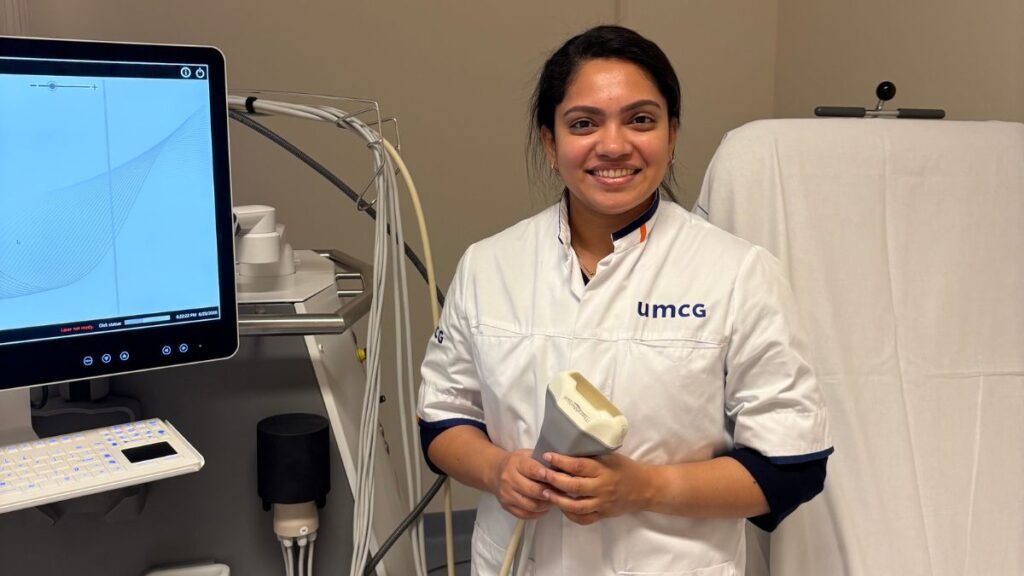
Instead of moving a sick patient to a dedicated imaging suite, as you would for an MRI, the device could be brought directly to the patient’s bedside, much like an ultrasound machine.
For example, photoacoustic systems for breast imaging already exist, but they often rely on large, high-power lasers, which makes the systems expensive and difficult to move. By replacing these with smaller and more affordable light sources, we can reduce the cost and size of the system and potentially turn a room-based technology into a portable clinical tool.
You’ve worked in both India and the Netherlands. Have you noticed a difference in how science is approached?
The biggest difference, in my experience, comes down to the translational loop—how closely engineers and researchers are connected to patients and clinical needs.
In the Netherlands, research often starts with an active clinical problem. Even within a technical university, researchers work closely with clinicians. In one of my current projects, we’re exploring the potential of our technology for intraoperative imaging—evaluating cancer resection margins in real time during surgery. Because we can work directly with patients undergoing active care, our research is closely connected to real clinical problems.
In India, in my experience, research often focuses strongly on foundational development, with ideas being thoroughly tested through phantoms and animal models. This creates a very strong technical foundation, although moving from laboratory studies into hospital trials can sometimes take a little longer.
I think there is a great opportunity to strengthen this connection further. India has both a large patient population and strong clinical infrastructure, which gives it tremendous potential for clinical trials. Building stronger bridges between the laboratory and the bedside could help translate many promising technologies into clinical applications.
What is the current state of photoacoustic imaging research in India?
The field has grown remarkably. A decade ago, photoacoustic research in India was concentrated in a few laboratories, but today there is a much more active research community, with work spanning areas such as instrumentation, image reconstruction, and machine learning.
I think the research community is very strong, and there is a lot of exciting work happening. The next important step is to strengthen the connection between this research and clinical applications. India already has strong technical expertise and a large clinical environment, so building stronger collaborations between research groups and hospitals could help with patient validation and clinical trials and translate more photoacoustic technologies from the laboratory into real clinical applications.
Do you hope to bring your current research to India?
Yes, absolutely. Proper clinical validation requires large and diverse patient cohorts, and India is particularly well suited for that.
One of the important challenges in optical and photoacoustic imaging is accounting for differences in skin pigmentation. Melanin absorbs light strongly, so the performance of these systems can vary across different skin tones. India has a great diversity of skin pigmentation, body types, and living conditions. If we want to ensure that these technologies work reliably for everyone, we need to validate them across that full spectrum.
Our team is actively exploring a Netherlands–India collaboration to facilitate this, although there are still logistical and regulatory challenges to navigate. In the long run, my goal is to return to India, continue my research, and teach the next generation of researchers.
Was there a particular experience that motivated you to pursue this path?
For me, it is all about seeing real-world impact. I have always been more interested in creating useful tools than studying theory in isolation. Knowing that the work we do every day in the lab could directly contribute to a device that might one day be used at a patient’s bedside or in an operating theatre is what motivates me most.
You’ve spoken about confidence in your journey. Where does it come from?
It started at home, but it took years to build. My mother raised me to be independent and to develop my own identity, which gave me a strong foundation.
But I think my real confidence came later, through competence. There’s a quiet confidence that comes from having deep knowledge—knowing that when I speak, I genuinely understand the science and the systems behind it.
Even so, I wouldn’t say I’m fully confident all the time. Confidence isn’t a finished state; it’s something I’m still building every day.
Have you faced discrimination because you’re a woman?
Yes, I have, although I think it has become much more subtle over time. In the past, people openly assumed that women researchers were less capable, but I think that has changed considerably. The discrimination I have personally experienced has been more subtle—for example, the assumption that certain practical tasks are simply easier for men.
Research often requires working late, sourcing materials, travelling to conferences, and dealing with people in different situations. Because of broader safety concerns in society, those limitations can sometimes get projected onto female researchers. When I first joined my lab, there were only two women, and our supervisor once remarked that he would have preferred male researchers simply because the logistics would be “easier to manage.”
But while external discrimination certainly exists, I think one of the biggest hurdles can also be our own self-doubt. Many women grow up in environments where they are encouraged to be cautious and protected, and in a traditionally patriarchal society, men may often have a stronger voice. Succeeding sometimes requires the courage to challenge that conditioning and take full responsibility for your own path.
There are also many more support systems for women today. Discrimination still exists, but I don’t believe it is strong enough to stop a determined woman from achieving her goals.
What would you tell young girls who are interested in science, especially when careers like medicine and nursing are often seen as the safer choice?
I’d tell young girls not to limit themselves to paths that society considers “safe” by default.
When I was growing up, almost everyone encouraged girls to choose nursing because it offered a stable career. Many of my friends took that route, and it is a wonderful career if you genuinely love it. But science can take you places you could never imagine as a child. I certainly never expected that I would be living abroad, doing cutting-edge research, earning a good living, travelling internationally for conferences, and meeting incredible people from around the world.
By traditional standards, if you ask whether I am “settled,” the answer is probably no. Many of my school friends have taken more conventional career paths, while I’m still doing postdoctoral research. But I love this journey. I’m still exploring, still learning, and still figuring out what comes next.
So my advice would be: if you have genuine curiosity and the determination to push through the difficult days, don’t be afraid to choose a path that is less conventional. A career in research can take you places you never imagined, and for me, it has been worth every step.
What do you think needs to change for women in science?
I think change has to happen on two fronts: practical policies and societal expectations.
On the practical side, institutions need to provide real support—childcare, paid leave, and appropriate safety provisions. Seeing more women in senior positions also matters immensely. Visibility creates momentum, and having role models shows young women that these career paths are possible.
But the deeper change has to happen at home and in society. We need to stop pressuring young women to choose only “safe” jobs or to prioritise getting “settled” early over pursuing longer research careers. Whether a woman is a scientist, a doctor, or an astronaut, there is still often an expectation that she should manage the household and take on most of the domestic responsibilities alongside her professional life.
That double standard needs to change. Women should have the freedom to pursue demanding careers, take risks, and define success on their own terms, without constantly being measured against traditional expectations of what their lives should look like.
Women In Science
Lise Meitner: a Physicist Who Never Lost Her Humanity
Lise Meitner helped explain one of the most consequential discoveries in modern physics: nuclear fission. Yet her legacy extends far beyond the breakthrough she shared with Otto Robert Frisch. Forced into exile by Nazi persecution, overlooked for the Nobel Prize awarded to Otto Hahn, and later refusing to participate in atomic bomb research, Meitner showed that scientific achievement could coexist with moral responsibility. Her life offers a powerful reminder that the courage to pursue knowledge can also mean having the courage to decide how that knowledge should—and should not—be used.
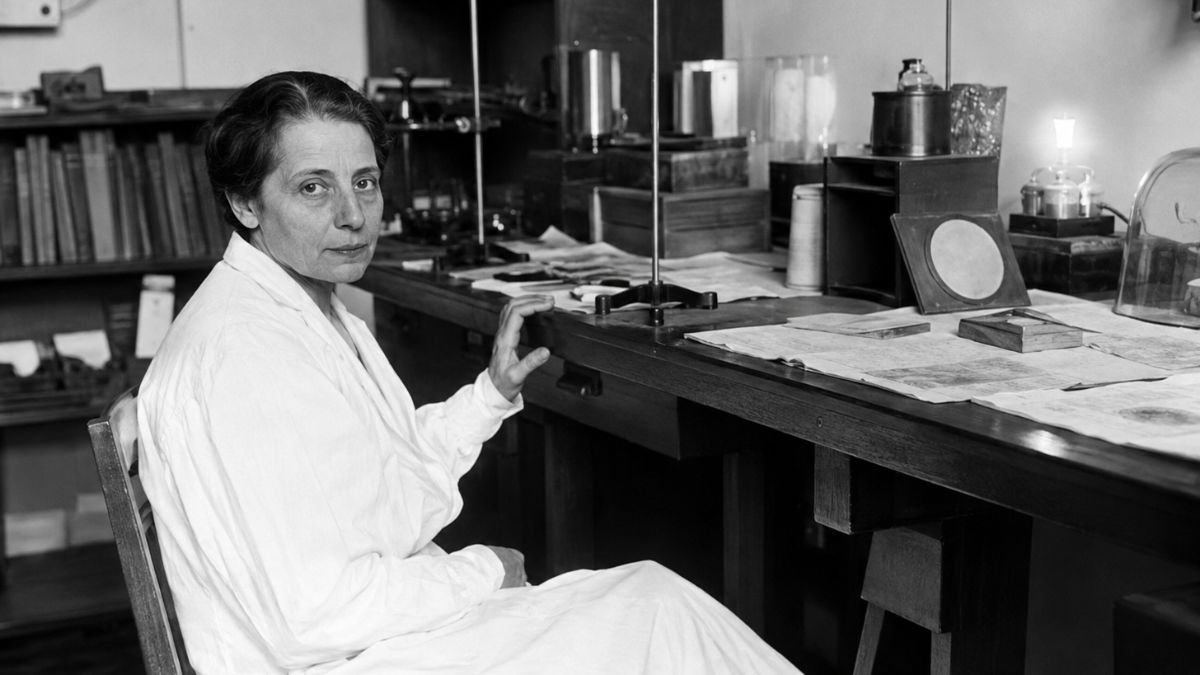
During the Christmas holidays of 1938, Lise Meitner took a walk through the snowy woods near Kungälv in western Sweden with her nephew, the physicist Otto Robert Frisch. Just months earlier, Lise Meitner had escaped Nazi Germany after nearly three decades of research in Berlin. In her pocket was a letter from her longtime collaborator, Otto Hahn, describing an experimental result that seemed impossible: uranium appeared to have produced barium after being bombarded with neutrons.
As they walked through the snow, Lise Meitner and Frisch found an explanation. Drawing on the newly developed liquid-drop model of the atomic nucleus, Meitner realised that the uranium nucleus had not transformed into a heavier element as scientists had expected. Instead, it had split into two smaller nuclei, releasing an extraordinary amount of energy.
Using Albert Einstein’s mass-energy equivalence equation, she calculated that the tiny loss of mass during the split accounted for this enormous release of energy. Frisch later borrowed the biological term “fission” to describe the process, and together they published the first physical explanation of nuclear fission in Nature on 11 February 1939.
The discovery transformed far more than physics. Within a few years, nuclear fission reshaped warfare, energy production, medicine and international politics, while fundamentally changing humanity’s understanding of the atom. For Meitner, however, the breakthrough also raised questions that would define the rest of her life: Who deserves credit for scientific discovery? What responsibilities do scientists bear for the consequences of their work? And can scientific progress ever be separated from the politics of its time?
For decades, Lise Meitner has often been remembered as “the woman who should have won the Nobel Prize.” While the debate over the 1944 Nobel Prize in Chemistry continues to attract attention, reducing her legacy to that single omission overlooks what made her one of the twentieth century’s most remarkable scientists. Meitner not only helped explain one of the greatest scientific discoveries in history but also demonstrated that scientific brilliance could exist alongside moral conviction. At a time when physics was transforming the modern world, she refused to separate scientific achievement from personal responsibility.
A Scientist Who Refused to Accept Limits
Born in Vienna in 1878, Lise Meitner grew up at a time when higher education remained largely inaccessible to women. Pursuing a career in physics required overcoming barriers that many of her male contemporaries never encountered.
Her determination was evident early. In 1906, she became only the second woman to earn a doctorate in physics from the University of Vienna. Two years later, she moved to Berlin to attend lectures by Max Planck, who had previously opposed admitting women to his classes but recognised Meitner’s exceptional ability.
Even then, opportunities remained limited. Women were not permitted to work in the main laboratories of the University of Berlin, forcing Lise Meitner to begin her research in makeshift basement rooms. Despite these restrictions, she developed a productive scientific partnership with the chemist Otto Hahn. Their expertise complemented one another: Hahn specialised in radiochemistry, while Meitner brought a deep understanding of physics. Together, they investigated radioactivity, identified new isotopes and, in 1918, co-discovered the element protactinium.
Lise Meitner’s contributions often unfolded in an academic world where women had to prove themselves repeatedly. She persisted nonetheless, eventually becoming Germany’s first female full professor of physics in 1926.
For Meitner, however, science was never about personal prestige. Friends and colleagues frequently described her as intensely curious, meticulous and deeply committed to uncovering the truth. She believed that science demanded intellectual honesty above all else.
Years later, she summarised that philosophy in a sentence that reflected both her character and her career:
“Science makes people reach selflessly for truth and objectivity.”
It was a principle that guided her through success, disappointment and exile.
Exile Changed Her Life, Not Her Values
The rise of Nazi Germany abruptly interrupted Lise Meitner’s career. Although she had converted from Judaism to Protestantism years earlier, Nazi racial laws classified her as Jewish. Following Austria’s annexation by Germany in 1938, remaining in Berlin became increasingly dangerous.
With the help of Dutch physicists Dirk Coster and Adriaan Fokker, Meitner escaped Germany in July 1938, travelling across the Dutch border with little more than a small suitcase and a handful of personal belongings. She eventually found refuge in Sweden.
Exile meant safety, but it also came at an enormous personal cost. She left behind the laboratory where she had spent nearly thirty years, her research equipment, many of her colleagues and the scientific environment that had shaped her career. At Stockholm’s Nobel Institute for Physics, resources were limited, and she struggled to establish the kind of experimental programme she had once led in Berlin.
Yet her intellectual curiosity remained undiminished.
When Hahn wrote to her describing the puzzling experimental results showing the presence of barium after bombarding uranium with neutrons, he admitted he could not explain what had happened. During her walk with Frisch that Christmas, she proposed that the uranium nucleus behaved like a charged liquid drop. Under the right conditions, it could split into two lighter nuclei rather than producing a heavier element.
It was a simple but revolutionary insight. Instead of creating new heavy elements, scientists had unknowingly discovered that atoms themselves could be split.
Within months, laboratories across Europe and the United States confirmed the phenomenon. Researchers also realised that each fission event released additional neutrons, making it possible for one reaction to trigger many more in rapid succession. This chain reaction would become the scientific foundation for both nuclear reactors and atomic weapons.
For Lise Meitner, however, the discovery represented something different. It was another step in humanity’s effort to understand nature. What troubled her was not the science itself, but how quickly political events transformed scientific knowledge into military ambition.
A Different Kind of Courage
As Europe moved towards war, many physicists found themselves confronting choices they had never imagined. Scientific discoveries that had once been pursued out of curiosity were now being assessed for their strategic value.
Fearing that Nazi Germany might develop an atomic bomb first, the United States launched the Manhattan Project in 1942. Many refugee scientists who had fled fascism joined the effort, believing that defeating Hitler justified the enormous moral burden of building such a weapon.
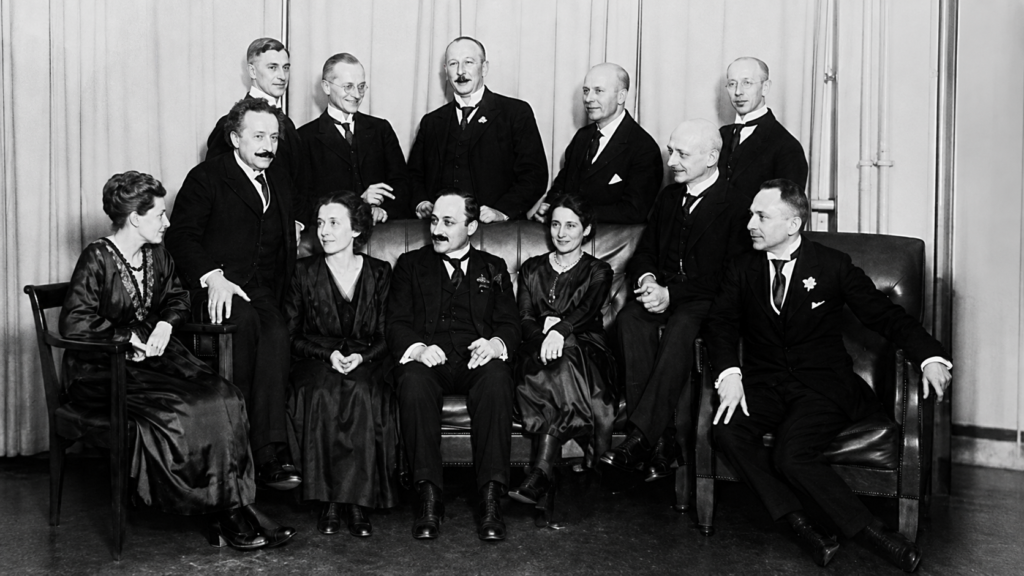
Meitner understood those fears. She had witnessed first-hand how fascism had dismantled scientific institutions and forced countless scholars into exile. Yet she reached a different conclusion. When opportunities arose for her to contribute to atomic bomb research, she declined.
Her response became one of the defining statements of her life:
“I will have nothing to do with a bomb.”
The decision was not an act of political protest against fellow scientists, nor did it reflect opposition to nuclear physics itself. Lise Meitner remained fascinated by understanding the atom and continued contributing to scientific research after the war. But she rejected was personal participation in developing weapons capable of mass destruction.
For Lise Meitner, discovering knowledge and choosing how to use that knowledge were fundamentally different responsibilities.
Unlike some later interpretations, she never argued that scientific research should stop because discoveries might be misused. Nor did she believe scientists could predict every future consequence of their work. Instead, she maintained that researchers remained morally responsible for the choices they personally made.
That distinction became the defining philosophy of her life.
Recognition Without Resentment
The end of the Second World War brought the world face to face with the devastating consequences of nuclear weapons. The atomic bombings of Hiroshima and Nagasaki demonstrated the immense destructive power that had emerged from the discovery of nuclear fission. Like many physicists of her generation, Lise Meitner was deeply disturbed by what she witnessed.
Although newspapers often labelled her the “mother of the atomic bomb,” she rejected the title. She had neither participated in the Manhattan Project nor contributed to the development of the weapon itself.
Her views were never absolutist. Lise Meitner did not condemn nuclear physics, nor did she believe discoveries should be abandoned because they carried risks. She understood that the same scientific principles that enabled the atomic bomb also opened new possibilities in medicine, electricity generation and scientific research. What mattered, she believed, was not the discovery itself but the values guiding its application.
Rather than offering simple answers, she accepted that science and ethics would always remain intertwined. The pursuit of knowledge demanded curiosity, but it also required humility.
A Nobel Prize That was Denied
In 1944, the Royal Swedish Academy of Sciences awarded the Nobel Prize in Chemistry solely to Otto Hahn for the discovery of nuclear fission. Lise Meitner’s omission has remained one of the most debated decisions in Nobel history.
Historians have spent decades examining laboratory records, correspondence and Nobel Committee documents in an effort to understand why she was overlooked. Hahn’s work was recognised as chemistry, while Meitner’s decisive contribution lay in theoretical physics. Wartime conditions complicated communication, and later scholars have also pointed to the institutional barriers women faced within scientific establishments.
Yet what is perhaps most remarkable is Lise Meitner’s own response.
She never built her career around public resentment. Friends recalled that she was disappointed, but she did not allow the Nobel Prize to define either her work or her identity. Instead, she continued researching, teaching and speaking about the responsibilities of science. History, meanwhile, gradually became more generous.
Today, historians broadly agree that the discovery of nuclear fission was the result of complementary contributions. Otto Hahn and Fritz Strassmann produced the experimental evidence. Lise Meitner and Otto Robert Frisch provided the physical explanation that revealed what those experiments meant.
Recognition also arrived in other ways. In 1997, the International Union of Pure and Applied Chemistry named element 109 Meitnerium (Mt) in her honour—an enduring acknowledgement of her place in the history of modern physics.
More Than a Pioneer for Women
Lise Meitner is often celebrated as one of the greatest women in science. She achieved distinction in a profession that offered women few opportunities, becoming Germany’s first female full professor of physics at a time when many universities still questioned whether women belonged in scientific research.
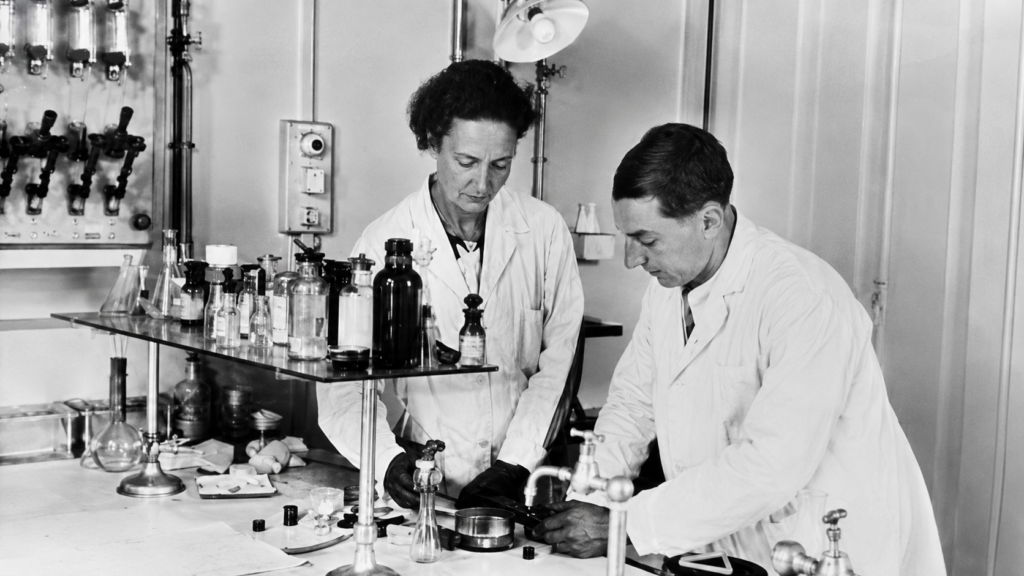
Her strength, however, extended beyond overcoming discrimination.
She rebuilt her career in a foreign country under difficult circumstances. She made one of the most important scientific contributions of the twentieth century, yet watched others receive its highest honour. Through all of it, she remained committed to science without becoming consumed by bitterness.
She demonstrated that courage in science is not measured solely by groundbreaking discoveries. Sometimes it is found in the quieter decisions: insisting on evidence over ideology, defending intellectual honesty when politics intrudes, and remaining faithful to one’s principles even when doing so comes at a personal cost.
A Legacy Beyond Discovery
Lise Meitner never claimed that scientists could control every consequence of their discoveries. Knowledge, once uncovered, inevitably enters the wider world. Yet she believed that individual scientists always retained responsibility for their own choices.
That belief shaped every major decision she made—from pursuing physics when women were discouraged from entering the field, to rebuilding her life after exile, to refusing to participate in the development of the atomic bomb.
Her story reminds us that scientific excellence is not defined only by intelligence or technical achievement. It is also measured by integrity, resilience and the courage to act according to one’s convictions.
The inscription on Lise Meitner’s gravestone in Hampshire, England, captures that legacy in a single sentence:
“Lise Meitner: a physicist who never lost her humanity.”
In an era when scientific discoveries were reshaping the modern world, she showed that the pursuit of truth and the exercise of conscience need not stand in opposition. That is why, decades after her death, Meitner remains one of history’s strongest women in science—not only for what she discovered, but for the principles she refused to abandon.


The Scientist Who Changed the Way We Understand Childhood

What is AGI? AI’s Next Era: When Machines Start Taking on the Work

Keralam’s Western Ghats ESA debate is now about the land between forests and farms

Kerala’s Biodiversity Records Are Going Digital. What Could That Change?

Job Readiness for Students: 7 Career Sutras That Matter

Farmers Borrowed to Build ‘Diggis’. Two Years Later, They Are Still Waiting for the Subsidy

When Decarbonisation Becomes the Real Conversation at Tiruppur’s Knit Show

When the Himalayas Collapse Without Warning, What Counts as Preparedness?

Anxiety Freezes Career Decisions. Curiosity Unfreezes Them

Meteorite Dust Reveals Evidence of Magnetic Field in the Young Solar System
-

 Math2 months ago
The 2026 Fields Medals: Four Proofs, Four Decades-Old Problems Solved
-
Climate2 months ago
After Kerala’s Deadliest Landslide, the Hardest Thing to Rebuild Was Childhood
-
Society3 months ago
West Asia Crisis: Can Kerala’s Returning Gulf Migrants Find a Future in the Green Economy?
-
Space & Physics4 months ago
India Semiconductor Mission: ‘It’s Not About Fabs. It’s About Building An Entire Ecosystem’
-
Climate4 months ago
The Climate World Cup? How Climate Change Could Affect Player Performance at the 2026 World Cup
-
Society2 months ago
What Is Civilisational Diplomacy? Understanding India’s Newest Foreign Policy Tool
-
Society3 months ago
From Bell Labs to the Classroom: A Second Career in Teaching
-
Space & Physics4 months ago
Engineers Develop Dual-Mode Propulsion System for Next-Generation Small Satellites