The Sciences
Challenging the Myth: Trees Are Not the Ultimate Solution for Overheating Cities
The cooling effects of trees are complex and vary significantly depending on the context in which they are planted, says researchers













The Sciences
Anxiety Freezes Career Decisions. Curiosity Unfreezes Them
A framework that integrates emotion and identity for modern careers.


Career anxiety is neither a pathology nor a personal failure. Yet most career paralysis stems not from a lack of options but from a fundamental misunderstanding of what career decisions entail. Not more certainty, but more cognitive agility.
Career paralysis occurs when our minds get stuck in a single cognitive mode. Scanning for threats, seeking certainty, protecting identity. The pathway forward requires the ability to shift between modes. Exploring possibilities while committing to direction, noticing losses while imagining gains, questioning our current self while becoming the next version.

This is the skill that modern careers actually demand. And unlike what anxiety tells us, it is not something we need to possess before we act. It is something we develop through engaging.
Why Career Decisions Feel So Uniquely Terrifying
Career choices combine three elements that the human mind struggles with: uncertainty (outcomes are delayed and ambiguous), identity threat (the choice feels like a statement about who we are becoming), and perceived irreversibility (the haunting sense that choosing one path closes all others).
Psychologists Lazarus and Folkman demonstrated that anxiety emerges when situations feel highly consequential and low in perceived control. Career decisions fit this profile perfectly. Add loss aversion. The psychological fact is that we weigh potential losses more heavily than equivalent gains. And we understand why career anxiety feels so intense.
The anxiety is predictable. The problem is that once it arrives, we treat it as a decision maker rather than a source of information.
The Five Dimensions of Career Cognitive Agility
Career decisions require what cognitive psychologists call cognitive agility. The capacity to move fluidly between different cognitive modes in response to uncertainty. The original research defined this as three components (cognitive openness, focused attention, and cognitive flexibility). This paper adds two more (emotional recalibration and identity enactment) for career-length transitions.
Cognitive Openness. The capacity to notice new information, consider multiple possibilities, and think divergently. This is where curiosity lives. The willingness to explore the unfamiliar.
Focused Attention. The ability to filter out distractions and concentrate on what matters most. Without this, we would be paralysed by the sheer number of options.
Cognitive Flexibility. The capacity to shift between openness and focus as the situation demands. This is the often-overlooked skill. Knowing when to explore and when to execute.
Emotional Recalibration. As we move between cognitive modes, our nervous system must also shift. Curiosity activates reward pathways and opens us to uncertainty. Focused commitment engages different systems. Emotional agility means tolerating the discomfort of each shift without becoming defensive.
Identity Enactment. Professional identity is not fixed. It is continuously created through our moment-to-moment experiences of choices. Exploring options is itself an act of professional identity. We are the people willing to engage, learn, and grow.
These five dimensions working together create the capacity to navigate career uncertainty without being paralysed by it.
A Real Example: When Cognitive Agility Matters
Consider Maya, who is good at engineering. Objectively, demonstrably good. But she is drawn to product design. Both paths matter to her, but in different ways.
Anxiety asks, “What if you choose wrong? Engineering is secure. Design is uncertain. What if you fail at design? What does it mean about your intelligence if you choose design instead?”
The anxiety is not irrational. It is protecting her. But it is also freezing her in a single mode. Threat scanning, certainty seeking, identity protecting.
What cognitive agility looks like for Maya:
Openness. Instead of “Which is the right choice?” she asks, “What would six months in design teach me about my actual interests?” She reaches out to designers, shadows product teams, and builds something.
Focus. She does not float endlessly in exploration. She commits to specific learning goals. She enrols in a design course. She builds a portfolio piece. She sets a decision timeline.
Emotional Recalibration. The shift from “safe engineering” to “uncertain design” creates real discomfort. She has to tolerate anxiety about her capabilities, social pressure about “throwing away” engineering, and fear of starting something afresh. These feelings are real. Cognitive agility does not eliminate them. It means moving forward while holding them.
Identity Enactment. She is not abandoning her “engineer” identity. She is expanding it. Six months of design exploration is a legitimate act of professional identity. She is someone willing to interrogate her path, test her interests, and integrate what she is learning.
Flexibility. She knows the point at which she will shift from exploring to committing. She has decision criteria. When she has gathered enough information, she will move decisively.
What Maya developed was not certainty. It was the cognitive and emotional capacity to navigate uncertainty without being controlled by it. That capacity is what unfroze her decision.
How Curiosity Changes Everything
Curiosity operates through a fundamentally different system than anxiety. While anxiety narrows attention to scan for threats, curiosity expands it. Psychologist George Loewenstein calls this the information gap theory. Curiosity arises from perceived gaps in understanding.
Neuroscience shows that curiosity activates reward-related neural pathways associated with dopamine, increasing tolerance for uncertainty and improving learning under ambiguous conditions.
Most importantly, curiosity does not require confidence in outcomes. It requires interest in the process.
Identity Enactment: Why Career Decisions Are Actually Identity Questions
Here is what makes career anxiety different from other decisions.
Most decisions are choice problems. Comparing options and selecting the best one. Career decisions are also identity problems. We are not just choosing a path. We are choosing who we will become. That is what creates the deeper anxiety.
Organisational psychologist Herminia Ibarra has shown that during career transitions, people often reconstruct their professional identity through narrative reframing. Telling themselves a new story about who they are. This is valuable work. It helps people make sense of change.
But there is something deeper happening in how professionals actually navigate uncertainty. They do not just reconstruct identity. They continuously enact it through their choices and actions.
Identity enactment means this: your professional identity is not stored somewhere waiting to be recovered or reconstructed. It is actively created moment by moment through what we do, what we choose, and how we show up. When we engage with a new opportunity, we are not abandoning an old identity to build a new one. We are continuously constituting who we are through our choices right now.
This distinction matters profoundly because it changes what we need to do.
If identity is fixed and we reconstruct through reflection, then we need to figure it out before we act. We need clarity first. This is where career paralysis lives.
If identity is something continuously enacted through action, then we do not need to figure it out in advance. We create it through engagement. The identity emerges through the doing, not before it.
The deeper fear beneath career anxiety. It is not actually the fear of failure. It is the fear of becoming someone different from what we imagined. It is the fear that choosing engineering (or design, or therapy, or entrepreneurship) means we are becoming an “engineer” (or designer, or therapist, or entrepreneur), permanently and irrevocably.
But this fear assumes identity is fixed. Once we recognise that identity is continuously enacted, we know that we create and recreate our professional self through our choices. The terror diminishes.
We are not choosing an identity. We are choosing an experience through which we will enact our identity. We are not committing to forever. We are committing to what we will learn in this chapter.
How this reframes everything. Exploring options becomes an act of professionalism, not a sign of inadequacy. Taking a step into uncertainty becomes an act of identity creation, not identity abandonment. Changing direction becomes integration of learning, not rejection of our past self.
This is where cognitive agility and identity enactment connect. The ability to shift between exploration and focus, between openness and commitment, between questioning and acting. That fluidity is how enacted career identity actually develops. Each shift is an act of becoming.
The Experiment Mindset
Cognitive agility fundamentally reframes what a career decision means.
Instead of asking, “Is this the right career for me?” — which demands certainty — ask, “What would this option teach me over the next year?” — which invites learning.
Career psychologist John Krumboltz argued for decades that careers are not discovered through prediction — they are constructed through experience, what he called planned happenstance. Contemporary theorist Mark Savickas emphasises that modern careers are built through iterative meaning-making rather than linear planning.
When a choice becomes a time-bound experiment rather than a permanent identity decision, its emotional weight changes. The illusion of irreversibility — one of the primary drivers of career anxiety — begins to loosen.
A 6-month experiment in a new field feels manageable. A permanent identity change feels terrifying. The only difference is our frame.
A Practical Exercise Before Our Next Decision
Before our next career decision, let us pause and work through these questions. They are designed to help us practice cognitive agility across all five dimensions.
1. Name the anxiety. What am I most afraid of losing or getting wrong? This activates our focused attention on real constraints and risks.
2. Reframe the choice. If this were a 6- to 12-month experiment, what would I want to learn? This shifts us into cognitive openness mode — exploration over evaluation.
3. Activate curiosity. What questions am I genuinely interested in answering about this path? This sustains openness by connecting to intrinsic interest. Curiosity is also emotional work. It requires nervous system activation.
4. Lower the risk. What is one small, reversible step that allows exploration without overcommitment? This uses focus to make curiosity actionable — filtering from all possibilities to one concrete action.
5. Build identity coherence. How can I see this choice as continuous with my development rather than discontinuous with my past? This is the identity dimension. We are not abandoning who we were. We are integrating who we are becoming.
6. Build cognitive flexibility. How will I know when it is time to shift from exploring to committing? What signals will tell me I have enough information? This is a metacognitive step — thinking about our thinking — that allows us to move fluidly between modes.
Small voluntary actions increase perceived control, a key factor in reducing anxiety. But this works deeper. We are practising the cognitive agility that modern careers actually demand.
When Structural Barriers Are Real
Let us be clear. Curiosity is not a solution to financial pressure, caregiving responsibilities, or systemic barriers. These are not mindset problems. They are real constraints that demand real scaffolding: parallel plans, incremental transitions, income buffers, and social support.
Cognitive agility operates within constraints, not instead of them.
What Modern Careers Actually Reward
In stable career systems, commitment to a single path was everything. Focus was the entire skill set.
In today’s volatile landscape, a different capacity, cognitive agility, matters more. The ability to flexibly operate with both curiosity and focus. Knowing when to explore and when to execute. When to question and when to commit.
Cognitive agility is not about being indecisive or constantly changing direction. It is about integrating openness, focus, and the flexibility to shift between them as situations demand.
The Final Reframing
Research on career resilience shows something crucial. Cognitive agility does not develop through prior preparation. It develops through engaging with challenges that demand it.
Each time we navigate a career transition — each time we choose openness over defensive closure, shift attention to what matters, integrate emotion without being controlled by it, and act on our evolving identity — we are strengthening the neural networks, emotional systems, and identity integration that enable future navigation.
We do not need to feel cognitively agile before pursuing an opportunity. The pursuit itself develops the agility we will need.
Anxiety wants certainty before action.
Curiosity creates action before certainty.
Modern careers rarely reward those who wait for perfect clarity. They reward those who learn their way forward.
Society
Where Time Stands Still for Science: Inside Teylers, the Netherlands’ Oldest Museum
Explore Teylers Museum, the Netherlands’ oldest museum, where 18th-century science, fossils, physics and Enlightenment history remain remarkably preserved.

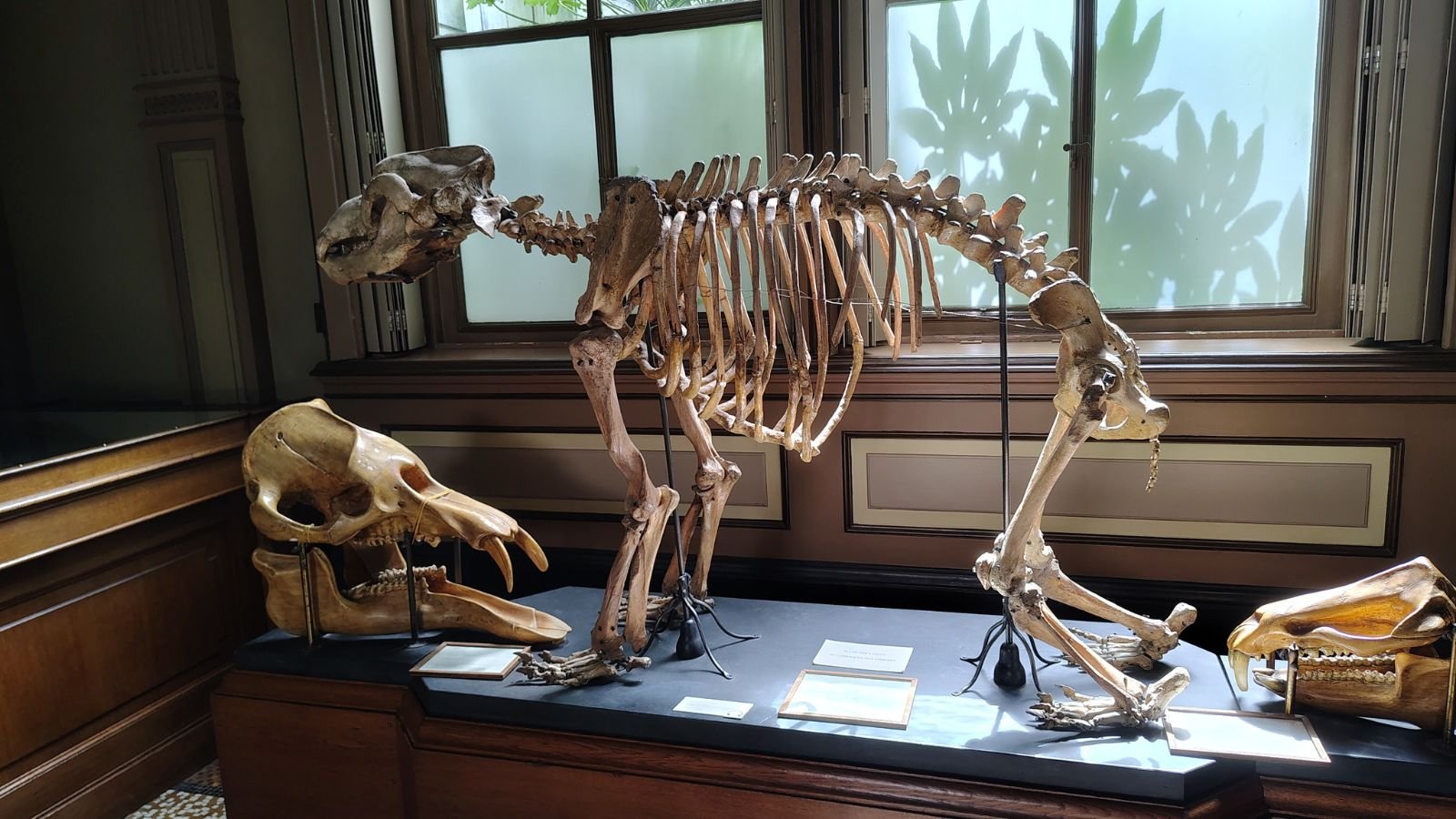
Teylers Museum in Haarlem, the Netherlands’ oldest museum, offers a rare journey through 250 years of science, from giant fossils and early physics to its historic Oval Room.
As I walked along the peaceful banks of the Spaarne River in Haarlem, a historic Dutch city located just fifteen minutes by train from Amsterdam, an elegant neoclassical facade caught my eye. To a casual passerby, the grand entrance might look like just another historic manor. Stepping through its heavy doors, I felt like I had walked right into another century. This is the Teylers Museum, the oldest museum in the Netherlands, founded in 1778.
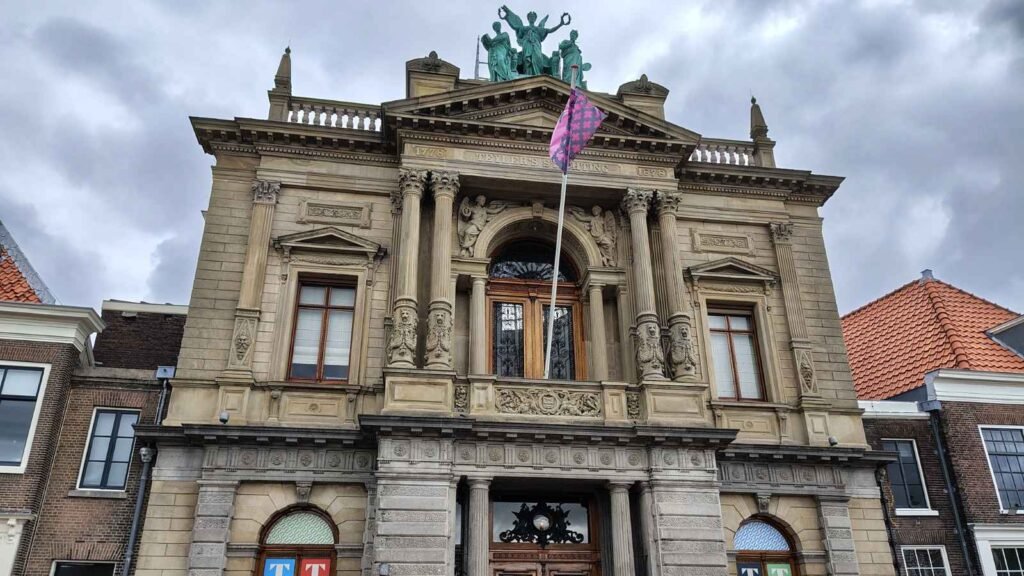
At a time when science and art were seen as sister disciplines rather than opposing worlds, Pieter Teyler van der Hulst, a wealthy cloth merchant and banker, decided to do something extraordinary. Inspired by Enlightenment ideals that people should discover the world independently through reason and hands-on investigation, he left his immense fortune to establish a public center for knowledge. Teylers Museum was designed not as a dusty storehouse for old relics, but as a living “temple of the muses.” It became a welcoming space where researchers, students, and everyday curious visitors could gather under one roof to witness live physics experiments, study fossilized secrets of the Earth, and admire master drawings.
The Heart of the Enlightenment
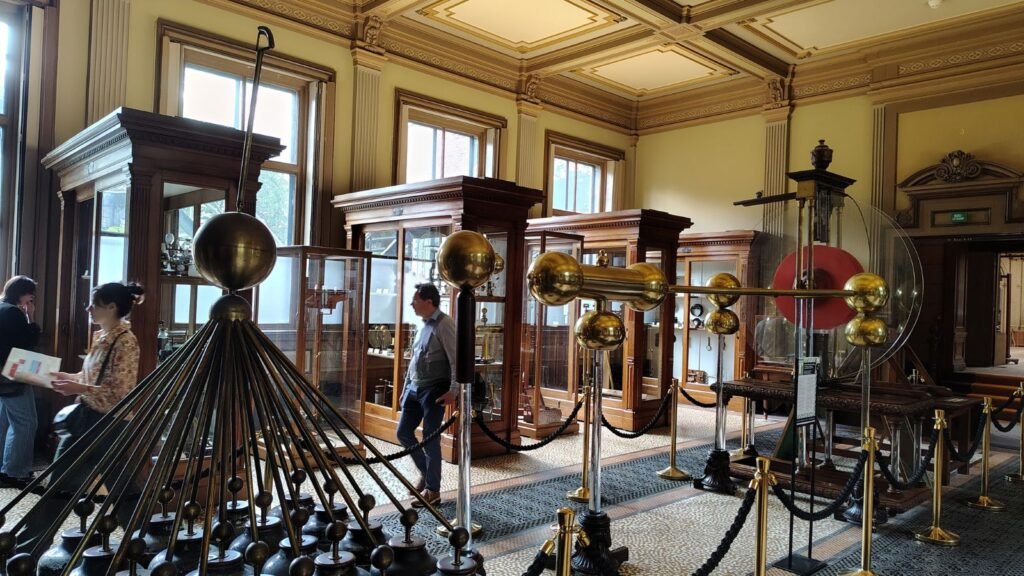
Inside the Oval Room Stepping into the museum’s historic core, the Oval Room, felt like walking directly into an eighteenth century laboratory. Completed in 1784, this double-tiered hall features carved wooden showcases, brass scientific instruments, and a balcony library filled with leather bound encyclopedias, all bathed in soft natural light flowing through an ornate ceiling skylight.
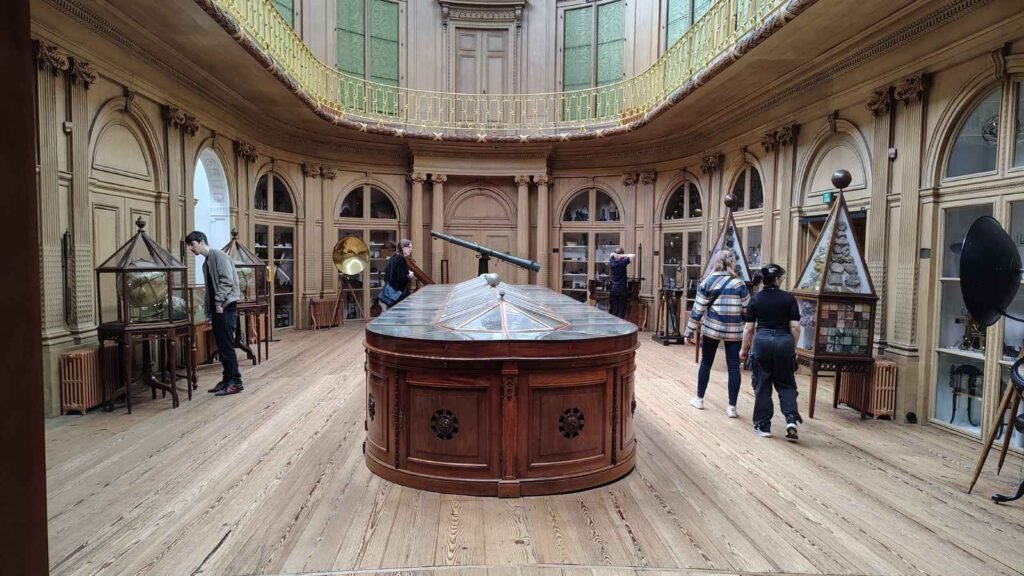
In the late 1700s, this room served as a high tech science hub. Martinus van Marum, the museum’s legendary first director, used the space to host public demonstrations that fascinated scholars and visitors alike. Van Marum firmly believed that science needed to be seen to be truly understood. To explore the mysterious nature of electricity, he commissioned John Cuthbertson in 1784 to build the largest electrostatic generator in the world.
From giant electrostatic machines and rare fossils to Hendrik Lorentz’s physics cabinet, Teylers Museum preserves the history of science in a remarkably intimate setting.
Equipped with two massive glass discs over five feet in diameter, Van Marum’s generator could produce sparks over two feet long, generating artificial lightning that left audiences completely amazed. As I stood before this colossal machine, I couldn’t help but think back to Van Marum’s original notes from his high voltage trials. He noticed that these massive electrical discharges left behind a distinct, sharp smell, an observation that quietly laid crucial groundwork for the later discovery of ozone gas.
Fossils, Physics, and the Foundations of Modern Science
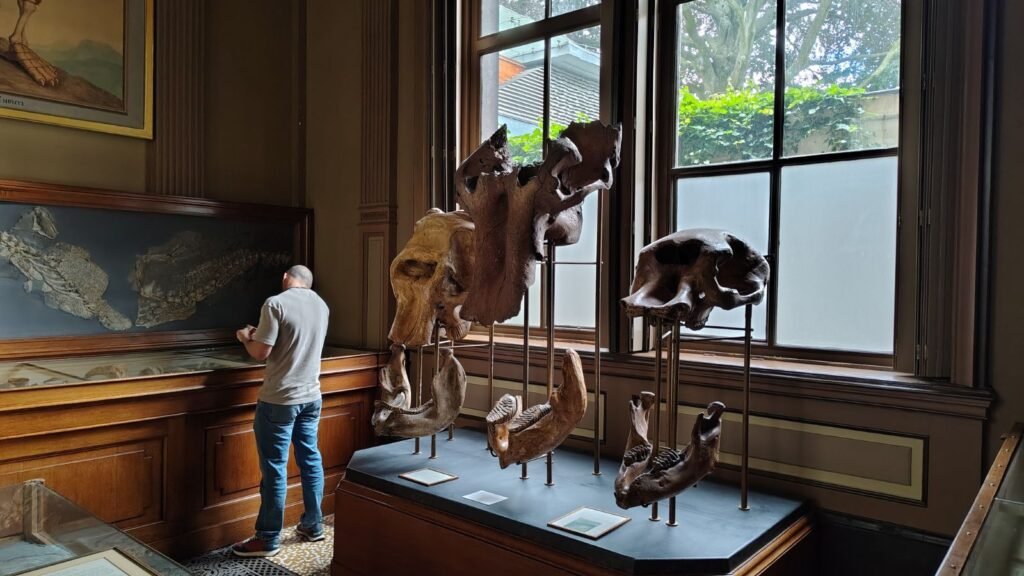
Moving beyond the Oval Room led me into the scientific galleries, where cabinet after cabinet reveals the real origins of modern paleontology and physics. Long before Charles Darwin published his theories on evolution, early naturalists were struggling to make sense of prehistoric remains.
In 1802, Van Marum purchased a famous fossil, originally unearthed in Öhningen in southern Germany, known at the time as “Homo diluvii testis”, or “the witness of the Flood.” Theologians of the era believed it to be the skeletal remains of a human who perished in Biblical waters. Years later, French naturalist Georges Cuvier examined the specimen and identified it as the fossilized giant salamander ‘Andrias scheuchzeri’. That discovery helped overturn centuries of religious assumptions, proving that entire species could actually become extinct over time.
Teylers Museum also houses one of the rare specimens of Archaeopteryx, the famous primeval bird fossil that provided the crucial missing link between feathered dinosaurs and modern birds. Walking past these display cases felt like watching the early building blocks of science come together.
The museum’s dedication to physics continued well beyond the 18th century. In 1910, theoretical physicist and Nobel laureate Hendrik Lorentz was appointed Curator of Teylers Physics Cabinet. Lorentz, whose mathematical equations laid the groundwork for Albert Einstein’s theory of special relativity, conducted experiments on electromagnetism, optics, and atomic physics within these very walls for nearly two decades. When Einstein visited his friend Lorentz in Haarlem, he described the city and its scientific atmosphere as a sanctuary of pure thought.
A Center for Curiosity
Dutch Museum Culture Across Generations Exploring the galleries, I was repeatedly struck by an aspect of the experience that feels deeply rooted in Dutch culture. In the Netherlands, museums are rarely treated as rigid, solemn monuments reserved only for academics. Instead, they are active, community centered gathering places designed to spark curiosity across every stage of life.
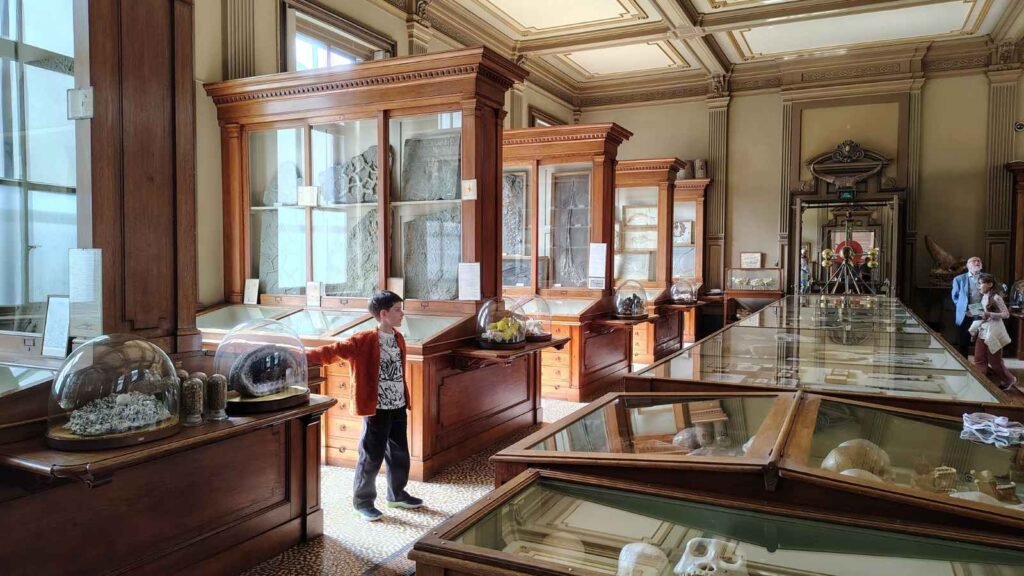
Around me, multi-generational discovery was happening in real time. I watched a young child look wide-eyed at a display of polished mineral specimens, pointing out bright colors to a grandparent who was patiently explaining how crystals form. A few yards away, a group of students stood engrossed near a collection of early optical instruments, casually debating how light bends through glass lenses.
This spirit of accessibility gives Dutch museum culture its vitality. From toddlers interacting with physical phenomena to lifelong learners examining centuries old manuscripts, people of all ages come together to ask questions and explore. Teylers Museum reflects this philosophy naturally. It doesn’t feel like a dusty home for old artifacts, but a place where centuries old ideas still inspire people today.
Timeless Wonder in a Physical World
What makes Teylers Museum stand out today is its complete preservation. While modern science centers rely heavily on interactive touchscreens and digital simulations, Teylers offers something far rarer: authentic, untouched history. The brass dials of the barometers, the hand blown vacuum tubes, the polished mahogany cases, and the handwritten labels remain virtually untouched, arranged exactly as they were over two centuries ago.
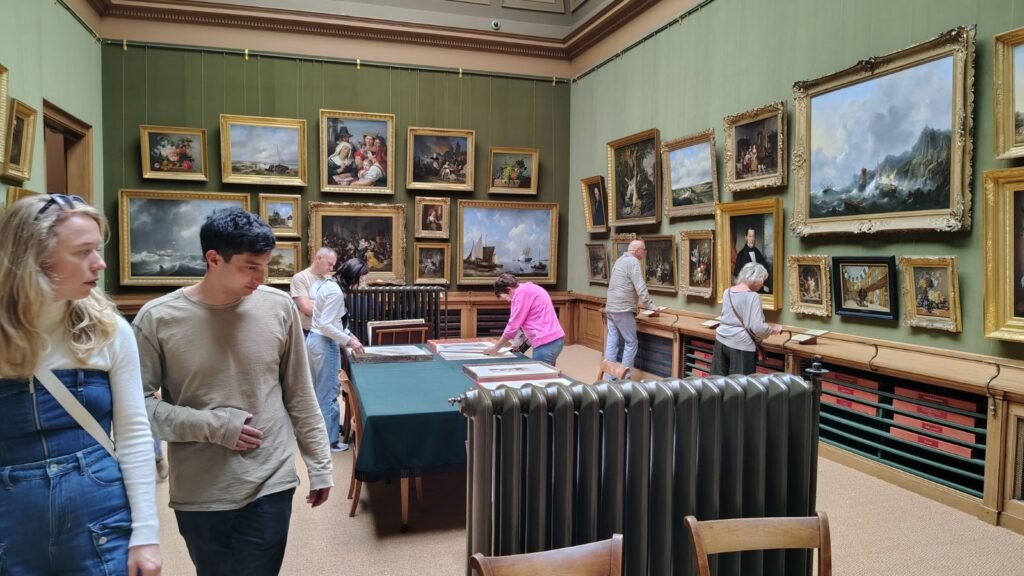
Standing among these collections, the experience feels less like viewing a static display and more like walking into a researcher’s active workplace, as if the scientists have merely stepped out for a short break.
As I walked out into the quiet streets of Haarlem, I couldn’t help but feel that the real magic of the place was not just in its old collection. It was in the reminder that science is not about having all the answers, but about never losing the urge to keep looking.
Society
79 Years After Independence: Is India Investing Enough in Science and Technology?
India’s R&D spending remains below 1% of GDP despite rising research output and patents. Is the country investing enough to achieve technological independence by 2047?


India’s research and development (R & D) spending has more than doubled in absolute terms, but R&D intensity remains below 1% of GDP. As India approaches 2047, the bigger question is whether its investment in science is sufficient to build the technologies and industries needed for technological independence.
When India became independent in 1947, the country had only 17 universities and 636 colleges serving about 2.38 lakh students. Literacy was around 14%. Nearly eight decades later, India has built a vastly larger education and research system. The country had 1,168 universities, 45,473 colleges and 12,002 standalone higher-education institutions in 2021–22, according to the All India Survey on Higher Education.
But as India looks towards its centenary of Independence in 2047, its scientific ambitions are running into a persistent question: is the country investing enough in research and development to build the technologies it will need? India’s R&D spending has increased sharply in absolute terms. Yet as a share of the economy, it has remained below 1%.
India’s R&D Spending Remains Below 1% of GDP
India’s gross expenditure on research and development rose from ₹60,197 crore in 2010–11 to ₹1,27,381 crore in 2020–21, according to the Department of Science and Technology. However, R&D expenditure as a share of GDP was 0.64% in 2020–21. The corresponding figure was 0.66% in both 2018–19 and 2019–20.
This means that while India’s research spending more than doubled over the decade, R&D intensity remained at roughly two-thirds of 1% of GDP. The latest detailed official figure available for India is therefore 0.64% for 2020–21. WIPO’s Global Innovation Index 2025 uses an R&D intensity figure of 0.65%, based on 2020 data. One of the most commonly used measures of a country’s research effort is R&D intensity—the amount a country spends on research and development as a percentage of its gross domestic product (GDP). It allows researchers to compare the relative priority given to R&D across economies of very different sizes.
There is currently no single internationally comparable R&D figure for every country for 2026. UNESCO’s new global R&D data collection is still underway, with the resulting data scheduled for release in November 2026.
Government Still Funds the Larger Share
The issue is not only how much India spends on R&D, but who pays for it. Government accounted for 59.2% of India’s gross expenditure on R&D in 2020–21, while business enterprises accounted for 40.8%, according to DST data.
The figures point to India’s continuing dependence on public funding for research. That becomes significant as research moves into areas such as semiconductors, biotechnology, artificial intelligence, quantum technologies, advanced materials and clean energy. These fields can require expensive infrastructure, specialised equipment and long development cycles before research produces commercially viable technologies.
Increasing private-sector participation is therefore likely to be as important as increasing the overall R&D budget.
India is Producing More Patents and Research
Despite its relatively low R&D intensity, India has become a significant contributor to global research and innovation. The latest Nature Index data, covering April 2025 to March 2026, records 3,565 research articles from India in the journals tracked by the index.
Patent activity has also grown rapidly. Indian applicants filed 76,470 patent applications worldwide in 2024, according to the World Intellectual Property Organization. This was a 19.2% increase over 2023 and placed India sixth among origins for worldwide patent applications.
The growth marks the sixth consecutive year of double-digit growth in patent applications from India-based applicants, according to WIPO. But patent filings do not necessarily mean that inventions reach the market.
A patent can protect an invention without it becoming a commercially manufactured product. For research to generate wider economic value, it has to move through several stages—from discovery to patent, prototype, product and eventually large-scale deployment. That transition remains one of the important challenges for India’s innovation ecosystem.
India Ranks Higher on Innovation Than Its R&D Spending Suggests
India’s relatively low R&D intensity has not prevented it from performing strongly on broader measures of innovation. WIPO’s Global Innovation Index 2025 ranked India 38th among 139 economies. India was also ranked first among lower-middle-income economies and first in Central and Southern Asia.
WIPO identifies India as an innovation overperformer, citing strengths including ICT services exports, venture-capital activity and the country’s ability to translate scientific knowledge into commercial impact. The contrast is significant.
India is generating considerable innovation despite spending a relatively small share of its GDP on R&D. But that does not necessarily mean that the existing level of investment is enough to support the next generation of technologies. As research becomes more capital-intensive, countries seeking technological leadership require sustained investment in infrastructure, specialised researchers and long-term development.
China Spends Four Times India’s Share
The gap becomes clearer when India is compared with major research economies. WIPO’s latest internationally comparable estimates for 2024 put R&D intensity at 6.33% of GDP in Israel and 5.32% in South Korea. Japan and the United States were both at 3.45%, while Germany stood at 3.11%.
China’s R&D intensity reached 2.65%. By comparison, India’s latest available figure is about 0.65%. China therefore spends roughly four times India’s share of GDP on R&D. Other emerging economies also show different levels of research intensity. WIPO estimates Brazil at 1.15%, Thailand at 1.16%, Türkiye at 1.42%, Vietnam at 0.42%, the Philippines at 0.32% and Indonesia at 0.28%.
The figures are not all based on the same data year, making direct comparisons imperfect. However, the broad difference between India and the world’s leading research economies remains clear.
Government Changing The Funding Model
India has begun introducing policies aimed at expanding research funding and encouraging greater industry participation. The Anusandhan National Research Foundation was established through legislation in 2023, with a planned five-year outlay of ₹50,000 crore for 2023–28.
The foundation is intended to strengthen research across universities, colleges and research institutions and encourage collaboration between academia, industry and government.
In July 2025, the government also approved a ₹1 lakh crore Research, Development and Innovation Scheme. The scheme is intended to encourage private-sector investment in high-risk and high-impact R&D, particularly in strategic and emerging areas.
The initiatives reflect an attempt to address a longstanding problem: India’s research system needs greater private-sector participation if overall R&D investment is to rise substantially.
What Would Higher R&D Spending Change?
There is no fixed relationship between R&D spending and the number of patents, papers or technologies a country will produce. Reaching a particular percentage of GDP cannot guarantee scientific breakthroughs.
But higher sustained investment could expand the country’s research capacity. Moving from 0.64% to 1% of GDP would represent an increase of about 56% relative to India’s current R&D intensity. It could provide greater resources for research grants, laboratory infrastructure, doctoral training and advanced equipment.
At 2%, India would move much closer to China’s current R&D intensity and have a substantially larger pool of resources for research in areas such as biotechnology, advanced manufacturing, AI, semiconductors and clean energy. At 3%, India would enter the range of several major research economies. The outcome, however, would depend on how effectively that money is used.
From Research Papers to Technologies
For India, the next phase of science policy may therefore need to focus as much on the movement of research into the economy as on increasing research output. Universities need stronger research infrastructure and stable funding. Public laboratories need effective technology-transfer mechanisms. Companies need stronger incentives to conduct R&D domestically. Researchers need access to advanced equipment and long-term funding.
Success could also be measured through indicators beyond publications and patents: technologies licensed to companies, university spin-offs, industry-funded research, prototypes entering production and revenue generated from publicly supported research. This is particularly important for technologies that could shape India’s economic future.
A semiconductor process developed in an Indian laboratory, a new pharmaceutical platform, an energy-storage technology or an agricultural innovation can have an economic impact far beyond the research paper that first describes it. At the same time, basic research cannot be judged only by immediate commercial returns. Some of the technologies that eventually transform economies begin as discoveries with no obvious market.
India therefore faces a two-part challenge: expand research that pushes scientific boundaries while building the institutions and industrial capacity needed to convert discoveries into technologies.
The Science Challenge India Faces in 2047
The scientific challenge India faced in 1947 was largely about building capacity. The country needed universities, laboratories, trained researchers and institutions capable of supporting scientific inquiry. Much of that foundation now exists.
The challenge approaching 2047 is different. India is no longer simply trying to establish a scientific system. It is trying to use that system to compete in technologies that will determine economic and strategic strength. That will require more sustained investment, greater participation from industry and stronger links between research institutions and the market.

As India approaches 100 years of Independence, the question is therefore no longer only how much science the country produces. It is whether India can invest enough in that science—and build the systems around it—to turn research into technologies, technologies into industries and scientific capability into technological independence.
Editor’s Note
Dipin Damodharan, Co-founder & Editor-in-Chief, EdPublica
South Korea offers an instructive comparison. R&D intensity—the share of a country’s GDP devoted to research and development—is not, by itself, a guarantee of economic transformation. But South Korea’s experience shows what sustained investment can achieve when it is accompanied by strong university research, private-sector participation and technological development.
UNESCO’s Institute for Statistics reported that South Korea’s R&D expenditure had reached 4.03% of GDP in 2011, compared with 0.81% for India at the time. The private sector accounted for a substantial share of South Korea’s R&D expenditure, highlighting the importance of industry participation alongside public investment.
The lesson for India is therefore not simply to spend more. It is to build an ecosystem in which increased R&D funding translates into research capacity, technologies, companies and productive industries.


Climate Change, Overfishing and the Uncertain Future of Bangladesh’s Hilsa Fishermen

A Dead Star Feeds Off Planet Formed From Its Ashes

Trump’s AI Accord Puts Big Tech in Charge of Its Own Safety. Is That Enough?

Standing with Teachers: The People Who Shape India’s Future

An Ageing Teacher Workforce Is Becoming a Recruitment Problem

From Scams to Screens: How the National Stock Exchange Rewrote India’s Equity Story

Aim for the Stars: Anjali Thomas’s Journey from a Small College in Kerala to the Frontiers of Medical Imaging

India’s AI Moment Rests on More Than Code

Marshall Islands: Why the US Nuclear Legacy Is Back Before the UN

From Silicon Valley to Sustainable Period Care; How This Engineer Is Rethinking Menstruation with Science

-

 Math2 months ago
The 2026 Fields Medals: Four Proofs, Four Decades-Old Problems Solved
-
Climate2 months ago
After Kerala’s Deadliest Landslide, the Hardest Thing to Rebuild Was Childhood
-
Society3 months ago
West Asia Crisis: Can Kerala’s Returning Gulf Migrants Find a Future in the Green Economy?
-
Space & Physics4 months ago
India Semiconductor Mission: ‘It’s Not About Fabs. It’s About Building An Entire Ecosystem’
-
Interviews2 weeks ago
From Scams to Screens: How the National Stock Exchange Rewrote India’s Equity Story
-
Climate4 months ago
The Climate World Cup? How Climate Change Could Affect Player Performance at the 2026 World Cup
-
Society3 months ago
What Is Civilisational Diplomacy? Understanding India’s Newest Foreign Policy Tool
-
Society4 months ago
From Bell Labs to the Classroom: A Second Career in Teaching