Space & Physics
India’s space economy soars: A $130 million VC fund to ignite innovation
The $130 million Venture Capital Fund is more than just a financial investment; it’s a catalyst for growth, innovation, and self-reliance in India’s space sector

In a dynamic leap toward becoming a global leader in space technology, India is set to launch a $130 million Venture Capital (VC) Fund dedicated to its burgeoning space sector. Announced by Prime Minister Narendra Modi, this initiative, spearheaded by the Indian National Space Promotion and Authorization Centre (IN-SPACe), aims to ignite innovation and support the country’s growing number of space startups.
A New Era for Space Startups
For many aspiring entrepreneurs in India’s space industry, access to funding has often been a significant barrier. Traditional lenders are typically hesitant to invest in the high-risk, high-reward arena of space technology. This new VC Fund is designed to fill that gap, providing essential capital to startups looking to take off.
“The fund is a game-changer,” says Dr. Anjali Rao, a space technology analyst. “It signals to investors that the government believes in the potential of our space industry. We’re going to see a surge in innovative solutions coming from Indian startups.”
Bridging the Funding Gap
The $130 million crore initiative is not just about money; it’s about fostering a supportive ecosystem. Over the next five years, the fund will allocate capital strategically, with plans to invest between $18.3 million and $30.5 million annually. This structured investment approach is designed to cater to both early-stage startups and more established firms, ensuring that companies at various levels of maturity can benefit.
For startups in their infancy, funding will range from $1.22 million to $ 3.66 million. More established companies with proven track records could receive up to $7.32 million. This tiered approach allows us to support a diverse range of companies and their unique needs.
Talent Retention and Economic Growth
One of the critical goals of the VC Fund is to prevent brain drain. Many skilled professionals have moved abroad for better opportunities, but this fund aims to retain talent by creating a thriving domestic ecosystem. “We’re not just creating jobs; we’re building a community of innovators who want to stay and grow in India,” says Dr. Meera Gupta, a startup consultant based in Mumbai, India.
Currently, India’s space economy is valued at approximately USD 8.4 billion, capturing about 2% of the global market. The government aims to quintuple this figure to USD 44 billion by 2033
The anticipated impact on employment is significant. The fund is expected to generate thousands of jobs across various sectors, from engineering to data analysis. As companies expand, indirect job creation in logistics and support services will also flourish.
Global Ambitions
Currently, India’s space economy is valued at approximately USD 8.4 billion, capturing about 2% of the global market. The government aims to quintuple this figure to USD 44 billion by 2033, with a strong focus on increasing exports. This vision positions India as a formidable player in the international space arena.
For startups in their infancy, funding will range from $1.22 million to $ 3.66 million. More established companies with proven track records could receive up to $7.32 million
As countries around the world recognize the strategic importance of their space sectors, India’s initiative aligns with global trends. Countries like the UK, Italy, and Japan have established similar funds to stimulate innovation and private sector participation. “India is taking a bold step in this direction, and the potential is immense,” remarks Dr. Rao.
Looking Ahead
As the launch of the VC Fund approaches, excitement is building within the Indian space community. Startups are already gearing up to apply for funding, eager to leverage the support that will help them bring their visions to life. “This is just the beginning,” says Dr. Gupta. “With the right backing, we can achieve remarkable things.”
The $130 million Venture Capital Fund is more than just a financial investment; it’s a catalyst for growth, innovation, and self-reliance in India’s space sector. As India looks to the stars, the world will be watching to see how this initiative transforms the landscape of space technology.









Space & Physics
The Universe Is Ringing
How gravitational waves from colliding black holes are opening an entirely new way of exploring the cosmos
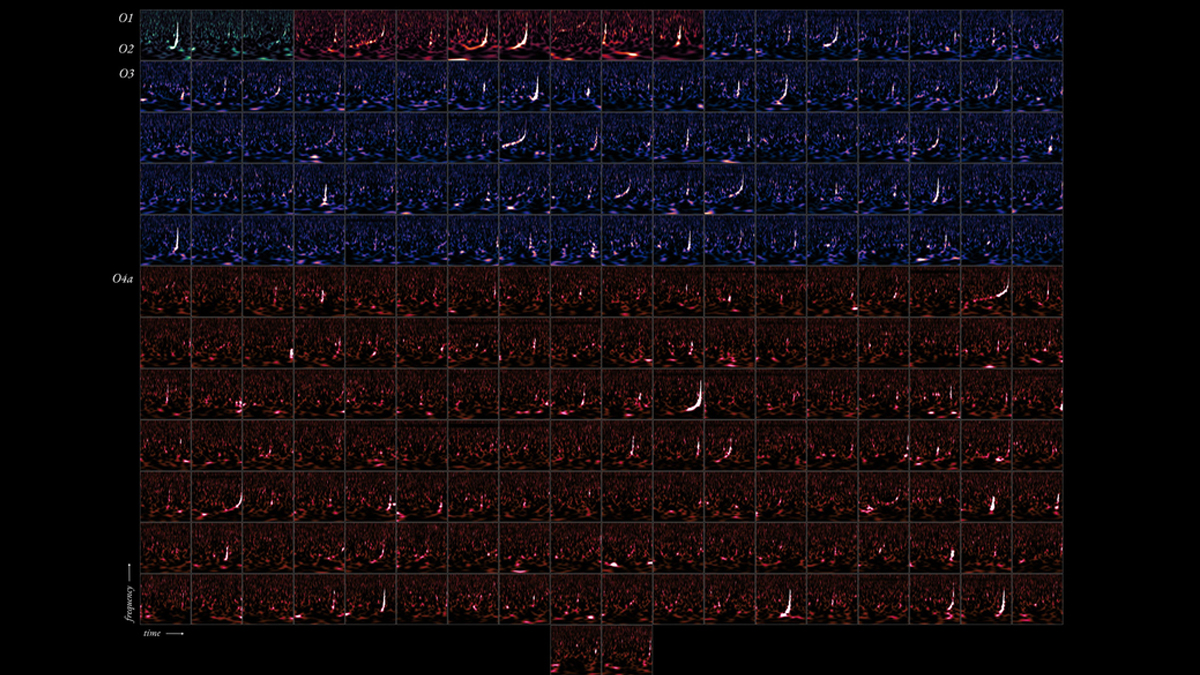
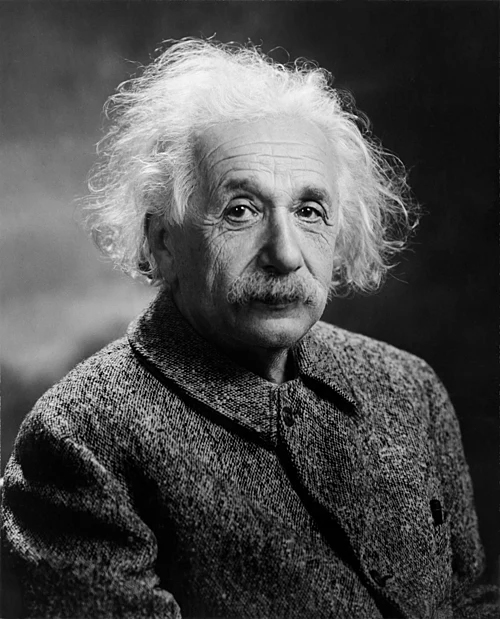
More than a century after Albert Einstein predicted them, gravitational waves are transforming astronomy. Ripples in space-time produced by colliding black holes and neutron stars are now being detected routinely, revealing a universe filled with violent mergers and cosmic echoes that have travelled billions of years to reach Earth.
A Ripple Across the Cosmos
When the densest objects in the universe collide, the impact does not simply end with the destruction or merger of stars. It sends ripples through the very fabric of space and time.
These ripples—known as gravitational waves—spread outward at the speed of light, crossing galaxies and cosmic voids for millions or even billions of years. By the time they reach Earth, they are unimaginably faint distortions of space itself.
Yet scientists have learned how to detect them.
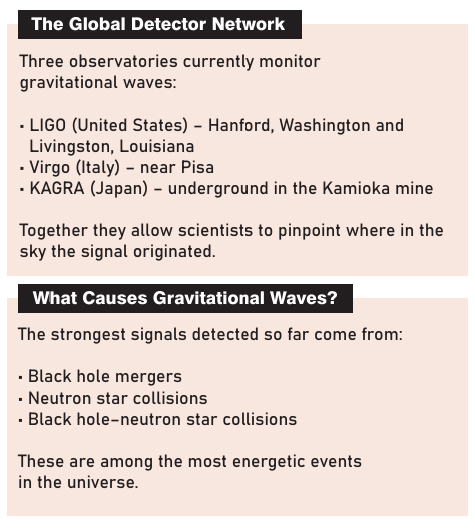
A global network of observatories now monitors these tiny disturbances: the Laser Interferometer Gravitational-Wave Observatory (LIGO) in the United States, the Virgo detector in Italy, and the Kamioka Gravitational Wave Detector (KAGRA) in Japan. Together, these instruments form one of the most sensitive scientific experiments ever constructed, capable of detecting distortions smaller than the width of a proton.
Through them, astronomers have begun to “listen” to the universe.
And what they are hearing is astonishing.
A Universe Filled with Collisions
The LIGO–Virgo–KAGRA (LVK) Collaboration has now released the latest compilation of gravitational-wave detections, to appear in a special issue of Astrophysical Journal Letters. The findings suggest that the cosmos is reverberating with collisions far more frequently than scientists once imagined.
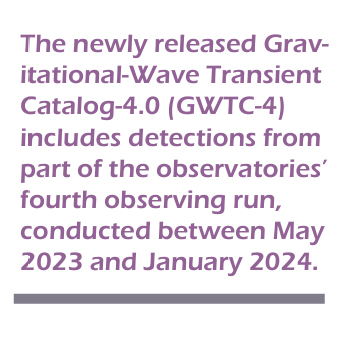
The newly released Gravitational-Wave Transient Catalog-4.0 (GWTC-4) includes detections from part of the observatories’ fourth observing run, conducted between May 2023 and January 2024.
In just nine months, the detectors recorded 128 new gravitational-wave candidates—signals that likely originated from extreme astrophysical events occurring hundreds of millions or billions of light-years away.
This newest batch more than doubles the size of the gravitational-wave catalog, which previously contained 90 candidates from earlier observing runs.
“The beautiful science that we are able to do with this catalog is enabled by significant improvements in the sensitivity of the gravitational-wave detectors as well as more powerful analysis techniques,” says Nergis Mavalvala, a member of the LVK collaboration and dean of the MIT School of Science.
What began in 2015 with the first historic detection has now become a steady stream of discoveries.
“In the past decade, gravitational wave astronomy has progressed from the first detection to the observation of hundreds of black hole mergers,” says Stephen Fairhurst, professor at Cardiff University and spokesperson for the LIGO Scientific Collaboration. “These observations enable us to better understand how black holes form from the collapse of massive stars, probe the cosmological evolution of the universe and provide increasingly rigorous confirmations of the theory of general relativity.”
When Black Holes Dance
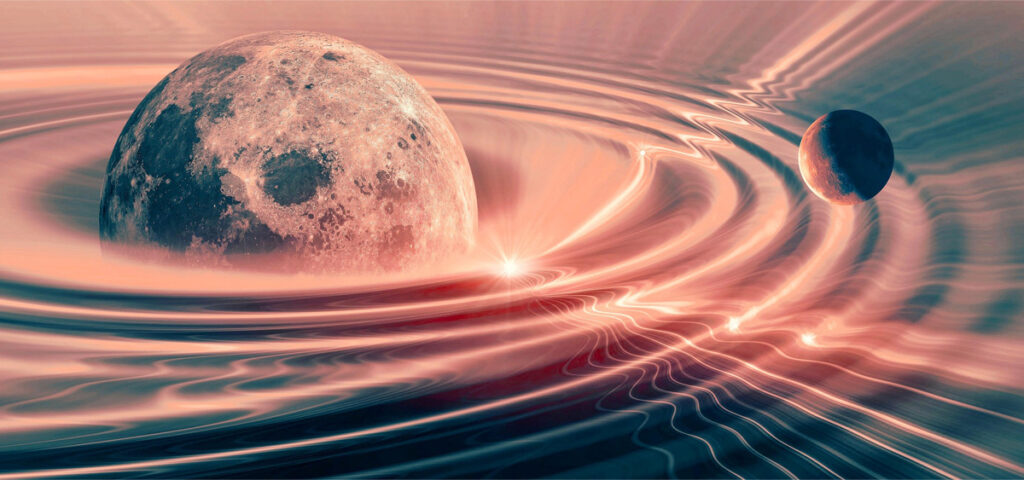
Most gravitational waves detected so far originate from binary black holes—pairs of black holes locked in orbit around each other.
Over time, gravity draws them closer together. As they spiral inward, they release enormous amounts of energy in the form of gravitational waves. In the final fraction of a second, the two objects merge in a titanic collision, forming a single, larger black hole.
These cosmic dances are among the most energetic events in the universe.
Black holes themselves are born when massive stars collapse at the end of their lives, compressing enormous amounts of matter into regions so dense that not even light can escape.
Many form in pairs. When they eventually collide, the event sends gravitational waves surging through space.
The first such detection, announced in 2016, confirmed a century-old prediction of Einstein’s theory of general relativity. Since then, dozens—and now hundreds—of similar events have been observed.
But the latest catalog shows that the universe is far more diverse than scientists once believed.
Pushing the Edges of Black Hole Physics
The newly detected signals reveal a remarkable variety of cosmic systems.
Among them are the heaviest black hole binaries ever detected, systems where the masses of the two black holes are strikingly unequal, and pairs spinning at astonishing speeds.
“The message from this catalog is: We are expanding into new parts of what we call ‘parameter space’ and a whole new variety of black holes,” says Daniel Williams, a research fellow at the University of Glasgow. “We are really pushing the edges, and are seeing things that are more massive, spinning faster, and are more astrophysically interesting and unusual.”
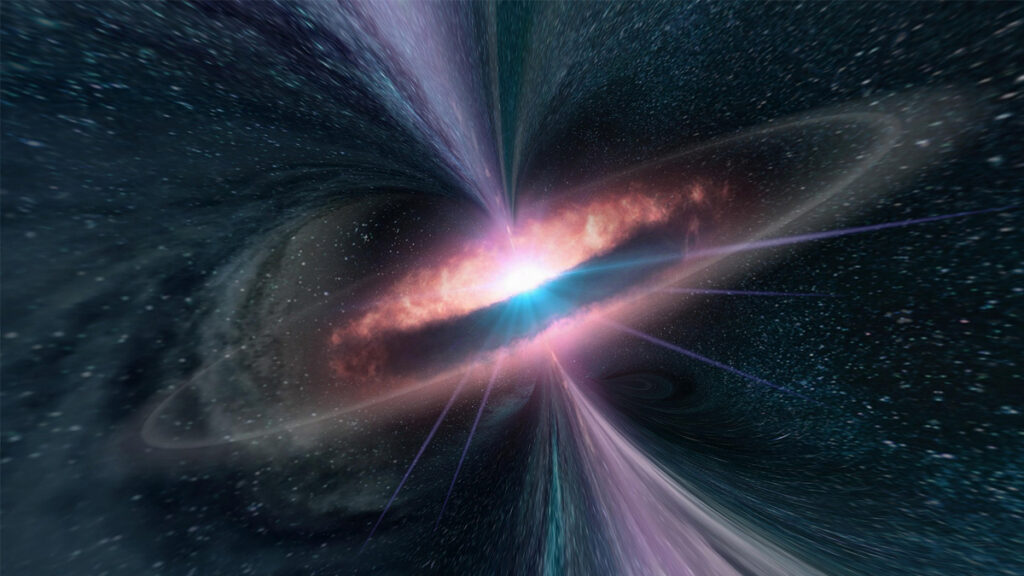
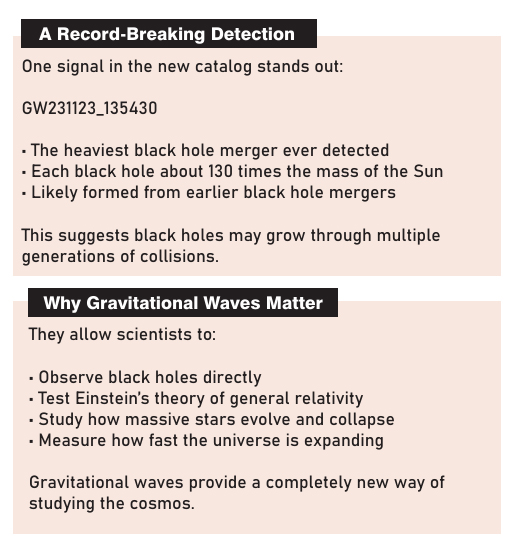
One particularly dramatic signal—GW231123_135430—appears to have originated from two enormous black holes, each roughly 130 times the mass of the Sun. Most previously observed mergers involved black holes closer to 30 solar masses.
The extraordinary size of these objects suggests they may themselves have formed from earlier black hole mergers—a kind of cosmic generational chain.
Another remarkable event, GW231028_153006, revealed a binary in which both black holes are spinning at around 40 percent of the speed of light.
And in GW231118_005626, scientists detected an unusually uneven pair where one black hole is roughly twice as massive as the other.
“One of the striking things about our collection of black holes is their broad range of properties,” says Jack Heinzel, an MIT graduate student who contributed to the catalog’s analysis. “Some of them are over 100 times the mass of our sun, others are as small as only a few times the mass of the sun. Some black holes are rapidly spinning, others have no measurable spin.”
“We still don’t completely understand how black holes form in the universe,” he adds, “but our observations offer a crucial insight into these questions.”
Catching a Whisper in Space-Time
Detecting gravitational waves requires extraordinary precision.
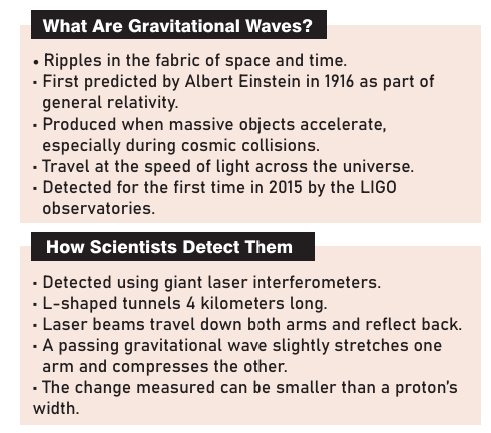
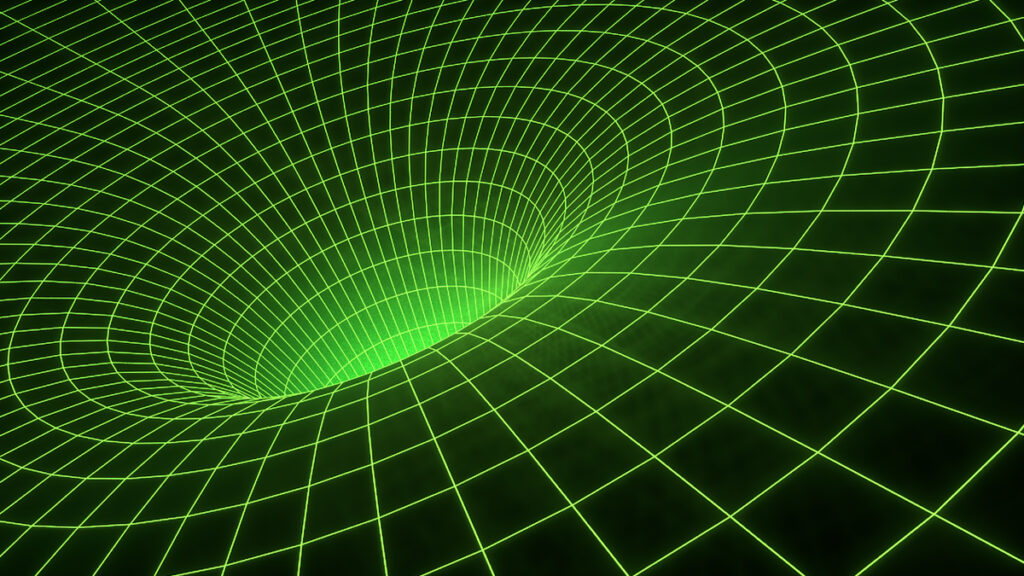
The observatories use L-shaped interferometers with arms several kilometers long. Laser beams travel down these tunnels and reflect back to their source.
If a gravitational wave passes through the detector, it slightly stretches one arm while compressing the other, changing the distance the light travels by an incredibly tiny amount.
These changes can be smaller than one-thousandth the diameter of a proton.
Even with such advanced technology, detections remain unpredictable.
“You can’t ever predict when a gravitational wave is going to come into your detector,” says Amanda Baylor, a graduate student at the University of Wisconsin–Milwaukee who worked on the signal search. “We could have five detections in one day, or one detection every 20 days. The universe is just so random.”
Recent upgrades have dramatically improved the detectors’ reach. LIGO can now detect signals from neutron star collisions up to one billion light-years away, and black hole mergers far beyond that.
Testing Einstein’s Ultimate Theory
Gravitational waves are not only revealing spectacular cosmic events. They are also providing some of the most extreme tests ever conducted of Einstein’s theory of general relativity.
Black holes themselves are one of the most extraordinary predictions of the theory.
“Black holes are one of the most iconic and mind-bending predictions of general relativity,” says Aaron Zimmerman, associate professor of physics at the University of Texas at Austin.
When two black holes collide, he explains, they “shake up space and time more intensely than almost any other process we can imagine observing.”
One particularly powerful signal—GW230814_230901—allowed scientists to analyze the structure of the gravitational wave in exceptional detail.
“So far, the theory is passing all our tests,” Zimmerman says. “But we’re also learning that we have to make even more accurate predictions to keep up with all the data the universe is giving us.”
Measuring the Expansion of the Universe
Gravitational waves are also becoming powerful tools for answering one of cosmology’s biggest questions: how fast the universe is expanding.
Astronomers measure this expansion using the Hubble constant, but different methods have produced conflicting results.
Gravitational waves offer an independent approach.
“Merging black holes have a really unique property: We can tell how far away they are from Earth just from analyzing their signals,” says Rachel Gray, a lecturer at the University of Glasgow.
“So, every merging black hole gives us a measurement of the Hubble constant, and by combining all of the gravitational wave sources together, we can vastly improve how accurate this measurement is.”
Using the current gravitational-wave catalog, scientists estimate that the universe is expanding at roughly 76 kilometers per second per megaparsec.
For now, the uncertainty remains large—but future detections could sharpen the measurement significantly.
Listening to the Future
Only a decade ago, gravitational waves were purely theoretical signals.
Today, they are transforming astronomy.
With every new detection, scientists gain another glimpse into the hidden life of the universe: the birth of black holes, the evolution of galaxies, and the behavior of gravity under the most extreme conditions imaginable.
“Each new gravitational-wave detection allows us to unlock another piece of the universe’s puzzle in ways we couldn’t just a decade ago,” says Lucy Thomas, a postdoctoral researcher at the Caltech LIGO Lab.
“It’s incredibly exciting to think about what astrophysical mysteries and surprises we can uncover with future observing runs.”
The instruments on Earth are quiet, their lasers moving silently down vacuum tunnels. But far beyond our galaxy, black holes continue to collide.
And with each collision, the universe sends out another ripple—another echo across the cosmos—waiting for us to hear it.
Space & Physics
NASA’s Artemis II Captures Stunning ‘Earthset’ Over the Moon
NASA’s Artemis II crew captures a rare Earthset over the Moon, revealing lunar basins, craters, and Earth’s night-day divide.
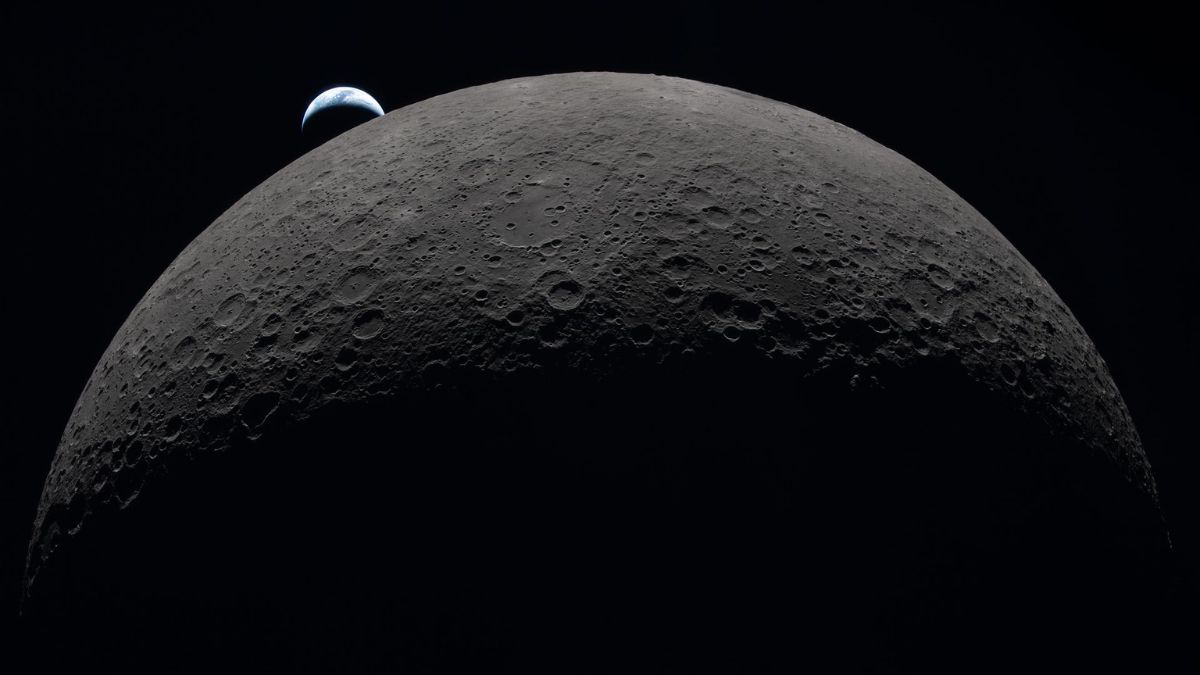
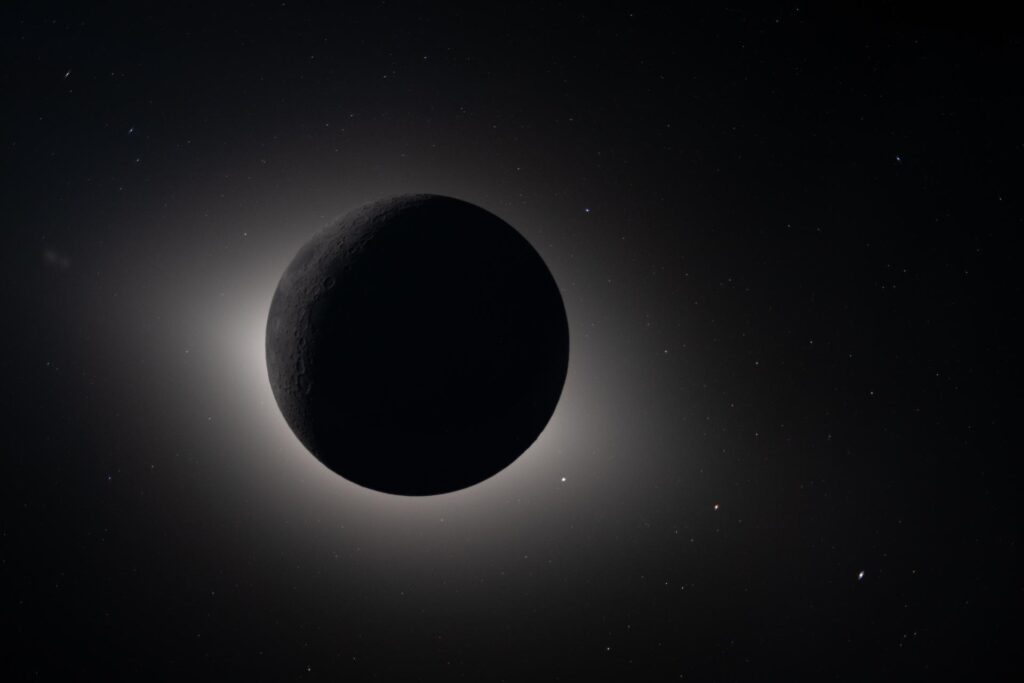
NASA’s Artemis II mission has captured a striking new perspective of the Moon, showing Earth setting beyond the lunar horizon in a rare and visually dramatic moment from deep space.
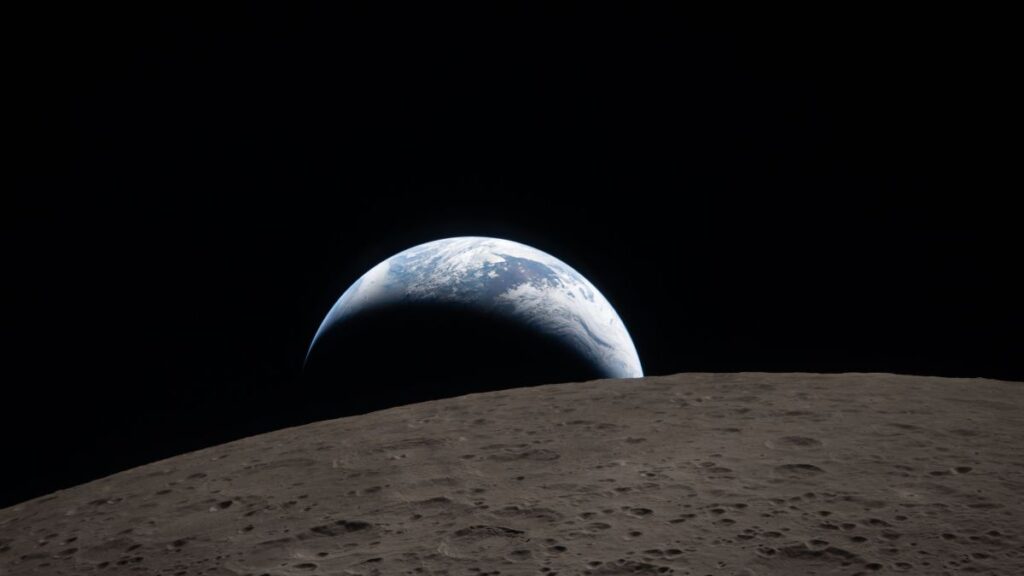
The image, taken on April 6, 2026, at 6:41 p.m. EDT by the Artemis II crew during their journey around the far side of the Moon, reveals Earth partially dipping behind the Moon’s curved limb—an event often described as an “Earthset.”
A Geological Snapshot of the Moon
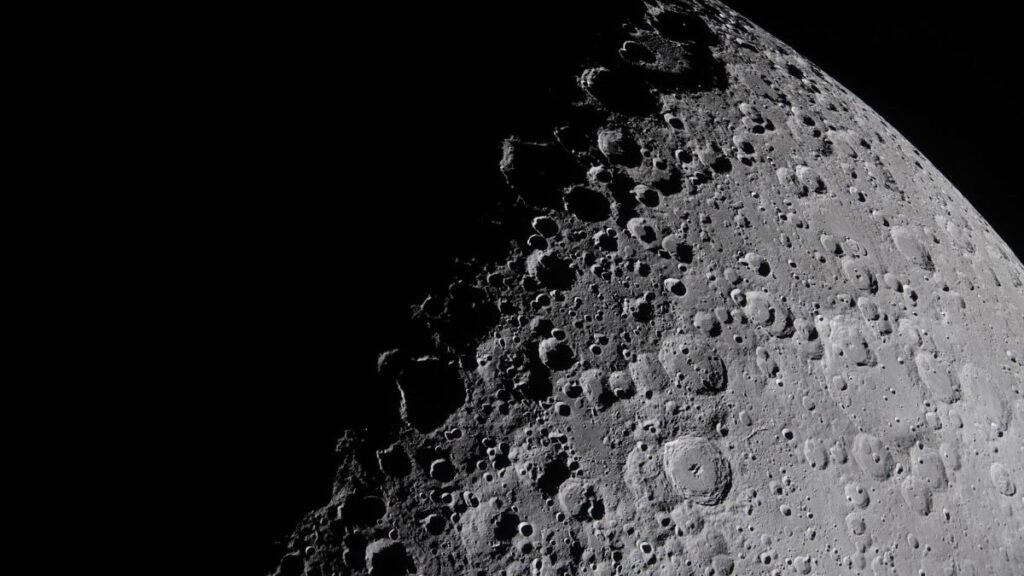
Beyond its visual impact, the image offers a detailed look at the Moon’s complex surface.
The Orientale basin, one of the Moon’s most prominent impact structures, is visible along the edge of the lunar surface. Nearby, the Hertzsprung Basin appears as faint concentric rings, partially disrupted by the younger Vavilov crater, which sits atop the older geological formation.
Also visible are chains of secondary craters—linear indentations formed by debris ejected during the massive impact that created the Orientale basin.
Artemis II: Earth in Shadow and Light
The photograph also captures Earth in a moment of contrast.
The darkened portion of the planet is in nighttime, while the illuminated side reveals swirling cloud formations over Australia and the Oceania region, offering a reminder of Earth’s dynamic atmosphere even from hundreds of thousands of kilometres away.
Artemis II: A New Era of Lunar Exploration
The Artemis II mission marks a major step in NASA’s return to the Moon, carrying astronauts on a crewed journey around the lunar surface for the first time in over five decades.
Images like this not only provide scientific insights into lunar geology but also offer a powerful visual connection between Earth and its nearest celestial neighbour—highlighting both the scale of space exploration and the fragility of our home planet.
Space & Physics
MIT Develops System to Boost Data Centre Efficiency by Up to 94%
MIT researchers develop Sandook, a system that boosts data centre efficiency by up to 94% without new hardware, improving SSD performance.
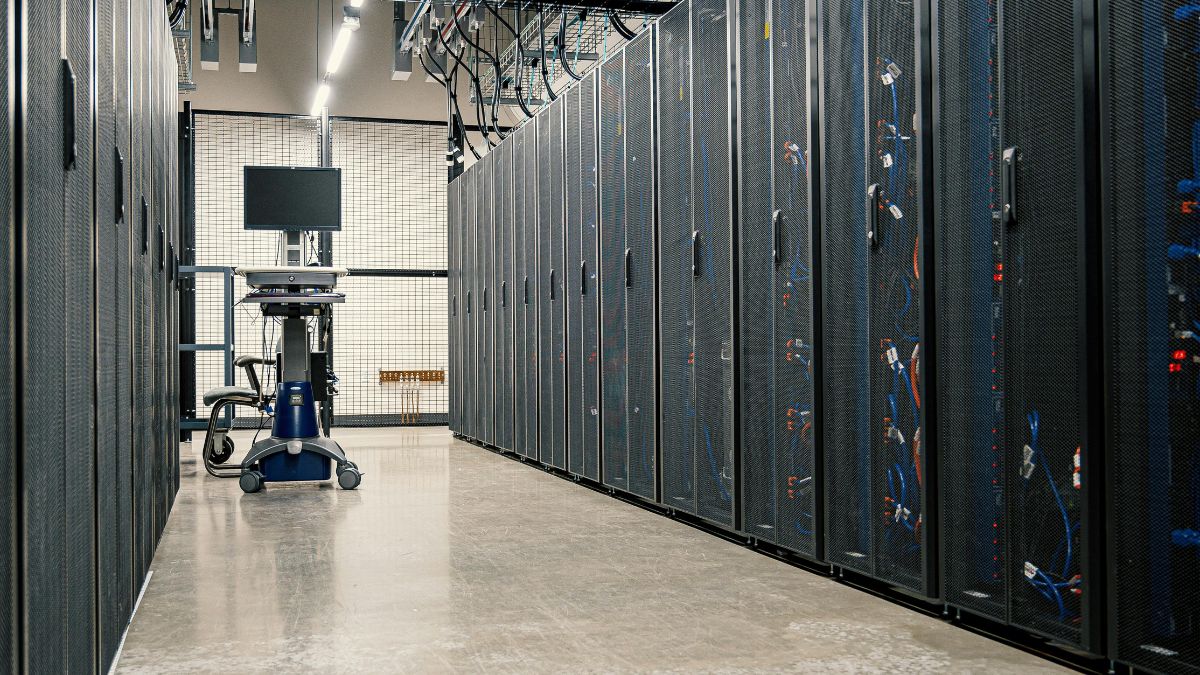
Researchers at the Massachusetts Institute of Technology (MIT) have developed a new system that significantly improves data centre efficiency by optimising the performance of storage devices, potentially reducing the need for additional hardware.
The system, called Sandook, addresses a persistent challenge in modern data centres—underutilisation of storage devices due to performance variability. By simultaneously tackling multiple sources of inefficiency, the approach delivers substantial performance gains compared to traditional methods.
Data Centre Efficiency: Addressing a Hidden Bottleneck
In data centres, multiple storage devices such as solid-state drives (SSDs) are often pooled together so that applications can share resources. However, differences in device performance mean that slower drives can limit overall system efficiency.
MIT researchers found that these inefficiencies stem from three key factors: hardware variability across devices, conflicts between read and write operations, and unpredictable slowdowns caused by internal processes like garbage collection.
To overcome this, the team developed Sandook, a software-based system designed to manage these issues in real time.
Two-Tier Intelligent Architecture
The system uses a two-tier architecture, combining a global controller that distributes tasks across devices with local controllers that react quickly to performance slowdowns.
This structure allows Sandook to dynamically balance workloads, rerouting tasks away from devices experiencing delays and optimising performance across the entire system.
The system also profiles the behaviour of individual SSDs, enabling it to anticipate slowdowns and adjust workloads accordingly.
Significant Performance Gains
When tested on real-world tasks such as database operations, AI model training, image compression, and data storage, Sandook demonstrated major improvements.
The system increased throughput by between 12 percent and 94 percent compared to conventional methods, while also improving overall storage utilisation by 23 percent. It enabled SSDs to achieve up to 95 percent of their theoretical maximum performance—without requiring specialised hardware.
A More Sustainable Approach
Researchers emphasised that improving efficiency is critical given the cost and environmental impact of data centre infrastructure.
“There is a tendency to want to throw more resources at a problem to solve it, but that is not sustainable in many ways. We want to be able to maximize the longevity of these very expensive and carbon-intensive resources,” said Gohar Chaudhry, lead author of the study, ina media statement.
“With our adaptive software solution, you can still squeeze a lot of performance out of your existing devices before you need to throw them away and buy new ones,” she added.
Unlocking Untapped Potential
The system also addresses the challenge of inconsistent device behaviour over time.
“I can’t assume all SSDs will behave identically through my entire deployment cycle. Even if I give them all the same workload, some of them will be stragglers, which hurts the net throughput I can achieve,” Chaudhry explained.
By continuously adjusting workloads, Sandook ensures that even underperforming devices contribute effectively without dragging down overall performance.
Researchers say the system could be further enhanced by integrating new storage technologies and adapting to predictable workloads such as artificial intelligence applications.
“Our dynamic solution can unlock more performance for all the SSDs and really push them to the limit. Every bit of capacity you can save really counts at this scale,” Chaudhry said.
Implications
As demand for data processing continues to surge, innovations like Sandook could play a critical role in making data centres more efficient, cost-effective, and environmentally sustainable—without requiring massive infrastructure expansion.


Vantara: Inside a Billionaire-Backed Bid to Build a Global Wildlife University

The Universe Is Ringing

Lancet Commission Launched to Tackle Health and Justice Impacts of Rising Sea Levels

India’s $145 Billion Energy Shift: The Financing Challenge Behind a Clean Power Future

NASA’s Artemis II Captures Stunning ‘Earthset’ Over the Moon

NASA to launch first crewed Artemis Moon mission on April 1

Climate change heat impact affected over 2.5 billion people

How China Is Redrawing the Global Map of Critical Minerals

Study Reveals How Ocean Bacteria Drive Plastic Biodegradation

Hormuz Crisis Exposes Global Fertiliser Dependency Risks

-

 Society3 months ago
The Ten-Rupee Doctor Who Sparked a Health Revolution in Kerala’s Tribal Highlands
-
Society4 months ago
From Qubits to Folk Puppetry: India’s Biggest Quantum Science Communication Conclave Wraps Up in Ahmedabad
-
COP305 months ago
Brazil Cuts Emissions by 17% in 2024—Biggest Drop in 16 Years, Yet Paris Target Out of Reach
-
Earth5 months ago
Data Becomes the New Oil: IEA Says AI Boom Driving Global Power Demand
-
COP305 months ago
Corporate Capture: Fossil Fuel Lobbyists at COP30 Hit Record High, Outnumbering Delegates from Climate-Vulnerable Nations
-
Space & Physics4 months ago
Indian Physicists Win 2025 ICTP Prize for Breakthroughs in Quantum Many-Body Physics
-
Health5 months ago
Air Pollution Claimed 1.7 Million Indian Lives and 9.5% of GDP, Finds The Lancet
-
Sustainable Energy4 months ago
The $76/MWh Breakthrough: Battery-Backed Solar Becomes the Cheapest Firm Power