Society
In ancient India, mushy earth made for perfume scent
Kannauj, a city in the Indian state of Uttar Pradesh, offers a sustainable alternative in producing perfumes using traditional modes of distillation.

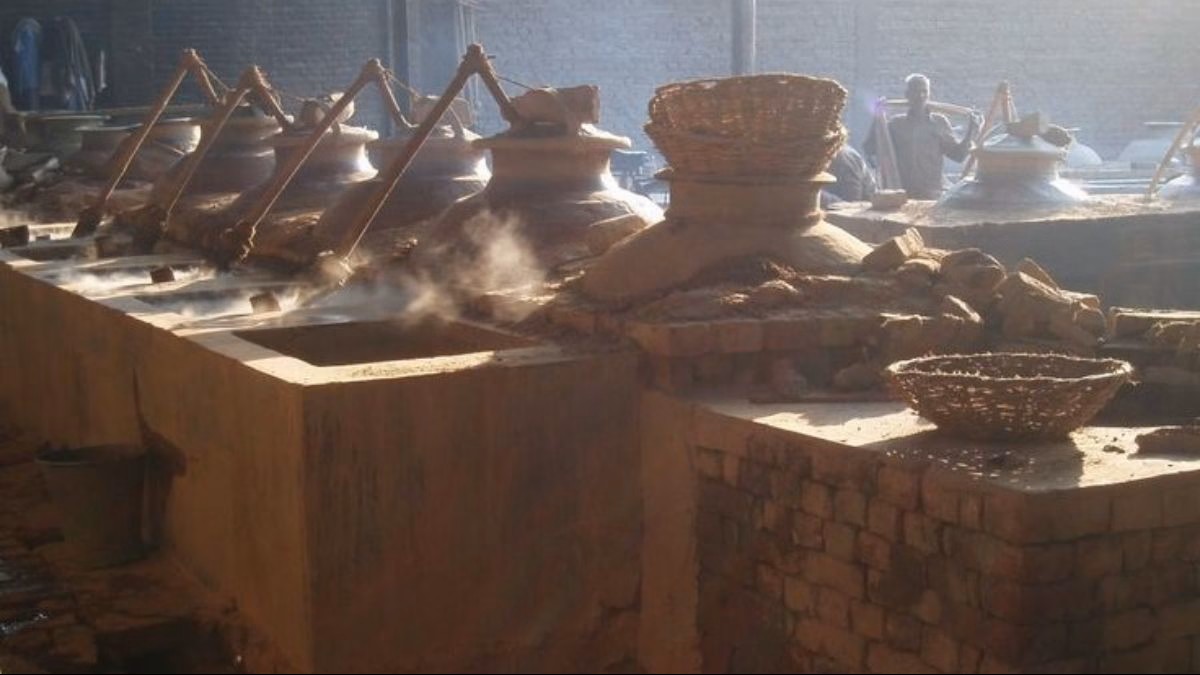
A sweet scent typically lingers around in the air at Kannauj, an ancient city in India’s most populous state of Uttar Pradesh. It’s an imprint of the countless occasions when it had rained, of roses that bloomed at dawn, and of sandalwood trees that once breathed centuries of calm.. Though mushy smells are not unique to Kannauj, the city utilized traditional distillation methods to make perfume out of these earthly scents.
Kannauj has had a longstanding tradition in perfume-making since four centuries ago. The city, colloquially known as the country’s ancient perfume capital, still uses rustic copper stills, wood-fired ovens, and bamboo pipes leading to sandalwood oil-filled vessels, or attar as it is colloquially known, to make their perfume. Though it gives a pre-industrial look, a closer peek would reveal an ecosystem of complex thermal regulation, plant chemistry, sustainability science, and hydro-distillation chemistry at work.
When synthetically-made but sustainable perfumes, and AI-generated ones share the spotlight today, Kannauj’s tryst with perfumes offer an alternative, sustainable model in traditional distillation, which is inherently low-carbon, zero-waste, and follow principles of a circular economy; all in alignment with sustainable development goals.
Traditional perfume-making is naturally sustainable
In industrial processing, hydro-distillation is a commonly done to separate substances with different boiling points. Heating the liquids produce vapors, which can later be liquefied in a separate chamber. Perfumers in Kannauj follow the same practice, except it promises to be more sustainable with the copper stills, a process colloquially known as dheg-bhakpa hydro-distillation.
There’s no alcohol or synthetic agents in use. Instead, they heat up raw botanicals – such as roses, vetiver roots, jasmine, or even sunbaked clay – to precise temperatures well short of burning, thereby producing fragrant vapor. The vapors are then guided into cooling chambers, where they condense and bond with a natural fixative, often sandalwood oil. Plant residue is the only byproduct, which finds use as organic compost to cultivate another generation of crops.
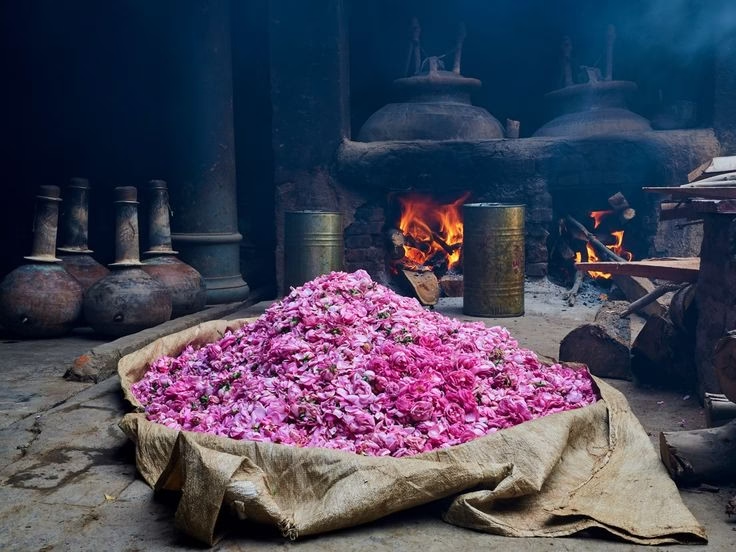
Trapping earthly scent to make perfume
In the past five years, Kannauj’s veteran perfumers noticed a quiet, but steady shift in their timely harvest and produce. Rose harvests have moved earlier by weeks. Vetiver roots grow shallower due to erratic rainfall. Jasmine yields are fluctuating wildly. The local Ganges river, which influences humidity levels essential for distillation timing, is no longer as predictable. For an entire natural aromatic economy built on seasonal synchrony, this uncertainty has rung alarm bells.
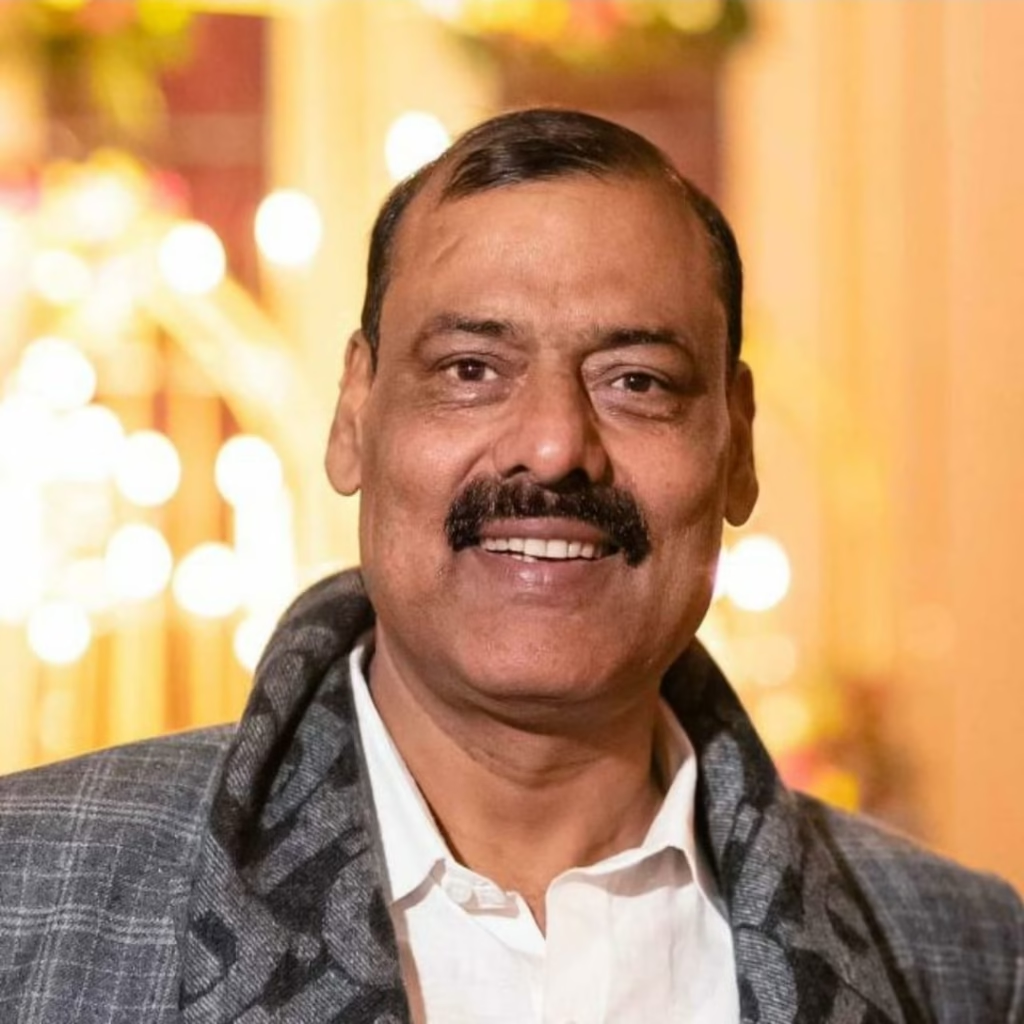
“The scent of a flower depends not just on the flower itself,” Vipin Dixit, a third-generation attar-maker whose family has distilled fragrance for decades, said to EdPublica.
“It depends on the weather the night before, on the heat at sunrise, on the moisture in the air. Even the soil has a scent-memory.”
As a result, perfumers in Kannauj have begun to adapt, applying traditional wisdom through a modern scientific lens. Local distillers are now working with botanists and environmental scientists to study soil microbiomes, measure scent compounds using chromatography, and develop community-based rainwater harvesting to ensure sustainable crop health.
One of the most surprising innovations is trapping petrichor — the scent of first rain — through earth attars. Clay is baked during extreme heat waves, mimicking summer conditions, then distilled to trap the scent of rain hitting dry soil. This aroma, called mitti attar, is one of the few scents in the world created from an environmental phenomenon; and not a flower.
At a time when the world is scrambling to save biodiversity, the humble attar may become a template for green chemistry — one that doesn’t just preserve scent, but also restores the relationship between science, nature, and soul.






Society
Academic Diplomacy: How India Can Build Global Influence Through Universities
Academic diplomacy could give India a new source of global influence as universities, research networks and student mobility become tools of foreign policy.

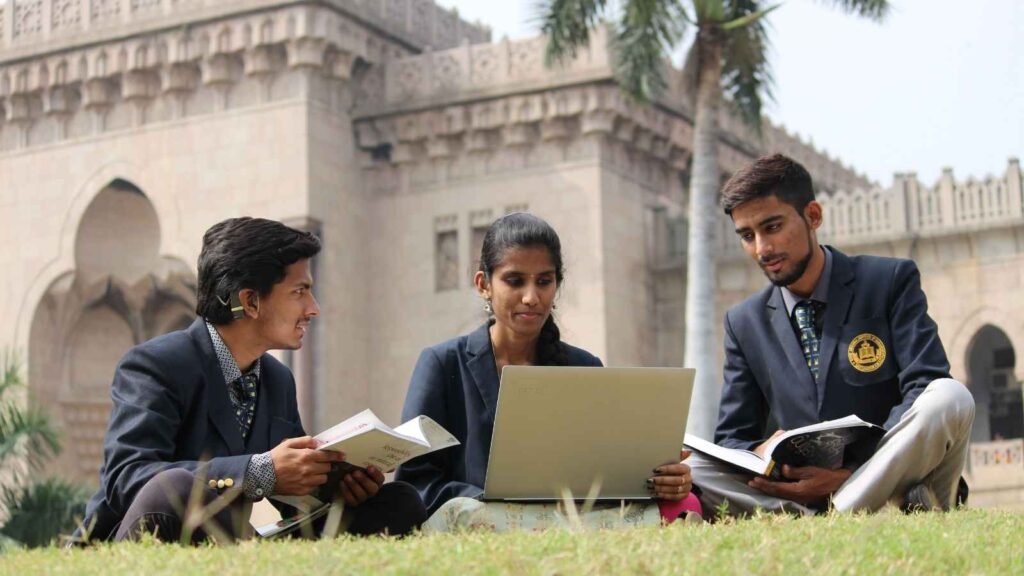
As global power becomes more multipolar, India’s universities could become important instruments of academic diplomacy, building influence through students, research and institutional partnerships.
In an era characterised by fragmented geopolitics, economic realignments, and the gradual decay of unipolar hegemony, statecraft has expanded far beyond classic military projection and commercial leverage. Modern influence relies heavily on attraction, ideological alignment, and institutional networking—the foundational components of soft power. For decades, international relations theorists evaluated soft power through the lens of cultural export, public diplomacy, and foreign aid. However, as global power shifts toward a multipolar architecture, higher education has emerged as one of the most vital strategic arenas for long-term influence. Knowledge ecosystems, research networks, and student mobility are no longer merely domestic educational metrics; they are instrumentalities of geopolitical positioning. Within this evolving international framework, India stands at a critical juncture where its vast higher education apparatus must transform from an internal developmental tool into a primary engine of regional and global academic diplomacy.
Academic Diplomacy: How India Can Turn Universities into Global Influence
Academic diplomacy is different from conventional foreign policy, as it has a different timeline. Economic sanctions and defence alliances yield results in the short term, whereas academic diplomacy makes an impact through generations of diplomatic relationships. This diplomacy includes various strategies, such as having international experts, opening branches of universities abroad and organising joint research projects that create new elite-to-elite relationships. When policymakers, scholars and influential people from abroad are educated in the host country, they acquire knowledge about its culture, legal systems and values. In the past, Western countries have used their educational establishment to promote their liberal values in the world, educating people from underdeveloped countries, and bringing them into their intellectual network.
In the multipolar international order, the balance of academic competition is moving away from being centralised. Emerging economies acknowledge that depending on outside sources of knowledge has implications of certain risks, from intellectual dependency to brain drain. For India, building a strong system of academic diplomacy is more than just prestige, it is a necessity from the geopolitical point of view as the largest democracy institutions are gaining their place as leaders of the Global South. The educational landscape of India provides an opportunity to expand its influence in the regions of Asia, Africa, and beyond.
India’s Historical Legacy and Modern Mandates
The idea of India as a global educational beacon is historically rooted in its ancient heritage. Long before the establishment of the contemporary nation-states, ancient education centres acted as international centres of wisdom, luring people from all over Eurasia with the promise of learning subjects such as philosophy, geography, medicine, and logic. After gaining independence, the Indian government engaged in making use of this heritage through providing training and scholarships to students from various nations of Africa, the Mideast, and South Asia through its Indian Technical and Economic Cooperation (ITEC) Programme.
However, modern academic diplomacy demands a structural transition from historical nostalgia to modern institutional capacity. The contemporary global student population values institutional rankings, research infrastructure, seamless credit transfers, post-study work pathways, and political stability. While India’s premier technical institutions, such as the Indian Institutes of Technology (IITs) and Indian Institutes of Management (IIMs), enjoy immense global brand recognition, their historically insular focus on domestic intake limited their direct role in international student recruitment. Recognising this limitation, recent structural interventions detailed in the official framework of the National Education Policy (NEP) 2020 have sought to reposition Indian higher education as globally integrated, aiming to increase international student enrolment and facilitate internationalisation at home.
Mechanisms of Projection: Institutional Footprints and Internationalisation
India’s contemporary academic diplomacy operates across three major vectors: international student recruitment, institutional offshore expansion, and strategic multilateral knowledge networks. Government-backed platforms like the official Study in India Portal were designed to streamline entry procedures, provide specialised scholarships, and market Indian higher education across target regions in Africa, Central Asia, and Southeast Asia. The value proposition is distinct: high-quality technical, medical, and liberal arts instruction delivered in English at a fraction of the cost of Western universities. By catering to price-sensitive students from developing nations, India builds goodwill and deepens economic and social linkages with emerging markets.
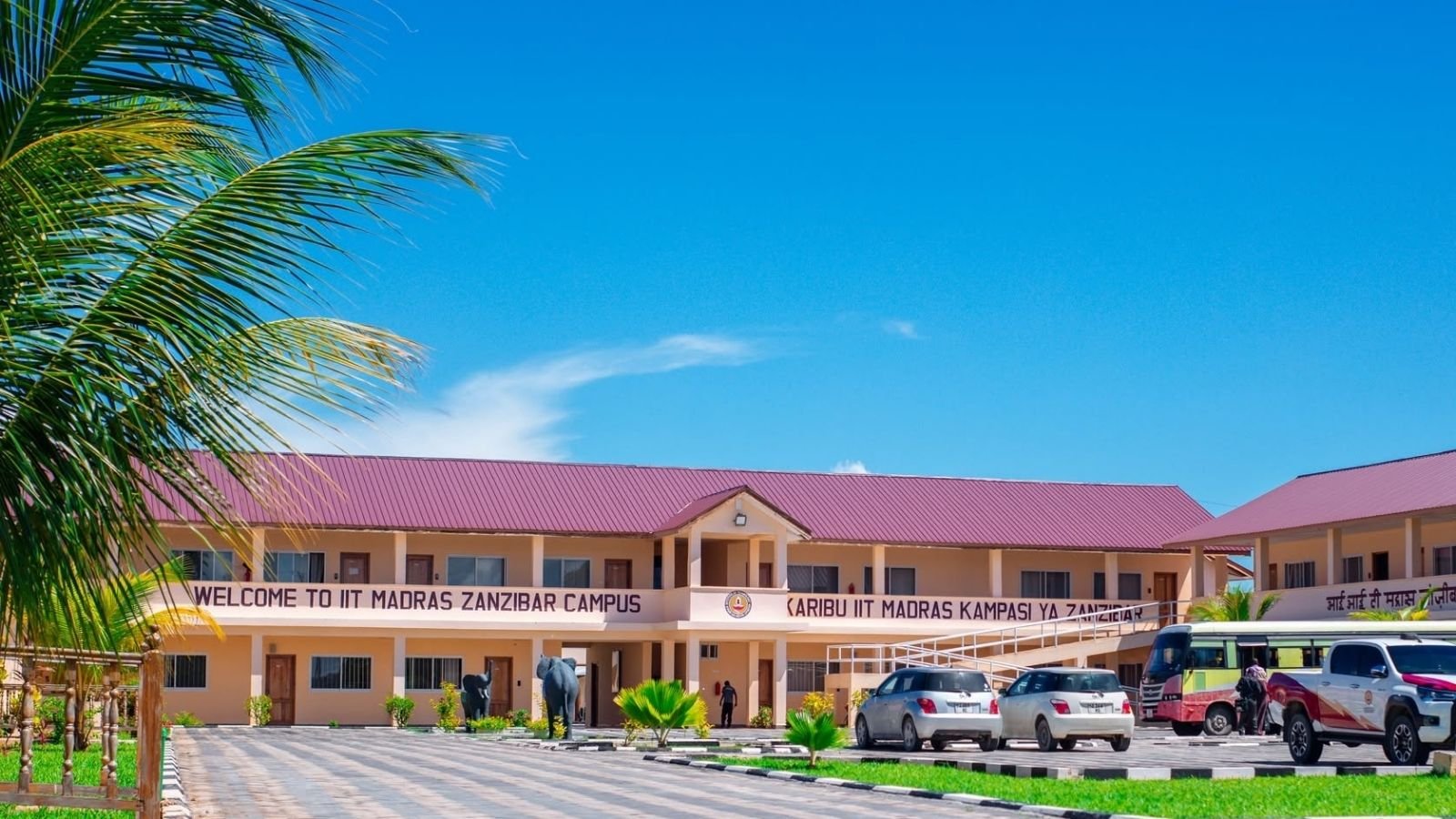
Concurrently, the outbound deployment of Indian public institutions marks a shift in state strategy. The launch of overseas campuses, detailed in official announcements for IIT Madras in Zanzibar and the establishment of IIT Delhi in Abu Dhabi, signals a transition from passive recruitment to active global institutional presence. These campuses serve dual strategic functions. Locally, they address acute capacity deficits in high-tier technical training across host nations. Geopolitically, they establish permanent Indian institutional footholds in key oceanic and economic nodes, acting as hubs for joint technological innovation, industrial collaboration, and strategic regional presence.
Beyond physical campuses, multilateral platforms provide another crucial dynamic for academic influence. Through regional groupings and global South summits, India has increasingly prioritised academic collaboration, joint research grants, and climate-resilience research initiatives. By spearheading collaborative research in fields such as artificial intelligence, renewable energy, tropical medicine, and digital public infrastructure, India positions itself not as an extractive knowledge consumer, but as a co-creator of solutions tailored specifically for the developing world.
Structural Friction: Domestic Realities versus Foreign Policy Ambitions
In spite of its strategic aspirations for higher education, India is blocked by serious structural challenges in fulfilling its potential as an academic global power. The key obstacle continues to be the major disparities within the domestic academic setting. While elite state-owned universities provide first-class educational services, many entities of the academic system suffer from administrative issues, inconsistent infrastructural provisions, lack of teaching staff, and complex regulation. Academic diplomacy of a country depends very much on the quality of the academic institutions available in it; it is essential to maintain high standards at home in order to project one’s image to the world.
In addition, international students have troubles connecting to their academic surroundings, getting qualified help and assistance, and establishing diversity on campus. International researchers arriving in India face a wide range of bureaucratic issues connected to visa fixing, constraints applied to housing, and the lack of practical work opportunities.
Furthermore, the global competition for intellectual capital has intensified dramatically. Middle-income powers across Eurasia and East Asia are heavily subsidising their university sectors to attract international talent, creating a highly competitive landscape for global education. If India seeks to position its universities as preferred destinations for foreign talent, academic diplomacy must receive sustained fiscal backing, simplified regulatory oversight, and dedicated institutional autonomy to design programs tailored for foreign scholars.
The Road Ahead: Building an Intentional Academic Statecraft
To create a robust academic presence in a multipolar world, India should incorporate its higher education strategy into its larger foreign policy framework. Educational diplomacy should work in conjunction with the Ministry of Education and the Ministry of External Affairs in order to function efficiently in time.
First, India must create specific scholarship schemes that would benefit future political, administrative, and technological leaders of the countries in the Global South. By providing fully merited scholarships to aspiring students from other countries, India will be able to reap high immediate diplomatic profits.
Second, authorities should give universities more operational autonomy when collaborating with foreign institutions. Making the process of obtaining dual degrees simpler, promoting joint degrees accreditation, and allowing more flexible systems of exchange can attract foreign universities and colleges to Indian institutions.
Third, academic diplomacy should not only be limited to STEM disciplines but should also span areas like social sciences, public policy, humanities, and environmental studies. In order to tackle complex global issues like climate change, digital ethics, poverty, and public health, India has a significant historical background with which it can be studied. Research institutions working on issues like Global South, simple innovation, and sustainable development should serve to transform Indian higher educational institutions into intellectual centres of the global governance debate.
Ultimately, higher education represents one of the most versatile and durable forms of soft power available to a rising state. In a global order increasingly characterised by geopolitical friction and economic volatility, classrooms and research laboratories offer spaces for sustained collaboration and shared progress. By strengthening domestic academic standards, removing administrative barriers, and projecting institutional capability abroad, India can transform its higher education ecosystem into a pillar of international diplomacy—advancing its national interests while contributing meaningfully to the global pool of knowledge.
Society
Six Months of the Hormuz Crisis: A USD 330 Billion Global Fuel Bill — and India’s USD 22.5 Billion Share

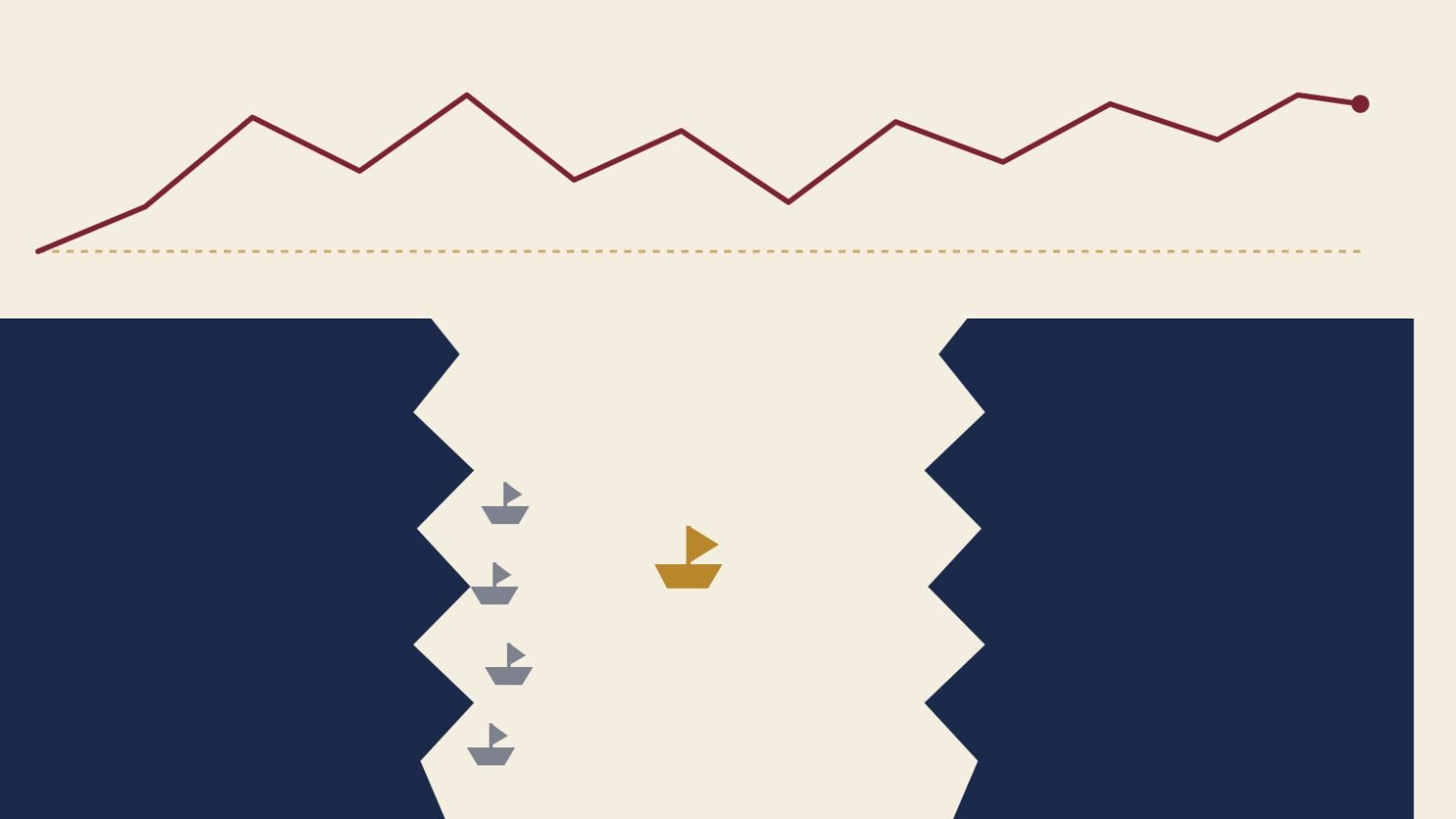
Six months into the Hormuz crisis, global fossil fuel importers have paid USD 330 billion above expected prices, with India’s additional bill reaching USD 22.5 billion.
EdPublica Data Desk | Analysis
Since the United States and Israel struck Iran on 28 February 2026 and shipping through the Strait of Hormuz collapsed, countries that import oil and gas by sea have paid more than USD 330 billion above what markets had expected to charge them, according to new research published by the Centre for Research on Energy and Clean Air (CREA). That works out to roughly USD 55 billion extra every month for half a year — the largest sustained fossil fuel price shock since the 1990 Gulf War, and one that is still running.
Hormuz crisis drives global fuel costs higher
India’s share of that bill is USD 22.5 billion, the second-highest of any country in the world, behind only China’s USD 35.5 billion and ahead of the United States, despite America being the world’s largest oil producer. That ranking is a direct consequence of how much of its energy India buys from abroad: the country imports close to 90 percent of the crude oil it uses, more than almost any other major economy, which leaves it with limited room to absorb a shock at the source.
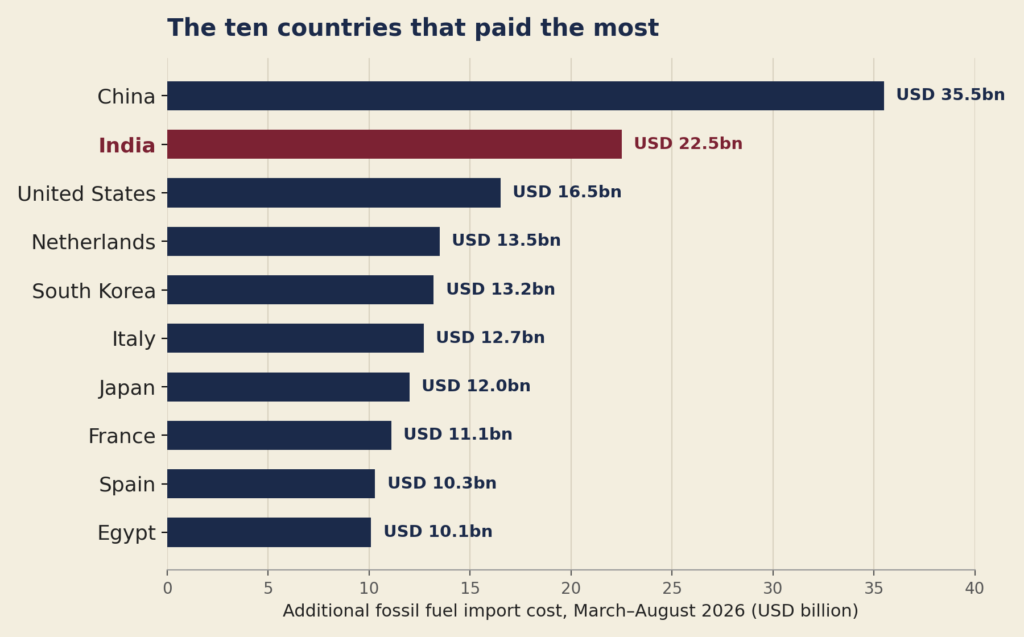
India paid the second-highest fossil fuel import premium of any country over the six months to August 2026, behind only China. Source: CREA analysis. Illustration: EdPublica
A shock rivalled only by the 1990 Gulf War
CREA’s estimate is built from actual, ship-tracked cargo data — sourced from Kpler — for crude oil, refined fuels and gas that moved by sea between March and August 2026, compared against the futures prices the market had already set for those same delivery months in the twelve days before the strikes. Because both sides of the comparison are settlements of the same contract, the gap is a direct, like-for-like price difference rather than a modelled estimate. The analysis covers 170 countries and deliberately excludes pipeline gas, coal, fuel oil, naphtha, freight and war-risk insurance, all of which would push the true cost higher. CREA describes its USD 330 billion figure as conservative on that basis.
Brent crude’s trajectory over the six months traced a path familiar from past oil shocks: a sharp spike in the first weeks, a partial retreat, and a second surge later on. Prices briefly touched pre-war levels in late June before climbing back above USD 100 a barrel in late July, a pattern CREA’s researchers compared directly against the 1990 Gulf War, the 2019 Abqaiq attack and the 2022 Russian invasion of Ukraine. Of those four episodes, only the Gulf War produced a larger and longer-lasting price premium than the current crisis.
Refined fuels rose faster than crude itself
Crude oil accounts for the largest single share of the extra cost, USD 164 billion, at an average premium of 35 percent over pre-war expectations. But the fuels people and businesses actually use day to day rose by a steeper proportion still. Diesel and gasoil were up 59 percent, adding USD 74 billion; gasoline rose 43 percent, adding USD 36 billion; jet fuel rose 59 percent, adding USD 20 billion; and LNG rose 60 percent in the Atlantic basin and 75 percent in the Pacific, adding USD 38 billion.
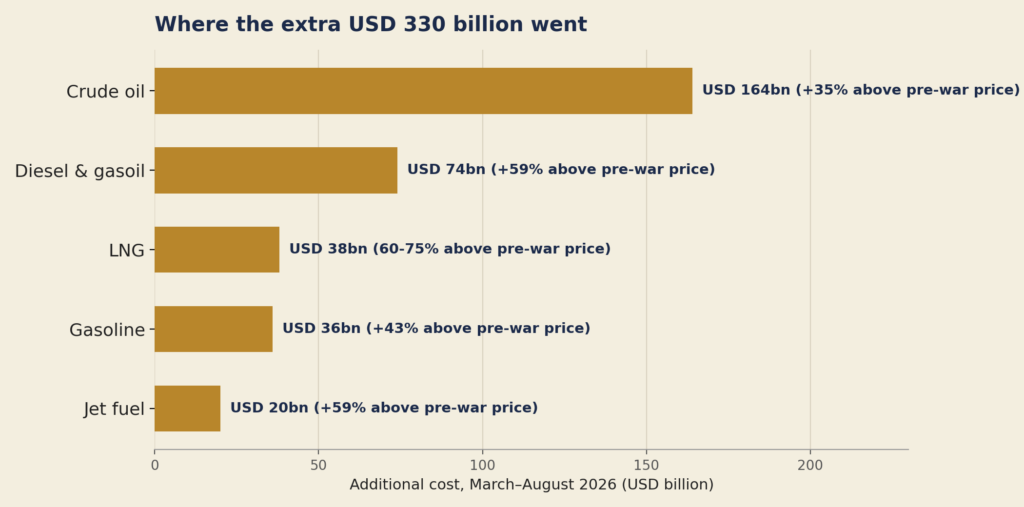
Refined fuels — diesel and gasoil in particular — rose by a steeper margin than crude oil itself. Source: CREA analysis. Illustration: EdPublica
Diesel’s premium mattered more than any other single figure in the analysis, because of how widely it is used. Industry, freight and farming all run substantially on diesel, so its price feeds directly into the cost of nearly everything else. Of the 170 countries CREA analysed, 134 paid more for diesel than their pre-war futures had implied. The war premium for diesel stayed above 55 percent in five of the six months, dipping to 43 percent in June before climbing back to 65 percent by August. Even the United States, the world’s largest oil producer, was not insulated: the average price of a gallon of diesel rose to USD 5.57 in the week of 17 August, the highest level since 2022 and closing in on that year’s record, according to AAA.
The clean energy dividend
The research’s central finding on mitigation is that a country’s exposure to the shock has been shaped less by geography than by how much of its power already comes from clean sources. Clean power capacity added since 2020 saved importing countries an estimated USD 36 billion in avoided coal, gas and oil imports in the first five months of the crisis alone. Of that, USD 10.6 billion existed only because of the war itself: every unit of coal or gas a country did not need to buy was a unit it did not have to purchase at inflated wartime prices, on top of whatever it would ordinarily have saved.
| “The best way to protect against high oil prices is to get off the black stuff as quickly as possible. Oil and gas prices have long proven to be an Achilles’ heel for both household finances and the global economy as a whole.” — Luke Wickenden, Energy Analyst, CREA |
“The energy transition is an investment,” Wickenden added, “so the best day to have started is yesterday.” Electrification is compounding the effect: the world’s electric vehicle fleet is on course to displace around five million barrels of oil a day by 2030, roughly comparable to the volume of crude Saudi Arabia currently moves through its East-West Yanbu pipeline specifically to bypass the Strait of Hormuz, according to the International Energy Agency’s Global EV Outlook.
Poorer countries are absorbing a bigger hit
The burden of the crisis has fallen unevenly by income, not just by geography. Low- and lower-middle-income countries paid an additional 1.0 percent of their 2024 GDP in higher fossil fuel costs, more than twice the 0.45 percent burden faced by high-income countries.
| “Across every fossil fuel product, this crisis is a multi-car pile-up, and where you land depends on what you’re driving. Wealthier nations, for whom paying extra is less of a burden in the short term, can absorb the higher prices. That’s not the case for lower-income countries that are far more price-sensitive. The countries best placed are the ones already in the EV lane: with fuel imports slashed, they can skirt the pile-up altogether.” — Luke Wickenden, Energy Analyst, CREA |
India’s particular exposure
India’s position in the top three is not simply a function of the size of its economy. The country entered 2026 already navigating a difficult trade-off on energy: after Washington imposed additional tariffs on Indian exports over New Delhi’s imports of discounted Russian crude, India had been cutting back on Russian oil and increasing purchases from the Middle East in pursuit of a US trade deal. The Hormuz crisis disrupted that shift almost immediately, cutting off much of the Middle Eastern supply India had been leaning on and pushing it back toward Russian crude even as prices climbed and a separate US sanctions waiver on Russian oil purchases lapsed in April.
By June, India’s total crude imports had hit a monthly record of roughly five million barrels a day, with Russian supplies alone reaching an unprecedented 2.6 million barrels a day — 54 percent of the country’s total crude imports, and more than double the volume seen in February. That pivot briefly inverted the usual arithmetic: discounted Urals crude, which had traded well below Brent since 2022, began trading at a premium to it in March, as Indian and Chinese refiners competed for the limited Russian cargoes still reaching them outside the Gulf. By July, as Gulf supply chains began to normalise, Urals discounts had reopened to more than USD 10 a barrel below Brent.
Russian crude functioned, in effect, as India’s insurance policy against a disruption its strategic reserves were not large enough to absorb on their own — but insurance still has a premium, and India’s USD 22.5 billion bill is a measure of how much of that premium it ultimately paid, on top of what it saved through the Russian discount.
Society
How Manali Strays Built a Lifeline for the Himalayas’ Stray Animals
Manali Strays has grown from a motorcycle rescue effort into a veterinary operation with ambulances, an operating theatre and outreach across Kullu valley.

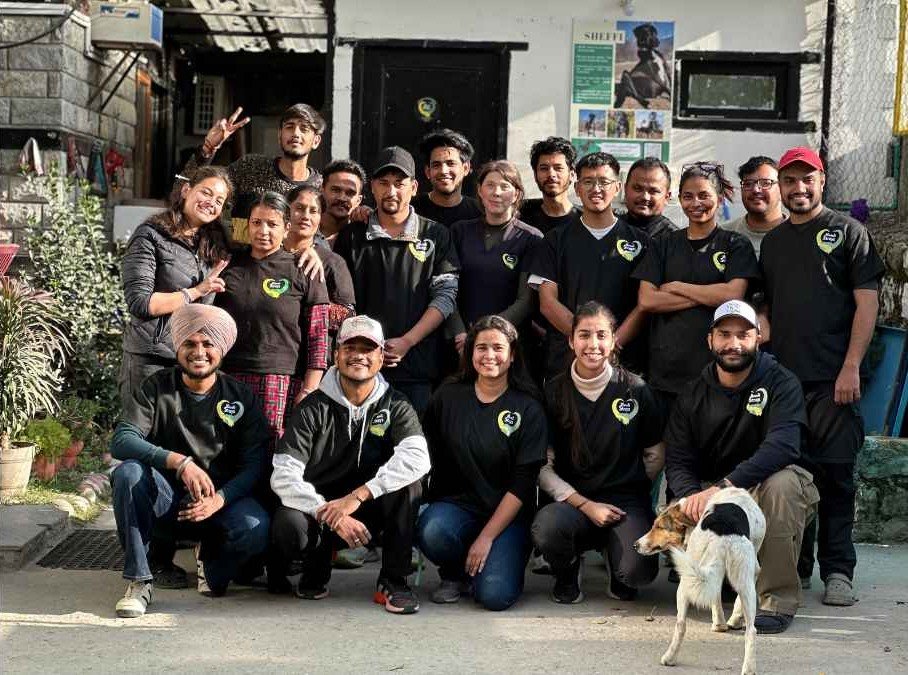
From a motorcycle and first-aid kit in 2019, Manali Strays has grown into a 15-person animal rescue operation serving stray animals across the Kullu valley.
Manali draws visitors from across the world for its snow-line, its apple orchards and its rivers. What most of them never see is what happens to the town’s street dogs once the tourist season empties out, or what it takes to treat an animal with no owner and nowhere to go when it is injured.
Manali Strays: Building Animal Rescue Services in the Himalayas
That gap is what Manali Strays was built to close. The organisation was founded on World Rabies Day — 28 September — in 2019, by four people who had each, in different ways, run up against the same problem: there was no veterinary infrastructure in the Kullu valley for animals that belonged to no one. Kamlesh, an Indian animal welfare worker with a diploma in veterinary sciences, had spent years handling rescue cases from Manali and its surrounding villages for another organisation and had seen how little could be done for them locally. Becky, a British national who visited Manali often, shared his concern. They were joined by Irma, a German national who had also spent time in Manali and had been trying to bring together people willing to set up a rescue, and by Buddhi Ram, a local resident. Together the four registered Manali Strays as a charitable trust in India in January 2020; a UK-registered arm followed a few months later to support fundraising and awareness abroad. The organisation is recognised by the Animal Welfare Board of India and holds 80G tax-exemption status, and describes itself as the first dedicated animal rescue operation in the Kullu district.
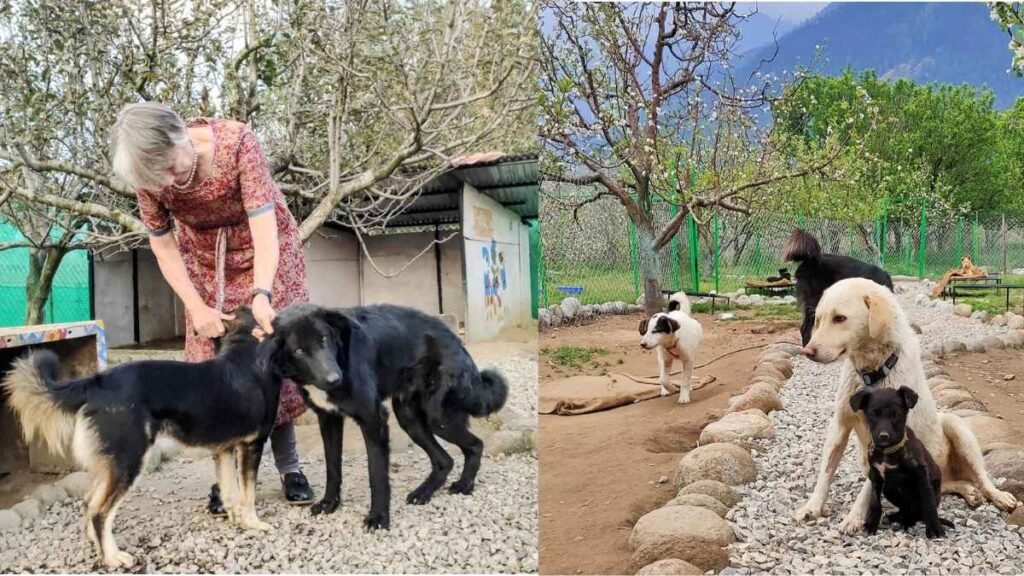
The work began in Haripur village, just outside Manali, with almost nothing but a motorcycle and a first-aid kit. Kamlesh would ride out to wherever a call came in — a dog hit on the road, an animal too weak to move — and treat it on the spot, because there was no facility to bring it back to. A helpline set up in the early days took two to five calls a day at first. It now takes 50 to 60, according to the organisation, a rough measure of how far word has spread and how much the service is now relied on.
The pandemic tested the operation almost as soon as it began. Manali’s street dogs survive largely on food discarded by hotels and restaurants, and when tourism shut down in 2020, that food source disappeared within weeks. Kamlesh’s team responded by running organised feeding drives across the town, alongside the rescue and treatment work they were already doing — and it was around this period that the need for a permanent facility became impossible to ignore. The trust leased land in Haripur and built a treatment centre where injured animals could be vaccinated, treated and held for recovery.

Six years on, that centre has grown into a proper veterinary facility, with a recovery shelter, an X-ray unit and a functioning operating theatre for sterilisation surgeries and other procedures. Three ambulances now run out of it, reaching animals in villages that would otherwise have no access to care at all. The team itself has grown from two founders to around 15 staff. According to the organisation, it has vaccinated more than 9,000 animals to date and sterilised more than 5,000 stray dogs — the latter figure central to keeping the street dog population in check without resorting to culling.
Himachal Pradesh’s monsoon floods, in 2023 and again in 2025, disrupted the region and its communities severely; the organisation says its rescue and treatment work continued through both.
Beyond Manali itself, the trust runs vaccination drives, sterilisation camps and rescue missions in villages further into the mountains that have no veterinary access of their own, and it runs an adoption programme for rescued dogs once they are treated, vaccinated and sterilised. It has also become a training ground for veterinary students: through a partnership with the Indian Veterinary Students’ Association, students travel to Manali for placements at the centre, working alongside the resident team on live rescue and surgical cases.
What began as one man on a motorcycle carrying bandages has become, over six years, an operation that a stray dog anywhere in the Kullu valley now stands a real chance of being reached by.


Nepal’s Glacier Disaster Exposes the Unequal Cost of Climate Change

When Health Care Becomes a Target, Patients Pay the Price

Academic Diplomacy: How India Can Build Global Influence Through Universities

Six Months of the Hormuz Crisis: A USD 330 Billion Global Fuel Bill — and India’s USD 22.5 Billion Share

The Giant Steel Gates Guarding the Netherlands from the Sea

When the Monsoon Returns, Fear Returns: How Climate Disasters Are Reshaping Mental Health in Himachal Pradesh

Astronomers Discover a ‘Black Hole Star’, a New Kind of Object in the Early Universe

From Bell Labs to the Classroom: Finding Purpose After Retirement

From Soil to Profit: How Organic Turmeric Changed the Fortunes of a Tribal Farming Family

Kerala Floods Highlight a Recurring Health Crisis as Disease Risks Rise

-

 Math1 month ago
The 2026 Fields Medals: Four Proofs, Four Decades-Old Problems Solved
-
Climate1 month ago
After Kerala’s Deadliest Landslide, the Hardest Thing to Rebuild Was Childhood
-
Society2 months ago
West Asia Crisis: Can Kerala’s Returning Gulf Migrants Find a Future in the Green Economy?
-
Space & Physics3 months ago
India Semiconductor Mission: ‘It’s Not About Fabs. It’s About Building An Entire Ecosystem’
-
Climate3 months ago
The Climate World Cup? How Climate Change Could Affect Player Performance at the 2026 World Cup
-
Society2 months ago
What Is Civilisational Diplomacy? Understanding India’s Newest Foreign Policy Tool
-
Society2 months ago
From Bell Labs to the Classroom: A Second Career in Teaching
-
Space & Physics3 months ago
Engineers Develop Dual-Mode Propulsion System for Next-Generation Small Satellites